
A New Vitality in the Alluvial Land
(DTO) On Tan Phong Island, Hiep Duc Commune, Dong Thap Province, alongside orchards laden with fruit, gentle canals flow quietly amid the lush greenery. However, the way local farmers cultivate and leverage their orchards has fundamentally changed.
They once simply hoped for a bumper harvest at good prices, but today they look for ways to turn every fruit tree, traditional roof, and local craft into a unique tourism product.
This marks a transition from a “growing crops to sell fruit” mindset to “sowing value to build the economy,” a direction shaping a vibrant new landscape for green tourism in this alluvial land.
ORCHARDS ARE NO LONGER JUST FOR HARVESTING
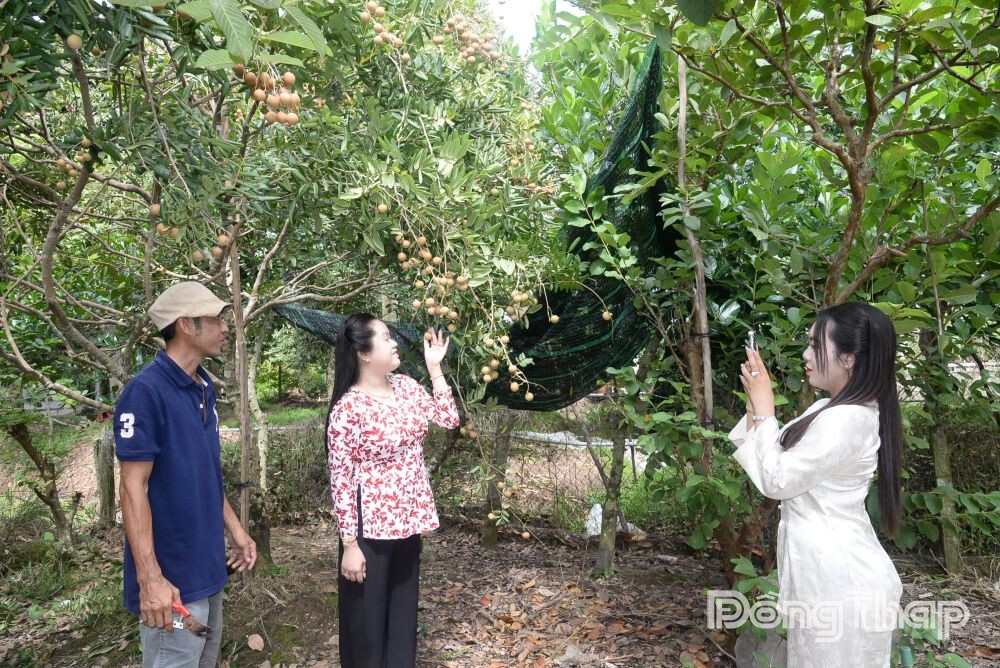
At the Nam On Tourism Site (Tan Thien Hamlet), visitors feel no need to rush through an itinerary. Instead, they stroll leisurely under cool green canopies, hand-picking ripe fruit clusters to enjoy directly in the orchard.
There are no luxury displays or extravagant services here, just the natural sweetness of freshly picked fruit and the genuine smiles of local farmers.
Huynh Thi Diem My and Tran Thi Yen Nhi, visitors from Ho Chi Minh City, shared that what stayed with them most was not just the delicious fruit, but the rare feeling of slowing down in nature. “The air is incredibly fresh, the fruit is clean, and the locals are exceptionally hospitable. We will definitely return for the next rambutan season.”
Nguyen Tan Phat, owner of the Nam On Tourism Site, reflected: “Perhaps what keeps guests coming back isn’t expensive amenities, but the authenticity of a countryside that has preserved its peaceful rhythm of life. When visitors come here, they feel that warmth, and we welcome them just like family.”
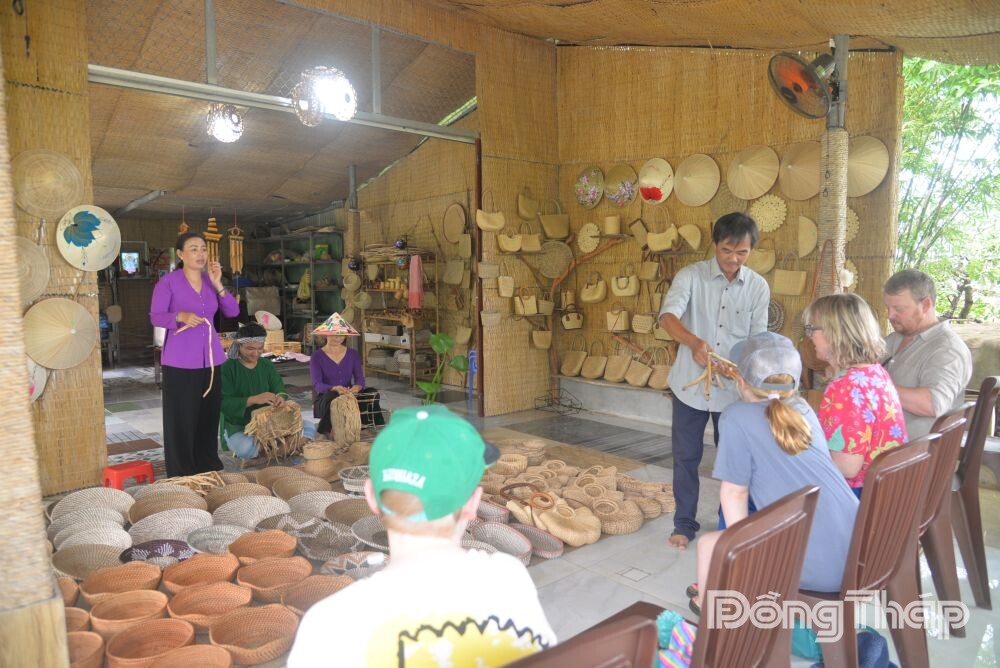
Few would have imagined that farmers, accustomed to tending to their orchards all year round, would become such passionate “tour guides.” They talk about the cycles of ripening fruit, show guests how to pick the best produce, share stories of ditch-draining fish catching, brew tea to share under the shade of trees, or patiently guide visitors through weaving a water hyacinth basket. These farmers do not merely grow crops; they share the story of their land.
Nguyen Van Nhan was among the earliest pioneers on the island to embrace this change, establishing the Vuon Nha Ngoai (Grandma’s Garden) Tourism Site.
Previously, his family’s orchard primarily grew longan. Realizing that travelers increasingly favored immersive experiences in nature, he reshaped his orchard, planting rambutan, star apple, jackfruit, and guava so that fruit would be available across all four seasons.
More importantly, he chose not to chase sheer volume, focusing instead on maintaining the orchard’s quality, farming safely and minimizing chemicals so visitors can harvest and eat with peace of mind right on the spot.
Dan from the Philippines and Emilie Lebbe from Belgium both shared that they especially loved the warmth of the locals, the fresh air, and the chance to taste fresh, delicious fruits right off the branch.
“What guests love most isn’t just good fruit, but the feeling of being part of local life. We want every guest who leaves this place to take home fond memories of the nature and people here,” shared Nhan.
This sentiment is shared by many farmers across Tan Phong Island. They recognize that in an era where people increasingly long to reconnect with nature, rustic simplicity, sincerity, and everyday charm become the ultimate point of distinction.
AIMING TOWARD GREEN TOURISM
Not far from Vuon Nha Ngoai is the Mekong Rustic Riverside resort (Tan Thoi Hamlet), where nearly 30-year-old durian trees cast cool shade. Nguyen Van Xam, owner of the resort, shared that his family originally specialized in durian cultivation.
Over the past three years, he has invested in an eco-resort model featuring 18 guest rooms nestled within the lush green orchard.
According to Xam, what visitors look for is not just delicious fruit, but the experience of immersing themselves in orchard life, from sipping tea under tree canopies and weaving water hyacinth products to participating in daily activities alongside local residents.
To meet this demand, many orchard owners on the island have gradually shifted toward organic farming, reducing the use of chemical fertilizers and pesticides to cultivate “clean from the roots” orchards. As a result, guests can confidently pick and savor fruit right off the trees, while simultaneously helping protect the ecosystem and raising the value of local produce.
During her visit, My Chu, a tourist from China, expressed her delight at picking fruit by hand, learning to weave water hyacinths, and ditch-draining for fish for the very first time.
“The people here are so friendly, the setting is serene, and everything feels completely natural. This is an experience I will remember forever,” she said.
According to Tran Van Trung, Vice Chairman of the Hiep Duc Commune People’s Committee, the entire commune currently has 3,597 hectares of fruit trees, with durian accounting for 2,666 hectares alongside hundreds of hectares of jackfruit, longan, rambutan, and various other specialty crops.
He stated that, leveraging the advantages of the riverine and orchard ecosystem, local residents are step-by-step shifting their mindset from “agricultural production” to an “agricultural economy,” meaning they do not merely produce agricultural goods, but also integrate cultural, ecological, and service values to enhance overall worth.
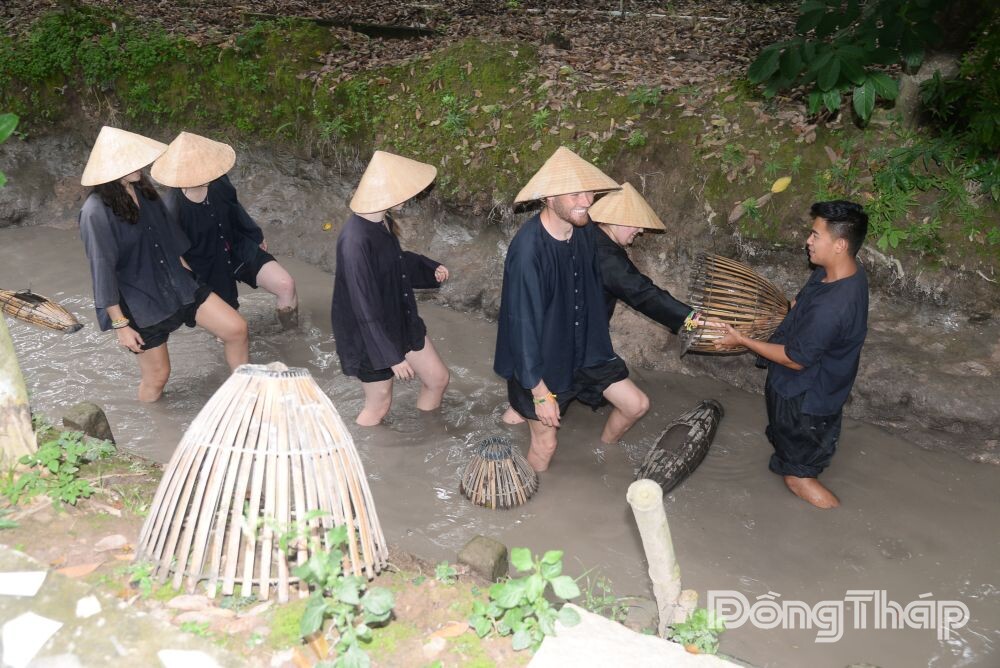
In practice, rather than simply selling a kilogram of fruit, farmers can now generate additional revenue through homestay accommodation, rowing boats, performing don ca tai tu, ditch-draining for fish, making traditional treats, hosting craft village tours, or serving fresh fruit on-site.
It is precisely these rich experiences that have multiplied the value of agricultural produce, creating job opportunities and increasing incomes for local residents.
To support the community, the Hiep Duc Commune People’s Committee has collaborated with the culture and tourism sectors to organize training workshops on community-based tourism skills, guide the transition toward organic production, upgrade transport infrastructure connecting tourist sites, and build models linking agriculture with experiential services.
The locality continues to develop multi-value agricultural models that align production with tourism, experiential education, and other services. The goal is to cultivate a modern, professional generation of farmers while making tourism a key economic sector that drives the socio-economic development of Hiep Duc Commune.
Amid the growing popularity of green travel trends, Tan Phong Island is confirming a clear path forward: using nature as the foundation, local culture as the soul, and local farmers as the main actors.
It is this dynamism and agility in transforming production models, combined with an approach to agriculture grounded in experiential tourism and environmental protection, that has breathed new vitality into this alluvial land, transforming Tan Phong Island into a green, welcoming, and sustainable destination in the Mekong Delta.
By PHUONG MAI
Translated by ANH DUC