

PURPLE BLADDERWORT:
A Signal of Ecological Revival at Tram Chim National Park
(DTO) In the final days of the year, visitors traveling by boat along the canals within Tram Chim National Park (TCNP) will have the chance to witness shimmering, tiny purple carpets of flowers rising above the water's surface. Not only do these purplish petals enhance the beauty of the landscape, but they also signal a spectacular revival of the wetland ecosystem at Tram Chim TCNP.
Purple bladderwort, also known as “Rong Trung Tim” (Utricularia punctata), is a submerged aquatic plant that thrives in highly acidic water conditions. In the past, when water levels at Tram Chim were consistently kept high, the aquatic environment remained “locked” in a neutral state throughout the year.
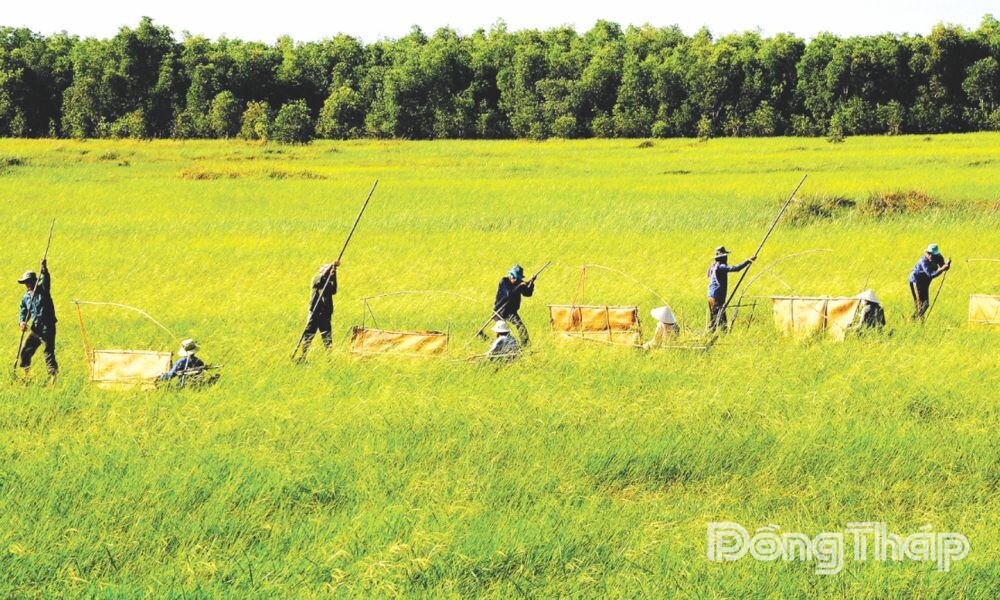
Under such conditions, acid-tolerant species like bladderwort could not compete with other plants and were gradually eliminated. The disappearance of bladderwort flowers clearly indicated profound changes in the ecosystem.
Along with the loss of bladderwort came the disappearance of many other species, including the Eastern Sarus Crane.
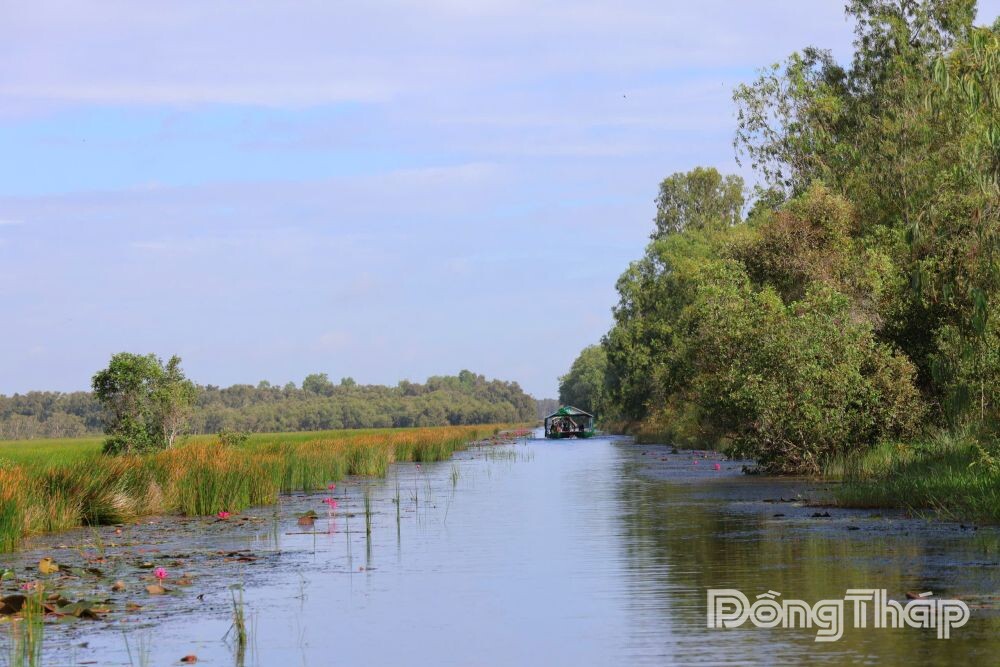
Over the past two years, changes in water management practices have allowed the aquatic environment at Tram Chim National Park to gradually recover. Characteristic acid-tolerant plant species have returned, and birdlife has become increasingly abundant.
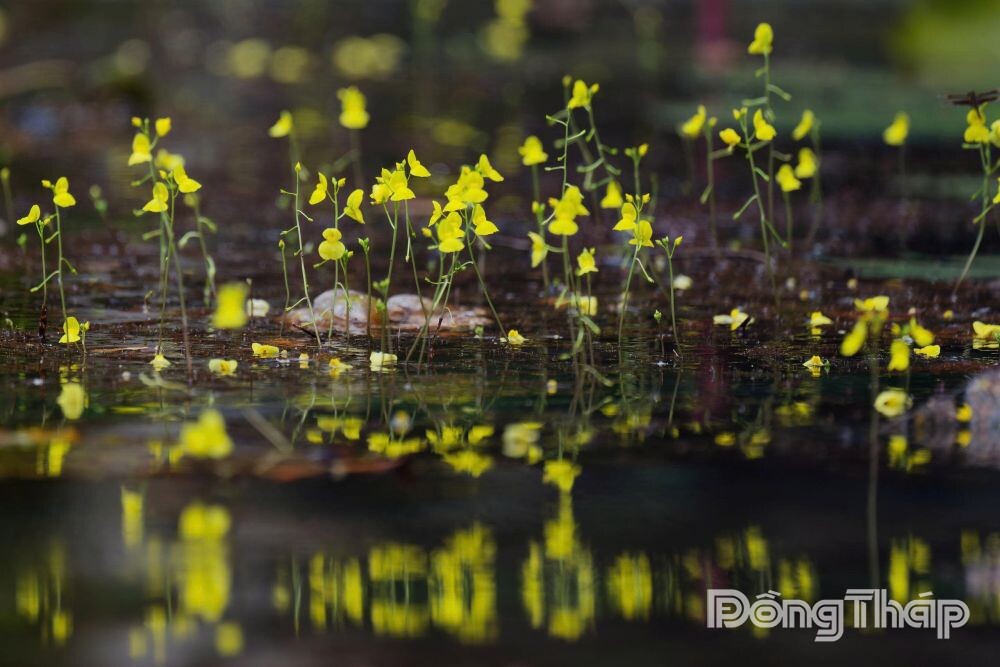
The bladderwort is a carnivorous plant. Its stems and leaves are equipped with numerous tiny bladders capable of capturing zooplankton living in the water.
This adaptation enables the plant to survive in acidic, alum-rich environments where essential nutrients such as nitrogen (N) and phosphorus (P) are difficult for plants to absorb.

Photo: Thanh Phong
In addition to the Purple Bladderwort, many other alum-tolerant plant species have recovered significantly at TCNP. Eleocharis ochrostachys (Nang kim), whose tubers are a favorite food of the Sarus Crane, has recovered over hundreds of hectares.
Similarly, fields of Ghost Rice and many alum-tolerant plants that were long absent have returned in high densities, such as Yellow Bladderwort, Pipewort (Eriocaulon), and both white and pink water lilies.
By DR. TRAN TRIET
University of Science, Vietnam National University - Ho Chi Minh City
Translated by X.QUANG