
TISSUE CULTURE TECHNOLOGY:
Affirming the Brand Position of Dong Thap Lotus
(DTO) Amid the pressures of climate change and the degeneration of traditional varieties, the lotus industry is facing major challenges, particularly from diseases. The application of tissue culture technology in seedling production is expected to be a strategic breakthrough, opening up a sustainable pathway for the lotus ecosystem in the Pink Lotus Land.
DISEASE CONCERNS
Dubbed the country’s “lotus capital,” the lotus is not only a cultural symbol but also a key agricultural commodity within Dong Thap Province’s agricultural development structure. In recent years, for farmers in localities such as Thap Muoi, Truong Xuan, Phuong Thinh, and Thanh Binh, the primary concern is no longer market prices but the visible threat of diseases in their fields.
The traditional cultivation practice of reusing seeds and plant stock from one crop to the next has revealed critical shortcomings over decades, forcing many farmers to reluctantly abandon lotus farming.
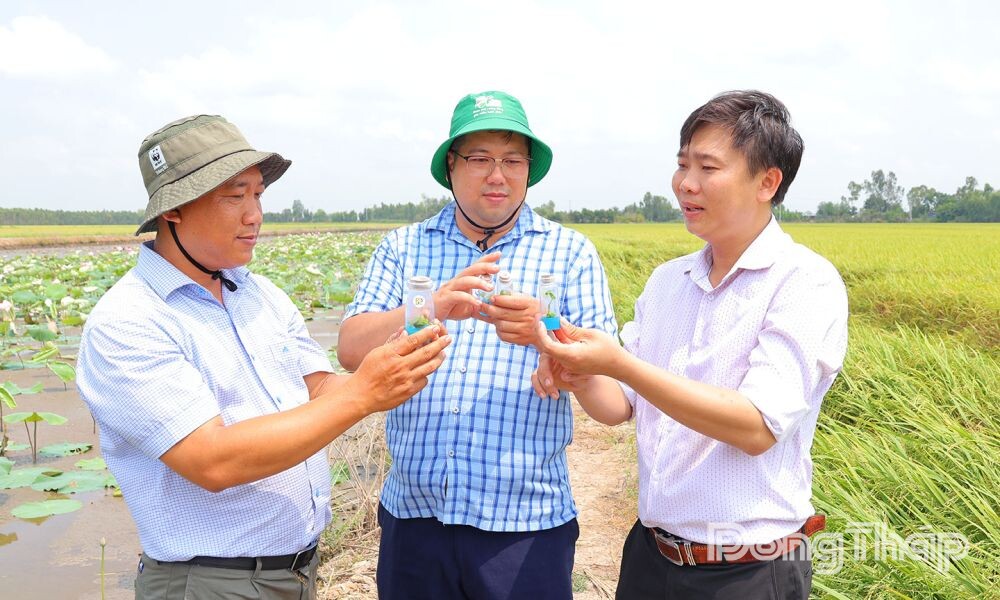
Nguyen Ngoc Thanh, a long-time lotus farmer in Phuong Thinh Commune, Dong Thap Province, shared: “Farmers have long been used to taking seeds and plant stock from previous fields for the next crop. It’s convenient and inexpensive, but the downside is that the plants grow weaker over time. Diseases spread quickly, and rhizome rot becomes widespread. In some seasons, we’ve had to watch entire lotus fields gradually wither away helplessly. Input costs keep rising, yet yields drop significantly.”
In reality, varietal degeneration not only reduces productivity but also weakens the lotus plant’s natural resistance. Once pathogens persist in traditional seed sources, chemical interventions offer only temporary relief and may even cause adverse effects on the environment and on product quality, an increasingly stringent requirement in export markets.
The bottleneck of disease-free planting material has become the biggest barrier, hindering the growth of a sector widely recognized for its strong potential in both domestic and export markets.
Faced with the urgent need to “clean” the genetic stock of lotus plants, scientists and specialized agencies have initiated a roadmap to standardize planting material through tissue culture technology. This is considered a fundamental solution to create uniform, disease-free plant populations with superior growth performance.
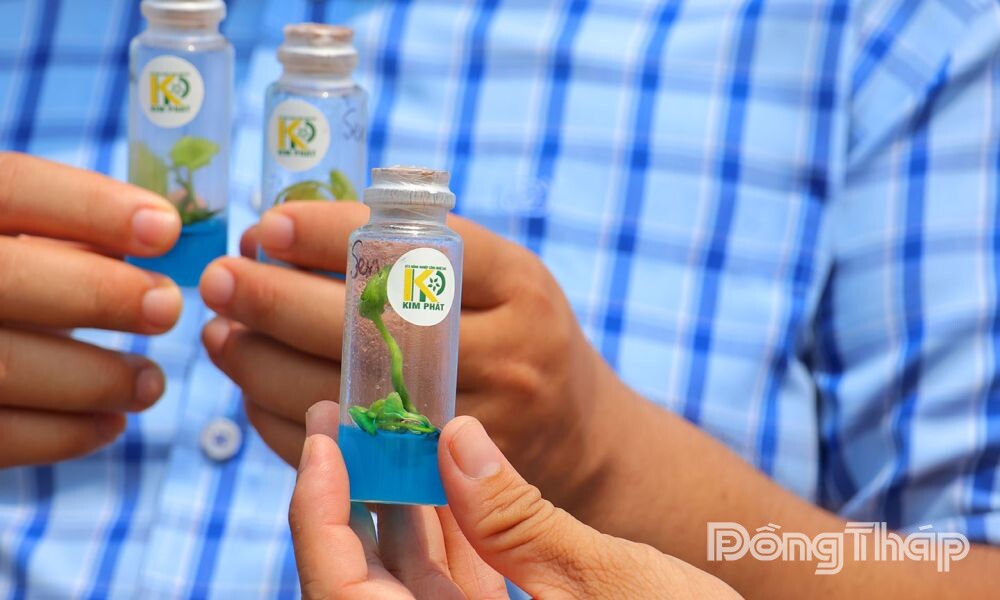
Trinh Phuoc Nguyen, Deputy Director of the Institute of Cli
mate Change (An Giang University), who has spent many years working with lotus farming models in Dong Thap, noted: “The biggest limitation of traditional vegetative propagation is the accumulation and transmission of pathogens over multiple generations. Tissue culture technology allows us to select the best mother plants and, through strict sterile processes, mass-produce clones. The result is a source of ‘pure,’ healthy planting material right from the laboratory stage.”
Mastering this technology not only helps control diseases but also enables better control over planting schedules. Instead of relying on conventional propagation methods, seed centers can supply large quantities of uniform seedlings in terms of size and growth stage, making it easier for farmers to adopt mechanization and standardized cultivation practices such as VietGAP and GlobalGAP.
STANDARDIZING HIGH-QUALITY PLANTING MATERIAL
The effectiveness of tissue-cultured plants is no longer theoretical. Lessons from other crops such as pineapple, banana, and wild orchids clearly show how a shift in propagation practices can transform the economic landscape of cooperatives.
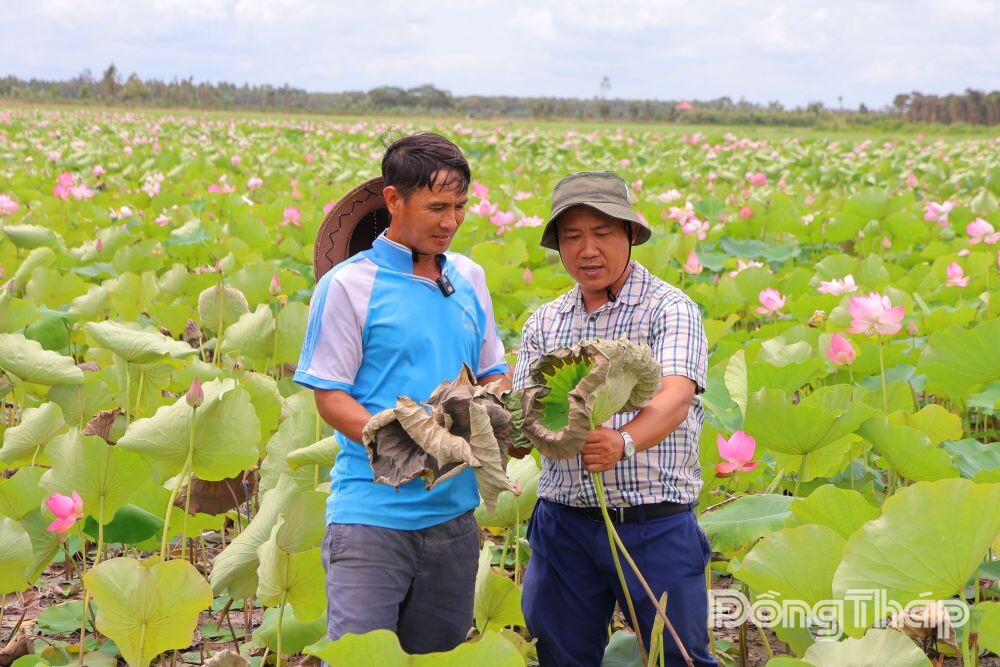
Ngo Hung Vu, Deputy Director of Kim Phat High-Tech Agricultural Cooperative in An Thanh Thuy Commune, Dong Thap Province, an entity with strong expertise in in vitro propagation, shared: “We have achieved success with MD2 pineapple and tissue-cultured bananas. In the past, pineapple-growing areas in Tan Phuoc were devastated by heart rot disease. However, after switching to disease-free planting material from laboratories, yields surged, input costs dropped significantly, and export value improved markedly.”
From field surveys in Dong Thap’s key lotus-growing areas, Vu noted that lotus is now facing challenges similar to those previously seen in pineapple. Accordingly, Kim Phat Cooperative is working closely with the Dong Thap Lotus Industry Association to roll out demonstration models.
In 2026, an estimated 5-6 hectares of tissue-cultured lotus will be piloted in difficult areas where diseases are most severe. This will serve as a practical benchmark, allowing farmers to directly observe the difference between high-tech solutions and traditional practices.
From a sector management perspective, Ngo Chi Cong, Chairman of the Dong Thap Lotus Industry Association, emphasized: “We cannot sustainably develop the lotus industry if we continue to rely on the uncertainties of weather and disease. Tissue-cultured lotus will provide a solid foundation for building clean raw material zones to support deep processing and experiential tourism.”
The vision for Dong Thap’s lotus industry goes beyond selling seeds, fresh rhizomes, or leaves. It aims toward a multi-layered economic model. Examples include integrated lotus-pineapple farming systems to optimize land use, or linking disease-free lotus cultivation with traceable growing area codes to position products in international markets. Localities such as Truong Xuan and Phuong Thinh are being planned as the first “satellite hubs” to adopt this new wave of propagation technology.
The shift from “agricultural production” to an “agricultural economy” begins with the smallest yet most fundamental change: planting material. While bringing tissue-cultured lotus from the laboratory to the field still faces challenges in initial investment costs and farmers’ habits, it is an inevitable path forward.
With the collaboration of the “four stakeholders,” the State, scientists, businesses, and farmers, high-tech lotus varieties are expected to soon flourish across the fields, delivering not only abundant harvests but also reinforcing the sustainable position of the Dong Thap lotus brand on both domestic and global economic maps.
By MY LY
Translated by ANH DUC