
TRACEABILITY:
An Inevitable Path for the Sustainable Development of the Durian Industry
(DTO) Durian is one of Vietnam’s key fruit export commodities in general, and of Dong Thap Province in particular. Alongside positive results, the production and consumption of durian are facing numerous challenges, ranging from quality assurance to transparency of origin. Therefore, implementing traceability toward sustainable production and export has become an inevitable path for the durian industry at present.
NUMEROUS CHALLENGES
Durian has been asserting its position as one of Vietnam's flagship agricultural exports, particularly in the Chinese market.
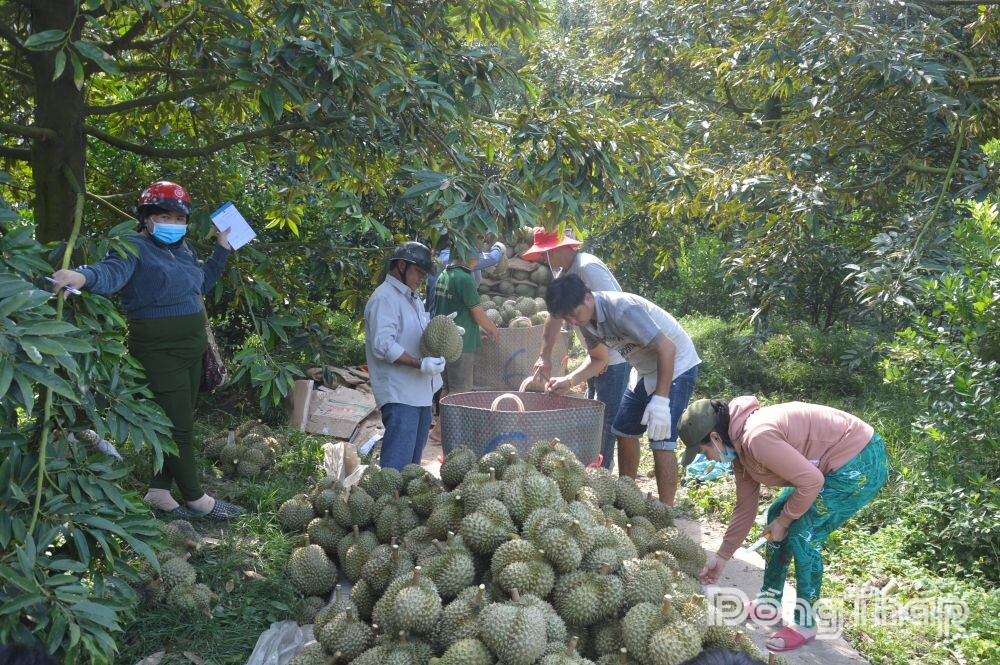
According to the Department of Crop Production and Plant Protection under the Ministry of Agriculture and Environment (MAE), from 2015 to 2023, the national durian-growing area increased by an average of 19.5% per year, while output grew by an average of 14.7% per year.
Vietnam’s fresh durians are exported to 28 countries and territories, while frozen durians reach 20 markets. In 2025, durian export turnover to China reached approximately 4 billion USD.
To date, the country has 1,192 durian growing-area codes and 96 export packing facility codes. Dong Thap leads the nation in the number of licensed growing-area and packing facility codes, followed by Lam Dong and Dak Lak provinces.
However, along with rapid growth come increasingly stringent requirements on quality, food safety indicators, traceability, and transparency across the production–processing–export chain. According to the Department of Crop Production and Plant Protection, the durian industry is currently facing multiple difficulties in production.
Specifically, product quality remains inconsistent, while production is small-scale and fragmented. Rapid expansion of growing areas has led to oversupply, disrupted production planning, and posed economic risks.
In addition, the lack of close linkages among enterprises and cooperatives, along with broken production chains, has made product traceability more difficult.
The durian industry also faces export challenges as China tightens plant quarantine inspections and food safety requirements. Costs and procedures have increased due to additional food safety testing requirements, while a comprehensive traceability system has yet to be established. Durian products cannot be traced because export shipments pass through multiple intermediaries.
In reality, many durian growing areas and packing facilities have not fully maintained the required conditions. Loose record management and incomplete or perfunctory logbooks have made traceability particularly difficult.
Common violations include mixing durians from areas without codes, using codes from other regions, failure to trace actual origins, or origin fraud.
As a result, several growing-area codes and packing facility codes have been revoked by the General Administration of Customs of China (GACC).
The inability to identify specific causes through traceability makes it difficult for enterprises to rectify violations. At the same time, this seriously affects the reputation of Vietnam’s durian industry and poses the risk of tighter controls or even market closure.
FOCUSED IMPLEMENTATION
To address these challenges and move toward sustainable development of the durian industry, the Ministry of Agriculture and Environment is coordinating with relevant sectors and localities to deploy a traceability system.
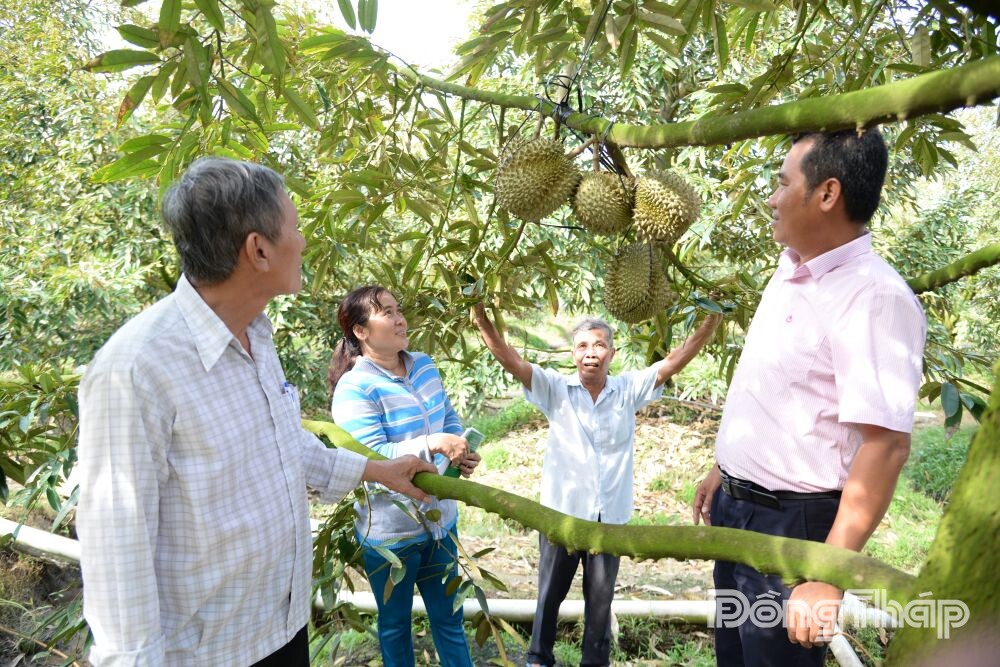
According to Mr. Vo Tan Loi, Chairman of the Dong Thap Durian Association, the biggest lesson learned is to absolutely avoid using colorants on durians.
Previously, due to market demands, some places dipped durians in coloring agents to enhance appearance. Initially, natural food coloring was used, but later there were cases of industrial dyes being applied to retain color longer, leading to contamination with Auramine O. Not using colorants is the safest solution.
Mr. Vo Tan Loi also noted that traceability will help restore transparency in production and export. It serves as a “passport” for durian exports, especially to the Chinese market.
Traceability is not difficult if production and business practices are transparent, but it requires the simultaneous issuance of growing-area codes to avoid shortages in meeting container-level volumes.
Sharing the same view, Mr. Le Anh Trung, Chairman of the Dak Lak Durian Association, said that never before has the orientation toward applying traceability been as necessary as it is now.
After experiencing recent “turbulence,” it has become clear that the durian industry must be transparent to international markets.
In this regard, enterprises, farmers, and supervisory units all bear responsibility for implementing traceability. This is mandatory and essential.
To achieve this, the coordinated involvement of all agencies, departments, local authorities, enterprises, and especially commune-level supervisory bodies is required. It is also necessary to carefully calculate how implementation will be carried out for farmers,...
According to Mr. Nguyen Quang Tin, Deputy Director of the Department of Science and Technology - The Ministry of Agriculture and Environment, major export markets such as China and the EU are increasingly strict about growing-area codes and product traceability, particularly after the Protocol dated July 11, 2022.
In addition, the impersonation of growing-area codes and the mixing of substandard products remain complicated, seriously affecting the reputation of Vietnamese agricultural products.
Therefore, without implementing traceability, Vietnamese durian risks losing its competitive advantage and may even face the possibility of export market closure.
Implementing Decision No. 5272 dated December 13, 2025, issued by the Minister of Agriculture and Environment on promulgating the Pilot Plan for Durian Traceability, on December 26, 2025, the Ministry of Agriculture and Environment officially launched the Vietnam Agricultural Product Traceability System.
This tool enables consumers to verify product information while supporting management agencies in monitoring and tracking goods.
According to Mr. Nguyen Quang Tin, the pilot durian traceability program aims to enhance product quality, reputation, and competitiveness in international markets.
The program will build a durian supply chain model that meets traceability, quality, and food safety requirements.
At the same time, it will establish and test a real-time online durian traceability system; record and manage data from cultivation to distribution; enable information retrieval via QR codes on product labels; and connect with the National Traceability Portal.
The program will mobilize at least five enterprises (in production, procurement, packing, transportation, and distribution) to participate in the pilot; issue and affix electronic authentication labels (QR/NFC/RFID) to qualified durian batches. The roadmap for applying this system will follow three phases.
In the initial phase, the Ministry of Agriculture and Environment will pilot traceability for fresh durians over the next six months and then expand to other essential agricultural product groups.
By T. DAT
Translated by X.QUANG