
Cai Lay Sausage - The Sweet Essence of Alluvial Lands
(DTO) There are dishes that do more than fill the stomach; they linger in memory. They evoke a land, a household, a fragrance drifting from the late-afternoon hearth. Cai Lay sausage is such a memory.
Cai Lay, a land nestled along the Tien River where silt nourishes lush orchards, is home to a people defined by their frugality and ingenuity.
Among the many renowned sweet fruits of this region, one product quietly holds its place on Tet banquet tables, in hometown gift baskets, and in the hearts of expatriates: the local sausage (Lap xuong).
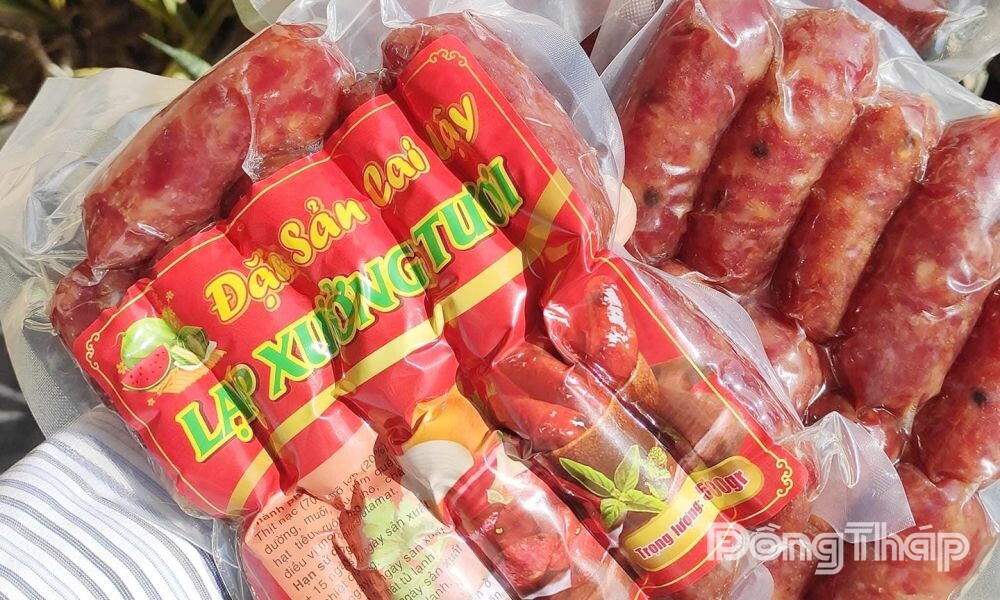
Cai Lay sausage typically features a refined, gentle sweetness, never cloying. This sweetness is not merely from sugar; it stems from the seasoning habits of Mekong Delta residents—a preference for harmony over extremes.
The pork must be fresh, the fat proportioned just right, marinated thoroughly before being stuffed into casings, then sun-dried and air-cured for the perfect duration. These artisans are never in a hurry. They understand that, much like growing a rice crop, everything requires its "due time."
When fried, the casing becomes taut and glossy, sizzling in the pan. The aroma wafts out, mingling with the scent of kitchen smoke, naturally making one slow down. One bite reveals a blend of sweet, salty, and savory flavors—neither too pungent nor too bland. It pairs perfectly with pickled leeks (dua kieu), steamed white rice, or tucked into a hot, crispy baguette.
However, to view this sausage only as food is to miss its most vital part. Cai Lay sausage is a story of craft preservation.
It represents how rural residents add value to small-scale livestock farming. It stands as a testament to a broader truth: agriculture is not just about rice and fruit; it is about processing, craftsmanship, and the mindset of building a brand.
Cai Lay sausage shall not be confined to the Tet banquet table; it possesses the potential to reach further into major markets and the global stage, carrying with it the sweetness of the alluvial soil and the ingenious spirit of the Mekong Delta people. |
In the journey of agricultural transformation—particularly regarding "emission reduction," "circular economy," and the "One Commune, One Product" (OCOP) program—products like this sausage should not be left behind.
Using pork from bio-secure farming, utilizing by-products, maintaining clean processing lines, and adopting eco-friendly packaging... these small steps, if organized systematically, will create a sustainable value chain.
A rice plant yields grain.
A pig yields meat.
But it is the professional mindset that creates a brand.
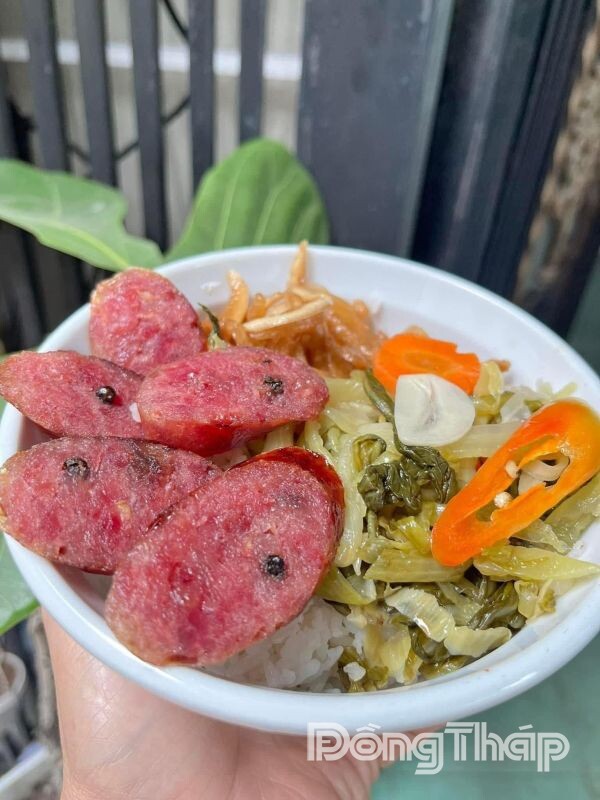
It is perhaps time for alongside promoting durian, jackfruit, and mango, Cai Lay can tell its sausage story more formally. It should not be seen merely as a "hometown specialty" but as a standardized product with origin traceability and a rich cultural narrative.
Ultimately, today's consumers are not just buying a sausage.
They are buying trust.
They are buying integrity.
They are buying a piece of memory.
If executed correctly, Cai Lay sausage shall not be confined to the Tet banquet table; it possesses the potential to reach further into major markets and the global stage, carrying with it the sweetness of the alluvial soil and the ingenious spirit of the Mekong Delta people.
Some things may seem small, but if cherished, they can become great. Like a bright red sausage hanging in front of a porch, quietly yet persistently preserving the scent of the homeland.
By LE MINH HOAN
Translated by X.QUANG