
Chairman Nguyen Thanh Nhan: Planning Adjustments to Guide Development and Investment Projects
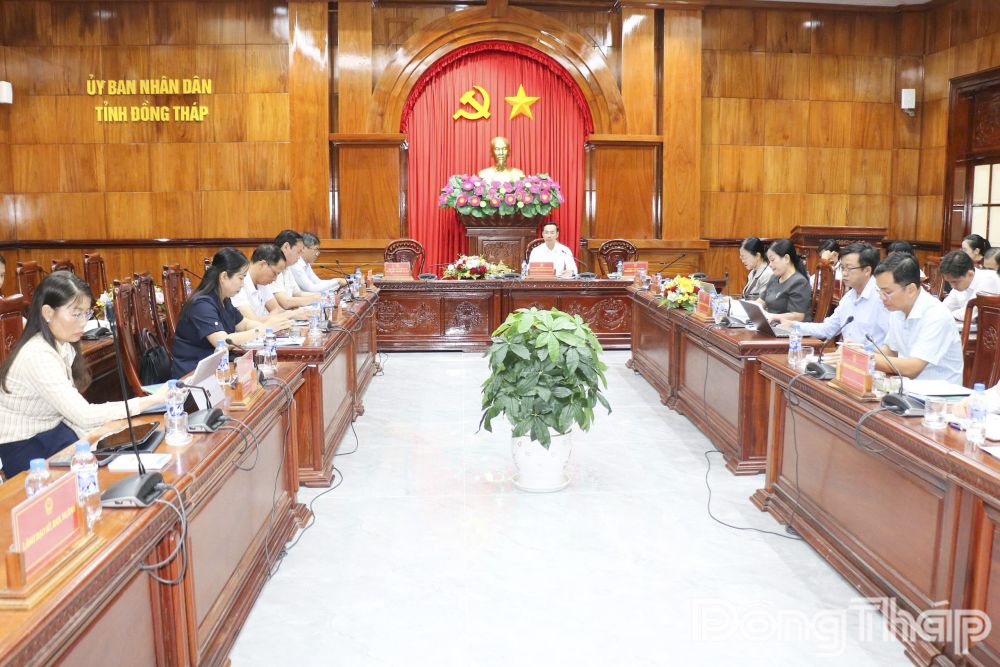
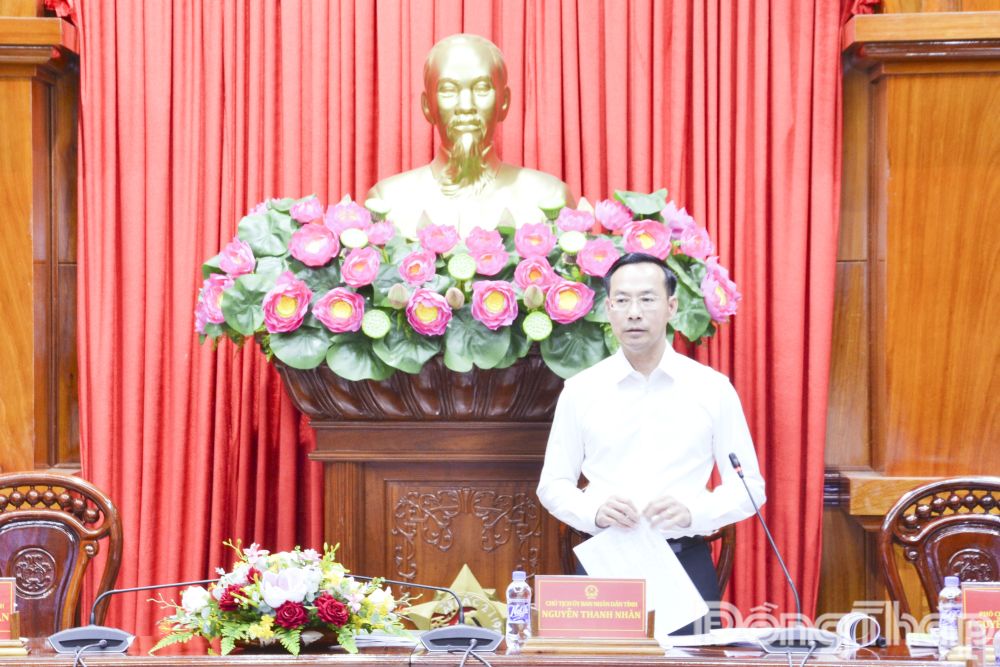
(DTO) On October 27, Deputy Secretary of the Dong Thap Provincial Party Committee and Chairman of the Dong Thap Provincial People’s Committee Nguyen Thanh Nhan chaired a meeting to hear reports evaluating the implementation of adjustments to the Dong Thap Provincial Master Plan for the 2021–2030 period, with a vision toward 2050.
The meeting was held in a hybrid format, combining in-person attendance with online connections to communes and wards across the province. Representatives of provincial departments, agencies, and the planning consultants also attended.
According to the report, Dong Thap’s gross regional domestic product (GRDP) was estimated to have grown by 7.44% year-on-year in the first nine months of 2026. Agriculture, forestry, and fisheries grew by 4.16%; industry and construction by 10.86%; and services by 8.23%.
In the industrial sector, the province has planned 66 industrial clusters covering approximately 3,854.2 hectares. To date, 22 clusters have been established, of which 17 are operational. They have attracted 126 investment projects and created jobs for approximately 34,600 workers.
The province continues to restructure its agricultural sector toward greener, more sustainable, and diversified production that can adapt to climate change. It is also implementing high-quality, low-emission rice production models. Trade, services, tourism, and logistics are being developed with a focus on the province’s strengths in waterways, orchards, cultural heritage, and coastal-adjacent spaces.
Infrastructure planning focuses on developing an interconnected network of expressways, national highways, provincial roads, interregional transport routes, waterways, and inland river-sea ports to strengthen connectivity and attract investment. The province currently has 35 urban areas, with an urbanization rate of 31.86%, and aims to raise this rate to 50% by 2030.
At the meeting, the planning consultants presented development proposals for key transport projects to improve connectivity within the province and with neighboring regions. They also proposed leveraging land along transport corridors and around expressway interchanges to develop urban areas, trade and services, industry, logistics, social housing, and resettlement zones. In addition, the consultants proposed solutions for managing domestic solid waste in communes and wards.
Representatives of departments, agencies, and local authorities contributed their views to refine the proposals, ensuring they reflect practical conditions and make the most of each area’s potential and advantages.
In his directive remarks, Chairman Nguyen Thanh Nhan emphasized that adjusting the provincial plan was important for setting development directions and providing a foundation for implementing investment projects. The plan must adopt a long-term vision, clearly identify key development axes, corridors, and drivers, and prioritize connections between road and waterway networks and industrial parks, economic zones, and areas with strong development potential. This would create an integrated network and expand the province’s development space.
He urged departments, agencies, local authorities, and the planning consultants to incorporate the feedback received and urgently review, update, and finalize the adjusted plan in line with the intended development orientations and legal requirements. The process must meet deadlines and ensure quality, consistency, and feasibility, while fully complying with procedures for consultation and appraisal.
Relevant units must proactively coordinate to identify and resolve overlaps between the provincial plan, sectoral plans, land-use plans, and other related plans. They must also promptly address difficulties and remove obstacles to project implementation. These efforts will help mobilize resources more effectively, facilitate investment attraction, unlock the province’s potential and advantages, and contribute to its socio-economic development goals in the coming years.
By H. THONG
Translated by X.QUANG