
Chairman Pham Thanh Ngai Inspects Forest Fire Prevention and Control at Tram Chim National Park
(DTO) Facing the heightened risk of forest fires in the dry season and the need to protect the ecosystem, on the morning of April 18, Chairman of the Provincial People’s Committee Pham Thanh Ngai, together with Vice Chairman Nguyen Phuoc Thien and leaders of relevant departments and agencies, conducted an inspection of forest fire prevention and control at Tram Chim National Park.
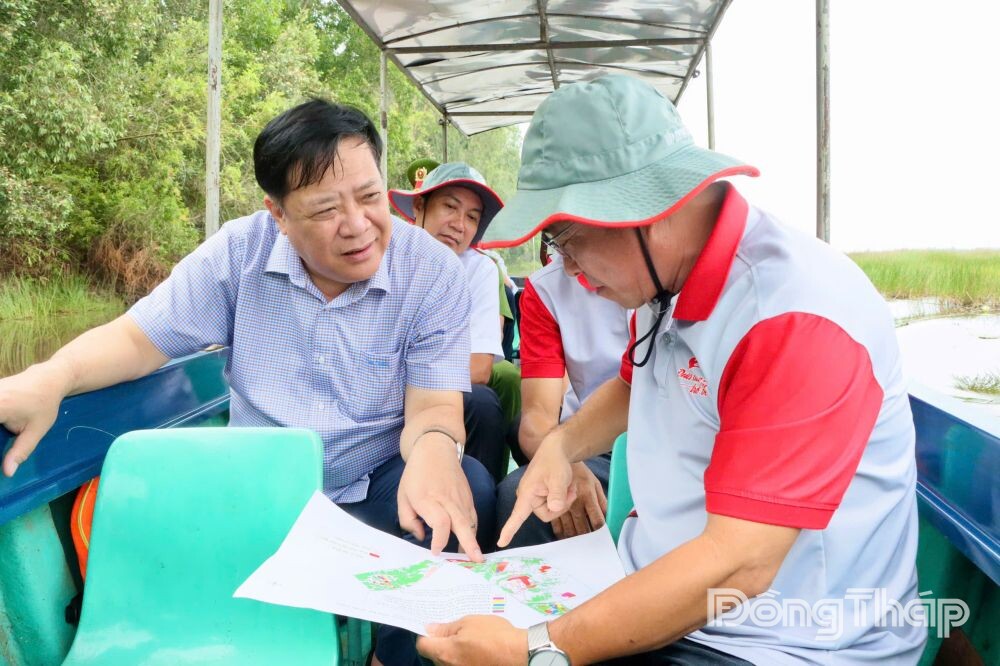
The park covers a total area of more than 7,300 hectares, including over 2,580 hectares of forest (accounting for more than 35%). The remaining area consists of wetlands, grasslands, and other types of terrain, distributed across six functional zones. These zones are surrounded by a 60-kilometer system of canals and dikes, adjacent to four buffer-zone communes: Tram Chim, Tam Nong, An Hoa, and Phu Tho.
At zone A1, the delegation conducted a field survey of water-level management, ecosystem restoration, tourism activities, and the implementation of forest fire prevention and control plans. According to the park representative, the current fire danger level is at grade 4-5 (dangerous to extremely dangerous).
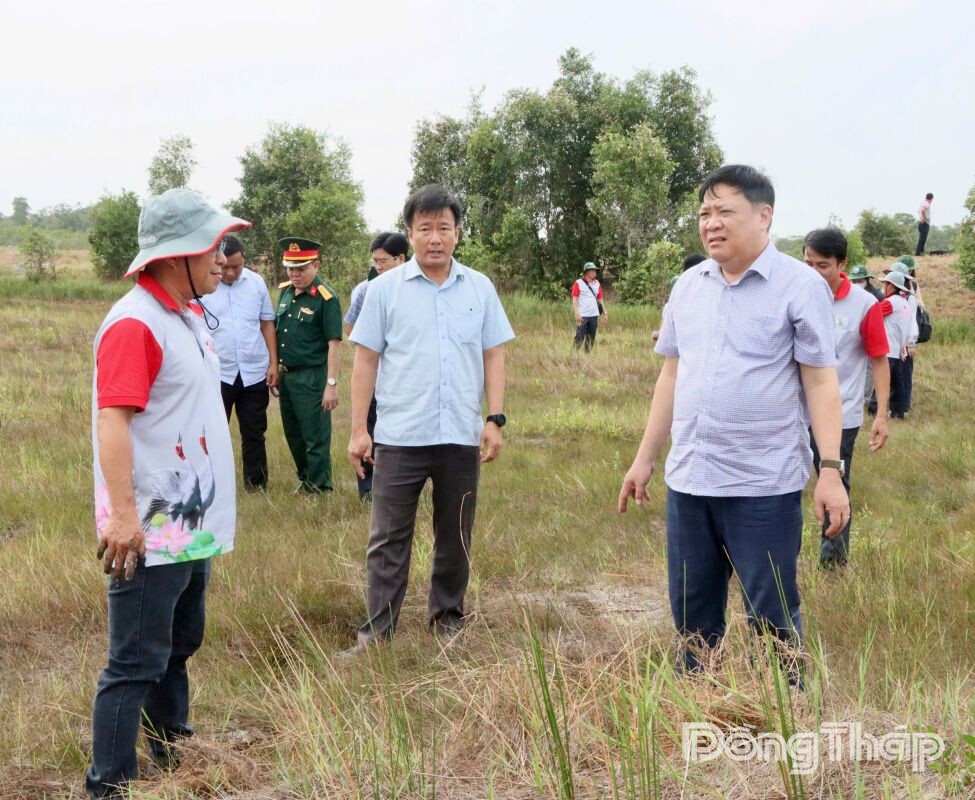
During the inspection, Chairman Pham Thanh Ngai emphasized that the thick and dry vegetation layer poses a very high fire risk. Therefore, Tram Chim National Park must remain highly vigilant and proactively implement synchronized fire prevention and control measures; strengthen patrols and monitoring; and deploy forces ready to respond. He also suggested planting bamboo around vulnerable areas as a natural protective barrier and reinforcing ranger forces at key zones.
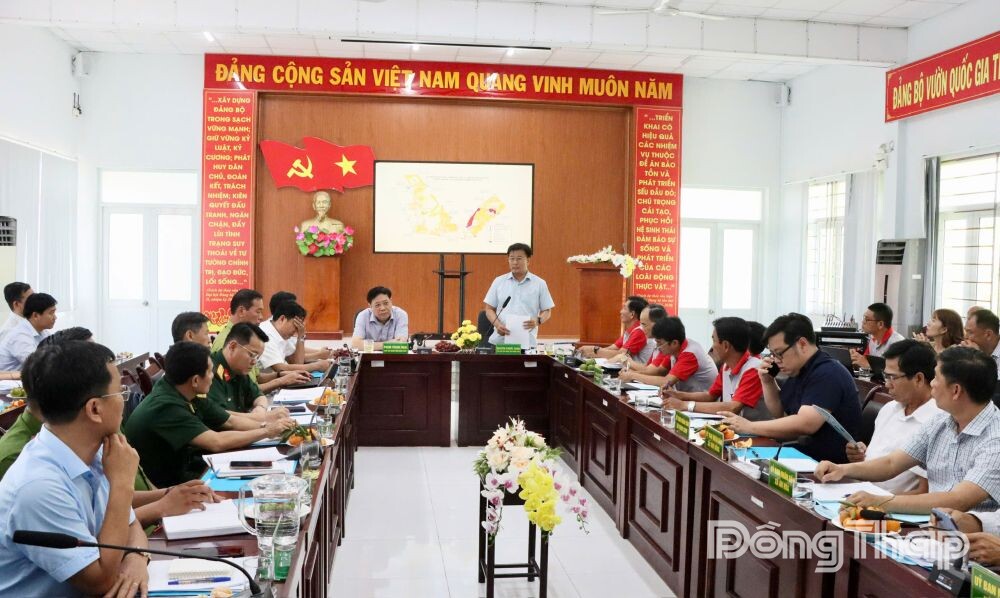
Following the field inspection, the delegation held a working session with the park’s leadership. Reports presented during the session showed that from the beginning of the 2026 dry season, the park has proactively implemented forest fire prevention and control measures; consolidated its Steering Committee; clearly assigned responsibilities; and arranged 24/24-hour duty shifts at stations, watchtowers, and observation posts.
Tram Chim National Park has developed a fire-risk warning map; distributed equipment and vehicles to high-risk areas; opened firebreaks in key zones; and expanded its camera-surveillance system to detect fires early. Coordination with buffer-zone local authorities has been regularly maintained in patrolling, monitoring, and handling violations.
However, forest fire prevention and control still faces many challenges due to the park’s large area, fragmented terrain, boundaries adjacent to residential and agricultural land, thick and flammable vegetation, and continued incidents of unauthorized entry and exploitation by some buffer-zone residents. The park also reported on the progress of the Sarus Crane Conservation and Development Project.
Vice Chairman Nguyen Phuoc Thien noted that the park’s ecosystem is gradually recovering, with many bird species returning. He requested the park to continue evaluating the effectiveness of livelihood models for buffer-zone communities; the agriculture sector to guide solutions for dealing with illegal livestock grazing; and relevant localities to develop regulations for coordinated management and prompt resolution of issues related to the park.
In addition, departments and agencies must work together to develop a tourism development plan that effectively utilizes the park’s potential.
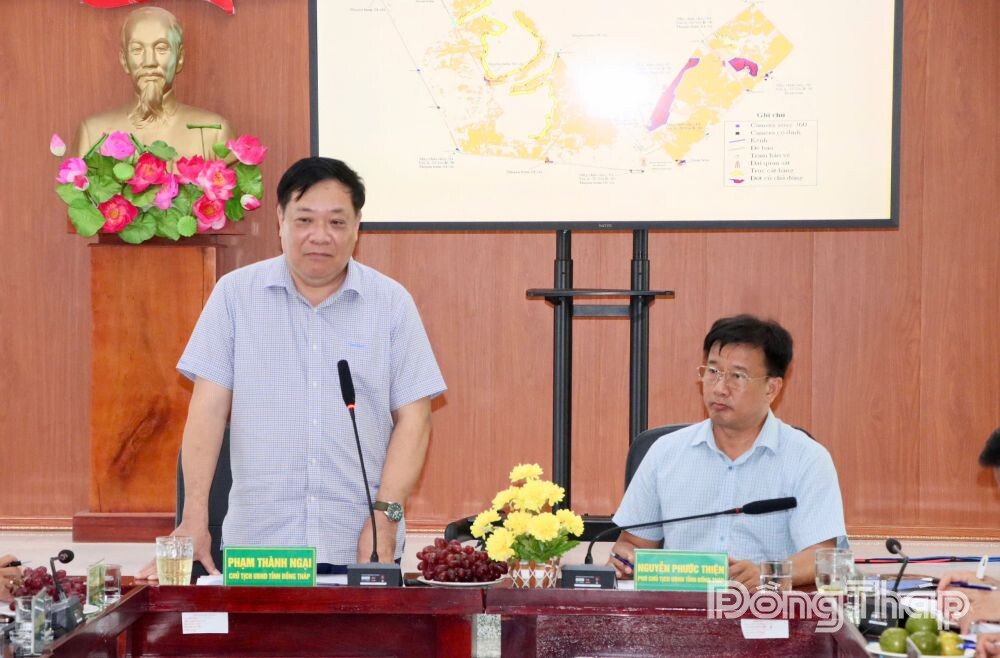
Chairman Pham Thanh Ngai acknowledged and commended the efforts of Tram Chim National Park in conserving and developing this internationally recognized Ramsar site. He emphasized that the ecosystem is gradually recovering, biodiversity is improving, and the return of many rare bird species is a positive sign.
He requested the park to soon complete its tourism development plan; enhance the application of science and technology in fire prevention and control; effectively apply the “four-on-the-spot” principle; strengthen inter-agency and inter-locality coordination; intensify patrols during periods of extreme heat; and focus on raising awareness among buffer-zone communities.
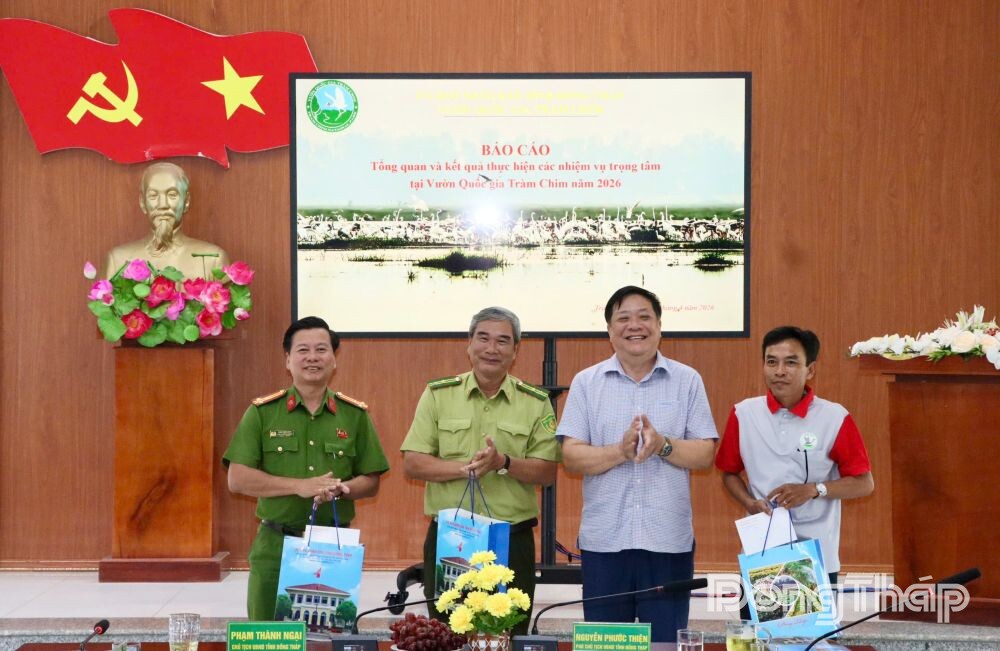
Tram Chim National Park.
In the long term, he stressed the need to continue effectively implementing the Sarus Crane Conservation and Development Project; restore suitable habitats for this rare species; enhance environmental monitoring to support ecosystem conservation; and rationally plan livestock-grazing areas, with strict penalties for illegal grazing within Tram Chim National Park.
By VIET TIEN
Translated by ANH DUC