
Connecting Border, River, and Maritime Spaces
(DTO) The newly formed Dong Thap Province opens up a vast development space, linking the “Southwestern border gateway” with the strengths of riverine orchards, agriculture and fisheries oriented toward the sea, thereby creating strong momentum for economic and tourism breakthroughs.
MOMENTUM FROM BORDER TRADE
Dong Thap has long been a border province with immense potential in the Southwestern region. It shares over 50 km of border with Cambodia’s Prey Veng Province and boasts a network of seven border gates. This includes two international gateways—Thuong Phuoc and Dinh Ba—alongside five secondary gates: So Thuong, Moc Ra, A Don, Binh Phu, and Thong Binh
Dong Thap is one of the provinces in the region with the largest number of border gates, creating favorable conditions for trade, border services and international tourism.
In recent years, the province's border areas have maintained a vibrant flow of goods, particularly in agricultural products, construction materials, and consumer goods.
The import-export turnover between Dong Thap and Prey Veng reached over $1.4 billion during the 2022-2024 period. In the first nine months of 2025 alone, total cross-border trade turnover approached $985 million.
At the Thuong Phuoc International Border Gate, budget revenue in the early months of 2025 exceeded 161 billion VND, clearly reflecting the economic significance of this border trade route.
Dong Thap's developmental space extends beyond trade and commerce into the realms of cultural exchange and tourism. Hong Ngu, situated at the heart of the border line, is emerging as a new border service urban center.
This area is seeing the development of night markets, cross-border culinary and shopping spaces, and riverine tourism routes connecting to Cambodia.
As tourism and trade demands from residents on both sides of the border grow, Dong Thap is well-positioned to affirm its role as a vital international transit hub.
RIVERINE STRENGTHS AND GREEN AGRICULTURE
The formation of the new Dong Thap province, following its merger with Tien Giang, significantly expands the region's identity-rich riverine space. The province now spans the entire Tien River corridor, stretching from the lush orchards of Cai Be and Tan Phong to the heritage lands of Sa Dec, Lai Vung, and Cao Lanh.
This creates a continuous eco-tourism, agricultural, and cultural ecosystem, converging the most iconic landscapes, craft villages, and experiences of the Southwestern region.
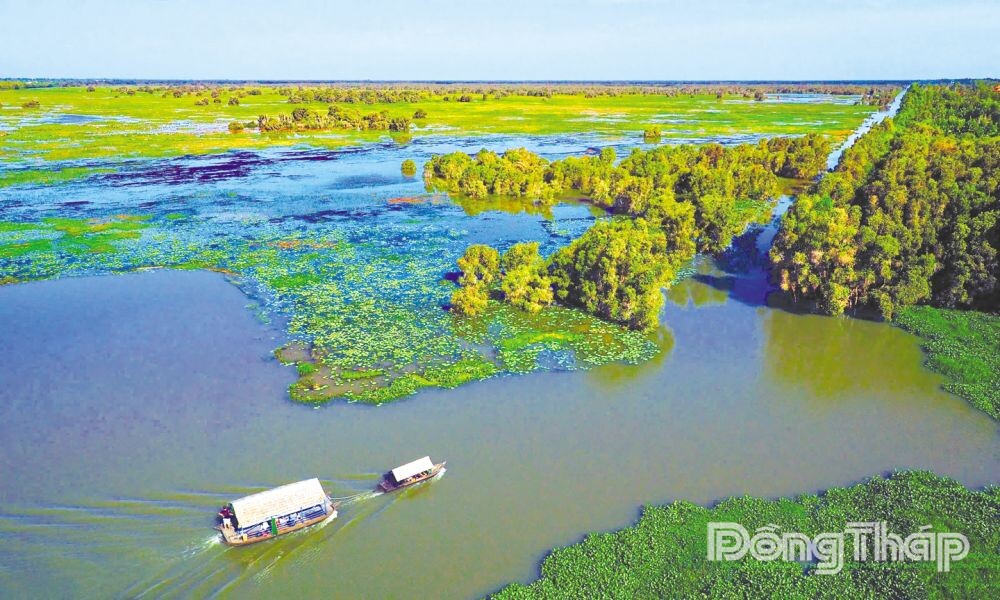
Dong Thap’s abundant ecological resources including: Tram Chim, Xeo Quyt, Gao Giong, Lang Sen,... when combined with the Cai Be Floating Market, Sa Dec Flower Village, and Tien Giang’s specialty fruit regions, offer diverse and compelling travel itineraries.
The vast agricultural production areas of mango, lotus, mandarin, durian, pomelo, and both freshwater and brackish water aquaculture serve as the foundation for green agritourism, community-based tourism, and "farm-to-table" experiences.
The Tien River corridor also provides a vital inland waterway advantage. It is not merely a natural transport route from the border to the sea but also a resource for developing the night-time economy, riverside pedestrian streets, cruise tours, night markets, and signature culinary experiences.
By upgrading river tourism toward a "green, smart, and identity-driven" model, Dong Thap can significantly increase the average length of stay and spending of tourists.
HEADING SEAWARD TO BROADEN HORIZONS
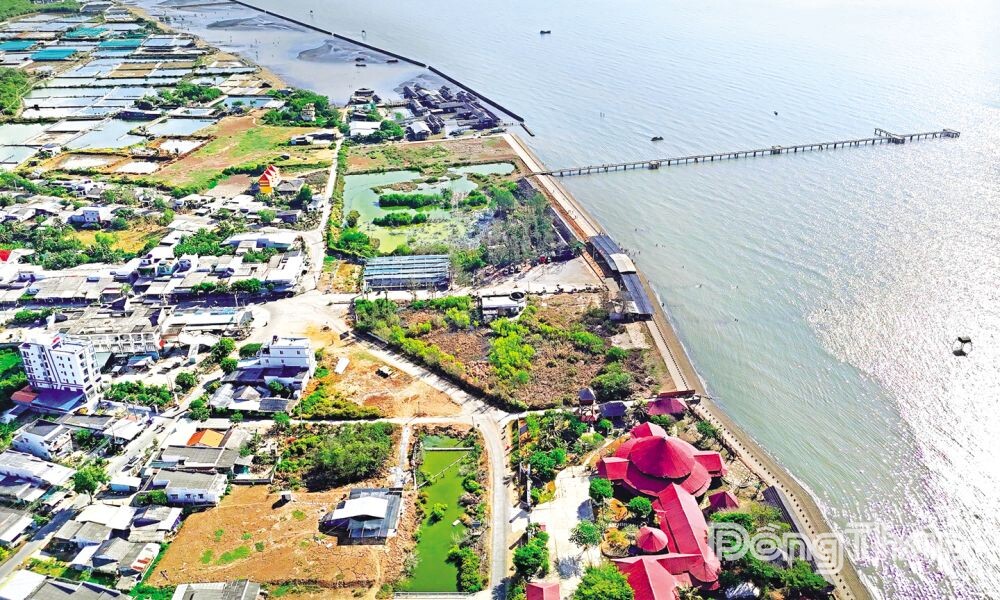
With a 32 km coastline in the Go Cong area, the new Dong Thap province now possesses a true "gateway to the sea."
This strategic geo-economic space includes the Cua Tieu, Cua Dai estuaries, alluvial flats, mangroves, and the Tan Thanh Beach tourism area—assets that an upriver province like the former Dong Thap never previously possessed.
This maritime space opens opportunities for coastal tourism and estuarine development, harmonizing the sea, the Tien River, and the orchard landscapes. From Go Cong Dong, Cho Gao, Cai Lay to Cai Be, Sa Dec, Cao Lanh, and up to Hong Ngu, a unified maritime-riverine-border tourism economy is formed.
This connection creates a unique product chain: from enjoying the beaches of Tan Thanh and Go Cong’s seafood to exploring the orchards of Cai Be and Sa Dec, experiencing the floating season in Tram Chim, and connecting to Cambodia via Hong Ngu and Dinh Ba.
Beyond tourism, the seaward orientation opens avenues for brackish water aquaculture, seafood processing, cold-chain logistics, and estuarine trade. As the system of expressways, seaports, river ports, and border gates becomes synchronously connected, the new Dong Thap can participate more deeply in the maritime value chains of both the Southeast region and the Mekong Delta.
By converging border, river, and maritime spaces, Dong Thap is unveiling a long-term developmental vision. When these spaces are integrated rationally and cohesively, the province will not only expand its markets and bolster economic competitiveness but also emerge as a premier destination in the Mekong region—where the sea, the river, and the border harmonize within a new, high-potential developmental space.
By Dr. Tran Huu Hiếp
Vice Chairman, Mekong Delta Tourism Association
Translated by X.QUANG