
Deep Processing Adding Value to Dong Thap’s Lotus
(DTO) More than a decade after designating lotus as one of the key sectors under its Agricultural Restructuring Plan, Dong Thap has built a relatively complete development ecosystem, with a growing number of businesses, cooperatives, and branded products. However, for lotus to become a truly competitive economic sector, the priority is no longer expanding cultivation areas or increasing output. Instead, the focus must shift toward developing high-quality raw material zones, promoting deep processing, applying science and technology, and building a modern, sustainable lotus-based economy.
FROM AN AGRICULTURAL PRODUCT TO A LOTUS ECONOMY
Few crops in Dong Thap carry both economic value and such deep cultural significance as the lotus.
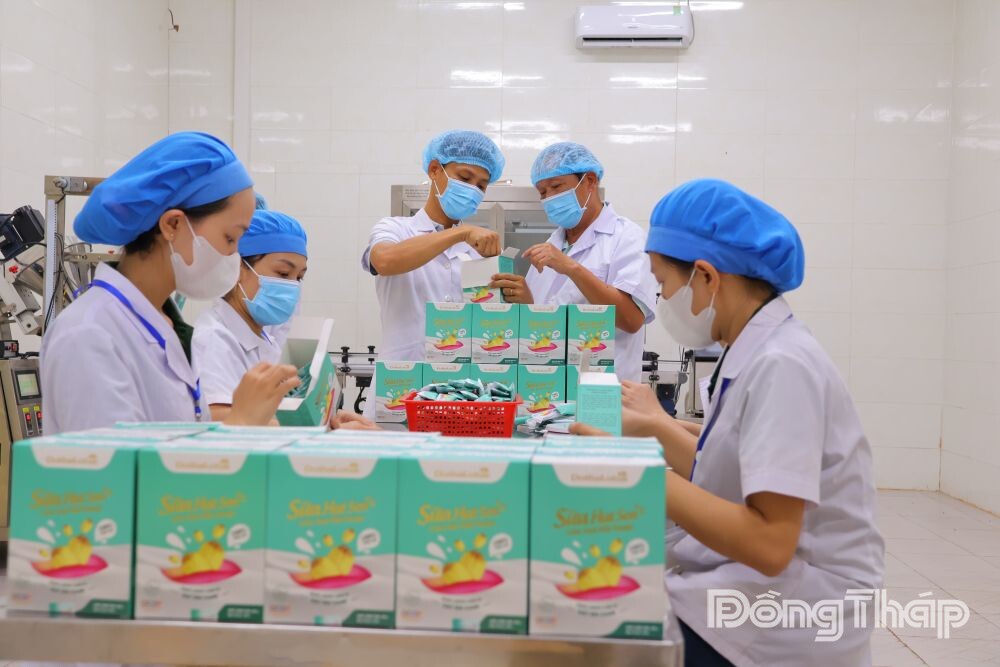
Beyond its role in daily life, the lotus has become the iconic symbol of the Pink Lotus Land and one of the province’s priority sectors for investment under its agricultural restructuring strategy.
After years of development, the lotus industry has attracted an increasing number of businesses from both inside and outside the province to invest in processing, diversify products, and build strong brands.
From traditional products, Dong Thap’s lotus industry now offers more than 100 products for the market. Many have earned OCOP certification, gradually strengthening their position in the domestic market.
Despite these achievements, significant bottlenecks remain.
In the coming years, the agriculture sector will focus on four key priorities: developing high-quality, green raw material zones with traceability and stable market linkages; promoting deep processing linked to circular economy models to create greater value from every lotus plant; integrating lotus with cultural and experiential tourism to generate additional livelihoods for local communities; expanding the industry’s digital presence through traceability data, e-commerce, and technology-driven storytelling to reach both domestic and international markets. Mr. LE CHI THIEN, DEPUTY DIRECTOR OF DONG THAP DEPARTMENT OF AGRICULTURE AND ENVIRONMENT |
According to Mr. Le Chi Thien, Deputy Director of the Dong Thap Department of Agriculture and Environment, the province’s lotus industry has already established a fairly complete value chain and development ecosystem after years of agricultural restructuring.
What is still lacking is stronger integration among raw material producers, processing enterprises, markets, and consumers.
The greatest challenge today is not a shortage of businesses or products, but the establishment of well-organized, high-quality lotus-growing areas capable of providing stable, sufficient raw materials for deep processing.
Mr. Le Chi Thien said the agriculture sector is advising the Provincial People’s Committee to develop managed lotus production zones involving farmers, cooperatives, businesses, and scientists. These areas will follow quality standards, ensure product traceability, and align production closely with the needs of processing enterprises.
This will be the essential foundation for Dong Thap to move beyond developing a single agricultural commodity toward building a comprehensive lotus economic ecosystem.
DEEP PROCESSING – THE KEY TO HIGHER VALUE
If raw material areas are the foundation, deep processing is the driving force behind creating greater value from lotus. According to Assoc. Prof. Dr. Nguyen Minh Chon of the Institute of Biotechnology and Food Technology, Can Tho University, the lotus still has enormous untapped potential thanks to its exceptional nutritional and medicinal properties.
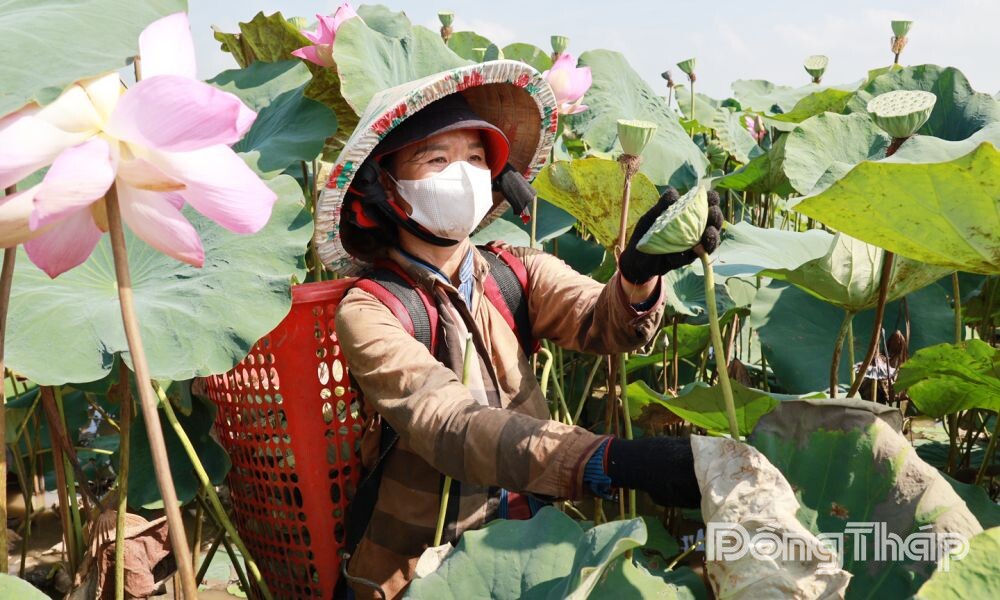
Virtually every part of the lotus plant can serve as raw material for the food, cosmetics, pharmaceutical, and health care industries when supported by appropriate preservation and processing technologies.
Assoc. Prof. Dr. Nguyen Minh Chon noted that modern technologies such as cold drying, freeze-drying, and cold storage not only extend shelf life but also preserve bioactive compounds and nutritional value. These technologies open the door to a wide range of value-added products instead of relying solely on raw-material sales.
This perspective aligns closely with that of lotus-processing businesses. Vo Duc The, a representative of Lotus Healthy Food Co., Ltd., said the company focuses on maximizing the value of every lotus ingredient rather than competing on raw material prices.
From fresh lotus seeds alone, the company has developed a diverse product range, including dried lotus seeds, frozen lotus seeds, canned lotus seeds, and lotus seed powder, supported by four processing lines: drying, freezing, sterilization, and powder production.
According to Lotus Healthy Food, when a single raw material can be transformed into eight to ten different products, economic returns increase significantly while production waste is kept to a minimum.
“The future of Vietnam’s lotus industry lies not in selling raw materials, but in building strong brands for deeply processed products,” the company representative said.
To achieve this, the company must invest in research and development (R&D), marketing, distribution networks, and continuous innovation to create products that meet evolving consumer demand.
At the same time, the company acknowledged that participation in global supply chains requires more than advanced processing technology. Businesses must also meet increasingly stringent requirements for product traceability, legal documentation, food safety standards, and the quality of raw material zones.
While these requirements present challenges, they also offer Dong Thap’s lotus industry an opportunity to move beyond exporting raw materials and toward building nationally recognized brands for value-added lotus products.
SCIENCE AND TECHNOLOGY - THE FOUNDATION OF A SUSTAINABLE LOTUS ECOSYSTEM
For deep processing to reach its full potential, science and technology must extend beyond production techniques to include quality management, product traceability, and brand development.
According to Mr. Phan Trong Tuong, Deputy Director of the Dong Thap Department of Science and Technology, obtaining Geographical Indication status for Dong Thap’s lotus-based products is not only about protecting intellectual property rights but also about laying the foundation for reorganizing production, standardizing quality, building a collective brand, and developing a lotus economic ecosystem.
This marks an important step in shifting the lotus industry from growth driven by production volume to one built on value addition, knowledge, and local identity.
Deputy Director Mr. Phan Trong Tuong said that in the coming years, the province will continue improving its Geographical Indication management system through digitalization by developing an integrated database containing information on cultivation areas, planting area codes, product traceability, production volumes, and quality, while gradually introducing artificial intelligence into management.
At the same time, efforts will focus on expanding VietGAP-certified and organic growing areas, strengthening intellectual property protection, developing OCOP-certified products linked to the Geographical Indication, and integrating production with agricultural tourism, the creative economy, and international trade promotion.
Dong Thap’s lotus industry is clearly entering a new stage of development. While the earlier goal was to build an agricultural sector, the challenge now is to create a lotus economic ecosystem, where farmers, cooperatives, businesses, scientists, and government agencies work together to build a complete value chain.
With well-organized raw material zones, greater investment in processing technology, stronger intellectual property protection, and the widespread adoption of digital technologies, Dong Thap’s lotus will become more than a symbol of the province. It will stand as a symbol of a green, innovative, and sustainable economy.
And when people think of the lotus, they will remember not only a beautiful flower but also Dong Thap, where natural resources are transformed into economic value through knowledge, science, technology, and the ambition to reach further.
By MY LY
Translated by ANH DUC