
Dong Thap: Aligning vocational training with labor market demands
(DTO) The surging demand for skilled labor, fueled by economic restructuring and investment inflows, is mandating an urgent overhaul of vocational education. Aligning training with market needs is now pivotal to driving job creation, boosting productivity, and fostering sustainable socio-economic growth.
ENHANCING TRAINING QUALITY
Over the past few years, the Dong Thap Provincial People's Committee has placed high-quality human resource development at the heart of its agenda.
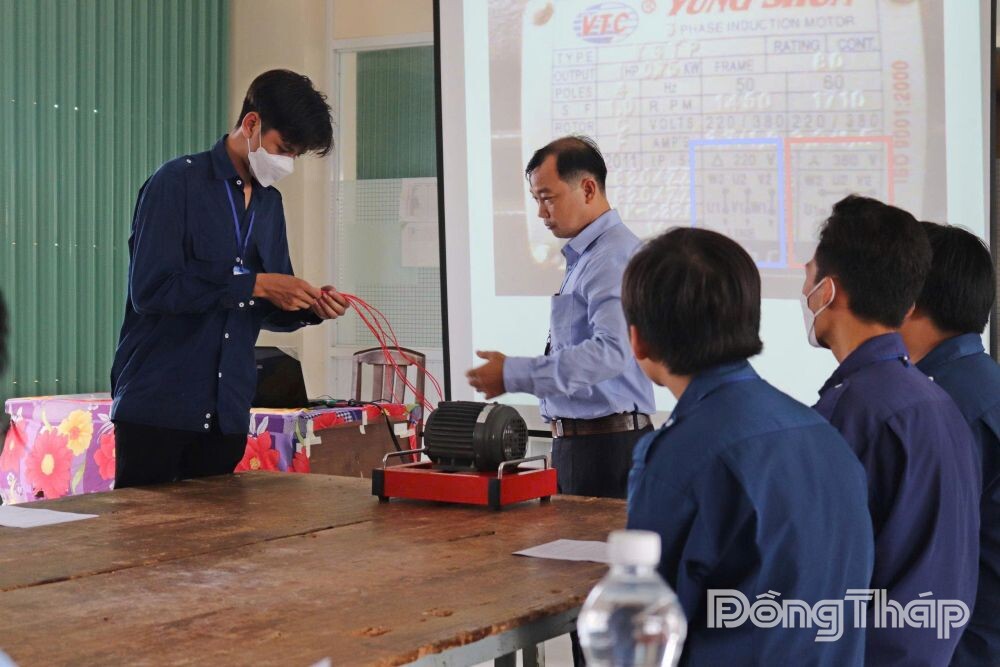
Under the orientation for vocational education development in the 2026–2030 period, the province aims to develop the sector rapidly and sustainably to meet diverse labour market demands, the needs of residents, and increasingly high requirements in terms of workforce quantity, structure and quality. The goal is to enhance labour productivity and national competitiveness in the context of international integration.
Specifically, during 2026–2030, the province will focus on improving the quality and efficiency of vocational training to meet skilled labour demand for the province, the region and the country. Several colleges are expected to approach the standards of advanced countries in the region. The province targets a trained labour rate of at least 82.5 per cent by 2030, including 43.5 per cent holding degrees or certificates, to support socio-economic development.
Alongside the network of vocational education institutions, Tien Giang College has been identified as one of the core institutions in training technical human resources for the province and the region.
The college has continuously renewed its curricula and training methods, gradually improving teaching quality and moving towards training closely aligned with enterprises’ labour needs.
In 2025, the college enrolled students in 13 disciplines with a total quota of 7,310 learners across intermediate, college-level and continuing training programmes.
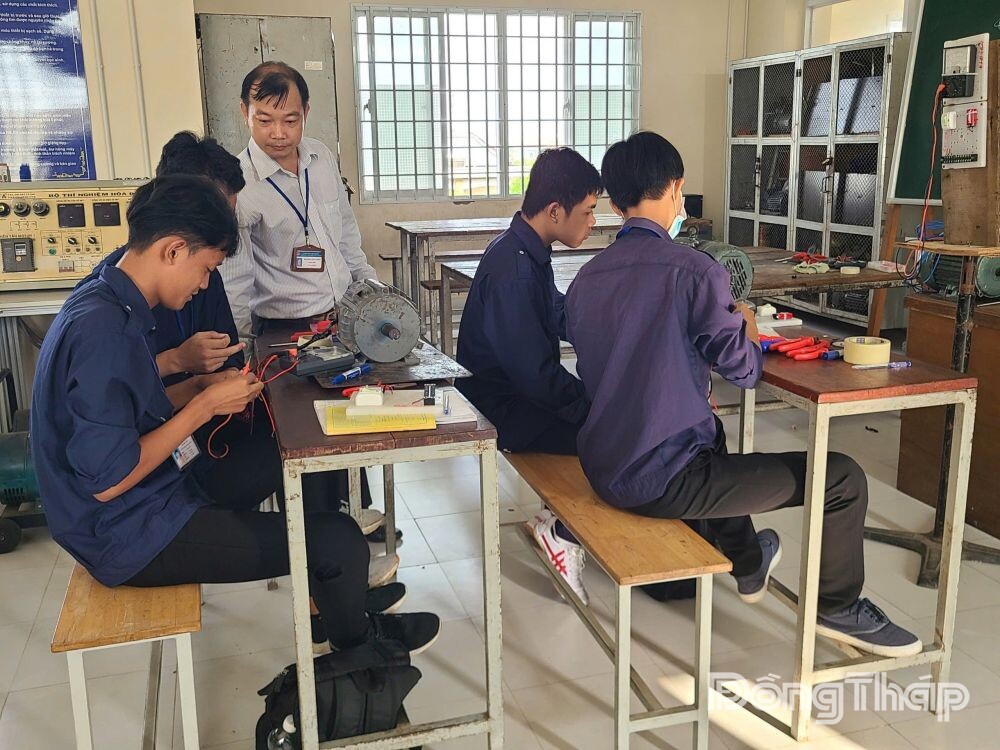
To improve enrolment effectiveness, the college established an admissions advisory board, organised direct outreach activities at lower- and upper-secondary schools, and diversified communication channels, including online consultation.
At the same time, application intake, selection and enrolment processes have been carried out flexibly through both in-person and online formats, facilitating access to vocational education.
The 2025 enrolment results reflected positive improvements in the college’s vocational training efforts. Specifically, the institution received and approved 5,546 applications, including 407 intermediate-level students, 250 college-level students, 219 students upgrading from intermediate to college level, and 4,670 learners in continuing education programmes.
According to the 2026 enrolment plan, the college will offer 24 training programmes at various levels, with a total target of 1,952 learners, including 310 college students, 800 intermediate students, 192 elementary-level trainees and 10,650 learners in short-term courses under three months.
Notably, many training programmes have been designed in close alignment with enterprise demand, including automotive technology, industrial electricity, mechanics, food processing technology, tourism services and healthcare, thereby enhancing graduates’ employment opportunities immediately after completion.
DRIVING LOCAL HUMAN RESOURCE DEVELOPMENT
Mr. Nguyen Quang Khai, Deputy Secretary of the Party Committee and Principal of Tien Giang College, said the institution has identified its core objective as aligning training with labour market demand to ensure graduates can secure stable employment.
“In the coming time, the college will continue expanding cooperation with enterprises, strengthening demand-driven training and improving the quality of its teaching staff,” he noted.
In reality, many graduates have quickly secured jobs relevant to their fields of study. Mr. Tran Duy Binh, owner of Tran Binh Auto Garage and an alumnus of the college’s automotive technology programme, shared: “After graduation, I was introduced to a job by the college and soon achieved a stable income. The knowledge and skills I gained at school helped me feel confident in my work and career development.”
Similarly, Mr. Nguyen Hoang Nguyen, Head of the Technical Department at Thang Thang Phat Co., Ltd. and a former student of the industrial electricity programme, said his time at the college equipped him with a solid foundation of knowledge, skills and confidence to enter the workforce.
“When I first started working, I faced certain difficulties, but thanks to the foundation I had built and support from colleagues, I gradually adapted, better understood my job and improved day by day,” he said, adding that vocational training is only the beginning, while real-world work is the journey to refine oneself.
These outcomes demonstrate that vocational training not only enhances learners’ skills but also contributes to job creation, income improvement and stable livelihoods for workers.
Amid the province’s push to attract investment and develop industry and services, demand for skilled labour continues to rise. Therefore, improving the quality of vocational training is considered a key solution to meeting socio-economic development requirements in the new period.
In line with the direction of the Dong Thap provincial People’s Committee, vocational education institutions are gradually renewing training programmes, increasing the application of information technology in teaching, investing in practical training equipment and improving lecturers’ professional capacity.
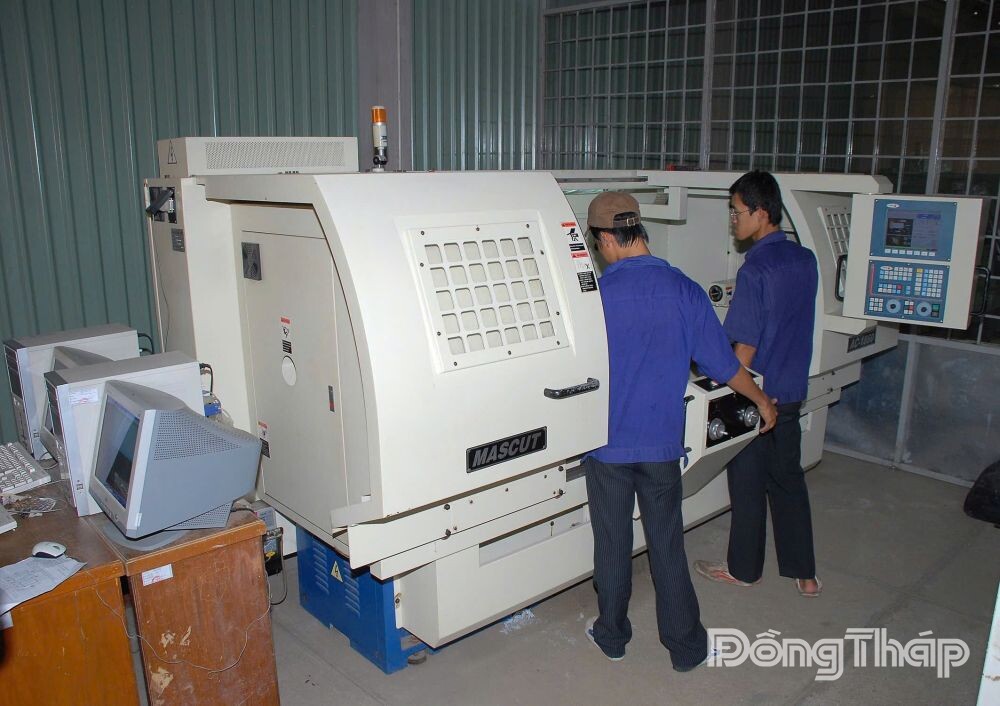
Notably, the college has focused on building a practice-oriented learning environment, enabling students to develop vocational skills, professional working styles and discipline to meet enterprise and labour market demands.
Enhancing the quality of vocational training not only helps supply skilled labour for businesses but also creates job opportunities, raises incomes and improves living standards for workers, laying a solid foundation for the province’s sustainable economic development in the years ahead.
By LY OANH
Translated by X.QUANG