
Dong Thap Chairman Nguyen Thanh Nhan: Regional Linkages Must Shift from ‘Cooperation’ to ‘Joint Execution’
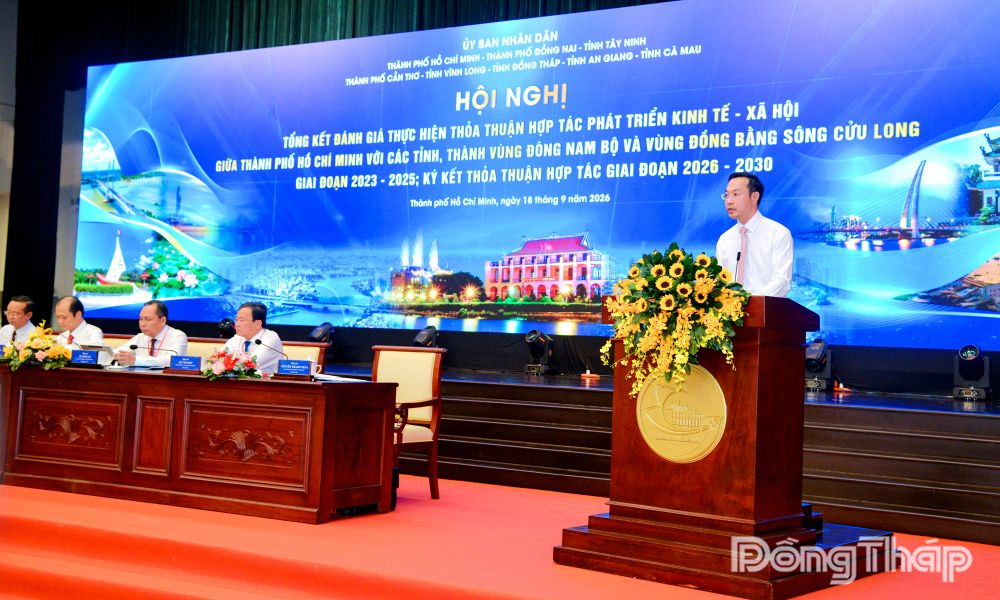
(DTO) On September 18, at a conference reviewing socio-economic development cooperation between Ho Chi Minh City and provinces across the southeastern and Mekong Delta regions during the 2023-2025 period and signing a cooperation agreement for 2026-2030, Mr. Nguyen Thanh Nhan, Deputy Secretary of the Dong Thap Provincial Party Committee and Chairman of the Dong Thap Provincial People’s Committee, emphasized the need to strengthen substantive regional linkages, effectively leverage each locality’s strengths, and jointly create new development space for the entire region.
Drawing on the experience of the past three years, Chairman Nguyen Thanh Nhan said the key issue is no longer whether there should be regional linkages, but how such linkages can deliver substantive results. Localities have implemented numerous cooperation programs, but infrastructure bottlenecks remain; logistics and transportation costs are still high; production, processing, and consumption chains are not yet closely connected; some inter-regional projects have progressed slowly; and resources remain fragmented. These are also shortcomings identified by Dong Thap during the implementation of the previous cooperation program.
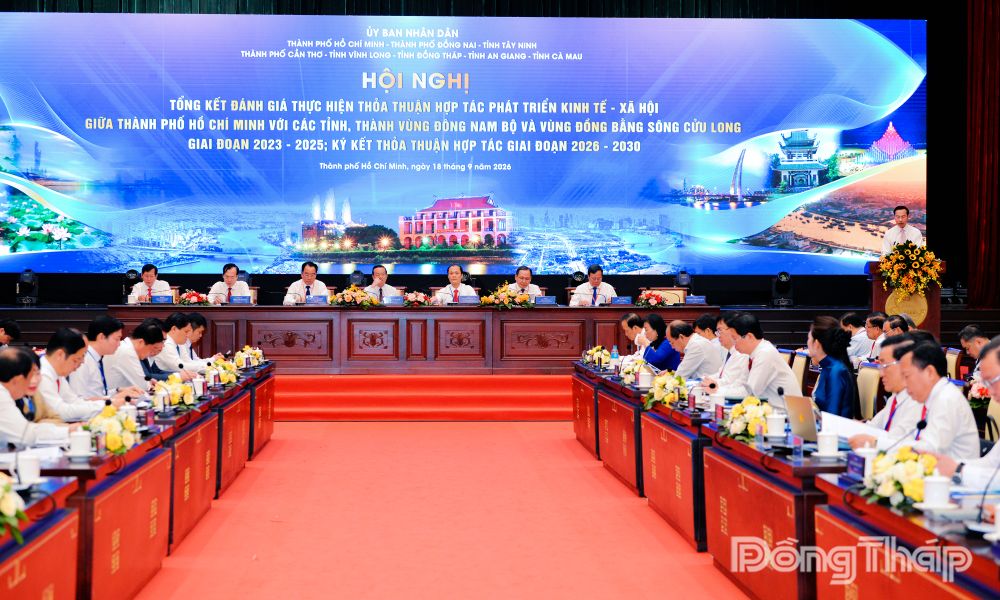
Therefore, Chairman Nguyen Thanh Nhan proposed that during 2026-2030, the region should make a strong shift from “cooperation” to “joint execution”; from administrative linkages to economic linkages; and from numerous separate programs to a number of joint projects, with the ultimate outcomes for businesses, people, and the regional economy serving as the measure of effectiveness.
Chairman Nguyen Thanh Nhan said the top priority should be strengthening infrastructure and logistics connectivity, as these are bottlenecks that need to be addressed first. Dong Thap proposed that Ho Chi Minh City and other localities jointly review and identify several truly important inter-regional transport corridors, ensuring integrated connectivity among roads, waterways, ports, and logistics systems. For Dong Thap, the province needs to capitalize on its identified economic corridors, including the Central Corridor; the Tien River Corridor from the border to the sea; the Dong Thap Muoi Corridor; the Eastern Coastal Corridor; and the Hau River Corridor. The ultimate goal is not simply to build more roads and bridges, but to shorten transportation time, reduce logistics costs, expand investment space, and enable goods from across the region to reach Ho Chi Minh City and international markets more quickly.
At the same time, there should be a common coordination mechanism for construction materials, particularly sand and backfill materials for key projects. Individual provinces should not be left to solve issues of an inter-regional nature on their own. This is also one of the practical obstacles identified in the draft cooperation agreement.
Chairman Nguyen Thanh Nhan proposed building regional economic value chains instead of having each locality develop independently. Ho Chi Minh City has particular strengths in markets, finance, science and technology, services, logistics, and its business ecosystem. The Mekong Delta has major advantages in agriculture, fisheries, raw materials, land, and development space. Meanwhile, the southeastern region has strengths in industry, seaports, and international supply chains.
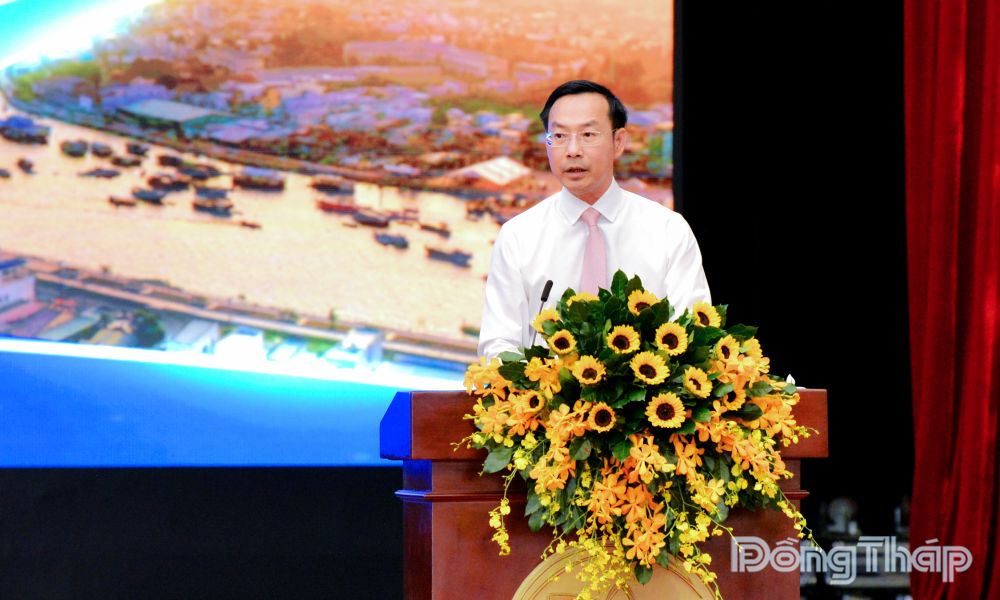
According to Chairman Nguyen Thanh Nhan, effective connectivity among these three economic spaces could establish a linkage chain from raw-material production and deep processing to logistics, Ho Chi Minh City, and the port system, thereby bringing products to domestic and international markets. Dong Thap proposed initially selecting several key commodities to organize inter-regional value chains, particularly rice, seafood, fruits, and processed foods. Linkages should go beyond agricultural consumption to cover the entire value chain, from seed research, production, and quality standards to processing, branding, logistics, distribution, and exports. In this way, more added value could remain with businesses and people in the region.
He also proposed building a regional logistics network, noting that the 2026-2030 cooperation agreement has clearly identified the need to develop logistics nodes linked to raw-material areas, processing industries, urban areas, border gates, and coastal areas. Not every province should invest in a large logistics center. Instead, each stage of the chain should be clearly defined, from production, preliminary processing, and collection to transit, border gates, seaports, and consumer markets. On that basis, the region should develop a shared logistics network connecting production centers with Ho Chi Minh City and export gateways, thereby avoiding overlapping investments and genuinely reducing logistics costs.
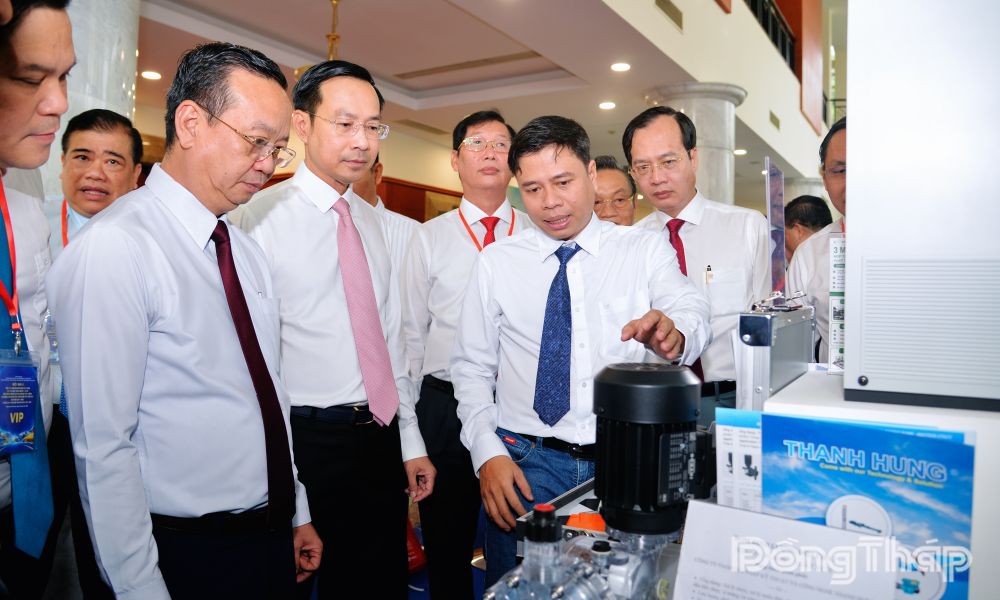
Chairman Nguyen Thanh Nhan stressed the need to step up cooperation in science and technology, digital transformation, and human resource development. These should become new and key areas of cooperation during 2026-2030.
Dong Thap hopes Ho Chi Minh City will support and coordinate with other localities in developing mechanisms enabling businesses, universities, research institutes, and innovation centers in the city to directly participate in addressing the region’s development challenges. Immediate priorities include agricultural processing technology, traceability, digital commerce, smart logistics, water-resource management, and human resource training for emerging industries and services. Thus, regional linkages should not stop at infrastructure connectivity but also expand to linkages in knowledge, technology, and human resources.
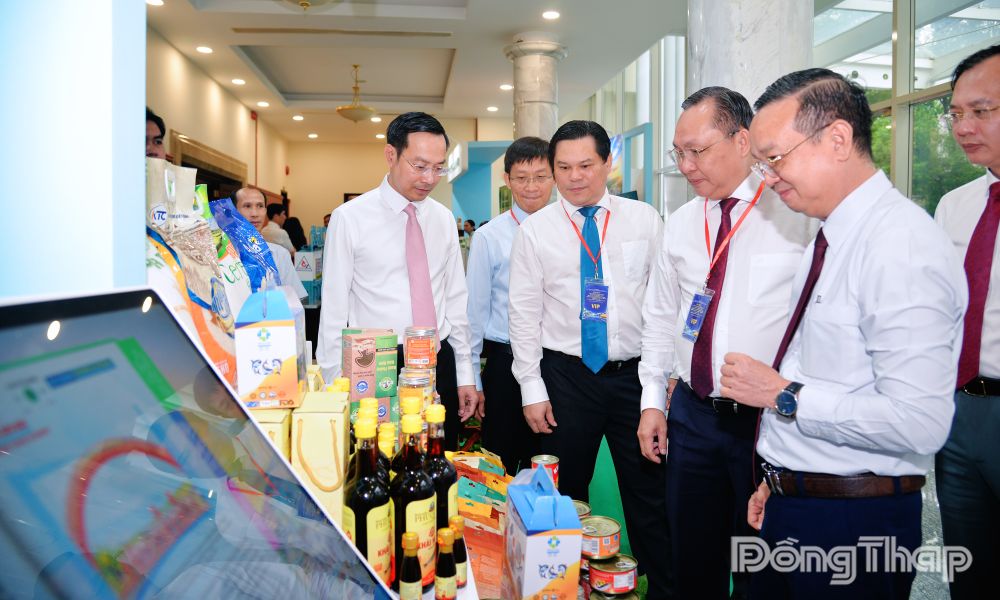
Chairman Nguyen Thanh Nhan raised the issue of renewing mechanisms for organizing and implementing regional linkages, considering this a decisive factor in the effectiveness of cooperation. A cooperation agreement, however good, is unlikely to generate significant changes without specific projects, designated persons in charge, resources, and implementation deadlines. Dong Thap proposed that following the conference, Ho Chi Minh City and other localities agree on a short list of priority inter-regional programs and projects for implementation during 2026-2030. Each project should follow the principles of: clear tasks, clear lead localities, clear coordinating localities, clear resources, clear timelines, and clear final outputs.
He proposed that every six months or annually, the parties should conduct specific assessments of implementation results, including how many kilometers of infrastructure have been connected; how much logistics costs have been reduced; how many projects have been launched; how many businesses have joined the value chains; and how much trade, investment, and income for local people have increased.
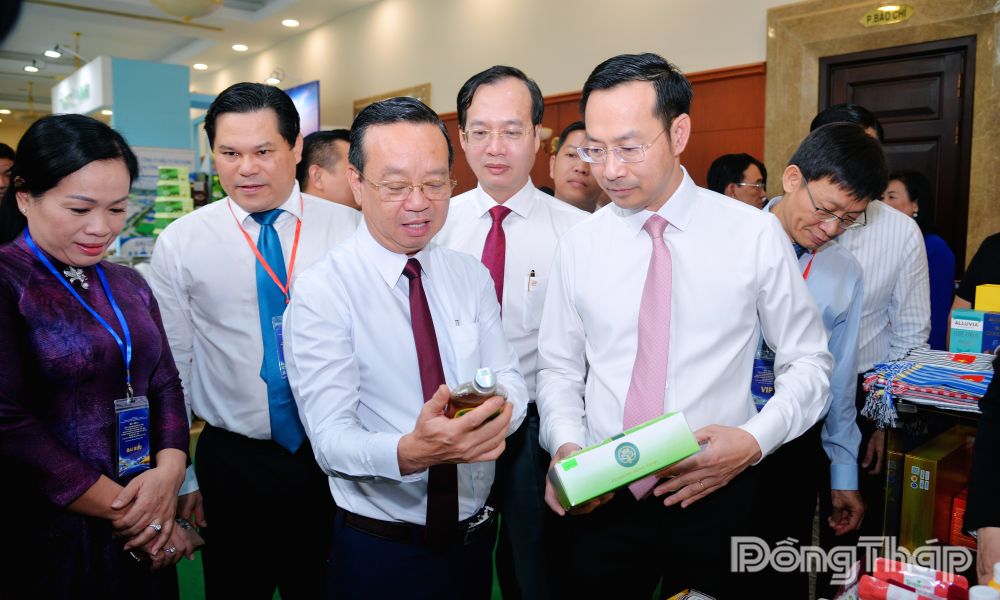
Dong Thap views Ho Chi Minh City not only as a major market but also as a regional hub connecting capital, technology, services, businesses, and international markets. Therefore, Dong Thap hopes to contribute to the common development space through the province’s emerging strengths, including the Dong Thap Muoi region, the Tien River, large-scale agricultural production areas, urban systems, the economic corridor towards the coastal Go Cong area, and border and international border-gate areas. Dong Thap has also identified orientations for industrial and logistics development and economic corridors in its preparations. If these strengths are effectively connected with Ho Chi Minh City, the southeastern region, and the wider Mekong Delta, this will not only expand the development space of individual localities but could also create a broader, more efficient, and highly competitive economic space.
Chairman Nguyen Thanh Nhan proposed the overarching spirit for 2026-2030: “We should not build linkages simply to add more programs; we should build linkages to address bottlenecks, reduce costs, expand markets, and jointly create new value.” Dong Thap is committed to taking a proactive and responsible approach and stands ready to work with Ho Chi Minh City and other localities to implement concrete tasks immediately after the conference, making cooperation substantive and delivering clear results.
By HA NAM
Translated by X.QUANG