
Dong Thap Determined to Create Distinct Breakthroughs in Economic Growth for the Upcoming Period
(DTO) On the afternoon of March 24, the Steering Committee for the Implementation of Economic Growth Targets for the 2026–2030 period in Dong Thap Province (Steering Committee) held its first meeting.
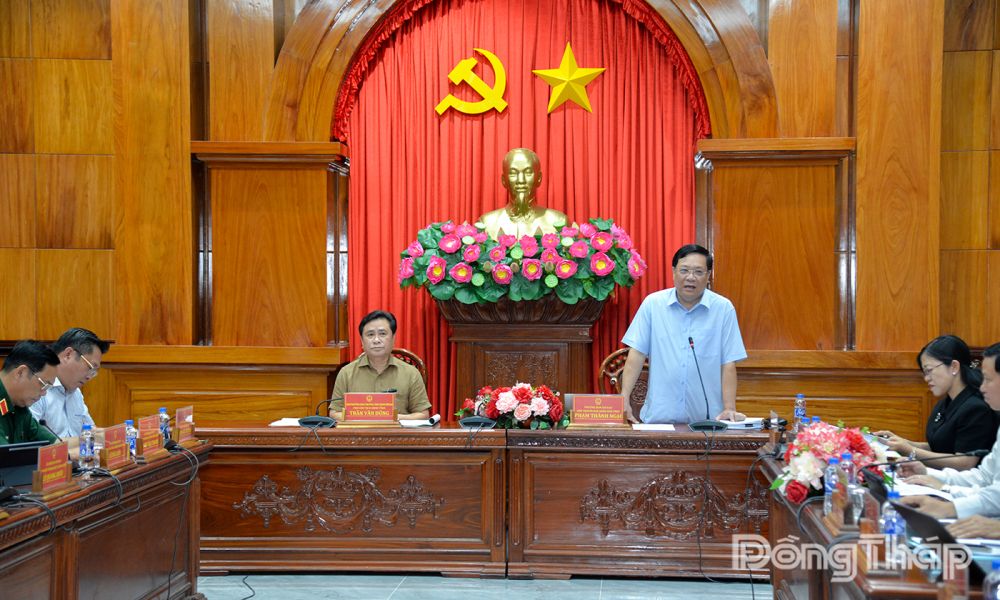
The meeting was co-chaired by Mr. Pham Thanh Ngai, Deputy Secretary of the Provincial Party Committee, Chairman of the Provincial People’s Committee and Head of the Steering Committee, and Mr. Tran Van Dung, Member of the Provincial Party Standing Committee, Vice Chairman of the Provincial People’s Committee and Standing Deputy Head of the Steering Committee. The meeting was connected online to 102 communes and wards across the province.
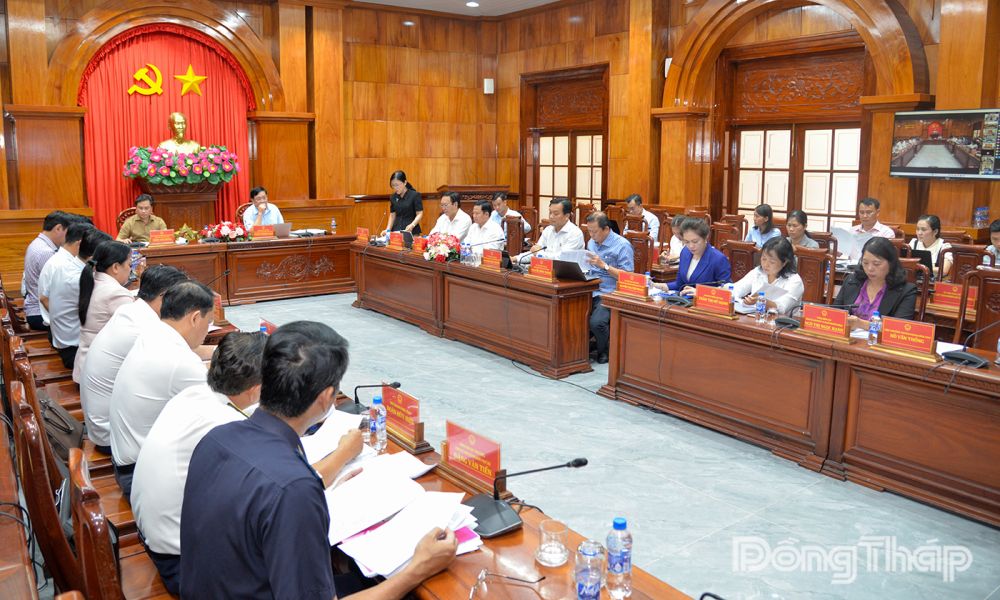
At the meeting, the Department of Finance reported on the specification, deployment, and implementation of Central directives, Party Resolutions, and the Resolution of the 1st Provincial Party Executive Committee on achieving "double-digit" Gross Regional Domestic Product (GRDP) growth by 2030, with an average growth of 9% per year for the 2026–2030 period.
Dong Thap Province strives for an average GRDP growth rate of 9% per year or higher from 2026 to 2030, reaching approximately 10% by 2030. This aligns with the national average growth orientation of 10%, ensuring the targets are both ambitious and suited to the province's actual conditions. Currently, the agricultural sector still accounts for a significant proportion of the economy, while the room for further growth in this field remains limited.
To achieve the growth targets for 2026–2030, the province needs to focus on promoting the industry and construction sector. This area still possesses growth potential but currently holds the smallest share among the three main sectors at 25.5%, compared to agriculture, forestry, and fishery at 34.6%, services at 24.4%, and taxes at 5.5%. For the agriculture, forestry, and fishery sector, where cultivated areas have reached saturation, the goal is to maintain stable growth. Given the high share of the service sector, the province will continue to drive high and stable growth in this area.
The province's GRDP growth scenario is built on a roadmap of gradual increases, aiming to hit double-digit growth by the end of the period.
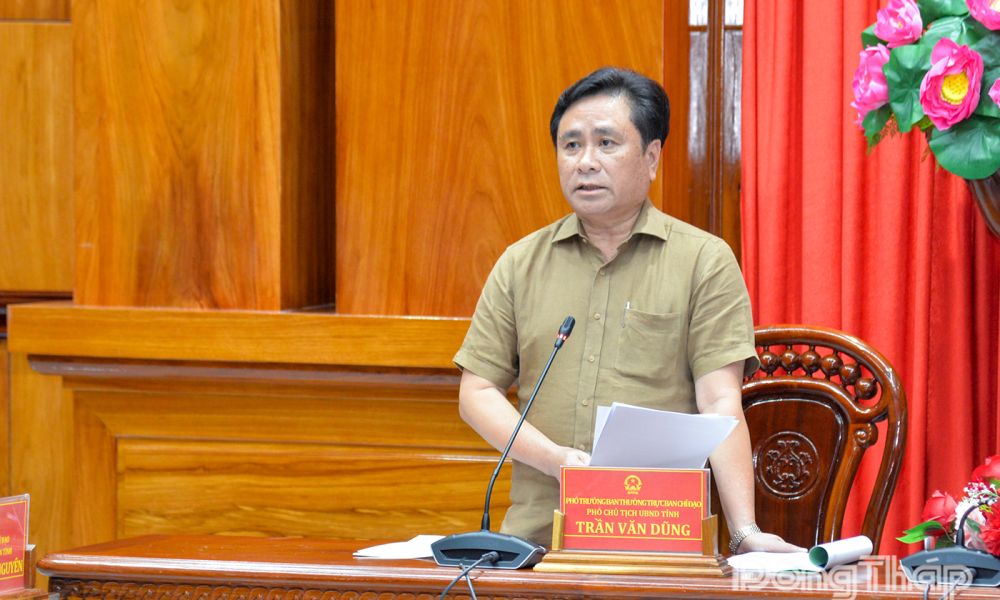
The province has proposed an action program for 2026–2030, with the industry and construction sector projected to grow by an average of 14.8% per year; the service sector by approximately 8.9%; and the agriculture, forestry, and fishery sector by about 3.5%. Product taxes (less product subsidies) are expected to increase by approximately 6.2%. By 2030, the average GRDP per capita is targeted at 150–154 million VND, and total social development investment capital for the 2026–2030 period is expected to average 33% of GRDP...
Speaking at the meeting, Chairman Pham Thanh Ngai emphasized that the current context poses many difficulties and challenges for the province. Recent fluctuations in fuel prices have directly impacted production and business activities.
He expressed concern that the province could become a "low-lying area" in terms of development, even though Dong Thap's economic potential and scale remain in the upper-middle group of the Mekong Delta.
He frankly pointed out that the greatest limitation currently lies in the implementation stage, despite having a relatively complete system of legal documents. Therefore, the establishment of this Steering Committee aims to create a centralized focal point to improve the efficiency of management and the execution of growth targets.
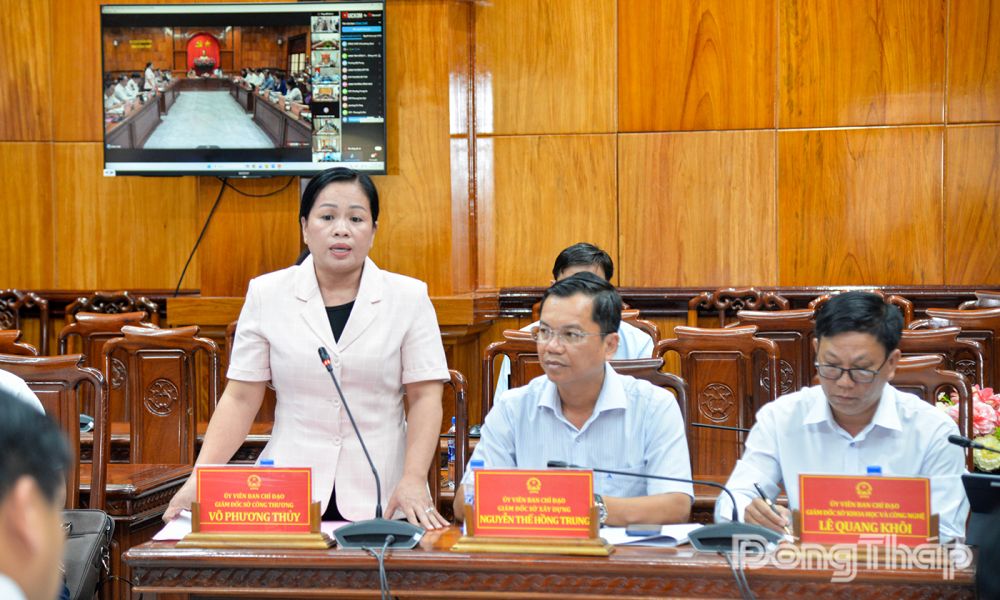
Ms. Vo Phuong Thuy urged the prompt completion of detailed growth plans, including both the five-year plan (2026–2030) and annual plans, to ensure consistency and avoid overlap. She suggested reviewing and developing plans for each sector and region, with the Steering Committee serving as the centralized management focal point and the assisting team operating continuously under clear regulations and assigned personnel to provide timely reminders and urge progress. Tasks should be assigned based on the principle: Clear people - Clear tasks - Clear timelines - Clear responsibilities - Clear products - Clear authority, integrated with a review and accountability assessment mechanism. Furthermore, a competition movement should be launched to achieve growth targets across all fields, tied to specific responsibility commitments between departments and units.
Chairman Pham Thanh Ngai emphasized the key growth pillars that require focus. In agriculture, it is essential to review the entire rice-to-paddy value chain from production and processing to export, while organizing specialized workshops to resolve bottlenecks. For the fisheries sector, emphasis should be placed on improving the quality of breeding stocks, feed, processing, and consumption markets, alongside proactive coordination with major enterprises to expand production scale.
In the industry and construction sector, the focus will be on resolving obstacles in public investment, particularly for large-scale and revenue-generating projects. Detailed plans must be developed to unlock investment projects, utilizing public investment as a catalyst to lead private investment. Simultaneously, energy projects such as wind power and renewable energy must be reviewed to accelerate progress and create growth breakthroughs.
Regarding trade, services, and tourism, tourism is identified as a vital industry that requires selecting spearhead products to avoid superficial development with low efficiency. Additionally, science and technology are considered key drivers; tasks and research topics must be linked to specific products that contribute directly to growth.
Chairman Pham Thanh Ngai stated that the Provincial People's Committee is currently focusing on the simultaneous implementation of new programs and projects while reviewing and resolving long-standing backlogs and obstacles.
He requested departments and agencies to proactively review investment projects facing difficulties—including minor issues—for timely resolution, while ensuring close coordination between all levels and sectors. Cases exceeding local authority must be reported to competent levels for consideration or proposed to the Central Government for resolution.
He emphasized that with high determination, appropriate methods, and the synchronized involvement of the entire political system, Dong Thap is committed to overcoming difficulties, effectively exploiting potential, and creating distinct breakthroughs in economic growth for the upcoming period.
By HA NAM
Translated by X.QUANG