
Dong Thap Drives Growth in Agriculture and Environment Sector
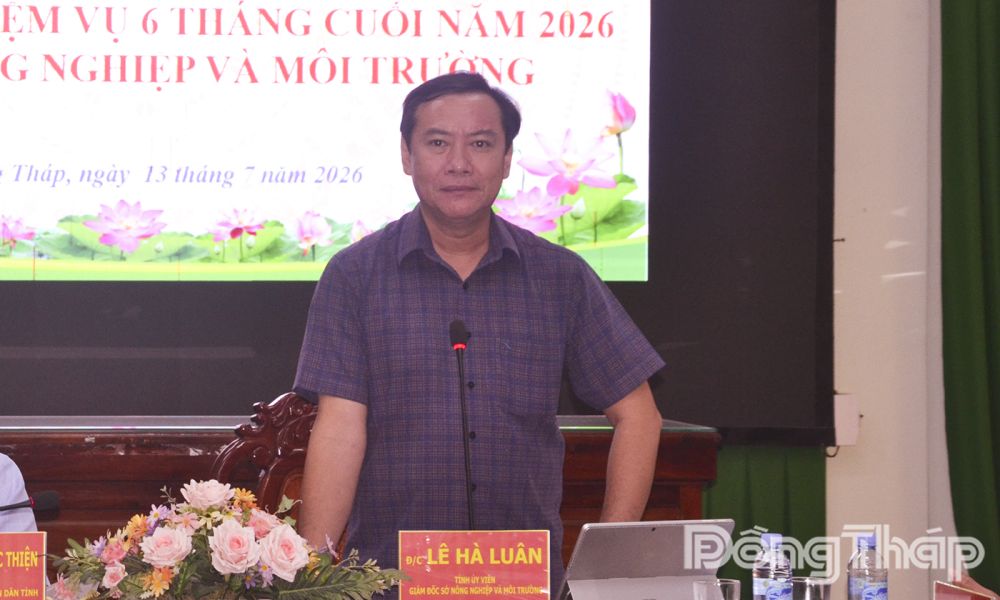
(DTO) – The Dong Thap Provincial Department of Agriculture and Environment on July 13 held a conference to review its first-half performance and map out strategic tasks for the remainder of 2026.
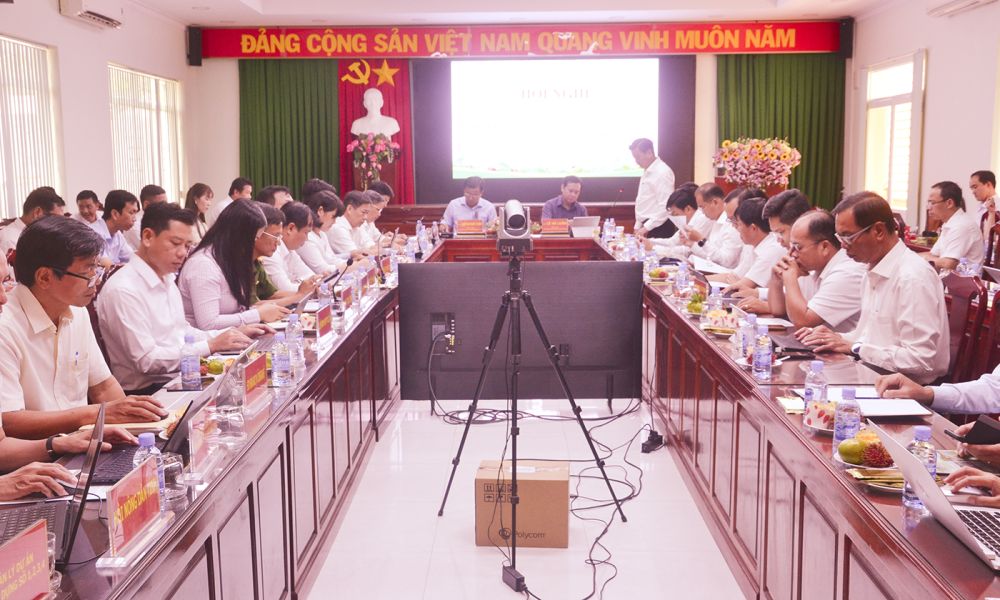
The event was attended by Mr. Nguyen Phuoc Thien, Member of the Provincial Party Committee and Vice Chairman of the Provincial People's Committee.
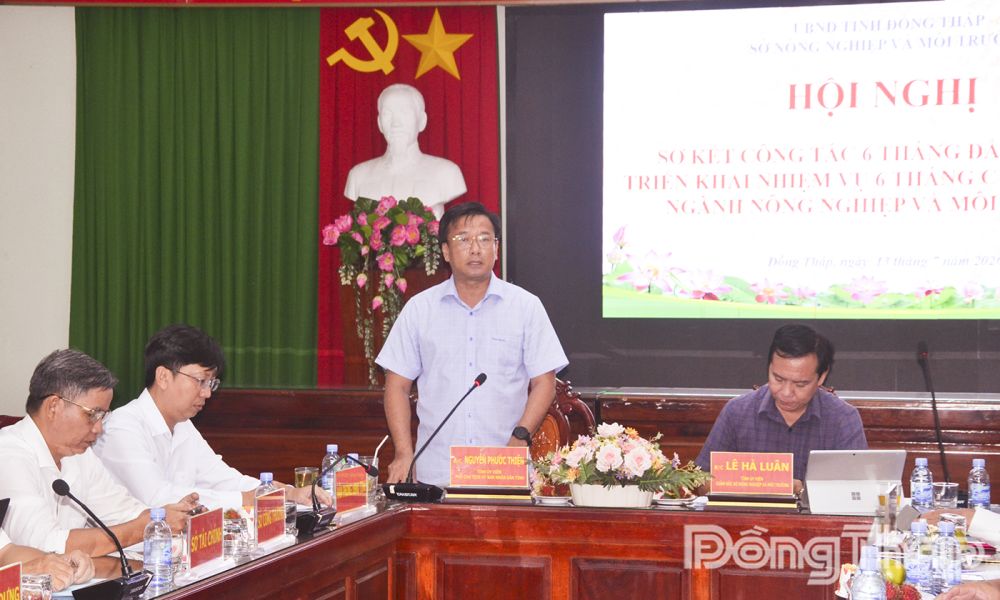
At the conference, departmental leaders reported that the sector had proactively implemented key tasks in strict alignment with the action programs of the Government and the provincial administration.
The agriculture, forestry, and fisheries sector generated an estimated value-added output of VND 38.019 trillion, up 4.15% year-on-year, outpacing the assigned growth scenario.
Dong Thap ranked 16th nationwide and second in the Mekong Delta region in terms of growth velocity in the agriculture, forestry, and fisheries sector.
Agricultural production maintained robust stability, with nearly 480,000 hectares of rice cultivated, yielding an output of more than 2.14 million tonnes. The fruit-growing area reached over 135,000 hectares, surpassing the annual target.
Livestock farming and aquaculture continued to expand, with many production targets met or exceeded. Disease prevention and control for crops and livestock remained highly effective, with localized outbreaks promptly contained to prevent widespread transmission.
Environmental management also recorded positive results as solid waste and hazardous waste were collected and treated in accordance with regulations, while commercial establishments largely complied with environmental standards.
The sector also continued to scale up the issuance of growing area codes, promote production under VietGAP and GlobalGAP standards, effectively implement the One Commune One Product (OCOP) Program, strengthen cooperative economic development, advance new-style rural development, and accelerate digital adoption in management and administration.
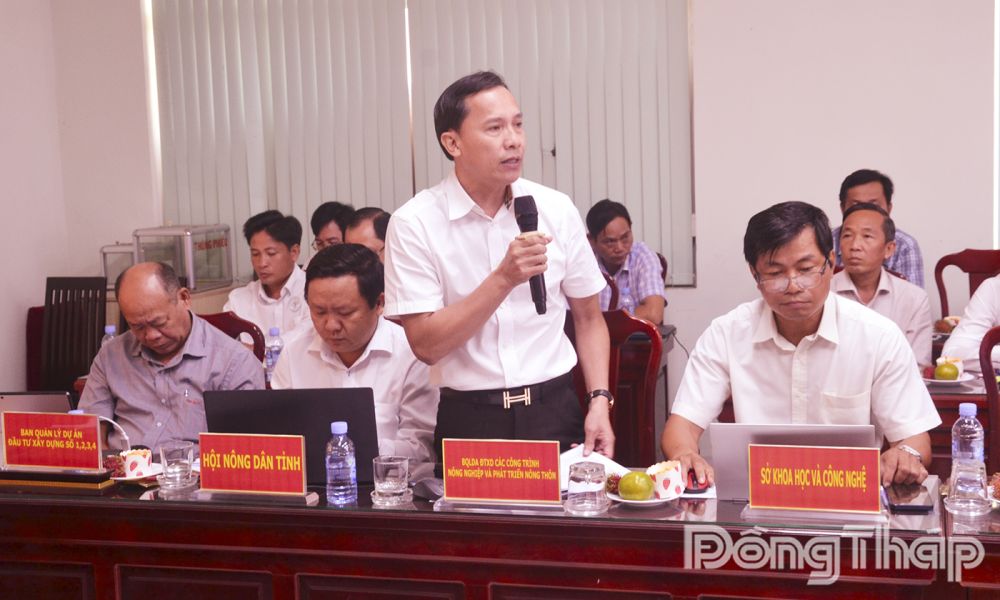
During the sessions, delegates focused on discussing solutions to accelerate sectoral growth in the remaining months of the year, focusing on land, natural resource, and environmental management; agricultural market expansion; disaster and climate change response; digital transformation; and clearing operational bottlenecks.
In his concluding remarks, Vice Chairman Nguyen Phuoc Thien acknowledged and commended the sector's achievements during the first half of 2026, while urging the entire sector to heighten accountability, and act with greater initiative and determination.
He directed the department to promptly implement resolutions, programs, and projects issued by the central and provincial authorities, strengthen public communication, and develop streamlined, operational guidelines to facilitate implementation at the commune and ward levels.
The provincial leader stressed that the cadre team must stay close to the grassroots, proactively grasp local conditions, and promptly resolve bottlenecks facing residents and businesses. Management must move beyond paperwork to rigorous field inspections to bolster state oversight.
He also requested agencies to improve quality, master their areas of responsibility, and process tasks efficiently to avoid chronic backlogs. Issues raised at the conference should be fully compiled, assigned to responsible agencies with clear deadlines, and reported to the Provincial People's Committee.
Regarding agricultural development, the Vice Chairman ordered proactive plans to market agricultural products by crop season and product group based on market forecasts, while strengthening coordination with the Department of Industry and Trade to expand consumption markets.
In response to increasingly unpredictable weather, he instructed the department to develop contingency plans for drought, saltwater intrusion, freshwater shortages, and water pollution, and conduct targeted impact assessments on each production zone to proactively minimize losses.
For environmental management, the provincial leader urged researching master plans and investing in integrated treatment systems for waste, garbage, and agricultural by-products, gradually establishing centralized processing hubs to ensure sustainable development.
The Vice Chairman also called for stronger digital transformation, wider application of science, technology, and innovation in the agriculture and environment sector, completion of sectoral databases, and bridging connections with businesses and researchers to optimize governance and production efficiency.
By H. THONG
Translated by X.QUANG