
Dong Thap: Hoi Gia Banh Tet Village Bustles for the Spring Season
(DTO) In the days leading up to the Lunar New Year, the atmosphere at Hoi Gia sticky rice cake village (My Phong Ward, Dong Thap Province) becomes livelier than usual.
From early morning until late at night, kitchen fires glow red, with smoke mingling with the aromas of freshly harvested glutinous rice, mung beans and fatty pork wafting through the small neighborhood hamlet.
Amid the hustle of peak-season production, each cylindrical banh tet is wrapped not only to meet orders, but also to preserve the flavors of a countryside Tet and to sustain a traditional craft.
STOVES GLOW IN THE CAKE VILLAGE BEFORE TET
For more than half a century, every twelfth lunar month has marked the busiest season at Hoi Gia sticky rice cake village, as households work tirelessly to supply banh tet for Tet celebrations near and far, adding to the vibrant springtime spirit.
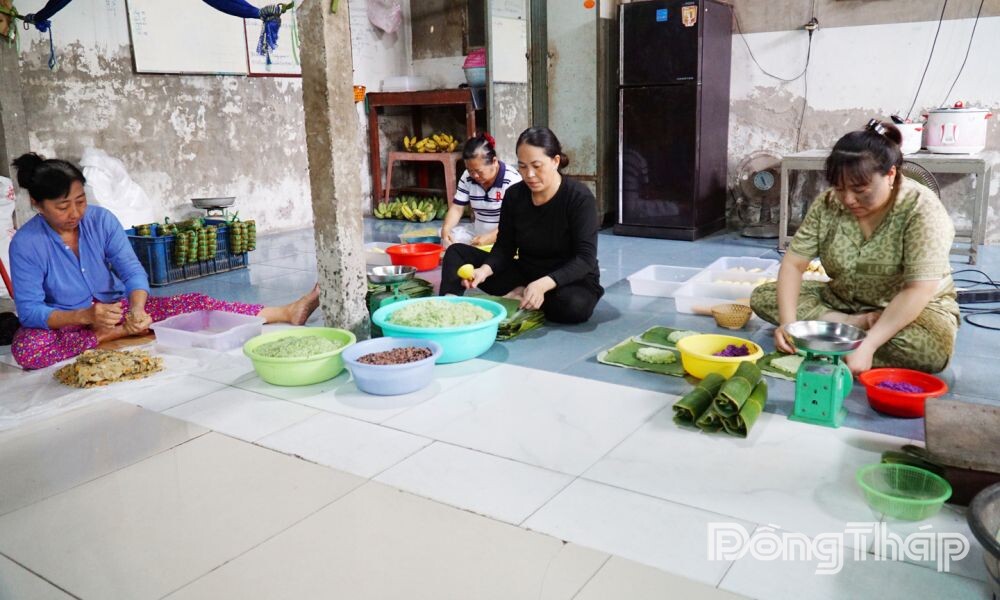
Before dawn, many homes in Hoi Gia are already lit. The sounds of rinsing rice, washing banana leaves and preparing ingredients blend into the daily rhythm, creating a lively scene.
In front yards, banana leaves are wiped clean and stacked neatly; in kitchens, large pots of cakes begin to boil vigorously, steam billowing into the air.
Having been dedicated to the craft for over 30 years, Ms. Duong Thi Lien (Hoi Gia Banh Tet Village) shared that making Banh Tet is most exhausting during the days leading up to Tet. "On normal days, we wrap a few hundred cakes, but just before Tet, we have to increase production four to five times. It is hard work, but seeing the cakes ordered by customers makes me very happy; it feels like an early Tet," Ms. Lien shared.
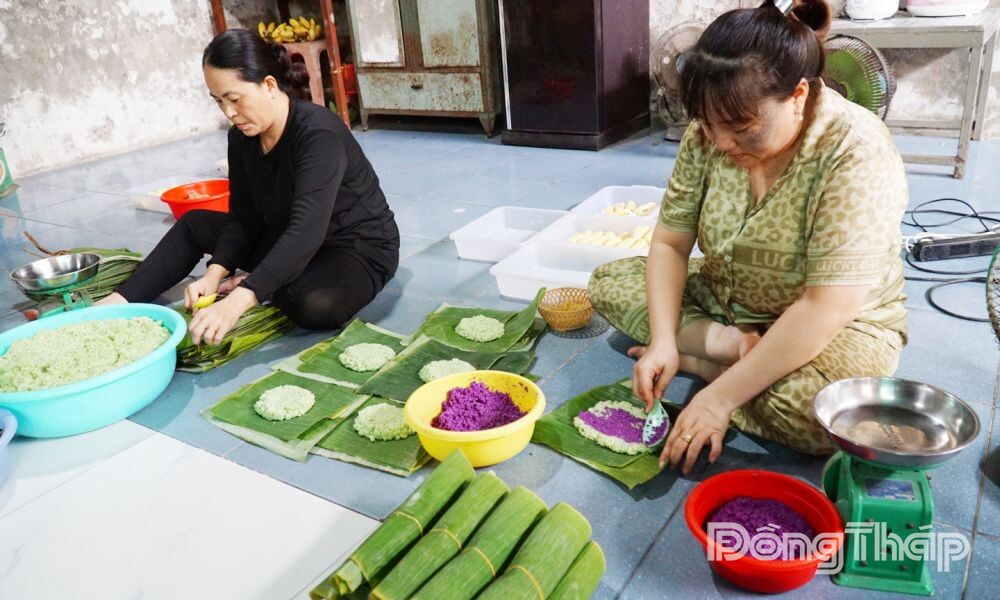
According to local residents, the Hoi Gia Banh Tet craft was formed about 50 years ago, initially only to serve families and neighbors. Gradually, as the cakes were delicious and maintained their traditional taste, more customers sought them out.
From there, the Hoi Gia Banh Tet Craft Village was established. Initially, dozens of households lived off the trade, but due to the strenuous nature of the work, about 10 families remain committed to it today. Every spring, the whole neighborhood enters "peak season," with houses lighting their stoves and making cakes continuously day and night.
The pots of Banh Tet are typically boiled for 8 to 10 hours. The fire must be steady, the water must always cover the cakes, and the person tending the stove hardly leaves for a moment. Shifts are rotated to ensure the cakes are evenly cooked, maintaining their chewiness and distinctive flavor.
The cake-making process happens urgently across different stages: some wrap the cakes, some tie the strings, others add water or firewood, all coordinating harmoniously.
Despite the continuous work, everyone is cheerful, as deep down, they understand that the cakes they are wrapping are bringing Tet to their own families and customers far and wide.
PRESERVING THE FLAVORS OF THE COUNTRYSIDE
What builds the Hoi Gia Banh Tet brand is the traditional flavor preserved through generations. The glutinous rice is carefully selected, uniform, white, and chewy without being mushy when cooked.
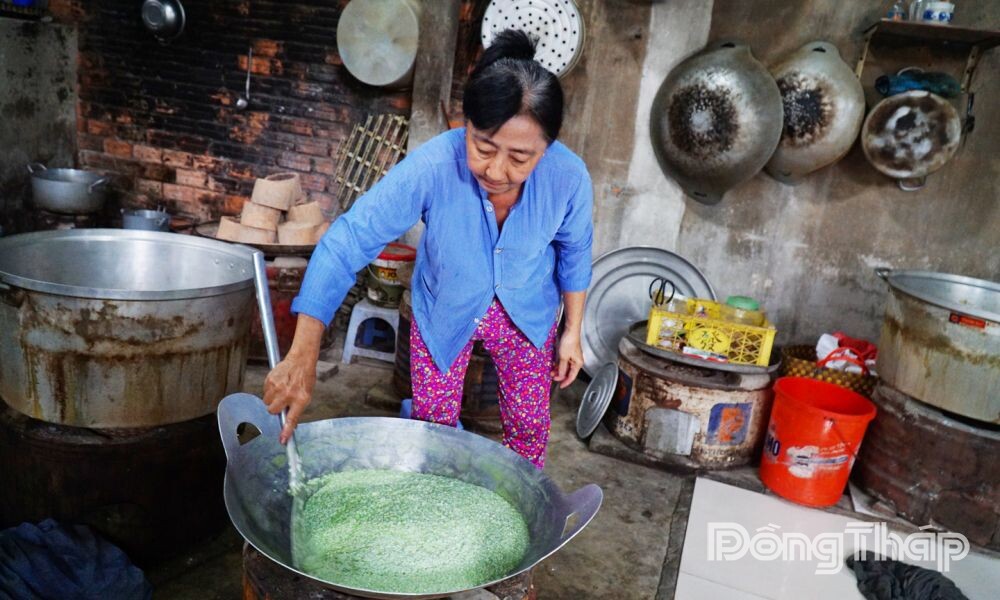
Mung beans are cleaned and mashed; pork belly is chosen and seasoned just right so that when cooked, it retains its richness without being greasy. All are wrapped tightly in layers of green banana leaves, creating firm, round cakes.
Ms. Truong Thi Hong Linh shared: "If Tet cakes are made carelessly, customers will know immediately. Since we are in this for the long term, every step must be meticulous, from selecting ingredients to wrapping and boiling. Only when the cakes are both delicious and beautiful will customers trust us and keep coming back."
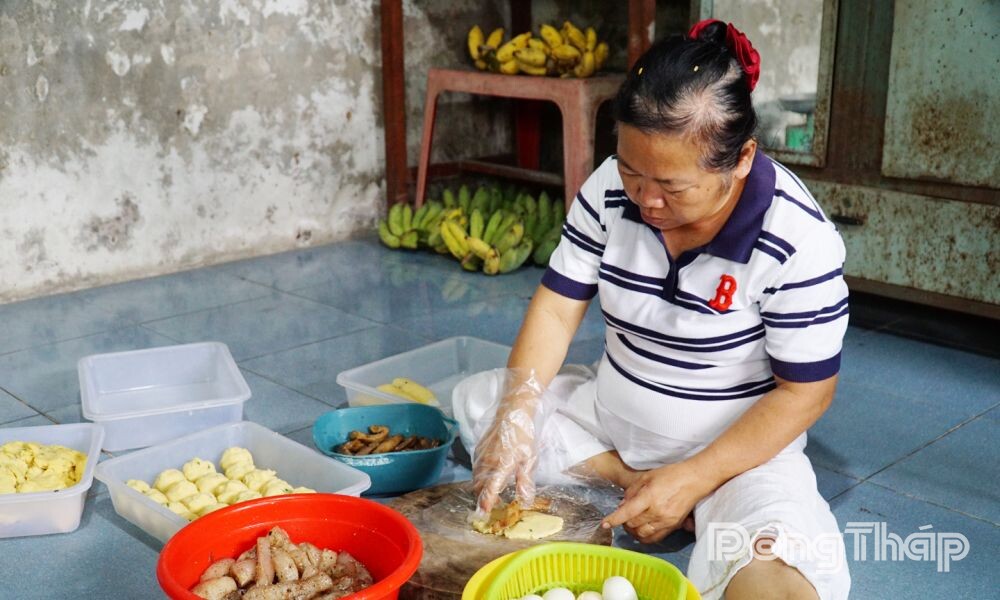
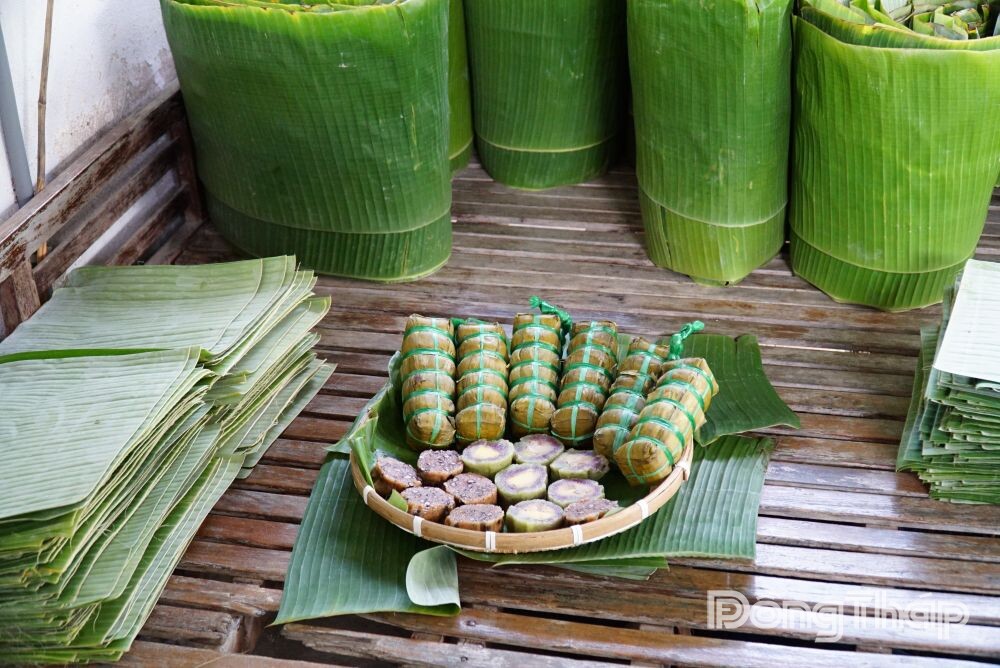
In addition to traditional savory fillings, many households also make banana, black bean, fat, and mung bean with egg fillings to serve diverse consumer needs.
Although new products have been added, the method remains manual, without artificial colors or preservatives. This meticulousness has helped Hoi Gia Banh Tet maintain its prestige with local and out-of-town customers.
These days, the phones of cake-making households ring more frequently with orders from traders and regular customers.
Some households sell several hundred cakes a day, requiring continuous work to deliver on time. This year's prices remain stable, ranging from 25,000 to 100,000 VND per cake depending on type and size, which is affordable for consumers.
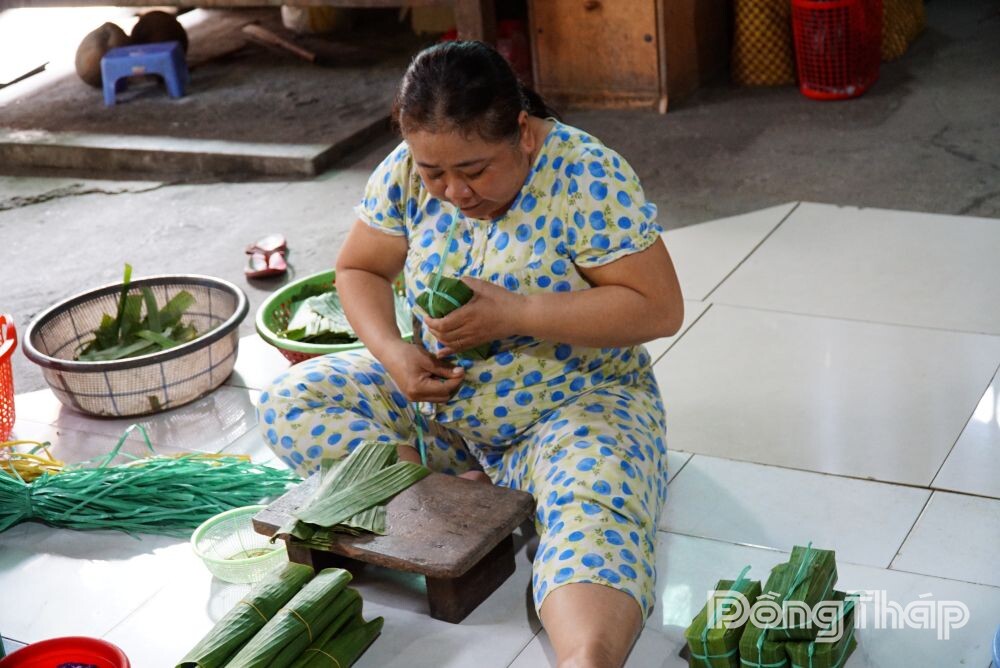
As Tet approaches, the pace intensifies. Beyond family members, idle local laborers also pitch in, creating a warm and bustling atmosphere of shared work.
According to the My Phong Ward People's Committee, Hoi Gia is a traditional craft that contributes to job creation and income for local people, especially during the Lunar New Year.
The ward authorities regularly visit and encourage production households while reminding them to ensure food safety and hygiene.
Mr. Doan Quoc Khuong, Vice Chairman of the My Phong Ward People's Committee, stated: "The Banh Tet craft not only brings income to the people but also contributes to preserving the local culinary culture of Tet.
The ward encourages residents to maintain the profession and improve product quality so that Hoi Gia Banh Tet becomes more widely known.
Additionally, the ward will step-by-step coordinate with relevant sectors to survey and build an experiential model associated with the Hoi Gia Banh Tet production process to attract tourists."
In modern life, many traditional crafts face the risk of fading away. Yet every spring, the image of Hoi Gia village glowing with kitchen fires day and night endures.
Rows of freshly cooked cakes, fragrant with new rice and banana leaves, are neatly arranged awaiting delivery-each carrying the pride of the artisans.
As evening falls and newly boiled cakes are lifted from the pots to drain, their aroma spreads throughout the hamlet. Despite the hard work, smiles abound-because Tet is very close.
Spring returns to Hoi Gia sticky rice cake village. In the crackling of firewood and the scent of freshly cooked cakes, the flavor of a countryside Tet is lovingly wrapped into each traditional banh tet.
By SONG AN
Translated by X.QUANG