
Dong Thap: Mobilizing Resources to Achieve 2026 Growth Target
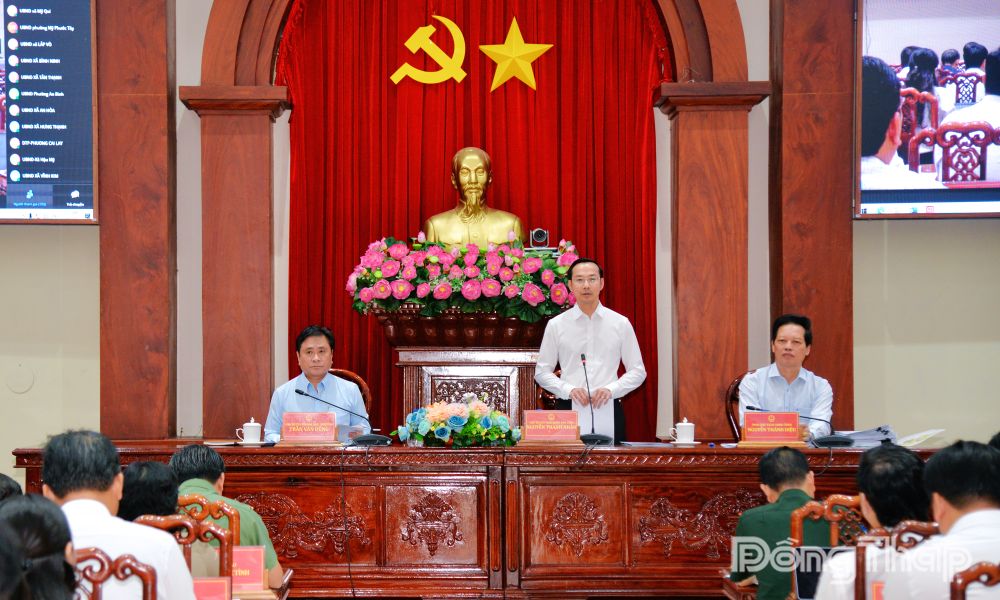
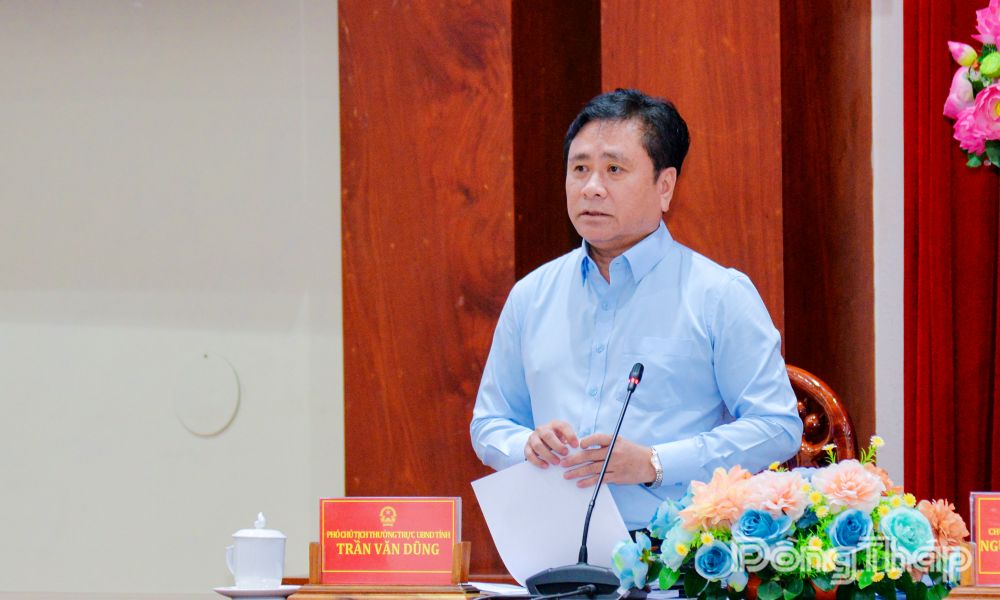
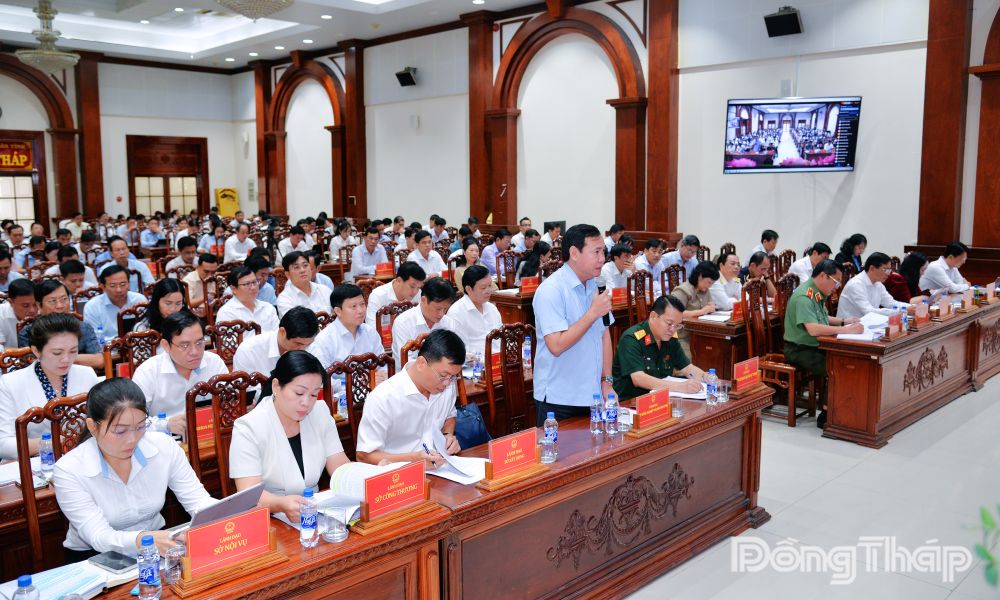
(DTO) On the morning of September 14, Nguyen Thanh Nhan, Deputy Secretary of the Dong Thap Provincial Party Committee and Chairman of the Provincial People’s Committee, together with Vice Chairmen of the Provincial People’s Committee, chaired the committee’s regular August meeting. The meeting was held via videoconference, connecting with 102 commune- and ward-level People’s Committees across the province.
In August, production activities among businesses in Dong Thap remained stable. The industrial production index rose 2.52% from the previous month and 15.13% year on year. In the first eight months of 2026, the index increased 12.58% year on year.
During the month, the province attracted one new investment project at My Tho Industrial Park and adjusted four existing projects, including three projects that increased their investment capital by a combined 1.706 trillion VND. As of August 17, industrial parks across the province had attracted 185 projects, including 103 FDI projects and 82 DDI projects, with total registered investment exceeding 95.057 trillion VND.
State budget revenue continued to post positive results. In August, total state budget revenue in the province was estimated at 1.58 trillion VND. Cumulative revenue through August exceeded 16.849 trillion VND, equivalent to 70.87% of the annual estimate and up 4.14% year on year.
In terms of public investment, as of September 10, the province had disbursed more than 5.97 trillion VND, equivalent to 52.2% of the plan assigned by the Prime Minister and 49.7% of the plan assigned by the Provincial People’s Council. This was higher than the national average disbursement rate.
Business development also continued to show positive progress. In August alone, 207 new businesses were established provincewide, with a total registered capital of 710 billion VND. In the first eight months, 2,239 new businesses were established, up 21.2% year on year and reaching 74.6% of the province’s 2026 business development target. Total registered capital reached 10.612 trillion VND. As of August 19, the province had 14,516 businesses in operation.
In education, the restructuring of the school network has been carried out toward a more streamlined system. Before the restructuring, the province had 1,075 preschool and general education establishments. After the restructuring, the number fell to 375, a reduction of 700 schools, or 65%, compared with July 1, 2025. The construction of six schools in border communes and wards is generally on schedule and meeting the requirements.
Regarding surplus public buildings and land following the restructuring, the province has 646 properties for which the first stage of handling has been completed, with management and further processing assigned to the Land Fund Development Center and commune-level People’s Committees. Of these, 564 properties, or 87.3%, have had handling plans prepared, while the remaining 82 properties, accounting for 12.7%, are continuing with the preparation of second-stage handling plans.
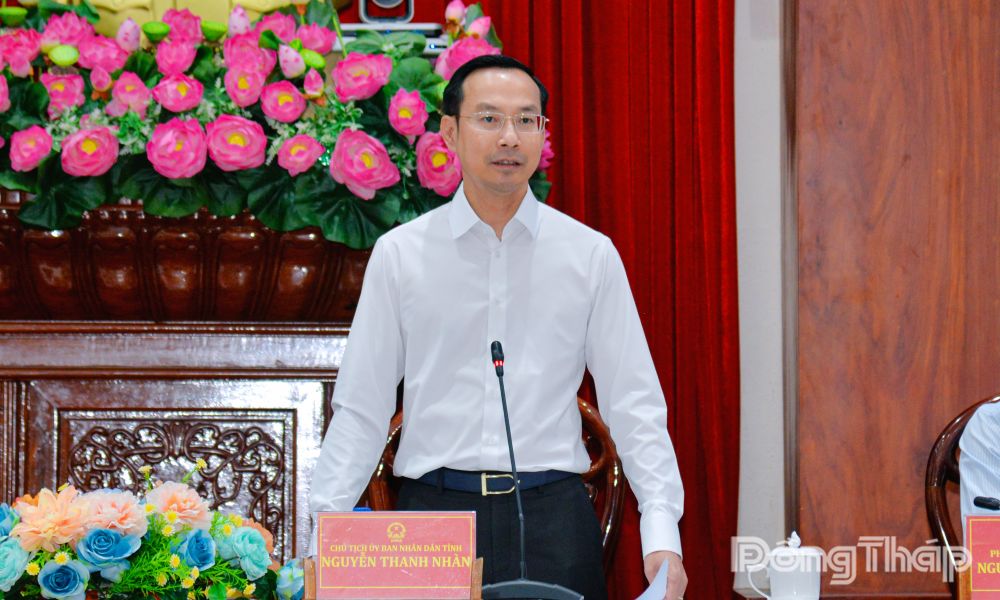
Speaking at the meeting, Chairman Nguyen Thanh Nhan said the province’s socio-economic situation remained positive in the first eight months of the year, with industrial production, trade, exports and budget revenue emerging as key bright spots. However, progress on some projects remains slow, particularly in completing procedures and site clearance, while the ability to turn available resources into production capacity and tangible value remains limited.
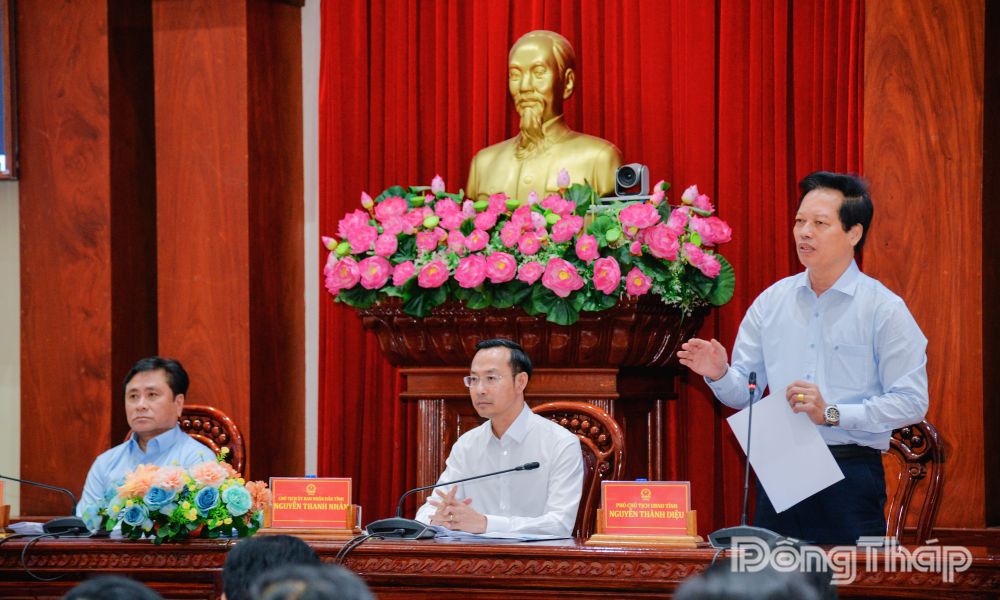
From now until the end of the year, the Chairman of the Provincial People’s Committee asked departments, sectors and localities to focus on five key areas. First, they must make every effort to achieve economic growth of at least 8.21% in 2026. Departments and localities are required to develop specific growth scenarios for the final four months of the year, broken down by sector, field, product and major project. These scenarios must be updated monthly to identify risks of falling short of the target and take timely action.
Second, efforts must focus on resolving bottlenecks and accelerating public investment and projects capable of driving growth. For each project, its likelihood of completion this year must be clearly assessed. Projects facing difficulties but still capable of being completed must receive focused attention, while those no longer feasible must have their funding proactively adjusted or reallocated, avoiding situations where funds remain tied up until the end of the year. Issues beyond local authority must be promptly consolidated and reported for consideration and resolution.
Third, priority should be given to investment projects capable of generating products and value within the year. Departments, sectors and localities must work closely with businesses to review each project, particularly those preparing to put factories into operation or capable of increasing capacity and output. The goal is to bring eligible projects into operation as soon as possible and ensure they make a tangible contribution to growth.
Fourth, the quality of growth must be improved, with a stronger shift from quantitative expansion to value creation. In industry, greater emphasis should be placed on deep processing, higher added value and market expansion. In tourism, the focus should not only be on visitor numbers, but also on increasing visitor spending and length of stay, while making better use of local cultural and historical values, heritage sites and distinctive products. At the same time, stronger links should be developed with Ho Chi Minh City and other provinces and cities in the region to expand the tourism space.
Fifth, infrastructure investment must be accelerated in a coordinated manner, particularly transport infrastructure, to ensure fast, seamless and efficient connectivity and open up new development space. Public investment funding must be carefully planned and focused on projects that improve connectivity, play a leading role, attract investment and drive socio-economic development, while avoiding scattered and inefficient investment.

Chairman Nguyen Thanh Nhan also called for stronger digital transformation, improved governance and administrative reform, particularly as the two-tier local government model is being implemented. Digital transformation must deliver tangible results rather than focus solely on equipment investment. It must be linked to the development, integration and effective use of databases, helping shorten processing times, strengthen the management and administrative capacity of government agencies, and provide better services to residents and businesses.
He stressed that there is little time left until the end of the year. The entire administrative system must ensure clear assignment of personnel, clear tasks, clear timelines, clear responsibilities, clear deliverables and clear authority. Assigned tasks must be regularly monitored and reviewed, with difficulties addressed promptly and agencies held accountable for their results.
The Chairman of the Provincial People’s Committee affirmed that Dong Thap has no shortage of potential, resources or development opportunities. The key issue now is to turn the province’s potential, resources and opportunities into projects, products, jobs and tangible development value. This will help bring about clear progress in the final months of the year, striving to achieve economic growth of at least 8.21% in 2026 and laying a foundation for 2027.
By HA NAM
Translated by ANH DUC