
Dong Thap Preserves Architectural Heritage in Conjunction with Tourism Development
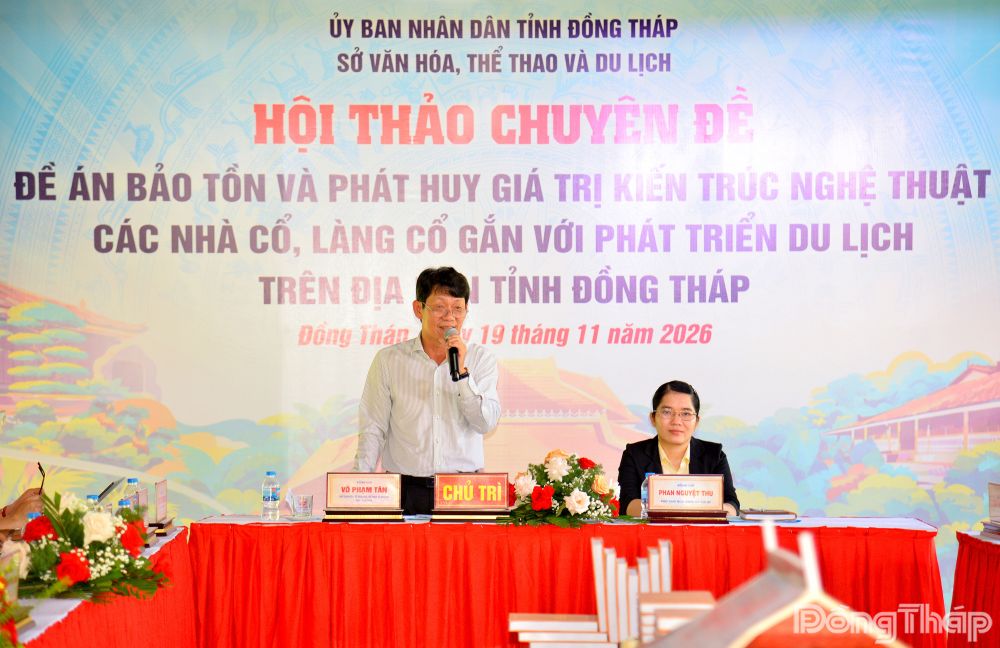
(DTO) On November 19, at Ong Ba Duc Ancient House in Cai Be Commune, Dong Thap Province, the provincial Department of Culture, Sports and Tourism held a thematic seminar on the “Project on Preserving and Promoting the Architectural and Artistic Values of Ancient Houses and Villages in Conjunction with Tourism Development” across the province. The event was part of the 7th Dong Hoa Hiep Ancient Village Cultural and Tourism Festival 2026.
The seminar was attended by representatives of provincial departments and agencies, universities inside and outside the province, the provincial Historical Science Association, Dong Thap Provincial Tourism Association, travel businesses and households owning ancient houses in Dong Hoa Hiep Ancient Village, among others.
A report presented at the seminar showed that Dong Thap currently has more than 42 notable ancient houses, including one ancient village, two ancient houses recognised as national relics and four recognised as provincial-level relics. These structures hold outstanding historical and cultural values, reflect traditional southern Vietnamese architectural artistry and East-West cultural fusion, and are set within distinctive riverine orchard landscapes featuring the arrangement of “house – brick courtyard – fruit orchard – ponds – waterfront landing – canals.”
Notable sites that have effectively developed tourism include Huynh Thuy Le Ancient House, a national relic in Sa Dec Ward; Dong Hoa Hiep Ancient Village, with prominent houses such as Tran Van Binh’s house (also known as Kiet’s house), Ba Duc’s house and Vo Van Vo’s house; and the former residence of Doc Phu Su (Governor) Le Van Mau (now the provincial museum). These sites demonstrate the practical appeal of combining architectural heritage preservation with tourism services, homestay accommodation and cultural experiences.
However, many valuable structures remain underutilised or face serious deterioration, while comprehensive management mechanisms and sufficiently robust heritage-based economic models are still lacking.
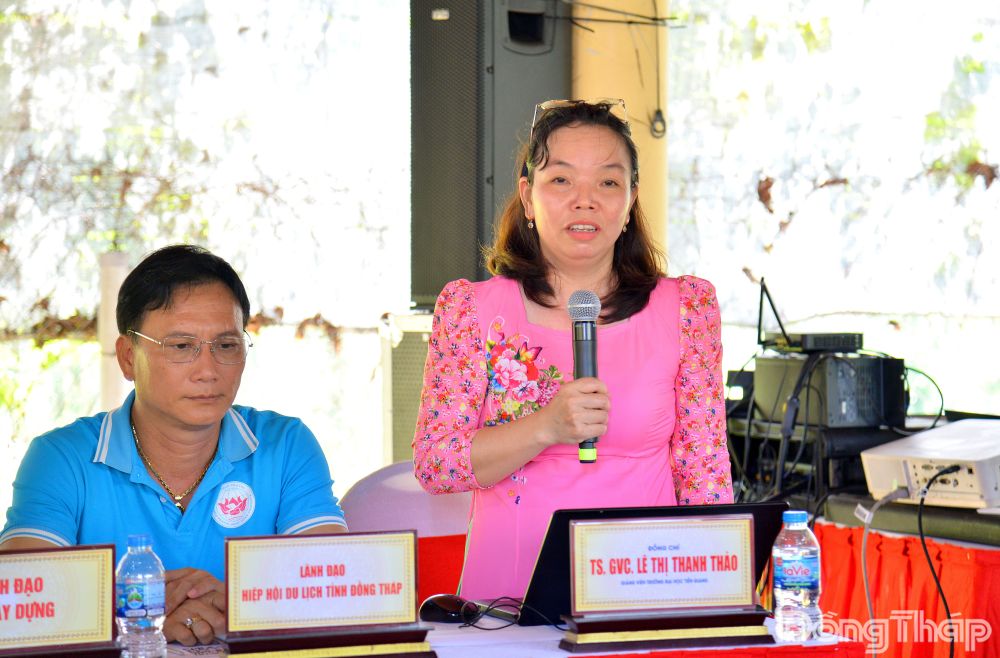
At the seminar, scientists and experts presented papers examining heritage values, preservation planning orientations, the role of communities and stakeholders, sustainable community-based tourism development, as well as mechanisms, policies and resource mobilisation.
During discussions, delegates, businesses and ancient-house owners candidly exchanged views on the current situation and proposed solutions to address difficulties in effectively utilising these heritage sites in the coming period.
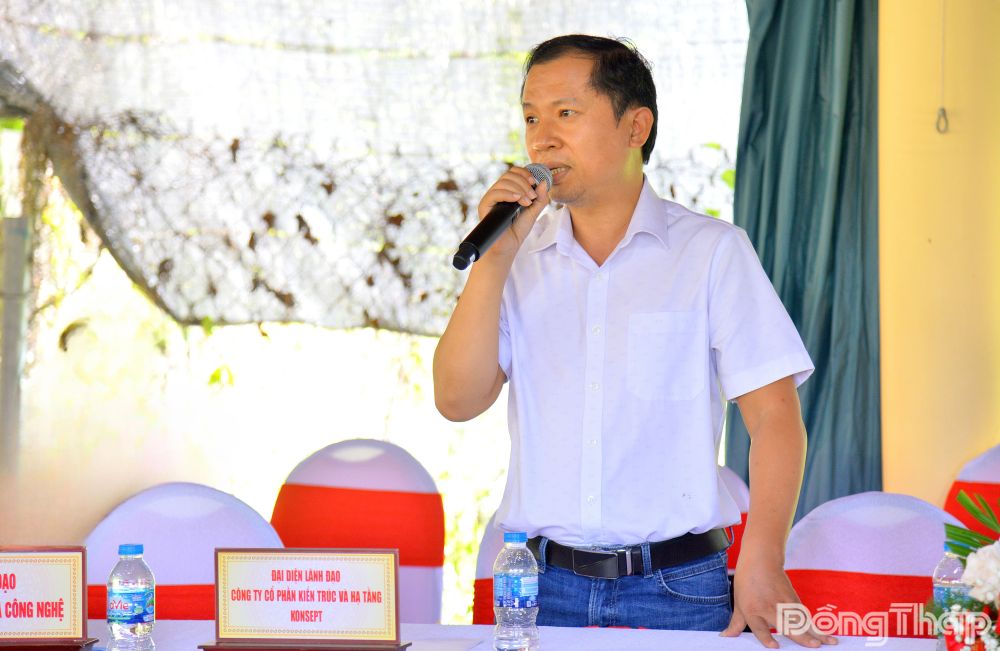
In his concluding remarks, Mr. Vo Pham Tan, Deputy Director of the provincial Department of Culture, Sports and Tourism, said the seminar was held amid Dong Thap’s expansion of its development space following administrative restructuring, alongside the implementation of the 2024 Law on Cultural Heritage and central and provincial policies on digital transformation in the cultural and tourism sectors.
He said the seminar was not only a scientific forum for comprehensively identifying the historical, geo-cultural, architectural and artistic values reflected in East-West cultural fusion, as well as the province’s riverine ecological landscapes, but also an objective review of practical conditions aimed at removing bottlenecks in heritage management, restoration and utilisation.
The organising committee acknowledged the contributions presented in papers and the frank, in-depth discussions and opinions offered by experts, scientists, managers and representatives of local communities at the seminar.
These inputs provide an important basis for the provincial Department of Culture, Sports and Tourism to coordinate with the consulting unit in continuing to study, consolidate and refine the draft project, with the aim of turning Dong Thap’s system of ancient houses and villages into outstanding examples of heritage preservation linked with green growth and sustainable tourism.
By THU HOAI – LE MINH
Translated by X. QUANG