
Dong Thap Proactively Tackles Climate Change, Natural Disasters
(DTO) Despite the increasingly complex nature of natural disasters, prevention and control efforts across the province have been implemented proactively, synchronously, and effectively.
To protect the lives, property, and production activities of the people, Dong Thap is actively deploying numerous solutions to adapt to climate change (CC) and respond to disasters.
THE PRESSURE OF CLIMATE CHANGE
In 2025, natural disasters and climate change impacted various sectors within the province, manifested through extreme weather phenomena, prolonged droughts, and erratic saltwater intrusion.
The most visible impact was on agriculture-the sector holding the largest share of the provincial economic structure. Vast areas of crops faced water shortages and reduced yields. In aquaculture, productivity declined due to shifting weather patterns. Furthermore, riverbank erosion continued to develop in a complex manner.
Throughout 2025, the province recorded 26 heavy rain events accompanied by thunderstorms, whirlwinds, and lightning, resulting in 2 deaths, 23 injuries, and damage to 819 houses. These events also destroyed significant property, fruit trees, and subsidiary crops.
Peak floods, combined with high tides and widespread heavy rains, caused localized flooding in many localities, severely affecting residential life and infrastructure.
It is estimated that rains, floods, and tides caused the total loss of 83 hectares of ornamental plants, 75.38 hectares of subsidiary crops, and 588.59 hectares of rice. Additionally, partial damage (30%–70%) was recorded on over 1,103 hectares of orchards and 34.26 hectares of fish ponds.
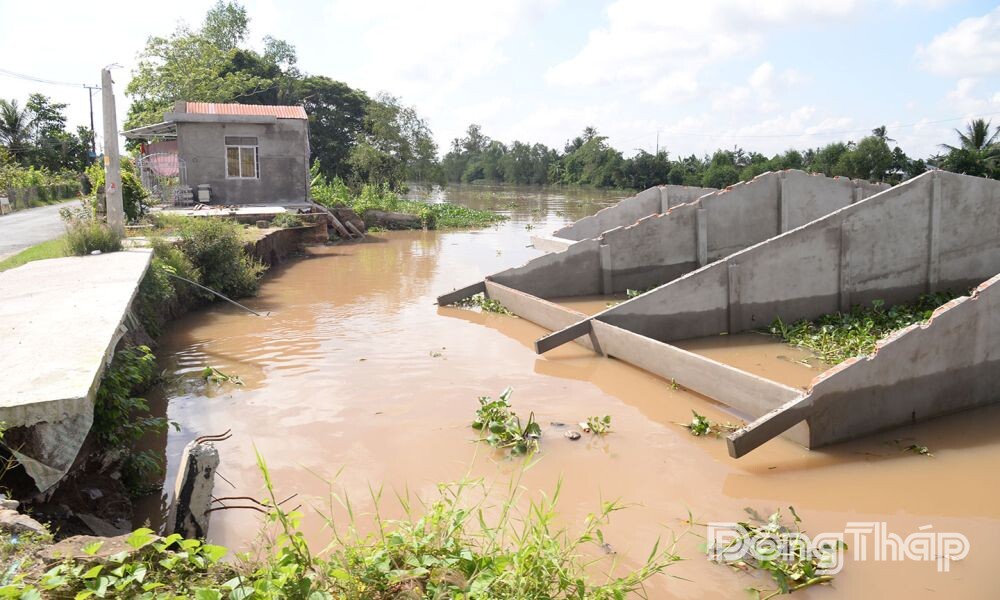
Most critical was the erosion situation. The entire province recorded 258 erosion sites (23 on the Tien River and 235 along small rivers, canals, and interior ditches) with a total length of approximately 46.118 km.
Erosion affected 83 houses (26 completely collapsed), impacting the lives and production of many riverside households. Total estimated damages caused by natural disasters amounted to approximately 543.23 billion VND.
SYNCHRONOUS IMPLEMENTATION OF SOLUTIONS
In the face of escalating climate change and disasters, Dong Thap has proactively implemented solutions following a holistic, synchronized, and long-term approach.
In 2025, Dong Thap Province implemented a synchronous range of solutions to reduce greenhouse gas emissions, spanning from refining policy mechanisms to applying practical production models. In the industrial and commercial sectors, the province intensified training and guidance for businesses on energy efficiency, production optimization, and the adoption of high-performance equipment. Rooftop solar power models have been initially deployed, contributing to emission reductions within the energy industry. In agriculture, local authorities have ramped up the implementation of low-emission production models. To date, the area participating in the "One Million Hectares of High-Quality and Low-Emission Rice" project has reached 75,000 hectares. These farming models have yielded significant results:
In the aquaculture sector, Dong Thap is focusing on sustainable development. The province now has 687.6 hectares of farming areas certified under VietGAP, GlobalGAP, ASC, and BAP standards, with an annual output of approximately 106,700 tons, ensuring economic efficiency is coupled with environmental protection. |
The province has promulgated the Action Plan for Climate Change Adaptation for the 2021–2030 period, with a vision to 2050. Climate change tasks have been integrated into provincial master plans.
Environmental protection and CC adaptation requirements have been carefully incorporated into specific investment projects. Communication efforts to raise awareness have also been organized with practical significance.
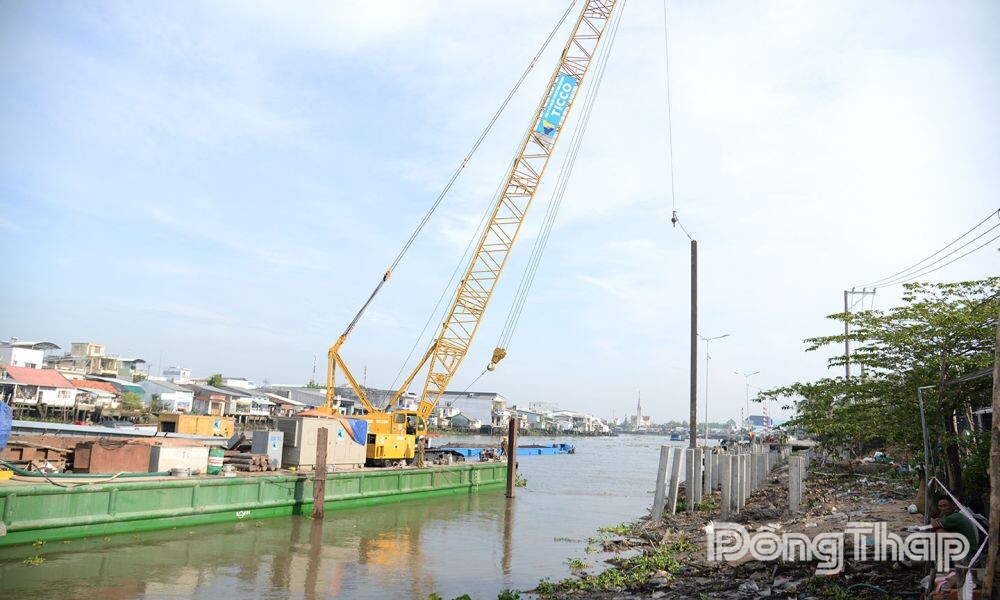
One of the key solutions focuses on the management, investment, construction, and maintenance of disaster prevention structures. Local authorities have implemented three replacement afforestation projects for protection and environmental shielding to mitigate the impacts of storms and tropical depressions. Additionally, investment has been channeled into 54 riverbank and coastal erosion control projects, alongside initiatives to relocate and stabilize residents in disaster-prone areas, erosion hotspots, and free-migration areas.
Specifically launched 2 projects against drought and saltwater intrusion, including the construction of saltwater prevention sluices at canal heads leading to the Tien River on Provincial Road 864 (Phase 1) and the Cho Canal sluice (Binh Ninh Commune).
These structures have proven effective in preventing saltwater intrusion, retaining freshwater, and regulating water resources, ensuring supply for both daily life and agricultural production, particularly during the drought and salinity season. Beyond structural measures, the province has focused on constructing, repairing, and upgrading irrigation systems, alongside dredging and improving works on rivers, canals, and streams.
Regarding response efforts, despite the increasingly complex nature of natural disasters, prevention and control across the province have been implemented proactively, synchronously, and effectively. Civil Defense Steering Committees at all levels have been consolidated to enhance the efficiency of leadership and administration.
Disaster forecasting and warning efforts are becoming more timely and practical, enabling authorities and residents to take proactive preventive measures. The "Four On-the-Spot" (bốn tại chỗ) motto continues to be executed effectively. Personnel, equipment, and materials are always kept in a state of readiness, contributing to the mitigation of potential damages.
Prevention has been strengthened through the review and updating of response plans according to risk levels, while disaster prevention content has been integrated into socio-economic development programs. Post-disaster recovery and reconstruction are carried out promptly and directed at the right subjects, helping residents stabilize their lives quickly.
PROACTIVE AND FLEXIBLE ADAPTATION
Forecasts for 2026 suggest that natural disasters in the province will continue to evolve in a complex manner under the influence of climate change and erratic natural factors. Facing these challenges, the locality has determined a spirit of proactive and flexible response, deploying synchronous solutions to minimize damage and ensure stable lives for the people.
According to the Provincial People's Committee, the central and consistent task is to mobilize the combined strength of the entire political system and the community, effectively promoting the "Four On-the-Spot" motto alongside "Three Readinesses" (ba sẵn sàng). The goal is not only to respond timely to disaster situations but also to proactively prevent them, protecting the lives and property of the people while maintaining production and social order.
On this basis, leadership and administration continue to be strengthened, ensuring unity and seamless communication from the provincial to the grassroots level. Simultaneously, the province strictly implements legal regulations, plans, and central government directives on disaster prevention. Significant attention is also paid to enhancing monitoring, forecasting, and early warning capabilities by effectively utilizing the hydro-meteorological observation system to provide timely information to the public, especially in high-risk areas.
In parallel, the locality prioritizes investment in and upgrading of essential disaster prevention structures such as embankments, regulating sluices, erosion control revetments, drainage systems, and irrigation works. These efforts contribute to increasing resilience against drought, saltwater intrusion, and high tides. Communication, training, and drills are also intensified to raise awareness and response skills for both local forces and residents.
Response plans based on risk levels continue to be reviewed and updated to reflect reality; personnel, vehicles, equipment, and logistics are fully prepared and ready for search and rescue operations when necessary. Furthermore, post-disaster recovery and restoration are emphasized, ensuring timely support for residents to stabilize their lives and resume production.
Additionally, the province will further integrate disaster prevention content into socio-economic development plans, public investment plans, and various local programs and projects.
By T.DAT – D.UT
Translated by X.QUANG