
Dong Thap: Restructuring the Fishery Sector towards Sustainability
(DTO) Dong Thap is a locality with a significant number of fishery vessels in the Mekong Delta. To avoid impacting resources and the ecological environment, the province is focusing on transitioning certain fishery occupations within its territory.
LARGE NUMBER OF NEAR-SHORE FISHING VESSELS
According to the Dong Thap Provincial People’s Committee, the province currently has 1,523 fishing vessels with a total engine capacity of 553,980 CV.
Among them, 1,182 vessels are engaged in fishing operations, while 341 serve as logistics and support vessels. The total number of workers directly involved in the fishing sector is approximately 9,590.
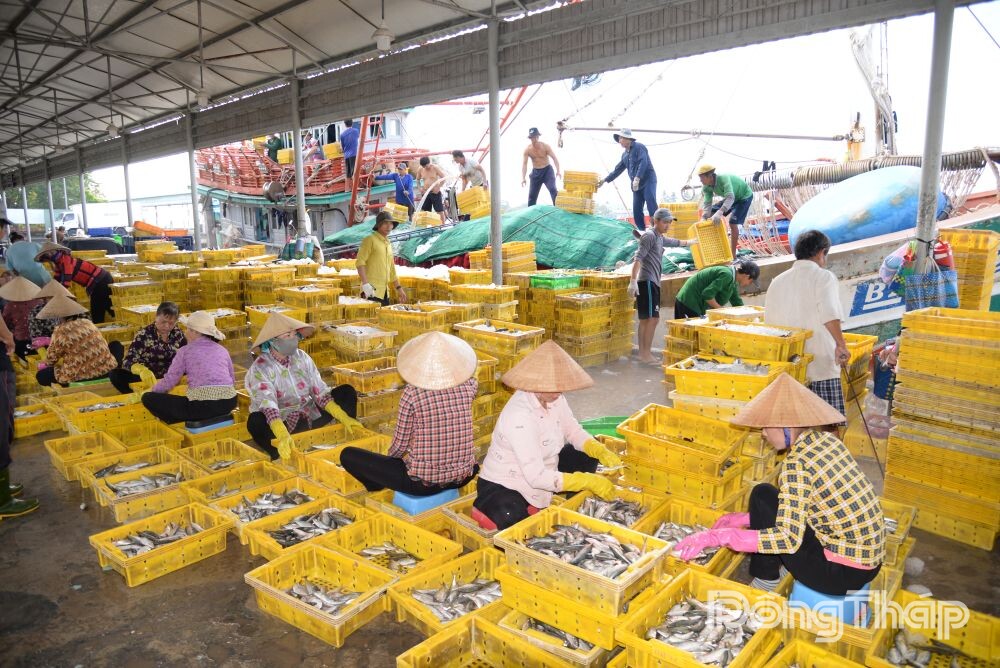
In recent years, fishing activities have made positive contributions to the province’s socio-economic development, creating jobs for thousands of workers and providing stable livelihoods for local communities.
However, statistics show that a large proportion of the local fishing fleet operate in near-shore waters. The high proportion of trawlers and trap-net operations has negatively affected marine resources and the ecological environment.
Dong Thap has several fishing practices that significantly impact aquatic resources and need to be reviewed for conversion to more environmentally friendly methods, or supported with policies for decommissioning, in order to reduce fishing intensity, protect aquatic resources and the ecological environment, and ensure sustainable development.
Specifically, many vessels operating in near-shore and coastal waters use nets with relatively small mesh sizes, contributing to resource depletion.
Therefore, it is necessary to transition and reduce the number of these vessels to ease fishing pressure in near-shore and coastal waters, helping replenish aquatic resources and promote sustainable development.
Trawling, in particular, is considered one of the main causes of environmental degradation and resource depletion. Moreover, its economic efficiency has become unstable and is declining compared to previous years.
The number of vessels operating at a loss continues to rise. By the end of 2025, the province is expected to have about 495 trawlers, representing the largest share of all fishing vessels.
Thus, transitioning to alternative occupations is essential to ensure rational exploitation that remains in balance with marine resources and the allowable harvesting capacity of the ecosystem.
This effort aims to support sustainable development, restore aquatic resources, and stabilize fishers’ incomes.
Mr. Bui Van Ton, a resident of Gia Thuan Commune, previously owned three fishing vessels, two trawlers and one gillnet vessel. Due to declining productivity, his family sold the two trawlers.
He said, “I started going out to sea when I was 11 years old, and now I’m over 60. In this line of work, most of us have to borrow from banks to invest. In the early years, when we first took out loans, fishing was profitable. But later on, marine resources gradually declined, making operations less effective.”
FOCUSING ON THE TRANSITION
To ensure the sustainable development of the fishing industry, the Dong Thap Provincial People’s Committee has issued a plan to implement the project on transitioning several fishing practices that negatively impact marine resources and the ecological environment.
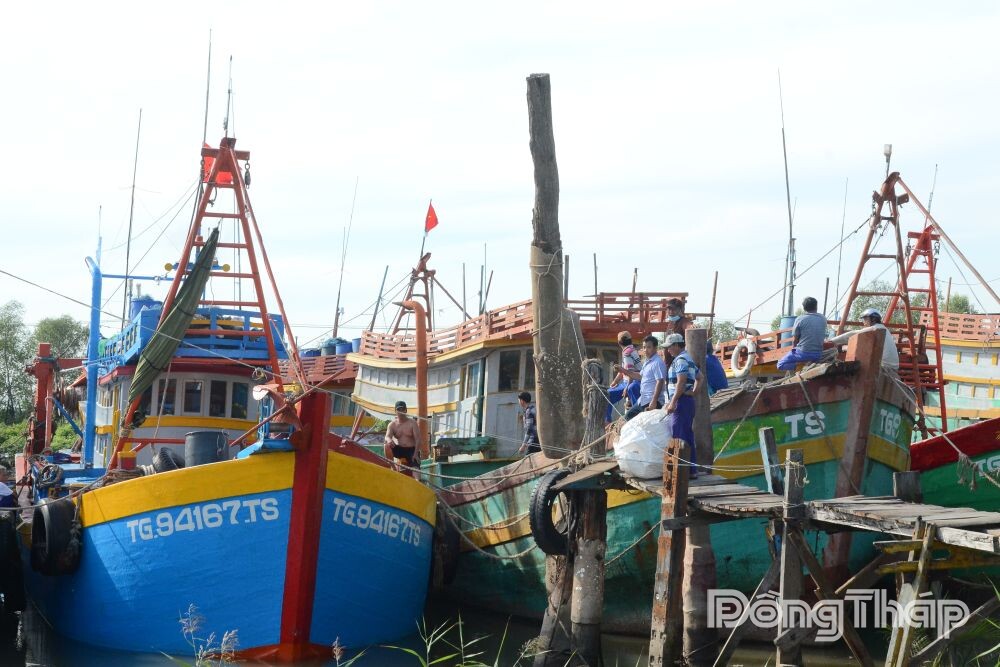
Accordingly, Dong Thap aims to convert fishing practices that heavily impact resources, the environment, and ecosystems to those with lower impacts, or transition fishing vessels using harmful practices into other non-fishing sectors. This will help gradually balance fishing capacity with the natural regeneration of aquatic resources.
The province also aims to gradually improve productivity, quality, and efficiency of its fishing fleet, enhance working conditions; and ensure 100% of fishers shifting away from harmful practices have stable jobs and sufficient income after transitioning.
From 2026 to 2030, in near-shore waters (vessels 6-12 meters long), the province plans to reduce and transition approximately 5% of the total existing vessels annually for gillnet and handline fishing.
By the end of 2030, Dong Thap aims to reduce and transition 76 out of 307 near-shore fishing vessels.
For coastal waters (vessels 12-15 meters long), the province will reduce and transition 4% of the total vessels each year for trawling and other fishing groups (drag nets, trap nets, lift nets).
By 2030, 56 out of 282 coastal vessels will be transitioned.
In offshore waters (vessels 15 meters long and above), the province will reduce and transition 1.5% of vessels annually for trawling, gillnetting, and other methods (trap nets). By late 2030, 70 out of 934 offshore vessels are expected to be reduced or converted.
After 2030, the province aims to fundamentally complete the transition of fishing vessels operating with practices harmful to marine resources, the environment, and ecosystems across all fishing zones.
These efforts will contribute to protecting aquatic resources, enhancing the management efficiency of the fishing fleet, stabilizing fishers’ livelihoods, and promoting a responsible and sustainable fishing industry.
According to provincial leaders, to achieve these goals, Dong Thap will intensify communication and legal education to raise fishers’ awareness about transitioning away from practices that harm marine resources and the ecological environment.
In fisheries management, the province will no longer approve new construction, retrofitting, leasing, or purchasing of vessels engaged in banned or restricted fishing practices in accordance with the law.
Local authorities will also enhance efforts to combat IUU fishing, working toward a responsible and sustainable fisheries sector. At the same time, the province will review, determine, and announce fishing license quotas for near-shore and coastal waters for the 2024-2029 period.
Additionally, Dong Thap will strengthen patrols, inspections, and monitoring of fishing activities, and strictly handle cases of unlicensed fishing, fishing in the wrong zones, or using prohibited methods.
By T. DAT
Translated by ANH DUC