
Dong Thap’s Collective Economy: Steadfast Steps 80 Years After President Ho Chi Minh’s Call
(DTO) Exactly 80 years ago, on April 11, 1946, President Ho Chi Minh called upon Vietnamese landowners and farmers to join agricultural cooperatives. This was a strategic vision for production organization, harnessing collective strength for economic growth. Through various periods, this ideology has been inherited and evolved, becoming a vital foundation for the collective economy and cooperative sector.
In Dong Thap, the role of the cooperative model is increasingly reaffirmed. The collective economy serves not only as a "support pillar" for household economies but also plays a crucial part in agricultural restructuring, new-style rural development, and improving local incomes.
GROWTH IN BOTH QUANTITY AND QUALITY
According to the Dong Thap Cooperative Alliance, as of the end of the first quarter of 2026, the province has 545 cooperatives and people's credit funds—a 2.8% increase compared to 2025—with over 161,500 members and nearly 28,000 regular workers. Total revenue for the sector reached approximately 1,176 billion VND, up 22.6% year-on-year, with profits exceeding 43 billion VND.
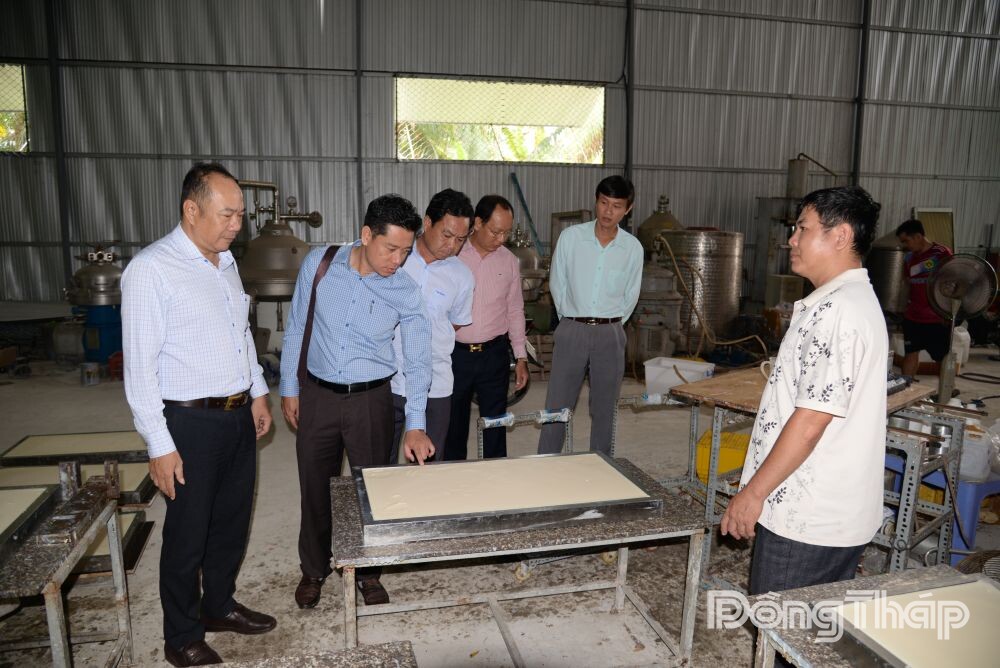
Notably, the agricultural and fishery cooperative sector continues to play a leading role with 419 units. Activities range from production and processing to the consumption of agricultural products. Cooperatives are increasingly shifting toward a general service model integrated with value chains, linking closely with enterprises, applying VietGAP and GlobalGAP standards, participating in the OCOP program, and establishing growing area codes for export.
Beyond numerical growth, the operational quality of cooperatives has been steadily enhanced. Many units have boldly applied mechanization, digital technology, and innovative governance, while ensuring financial transparency to build prestige and attract more members.
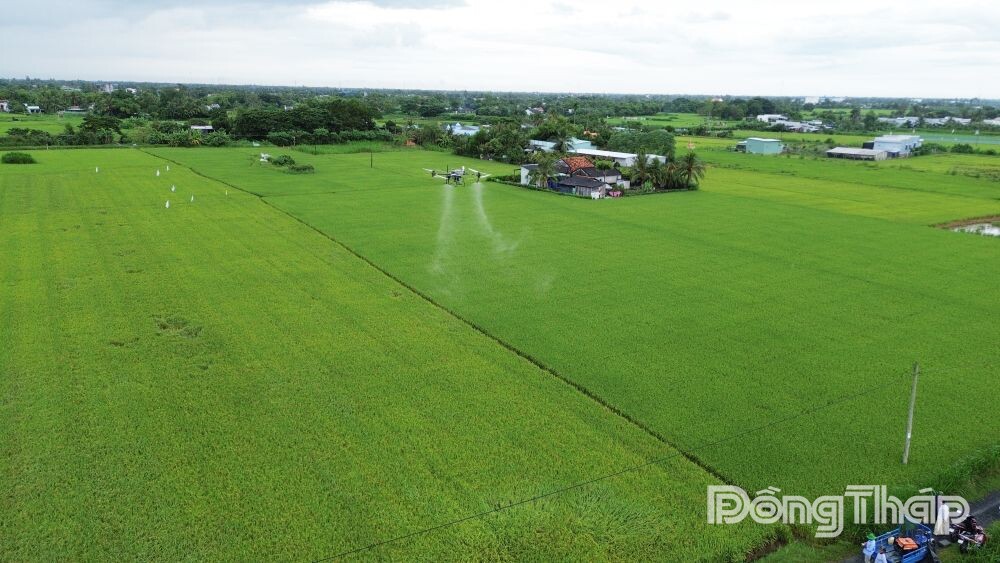
Practice shows that effective cooperatives share a common thread: organizing production according to value chains and market linkages. In the rice sector, cooperatives such as My Quoi, Tan Binh, and Thang Loi have synchronously implemented services from material supply and production to harvesting and product consumption.
The application of mechanization, advanced farming techniques, and the reduction of fertilizers and pesticides not only lowers costs but also improves quality, aiming for low-emission rice production.
Binh Thanh Agricultural Service Cooperative (Lap Vo District, Dong Thap Province) was established in 1989. Mr. Nguyen Van Doi, Director of the cooperative, stated that linking production with product consumption is identified as the core of their sustainable development plan.
In recent years, such linkages have helped increase members’ profits per unit area thanks to stable prices secured through contracts signed prior to harvest. Investment costs for irrigation services have also decreased due to rational planning and appropriate crop structuring based on market demand.
With the guidance of professional sectors and close supervision from cooperatives, members have mastered the rational and effective use of fertilizers and pesticides, reducing environmental impacts. This transition has directly contributed to lowering production costs.
Through these linkages, farmers’ knowledge has been progressively enhanced, providing them with a clearer insight into the agricultural commodity market. This, in turn, strengthens their commitment and support for cooperatives during contract negotiations,” said Mr. Doi.
In the fruit sector, many cooperatives have made a distinct mark. Models for cultivating durian, dragon fruit, and mango have not only achieved VietGAP and GlobalGAP certifications but have also established production unit codes (PUCs), developed OCOP products, and strengthened processing and consumption linkages with enterprises.
My Loi A Agricultural Service Cooperative (My Loi Commune, Dong Thap Province) was established in 2017 with only 30 members. To date, the cooperative has expanded to nearly 300 members.
Over the years, the cooperative has organized centralized fruit production, applying technical advances and adhering to safe cultivation processes. Furthermore, it regularly inspects, monitors, and guides members in producing according to VietGAP standards and maintaining farming logs. This has gradually transformed safe production into a standard practice among members, replacing traditional farming methods. Consequently, the cooperative's production area has become increasingly stable, with annual productivity and output rising compared to previous periods.
The cooperative is step-by-step building concentrated raw material areas with uniform quality to meet market demands both within and outside the province. Its current total production area is 271.9 hectares, of which 26.5 hectares follow VietGAP standards and 245.5 hectares are dedicated to safe production (with registered production unit codes).
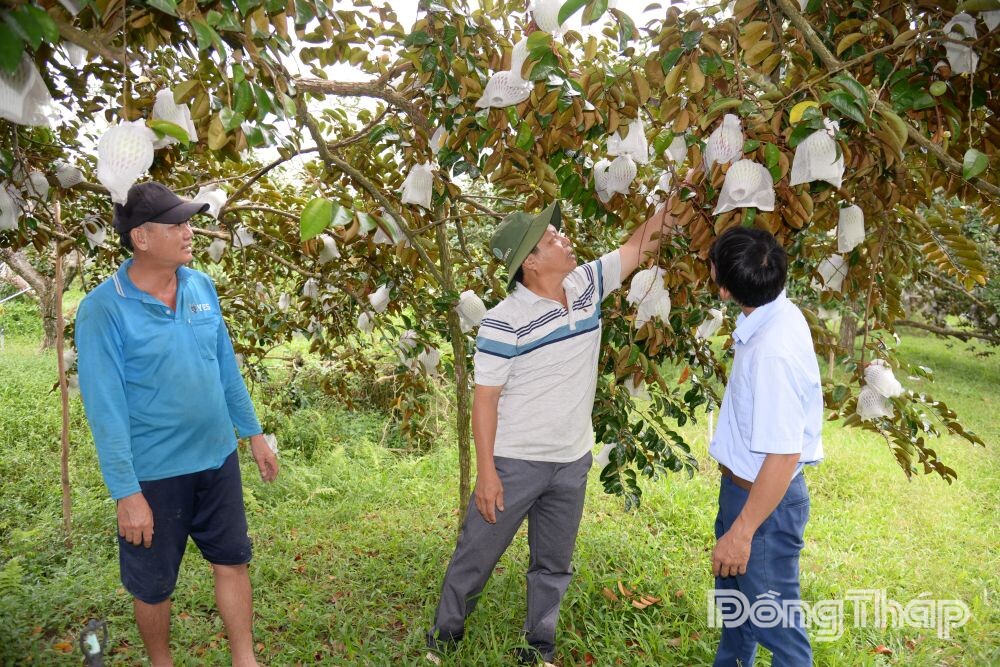
Mr. Ngo Van Be Em, Director of My Loi A Agricultural Service Cooperative, shared: “Over nearly 8 years of formation and development, the cooperative has always acted as a focal point for linkages, supporting members from input supply to output consumption. We proactively partner with enterprises, traders, supermarkets, and distribution channels to consume members' fruit through off-take contracts. Our products are gradually building a strong brand identity."
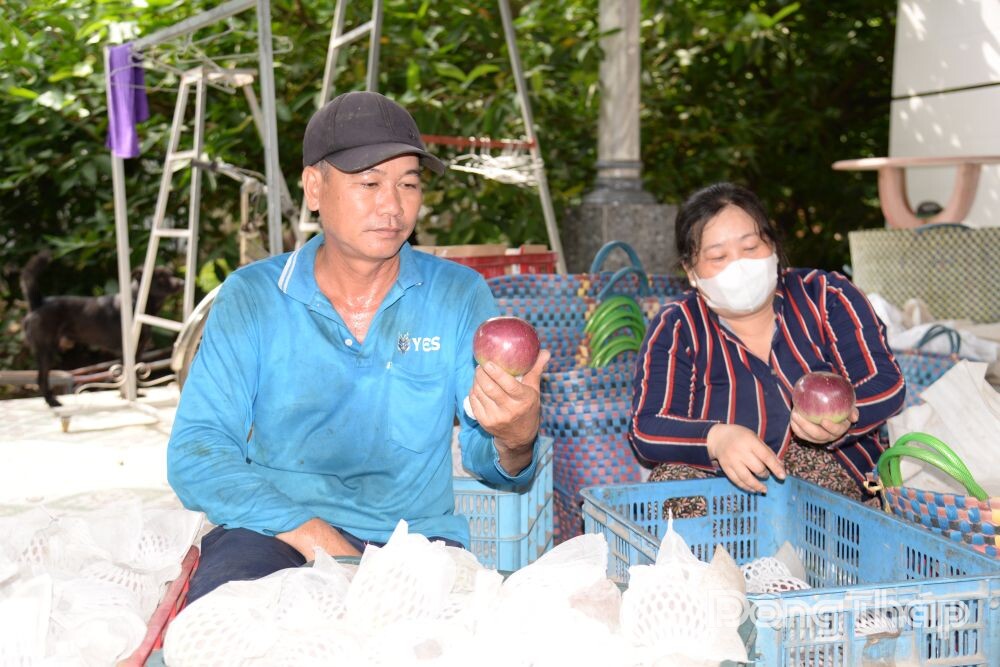
"Since the beginning of 2023, the cooperative has signed annual contracts with MM MEGA MARKET Vietnam Co., Ltd. to consume fruit products (mango, star apple, durian, jackfruit, guava, etc.) for our members, with an average volume of 25 - 30 tons per month.”
Additionally, safe vegetable, livestock, and lotus-fish cooperatives across the province are progressively asserting their effectiveness through linkages with supermarket systems and enterprises, expanding their consumption markets both domestically and internationally.
CONTINUING TO REKINDLE THE SPIRIT OF COOPERATION FOR SUSTAINABLE DEVELOPMENT
Looking back on the 80-year journey since President Ho Chi Minh’s call, it is evident that the cooperative model has increasingly affirmed its role in socio-economic development. In Dong Thap, the collective economy sector is undergoing a powerful transformation toward modernity, efficiency, and sustainability.
According to Mr. Le Minh Khanh, Vice Chairman of the Dong Thap Provincial Cooperative Alliance, in the coming period, the province will continue to implement and finalize the system of guiding documents for the Law on Cooperatives and support policies for the collective economy and cooperatives.
Accordingly, the Cooperative Alliance will coordinate with departments, agencies, and socio-political organizations to advise the Provincial People's Committee on support policies for the collective economy and cooperatives, in line with Resolution No. 20-NQ/TW of the 13th Party Central Committee and the 2023 Law on Cooperatives. Simultaneously, effective development goals for the collective economy sector will be pursued to leverage its strengths and potential within the socialist-oriented market economy.
The Cooperative Alliance will develop plans to mobilize the development of new cooperative groups and cooperatives, focusing on consolidating and enhancing their operational capacity and efficiency. Furthermore, it will build new-style cooperative models across all sectors, subsequently replicating successful models to develop cooperatives in depth, improve competitiveness, and enhance the quality of the province's collective economy.
Propaganda and human resource development for cooperatives will also be a focal point of coordinated efforts. A key task is the implementation of support and incentive policies for cooperative development under the specific support programs. Specifically, this involves enhancing capacity and raising awareness for the collective economy sector.
Additionally, policies to support the establishment of new cooperatives will be deployed, alongside financial and credit policies, infrastructure support, and initiatives to attract young laborers to work in collective economic organizations and cooperatives. Efforts will also focus on trade promotion, market expansion, and the application of science, technology, and new innovations.
Mr. Le Minh Khanh also noted that the Cooperative Alliance will advise on consolidating, perfecting, and improving the capacity and efficiency of the apparatus and officials directly responsible for the collective economy and cooperatives from the provincial to the grassroots level for monitoring and supervision. Special emphasis will be placed on training, fostering, and implementing appropriate policies to ensure improved quality and efficiency in utilizing human resources to develop the collective economy and cooperatives.
By ANH THU
Translated by X.QUANG