

Dong Thap’s Digital Transformation: From Foundations to Tangible Results
(DTO) In 2026, Dong Thap Province is gradually shifting its digital transformation focus from building infrastructure and platforms to leveraging data and technology to deliver tangible results. Progress across the three pillars of digital government, digital economy and digital society provides a foundation for the province to further modernize governance, promote the digital economy and improve services for residents and businesses in the 2026-2030 period.
DIGITAL TRANSFORMATION DRIVES PROGRESS ACROSS THREE PILLARS
In the first nine months of 2026, the Dong Thap Provincial Party Committee and People’s Committee focused on directing digital transformation efforts with clear assignments, tasks, timelines and responsibilities. They also conducted regular inspections and addressed difficulties, particularly those arising during the operation of information systems serving the two-tier local government model.
The province issued a digital transformation plan for 2026-2030 and a plan for implementing the Law on Digital Transformation. It also finalized regulations on shared data, open data and the commune-level digital transformation model. A support policy for Community Digital Technology Teams was introduced to bring digital transformation efforts to the grassroots level.
Under the digital government pillar, telecommunications infrastructure continued to be invested in and upgraded. All hamlets and residential quarters now have fiber-optic connections and 3G, 4G and 5G mobile coverage, with 5G coverage reaching approximately 90% of the population. All state agencies are connected to the dedicated government data transmission network, while the videoconferencing system extends to all 102 communes and wards.

Document management and administration systems, official email, online videoconferencing, reporting systems, the Intelligent Operations Center (IOC), the shared data repository and the open data portal continue to operate reliably, ensuring seamless connectivity from the provincial level to local authorities.
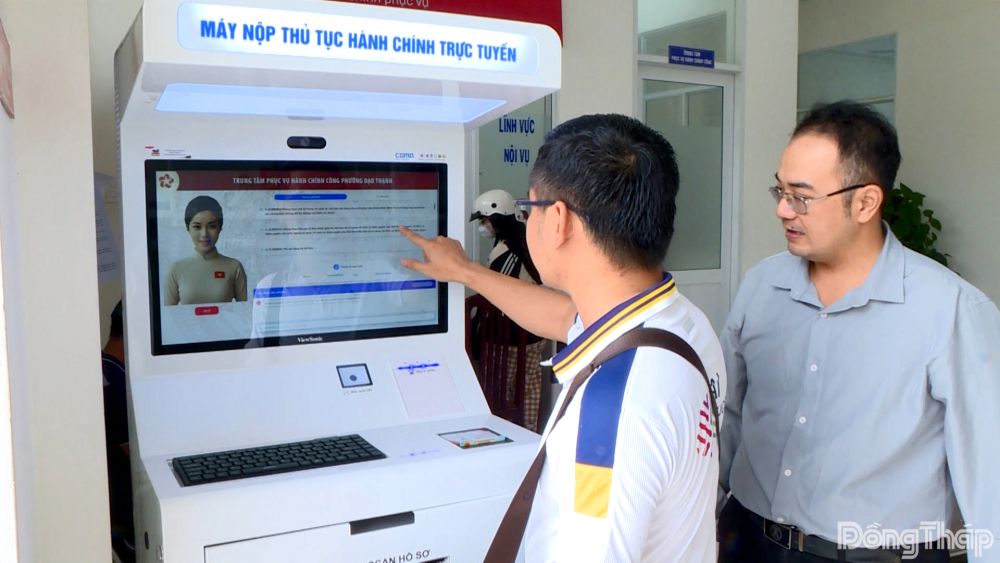
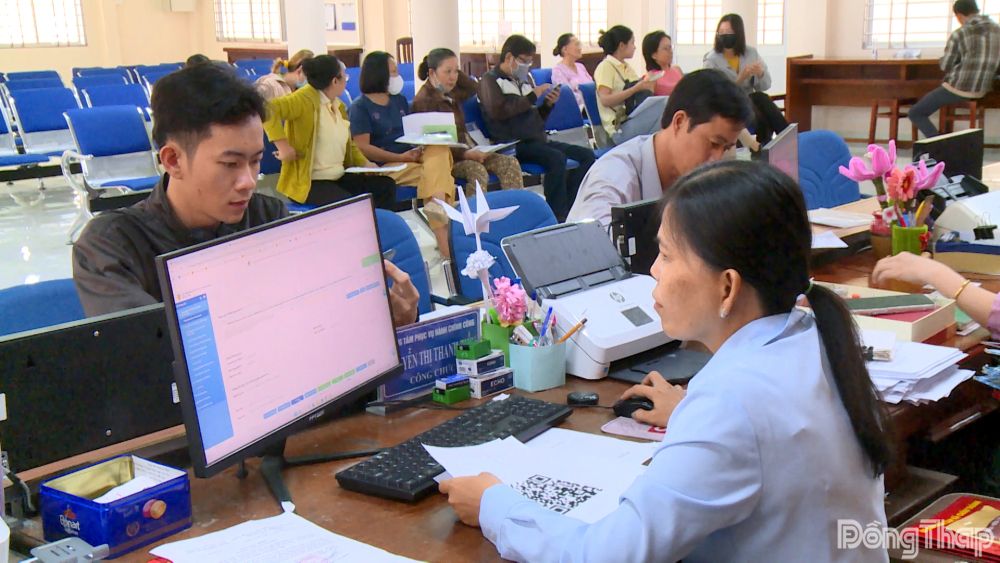
Notably, all state agencies in the province now handle their work entirely in the electronic environment. More than 20,000 digital signatures are active, meeting the requirements for digital workflows. Centralized administrative procedure systems provide more than 1,800 online public services, accounting for 99.5% of all public services.
Connecting and sharing data between national and sector-specific databases and administrative procedure systems helps reduce the time needed to verify and cross-check information, while limiting requests for residents and businesses to resubmit data already available in government systems. This is gradually reducing the number of required paper documents and improving administrative processing efficiency.
Alongside infrastructure development, the province is focusing on building a data foundation for governance and administration. The shared data repository and open data portal currently connect, integrate and share 156 datasets across 13 sectors. The commune-level digital transformation model is being piloted in 10 communes and wards, with an integrated approach covering infrastructure, data, platforms and applications for management and public engagement.
Under the digital economy pillar, technology is expanding market access for businesses, cooperatives and household businesses. More than 60% of the population shops online; all communes and wards have online commercial activities and service provision; and approximately 70% of businesses maintain websites and regularly update their information.
Building on its agricultural strengths, Dong Thap is helping local products reach e-commerce platforms. To date, 910 OCOP products from 403 producers have received support to be listed on these platforms. All four-star and five-star OCOP products have implemented origin traceability.
Across five livestream sales sessions on TikTok Shop and Shopee, local products attracted more than 6.57 million views and engagements and generated 3,000 orders. In addition, 75 businesses, cooperatives and household businesses received support in managing traceability for 443 products. In the first nine months of 2026, postal service providers in the province recorded estimated revenue of more than 590 billion VND, helping connect e-commerce with distribution and delivery networks.

Under the digital society pillar, technological services are becoming increasingly integrated into daily life. Across the province, 71 markets in 53 communes and wards have registered for and maintained cashless payment models. As of September 18, 2026, the province had more than 343,000 public personal digital signatures, equivalent to over 11% of the adult population.
More than 1,200 Community Digital Technology Teams, with 8,000 members, are helping residents use public services, VNeID, digital payments and other online services. To date, more than 2.92 million adults have been confirmed as having acquired foundational digital knowledge and skills through the VNeID platform, representing over 90% of the adult population.
Cashless payments are being promoted across public services, education, healthcare, commerce and social welfare. The province currently has more than 4,730,000 active payment accounts at banks and authorized payment service providers. This provides a foundation for expanding cashless markets and streets, helping change how residents conduct transactions.
LEVERAGING DATA AND TECHNOLOGY TO DRIVE DEVELOPMENT IN A NEW ERA
Despite these achievements, digital transformation in Dong Thap still faces several challenges. Small and medium-sized enterprises have limited participation in e-commerce; the rate of personal digital signature adoption remains low; and access to technology varies across population groups.
These challenges highlight the need to shift the focus from building infrastructure and platforms to making effective use of data and existing systems to deliver tangible benefits in governance, production, business and daily life.
According to Tran Van Dung, Deputy Director of the Dong Thap Department of Science and Technology, the province will focus on developing integrated digital infrastructure, expanding shared digital platforms and completing sector-specific databases to support data-driven digital government.
He said the province would continue leveraging residents’ electronic identification in conjunction with administrative reform and online public services. It would also promote the digital economy and digital society, particularly e-commerce and the wider adoption of digital technologies across industries and sectors.
One key development priority is the application of artificial intelligence (AI), big data and emerging digital technologies in areas with practical needs and clear potential for measurable benefits. The province is piloting AI applications in leadership and administration while exploring their use in platforms such as the Smart City Operations System and the Public Service Portal. These applications aim to support data analysis, identify trends and improve user experience. AI adoption will be guided by the principles of safety and responsible use.
To develop the digital economy, the province will continue helping businesses, cooperatives and household businesses adopt technology, e-commerce, product traceability and digital payments. Progress in promoting OCOP products, livestream sales and traceability management provides a foundation for expanding market access and strengthening links between production and consumption.
Meanwhile, developing a digital society must go hand in hand with improving residents’ digital skills. Community Digital Technology Teams will continue helping residents access online public services, use electronic identification and personal digital signatures, and make digital payments. The goal is to make technology more accessible, convenient and useful in everyday life.
During the 2026-2030 period, Dong Thap will focus on completing its digital infrastructure to ensure seamless connectivity from the provincial level to the grassroots; developing, connecting and leveraging data for governance and administration; promoting AI adoption; and improving the quality of online public services. The province will also accelerate digital economy development, strengthen digital skills within the community, and step up inspections and monitoring to promptly address bottlenecks during implementation.
Implementation must deliver tangible, effective results, avoid duplicative investments and make the most of existing platforms. In this way, digital transformation will gradually become a driving force for modernizing governance, expanding economic opportunities and improving services for residents and businesses across the province.
By LE MINH - TRONG HIEU - M.T
IN COLLABORATION WITH THE DONG THAP DEPARTMENT OF SCIENCE AND TECHNOLOGY
Translated by ANH DUC