
Dong Thap: Scientific Workshop Contributes Feedback on Provincial Planning Adjustment
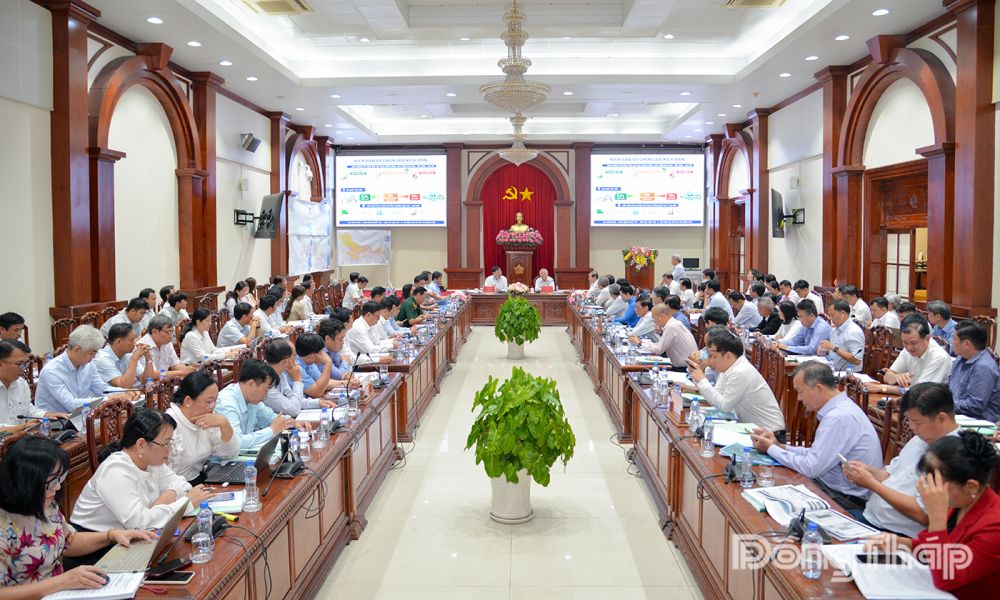
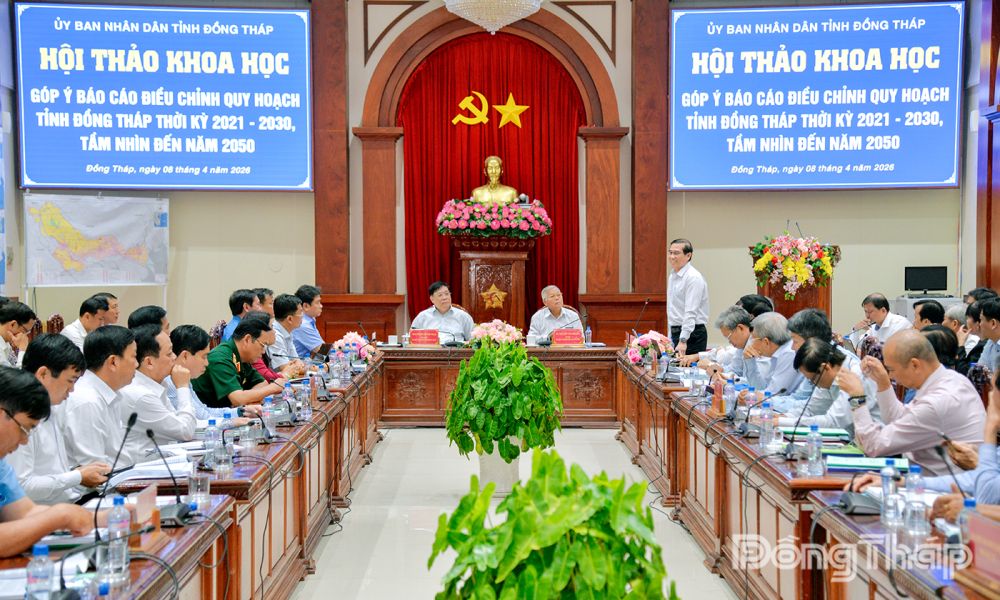
(DTO) On the morning of April 8, Dong Thap Province held a scientific workshop to gather feedback on the draft report for adjusting Dong Thap Province’s planning for the 2021-2030 period, with a vision toward 2050.
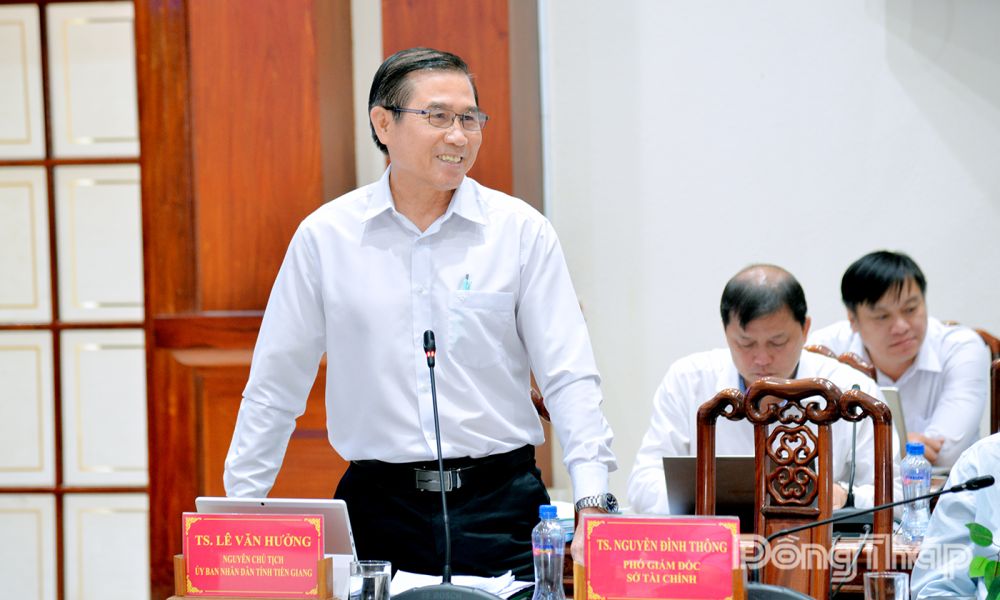
The workshop was co-chaired by Pham Thanh Ngai, Deputy Secretary of the Provincial Party Committee and Chairman of the Provincial People’s Committee, and Dr. Nguyen Van Khang, former Deputy Secretary of the Provincial Party Committee and former Chairman of the Provincial People’s Committee, now Chairman of the Provincial Union of Science and Technology Associations. The event gathered experts, scientists, representatives of institutes and universities, as well as businesses and investors inside and outside the province.
Dong Thap Province was formed through the merger of the former Dong Thap and Tien Giang provinces. Following the merger, the province’s population scale, development space, infrastructure corridors, growth poles, and land-use allocation have undergone significant changes.
As a result, the integrated planning frameworks of Tien Giang and Dong Thap prior to the merger no longer align with the new context, conditions, and development potential.
By 2030, Dong Thap aims to become a fast-growing industrial province, a pioneer in ecological agriculture, modern rural development, and progressive farming communities, and one of the leading localities in the Mekong Delta.
Dong Thap’s upcoming development orientation will follow a model of: one main development corridor along the Tien River; two key economic zones, which are the Dong Thap Border-Gate Economic Zone and the Go Cong Coastal Economic Zone; three pillars of sustainable development, ensuring balanced economic, social, and environmental growth toward green development; and four strategic gateways connecting to the Southeast region, the Mekong Delta, Cambodia, and the maritime economic space.
Five socio-economic subregions are connected through five economic corridors, including the central Tien River subregion; the border subregion; the Dong Thap Muoi ecological agriculture subregion; the coastal economic subregion; and the southern Tien River and northern Hau River subregion. Six central urban areas, My Tho, Cao Lanh, Sa Dec, Go Cong, Cai Lay, and Hong Ngu, are designated as integrated and specialized centers positioned to drive regional development.
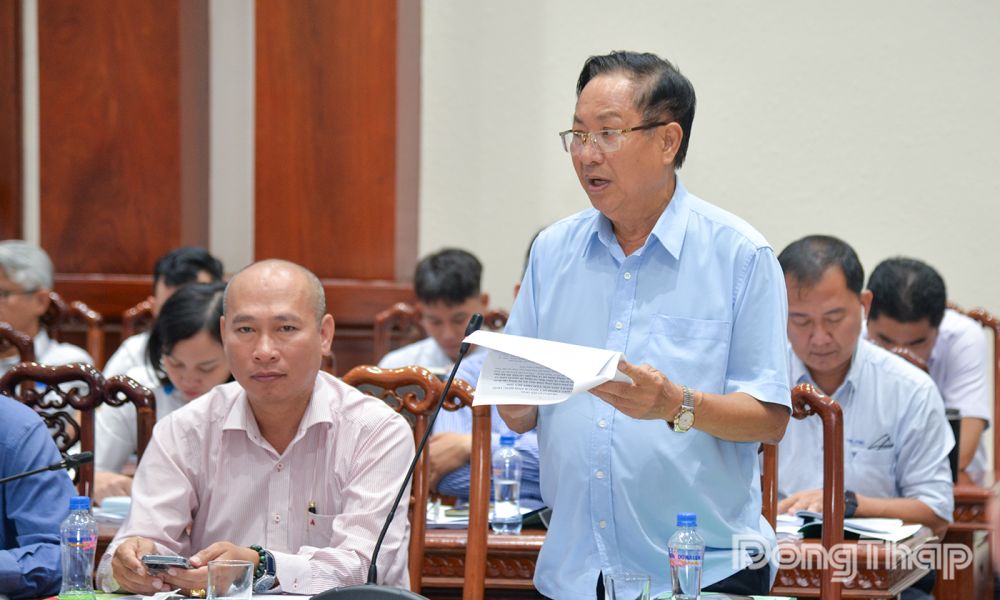
During the workshop, experts, scientists, investors, and enterprises shared extensive feedback on the draft provincial planning report.
Speaking at the workshop, Chairman Pham Thanh Ngai expressed his sincere gratitude to experts, scientists, and businesses for their valuable contributions, which help refine the province’s planning and development orientation for the coming period.
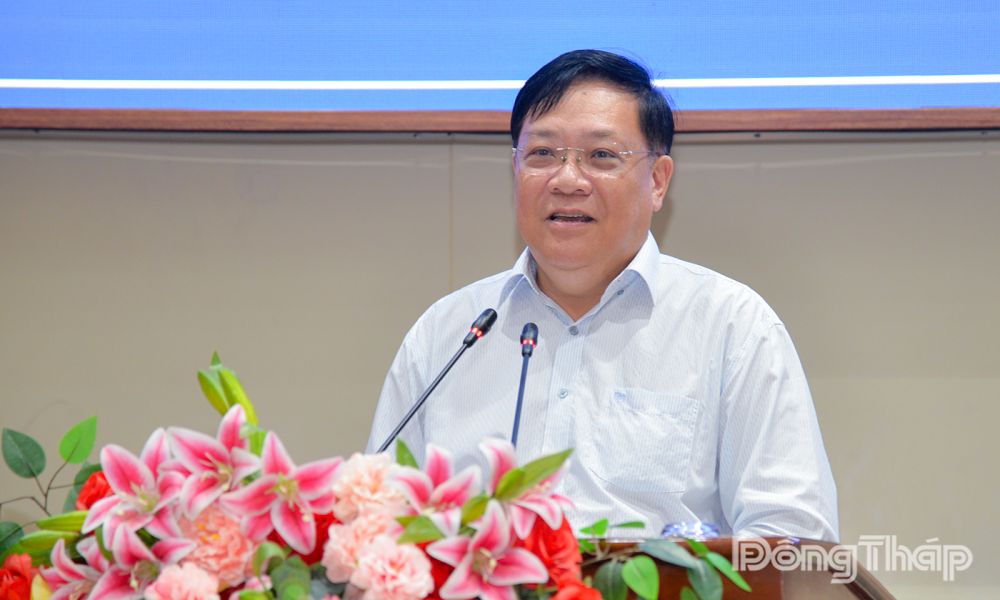
The Chairman affirmed that collecting feedback for the provincial planning would not stop at this workshop but continue throughout the drafting and implementation process. Even after the provincial planning is approved, the province will continue listening to scientists, businesses, and on-the-ground realities to make timely adjustments, ensuring the provincial planning is practical and effective.
He emphasized the need to maintain stability and consistency in the planning framework so that it truly serves as a key legal basis for implementing development policies in the years ahead.
He stressed that the planning must address existing bottlenecks, create breakthroughs, and support the province’s goal of achieving double-digit growth. In its development orientation, the province prioritizes industrial growth linked to agriculture, especially processing industries, to enhance added value.
At the same time, industrial zone planning will be reviewed and adjusted according to available land resources and actual needs. Alongside economic goals, the province also places strong emphasis on cultural factors in planning, viewing culture as a foundation of internal strength.
Following the workshop, the province will hold thematic conferences to disseminate the planning framework to all levels and sectors, ensuring local officials fully understand the development directions. It will also continue dialogue with businesses in fields such as agriculture, industry, and tourism to remove obstacles, promote investment, and drive growth.
By HA NAM
Translated by ANH DUC