
Dong Thap Seeks Eco-Friendly Solutions to Tackle Rice-Damaging Golden Apple Snails
(DTO) On May 28, at the Wildbird Hotel in Tram Chim Commune, the Dong Thap Provincial Department of Agriculture and Environment, in partnership with the University of Science - Vietnam National University Ho Chi Minh City (VNUHCM), convened a seminar titled "Solutions for Ecological Management of Golden Apple Snails in Rice Fields in the Mekong Delta."
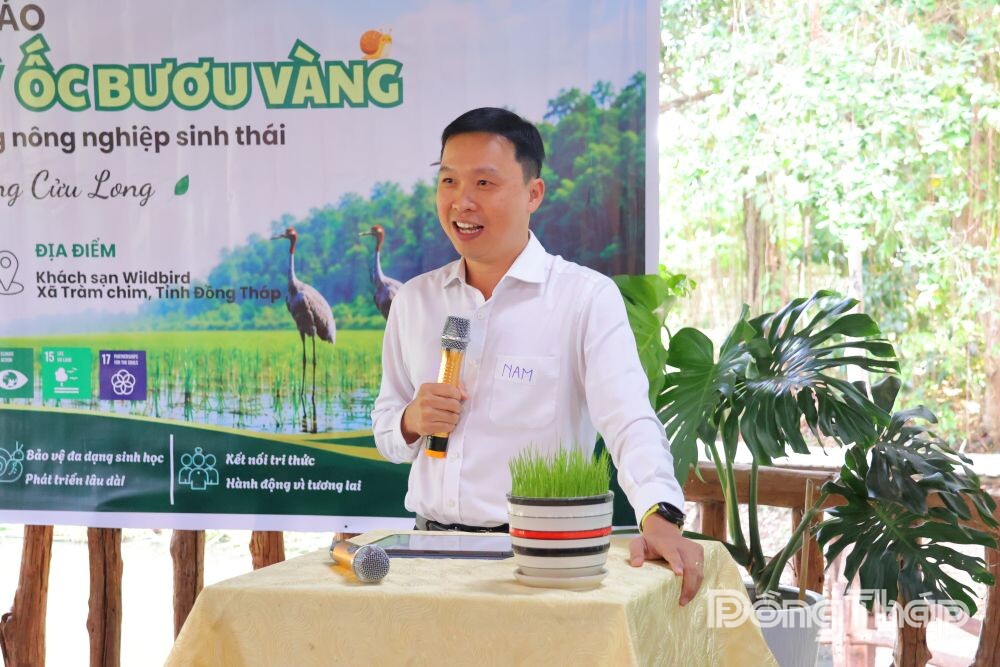
The event drew nearly 100 delegates, including agricultural officials, scientists, experts, cooperative representatives, and local rice farmers from across the region.
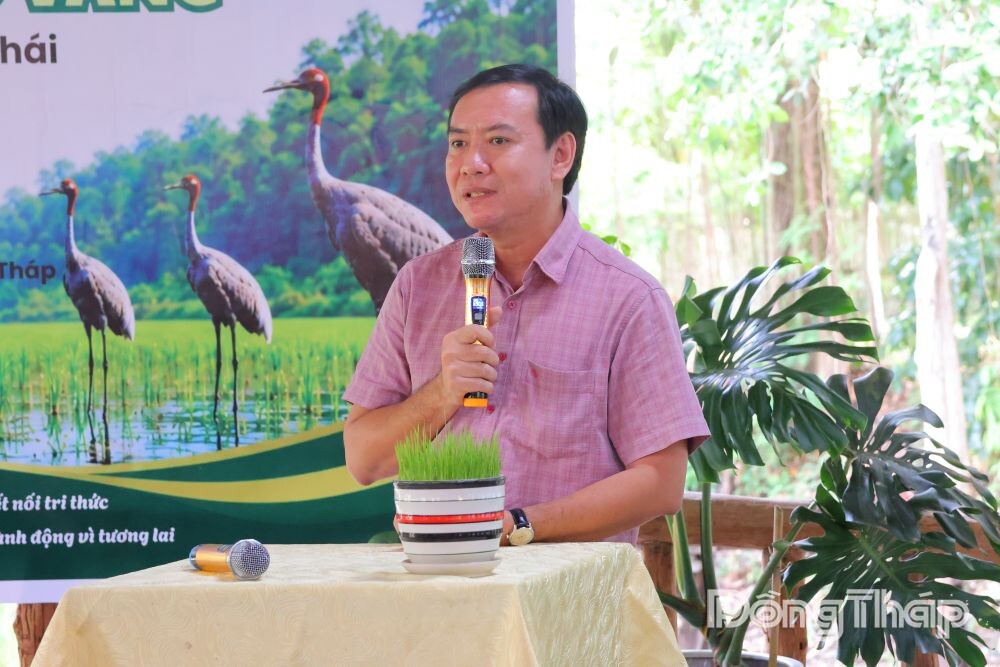
Speaking at the seminar, Mr. Le Ha Luan, Director of the Dong Thap Provincial Department of Agriculture and Environment, stated that Dong Thap is currently a key rice hub in the Mekong Delta, boasting a cultivation area exceeding 611,000 hectares and an estimated annual output of over 4.1 million tons.
Over the past years, the province has focused on restructuring its rice sector toward elevating quality, slashing production costs, increasing added value, and ensuring sustainable development. Concurrently, the locality has driven climate-resilient farming models that mitigate greenhouse gas emissions.
According to Director Le Ha Luan, transitioning to green agriculture makes safe, ecosystem-based pest management an urgent priority. Among these pests, the golden apple snail remains a worrisome threat across many localities due to its rapid reproduction, widespread dispersal through canal networks, and severe damage to seedlings and young rice crops. "Effective, ecological management of golden apple snails is not merely about treating a pest species. It represents a paradigm shift in production mindset—moving away from chemical dependency toward ecosystem-based management, and from conventional production to agricultural development that harmonizes with nature," Mr. Le Ha Luan emphasized.
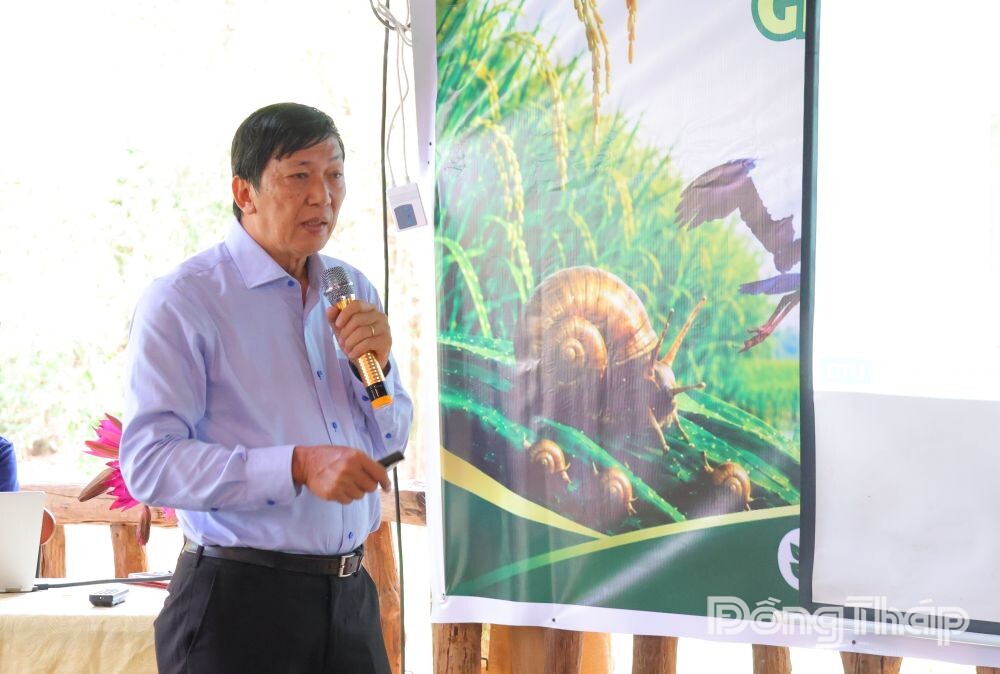
At the seminar, scientists and experts presented numerous papers regarding the biological and ecological traits of golden apple snails, alongside integrated pest management (IPM) solutions geared toward biological approaches, reducing chemical pesticide use, and preserving biodiversity in rice fields.
Notably, Mr. Lang Canh Phu, from the College of Agriculture, Can Tho University, shared several solutions to manage golden apple snails in organic rice cultivation using safe and environmentally friendly methods.
Accordingly, instead of relying on chemical pesticides, farmers can synchronously apply measures such as proper water level management, hand-picking, utilizing plant-based attractant traps, introducing ducks into the fields, or leveraging natural predators to control the snail population. These solutions not only help curb production costs but also contribute to protecting the field ecosystem, maintaining biodiversity, and premiumizing the quality of organic rice products.
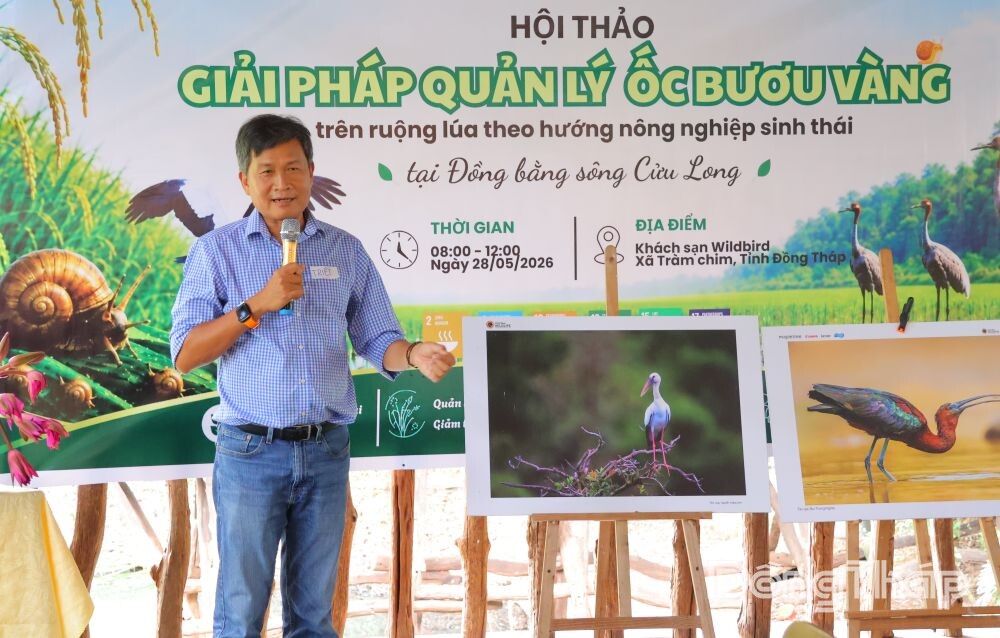
Echoing this sentiment, Dr. Tran Triet, from the VNUHCM-University of Science and the International Crane Foundation, argued that the overuse of chemical pesticides to eradicate golden apple snails is taking a heavy toll on biodiversity within the rice ecosystem, particularly in sensitive ecological buffer zones like the area surrounding Tram Chim National Park. Therefore, shifting toward ecological management solutions is imperative to simultaneously safeguard agricultural production and conserve natural ecosystems.
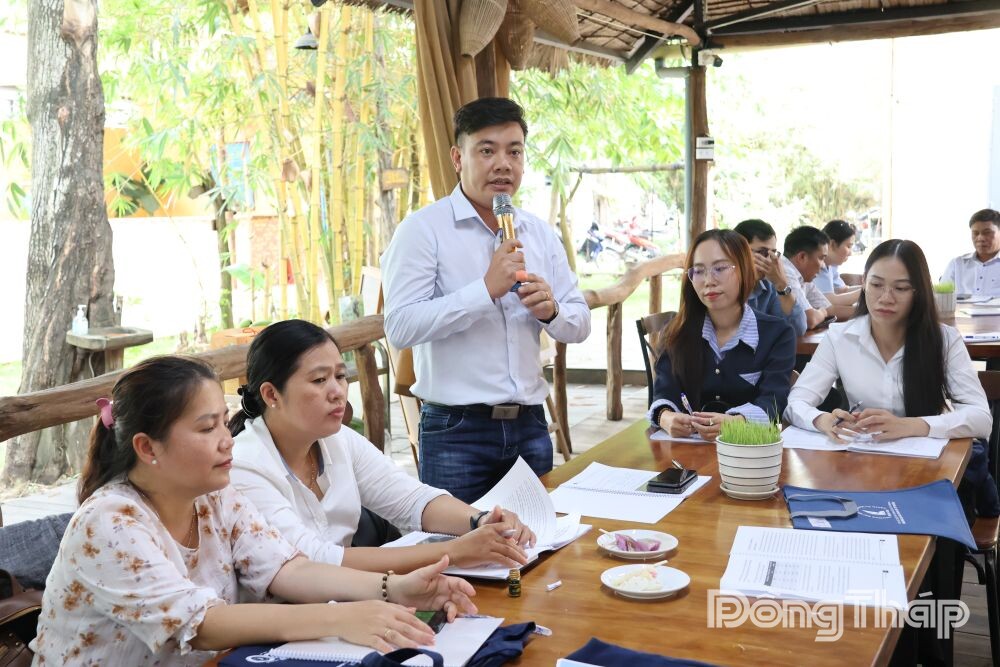
Beyond scientific papers, the seminar served as a platform for practical exchanges among farmers, cooperatives, and agricultural representatives from across the Mekong Delta. Several low-emission rice production models combined with nature-based pest management have initially proven effective in reducing input costs, limiting chemical usage, and elevating crop quality.
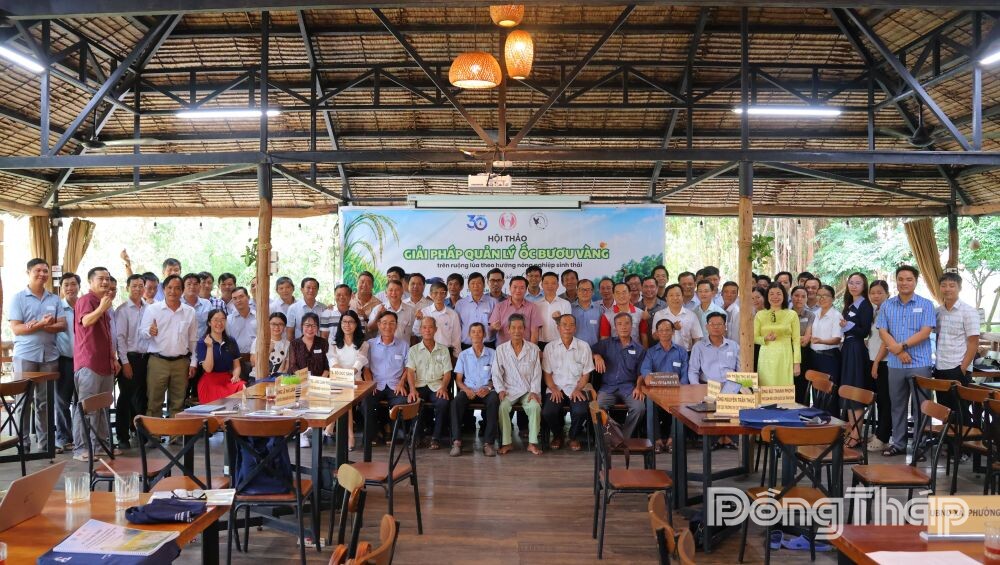
The seminar contributed to formulating comprehensive, long-term, and sustainable strategies for golden apple snail management, while accelerating the transition toward an ecological, low-emission agriculture aligned with the Government's Project on One Million Hectares of High-Quality Rice in the Mekong Delta.
By MY LY
Translated by X.QUANG