
Dong Thap signs emulation pact to strive for 8–8.5% economic growth in 2026
(DTO) On the afternoon of April 7, the Dong Thap Provincial People’s Committee held a conference to implement Plan 246/KH-UBND (dated March 8, 2026) on launching an emulation movement to fulfill the province’s socio-economic development goals for 2026-2030, tied to achieving double-digit economic growth by 2030, and to sign the 2026 emulation agreement.
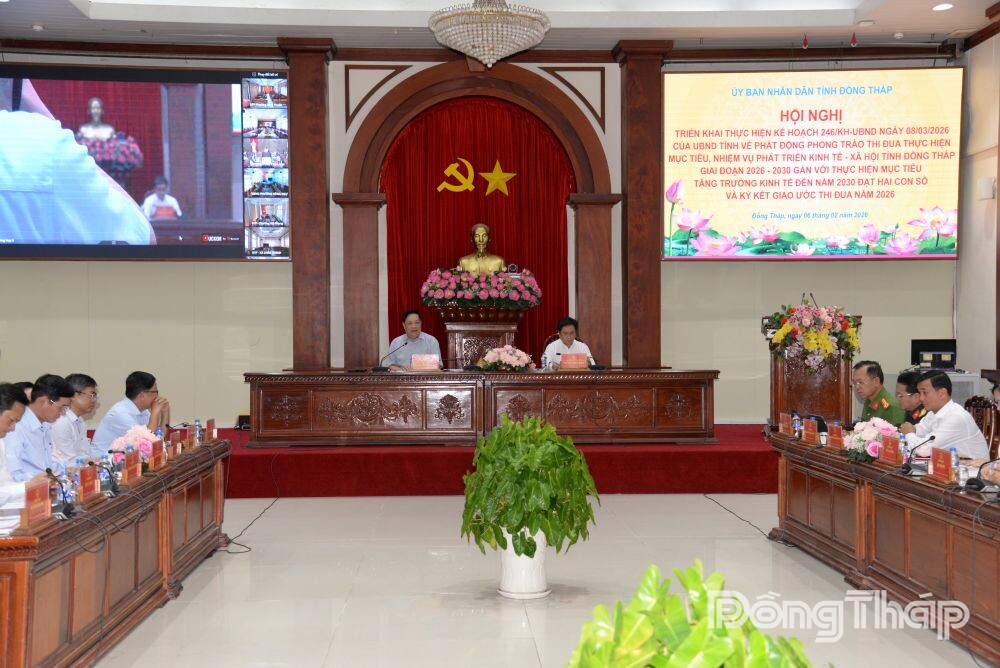
The event was co-chaired by Provincial People’s Committee Chairman Pham Thanh Ngai and Provincial People’s Committee Permanent Vice Chairman Tran Van Dung. Attendees included Tran Thanh Nguyen, Member of the Standing Committee of the Provincial Party Committee and Vice Chairman of the Provincial People’s Council, along with leaders of provincial departments, agencies, and localities. The conference was connected online to 102 communes and wards across the province.
At the conference, the Department of Finance presented a report on economic growth in 2025 and the first quarter of 2026, projected growth scenarios for 2026, and key contents of Plan 246.
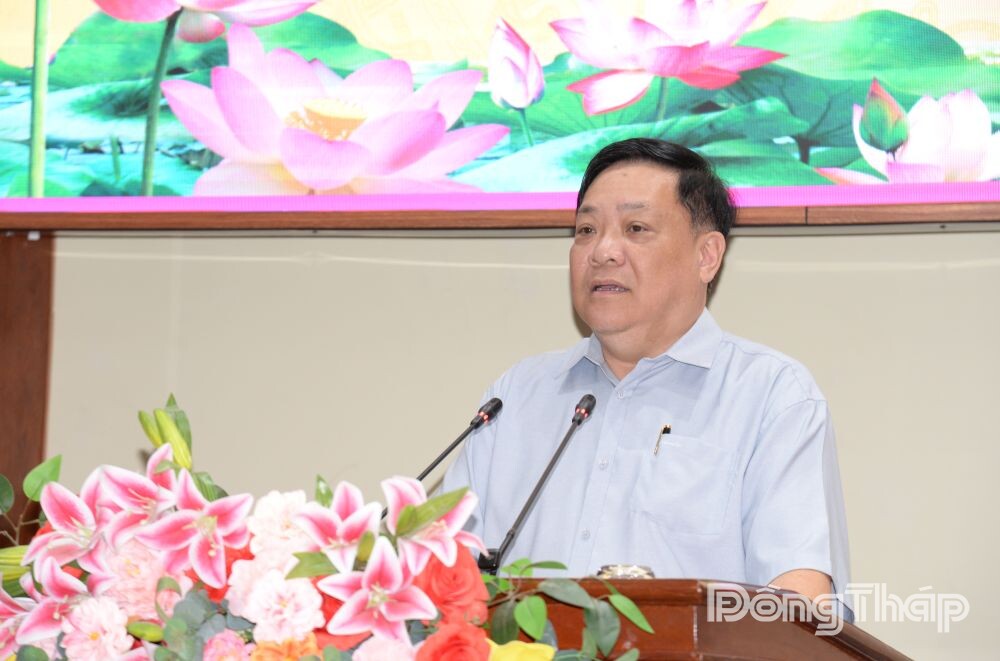
The province will concentrate resources on fully and decisively implementing resolutions and action programs issued by the Government, the Provincial Party Committee, and the Provincial People’s Council related to the socio-economic development goals for 2026 and the 2026-2030 period.
A major focus is effective execution of Government directives and Provincial Party Committee instructions to achieve the 2026 growth target of 8%-8.5%, and an average annual growth rate of 9% for 2026-2030, reaching 10% or higher by 2030.
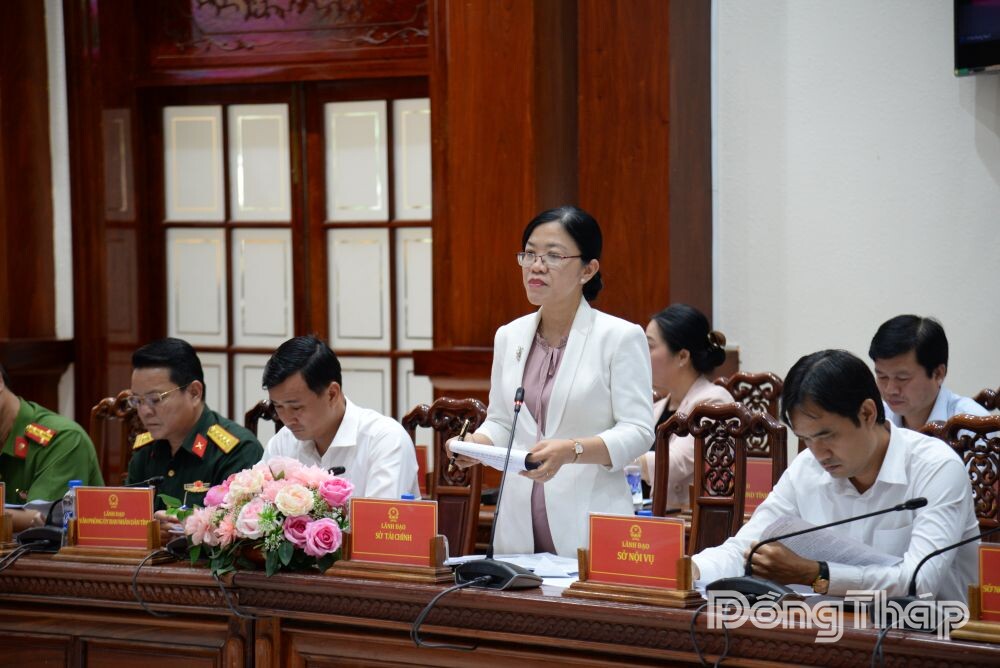
The province will complete adjustments to the provincial planning for 2021-2030, with a vision to 2050, on schedule; announce the adjusted plan and develop an implementation roadmap after approval to ensure consistent and coordinated execution.
It will also take decisive action in allocating and disbursing public investment capital and funding for national target programs from the very beginning of 2026; strengthen state budget revenue management, especially revenues from land-use fees, e-commerce activities, and digital-platform businesses; and focus on promoting and attracting large-scale, high-tech, and environmentally friendly foreign direct investment projects.
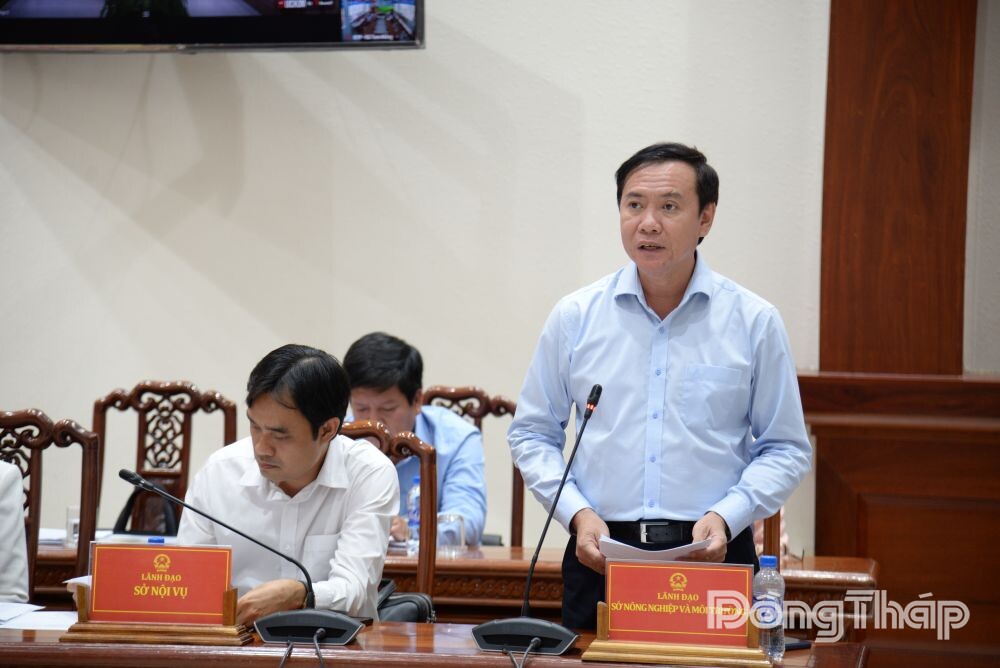
Also at the event, the Department of Home Affairs presented the main contents of the emulation agreement for achieving the 2026 economic growth target of 8%-8.5%.
A key component of the emulation agreement is accelerating and breaking through in meeting economic growth targets, ensuring that by the end of 2026 the province reaches a growth rate of 8%-8.5%, thereby laying a solid foundation for achieving the five-year goal. All economic sectors are expected to grow, with agriculture-forestry-fishery rising 4.1%-4.5%; industry-construction 13.1%-14%; services 8.2%-8.5%; and tax revenues increasing 5.65%-6.5%.
The province will monitor and evaluate quarterly GRDP performance and assess sectoral indicators monthly. Growth scenarios for subsequent quarters will be reviewed and adjusted in line with actual developments.
Leaders from various departments and agencies also pledged to carry out the emulation tasks within their sectors.
In his concluding remarks, Chairman Pham Thanh Ngai emphasized that the signing of the emulation agreement is a political commitment to the Party and the people toward achieving the province’s economic growth goals.
He requested departments and agencies to treat this as a regular task, ensuring close follow-up and implementation of the commitments. Chairpersons of commune and ward People’s Committees must, within their functions, translate the agreed commitments into concrete actions to help achieve the growth targets. He emphasized that if everyone works in unity, contributing effective and innovative solutions, the province is fully capable of reaching its economic growth goals.
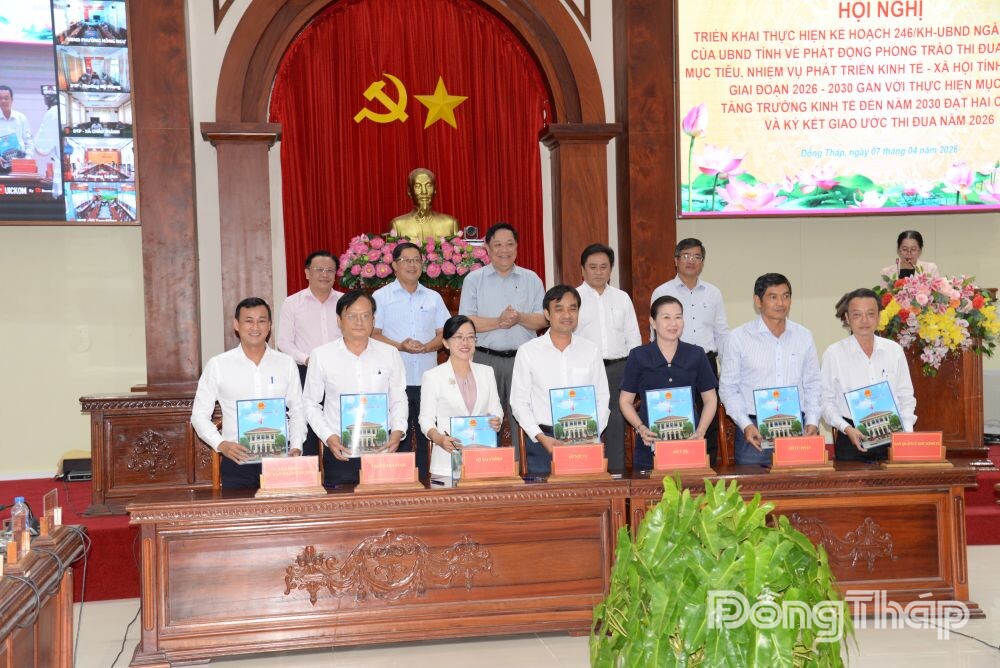
He also requested that all units immediately begin carrying out their assigned tasks. The first priority is to implement the newly delegated responsibilities. The next is to review any pending work, particularly long-stalled projects at high risk of waste, and focus on clearing obstacles.
Departments and localities must accelerate administrative reform to enhance investment attraction, support economic growth, and implement key economic-development resolutions. Priority should be placed on removing obstacles and speeding up industrial zone and cluster development. At the same time, the province must push forward public investment disbursement and bring science and technology into practical application and production.
He called on departments, agencies, and localities to work in unity, driving positive change to advance socio-economic development and contribute to achieving the province’s growth targets.
By M. THANH
Translated by ANH DUC