
Dong Thap Strengthens Military-Civilian Solidarity in Border Areas
(DTO) With the motto “teach people how to fish rather than give them fish,” Dong Thap is implementing a coordinated and determined range of measures to reduce multidimensional poverty while consolidating national defence and security.
Thanks to the involvement of the entire political system and the spirit of mutual support at all levels, new opportunities have opened up for border residents to become self-reliant in their livelihoods, secure stable employment and gradually improve their lives.
SUPPORTING BORDER RESIDENTS
Along Dong Thap Province’s border, rural areas are changing for the better each day, with well-built roads stretching through hamlets and residential quarters, while livestock-rearing models and production groups are gradually replacing the mindset of dependence and reliance on state support.
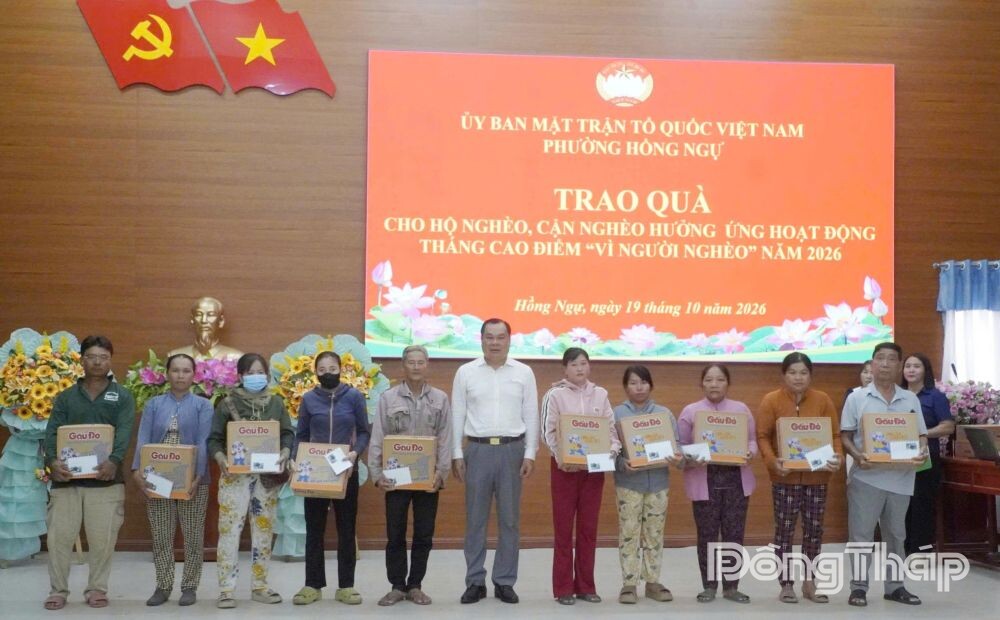
These achievements stem from the coordinated implementation by localities across the province of sustainable poverty reduction measures based on a multidimensional, cross-sectoral approach, with livelihood development and enhancing people's self-reliance at the centre.
Amid these changes, the “Accompanying Border Women” programme has become a fresh source of vitality, delivering practical results in border communes and wards.
The programme has been implemented in a substantive manner and has become a firm support for women members in developing their household economies, while affirming women's role in safeguarding territorial sovereignty.
Despite the particular hardships of border areas, it has become a familiar sight to see officials from all levels of the Women's Union working alongside Border Guard officers and soldiers, visiting individual households to understand residents' concerns and aspirations.
Many creative models and initiatives have been maintained and expanded, including the “Compassionate Rice Jar” initiative, the “Supporting Children on Their Way to School – Border Guard Station Foster Children” programme, and the participation of Women's Union members in self-management teams for border lines and national boundary markers. In particular, humanitarian programmes such as “Spring Trees for Soldiers,” “Godmother,” and “Millions of Gifts Sharing Love” have touched the hearts of thousands of border residents, further strengthening military-civilian solidarity.
Identifying helping women escape poverty as a key task in stabilising life in border areas, Women's Union chapters at all levels have translated this goal into clear action mottos: “Each branch helps one poor woman escape poverty,” “Each grassroots Women's Union chapter helps one poor household achieve sustainable poverty reduction,” and the model of “Three well-off households helping one poor household escape poverty sustainably.” Through close guidance and support, the programme has helped hundreds of poor women's families meet the criteria of the “Five Nos, Five Haves” and “Three Clean” campaigns.
To maximise the effectiveness of support resources, the Dong Thap Provincial Women's Union has proactively provided livelihood capital to women in border communes and wards, while offering interest-free financial assistance to households that do not qualify for bank loans.
At the same time, close coordination with local transaction offices of the Vietnam Bank for Social Policies has helped disburse loans to women from poor households and those who have recently escaped poverty.
With access to capital, women have become more confident in investing in models suited to local soil conditions and traditional practices, such as raising chickens, ducks and goats, running small businesses, joining garment-making groups or participating in cooperative groups producing woven plastic chairs.
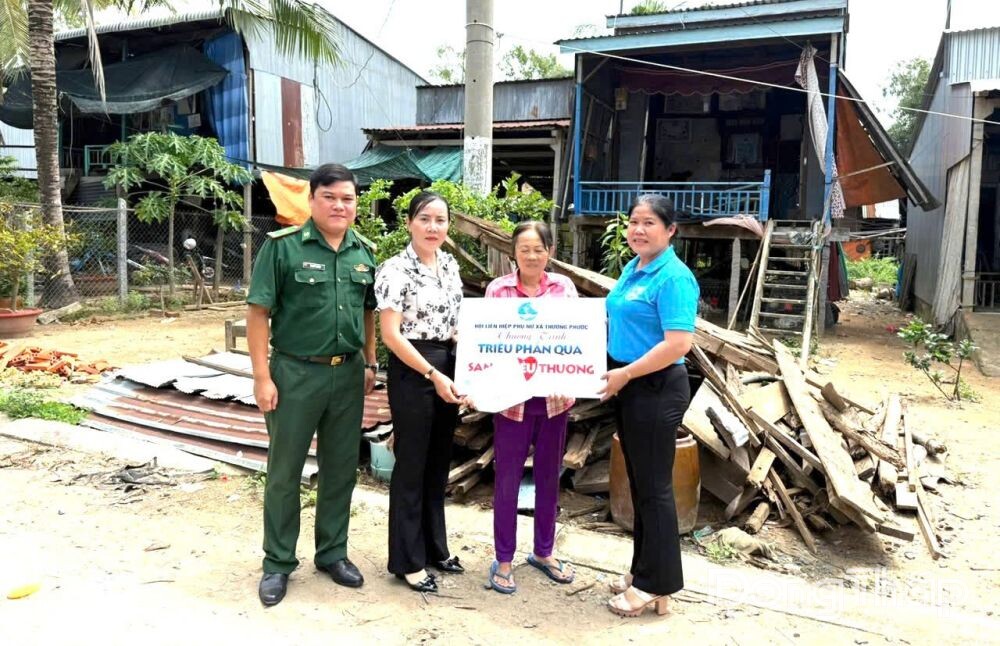
The Women's Union of Thuong Phuoc Commune has effectively mobilised social resources and tapped the potential of its members to implement models such as “Women Supporting Each Other in Developing Household Economies” and “Helping Poor Households Escape Poverty Based on Multidimensional Criteria.”
Through sharing business experience, providing vocational training and connecting women with the Women's Economic Development Fund, the union has helped many members access more than VND1 billion in capital for livestock raising and small-scale trading.
According to the commune Women's Union, recent efforts to promote thrift in line with President Ho Chi Minh's example, through models such as “Raising Piggy Banks” and “The 100-Dong Women's Home Group,” have generated practical local funds. In addition, the union has mobilised benefactors to provide more than 300 gifts worth over VND90 million to women, 150 gifts worth VND30 million to children, and 45 scholarships worth VND22.5 million, giving disadvantaged families further encouragement to improve their circumstances.
TOWARDS ELIMINATING POOR HOUSEHOLDS
Alongside the efforts of local authorities and mass organisations, armed forces stationed in the area have also made significant contributions to poverty reduction.
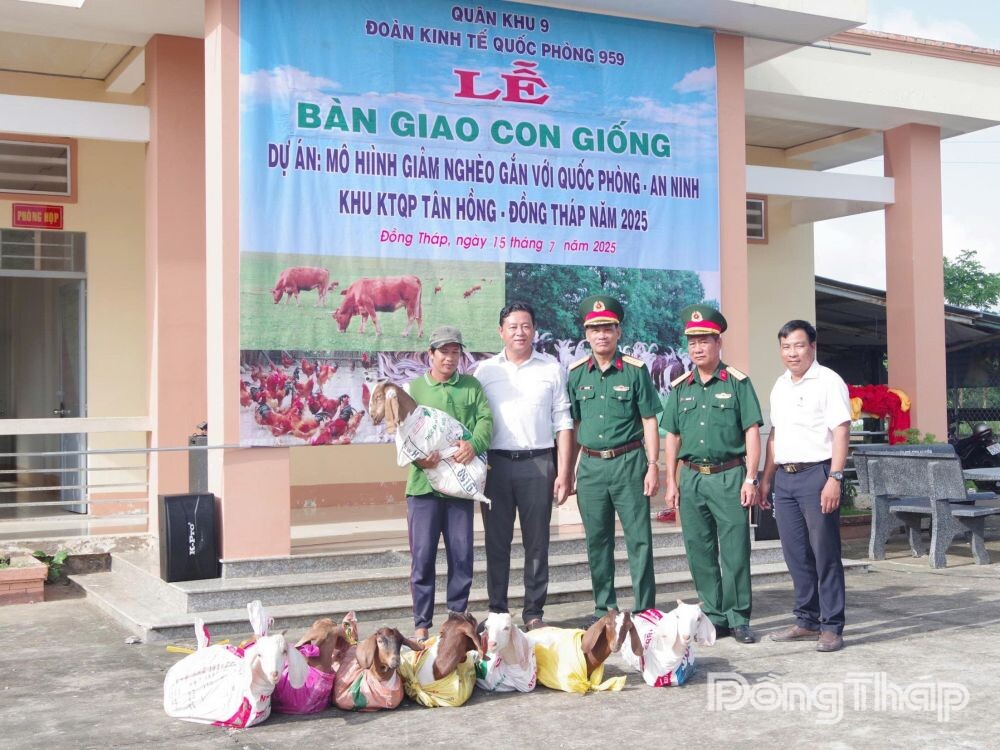
In particular, Economic-Defence Corps 959 of Military Region 9 has become a trusted source of support for local residents by providing direct technical guidance and assistance with livestock breeds and production materials, helping households restructure production in line with local climate and soil conditions.
The unit has organised technical training for hundreds of households and presented thousands of livestock to poor and near-poor households, as well as those that have recently escaped poverty, with total funding exceeding VND8.8 billion.
Colonel Bui Duy Quan, Commander of Economic-Defence Corps 959, said: “It is these specific and practical efforts to support the people that have made the close-knit bond and blood ties between the military and civilians in border areas increasingly strong, creating an important foundation for successfully fulfilling socio-economic development tasks in conjunction with strengthening national defence and security.”
To prevent poverty reduction efforts from becoming fragmented or leading to households falling back into poverty, Dong Thap has adopted a systematic approach to consolidating its management apparatus and classifying target groups for assistance.
Immediately after completing the reorganisation of its administrative apparatus under the two-tier local government system, the province swiftly restructured its management system and mobilised diverse resources to ensure the continuous and smooth implementation of National Target Programmes.
The province is pursuing a differentiated poverty reduction strategy across three specific target groups: focusing on support for production development, vocational training and job placement; prioritising access to education, healthcare, housing, clean water and information; and fully implementing social protection policies and long-term welfare assistance.
A highlight of the province's approach is the focus by poverty reduction steering committees at all levels on organising value-chain-based livelihood models closely linked with cooperatives, cooperative groups and off-taking enterprises. The province encourages poor households to join group-based production arrangements to build commercial scale, enhance competitiveness and improve economic efficiency.
The coordinated integration of livelihood support, preferential credit and technical guidance for value-chain-based production is the key to strengthening people's self-reliance and creating a solid foundation for substantive poverty reduction.
Dong Thap aims to reduce its average poverty rate by approximately 0.18 percentage points annually, achieve the goal of eliminating all poor households under the multidimensional poverty standard by 2029, and firmly maintain this result through 2030.
The province also strives to ensure that at least 80% of working-age people from poor and near-poor households in need of support receive assistance to improve their production capacity in agriculture, forestry, fisheries and non-agricultural occupations, enabling them to adapt effectively to climate change and disease outbreaks.
With unity in both policy and action, Dong Thap's border areas are becoming increasingly developed and peaceful, where every resident has the opportunity to take control of their livelihood and build a prosperous life in their homeland.
By DUONG UT – NTL
Translated by X.QUANG