
Dong Thap Strengthens Traceability for Agricultural, Forestry, and Aquatic Products
(DTO) To ensure product quality, food safety, and alignment with market integration requirements, the Dong Thap Provincial People’s Committee has issued a plan to implement traceability for agricultural, forestry, and aquatic products for the 2026-2030 period, with a vision to 2035.
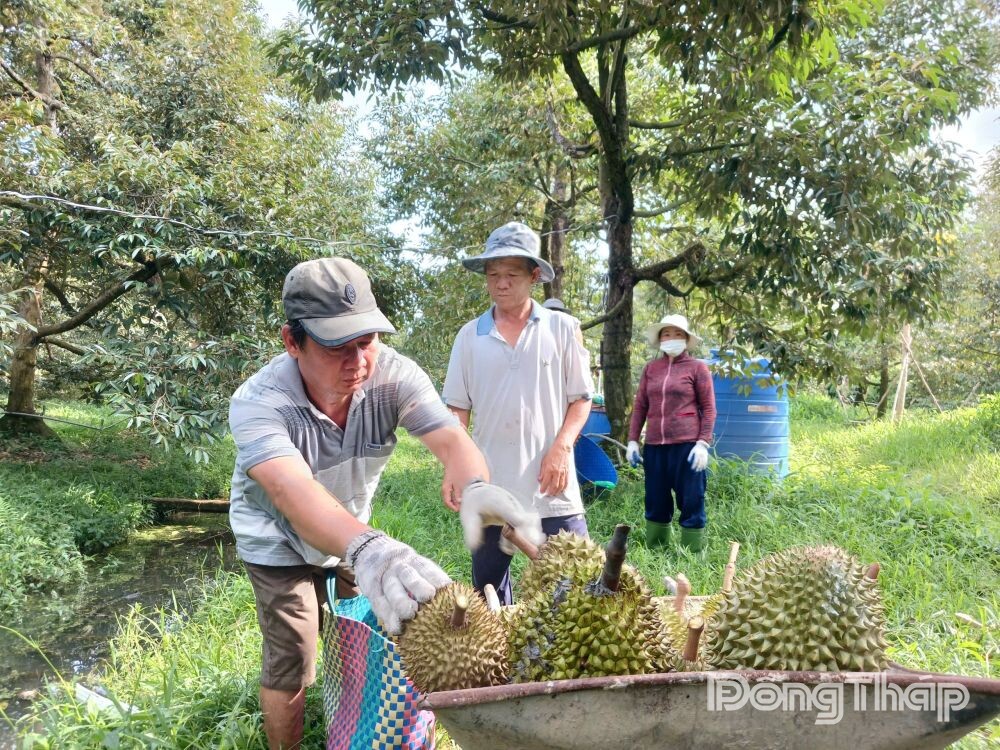
According to the plan, the traceability system will apply to agricultural products, aquatic products, and agricultural inputs under the state management of the agriculture and environment sectors.
The system will be implemented throughout the entire production chain, from production, harvesting, preliminary processing, processing, and storage to transportation and consumption. Priority will be given to durian, key commodity sectors, and export-oriented products.
In 2026, Dong Thap will pilot a traceability system for agricultural products, starting with at least one durian pre-processing and packaging facility in the province.
Alongside the pilot phase, the province will review and assess its existing infrastructure like facilities, technical systems, and information technology to ensure stable, seamless, and secure operation of the traceability system. Dong Thap will also coordinate with the Ministry of Agriculture and Environment to develop and improve the agricultural traceability system.
The province aims that by 2030, 100% of planting area codes and packaging facilities approved by importing countries will apply the agricultural traceability system, including products exported directly or through cooperative or authorized export channels.
By 2030, the province also targets that all large-scale livestock farms with valid certificates of eligibility will be assigned codes and included in the traceability system.
100% of pangasius farms, brackish-water shrimp farms, and cage fish farms with food safety certificates will participate in the system. At least 50% of OCOP-certified agricultural products will apply traceability (excluding community-based tourism, eco-tourism, and tourism site services). All OCOP-certified products rated 4 stars or higher must apply the system. By 2035, the goal is for 100% of OCOP-certified agricultural products to be traceable.
Furthermore, the province aims for all organizations, individuals, and enterprises participating in the agricultural traceability system to receive training and guidance. By 2030, the province expects to essentially complete its equipment, technical infrastructure, and information technology system to ensure stable and secure traceability operations that meet state management requirements. By 2035, the system should be fully integrated with the national traceability portal.
To achieve these goals, Dong Thap will strengthen communication, awareness-raising, and dissemination of information about agricultural traceability, while enhancing state management functions in this field.
The province will also accelerate the application of new technologies to improve system effectiveness. Specifically, Dong Thap will study, adopt, and integrate advanced digital traceability technologies such as identification codes, barcodes, QR codes, blockchain, and other suitable solutions to improve transparency, authenticity, and efficiency in information management along the entire agricultural supply chain.
In addition, the province plans to explore the use of artificial intelligence (AI) in traceability to support data standardization, analysis, and utilization.
Additionally, Dong Thap will build, improve, and effectively operate its agricultural traceability system.
By ANH THU
Translated by ANH DUC