
Dong Thap Strengthens Training Links to Address Demand for High-Quality Workers
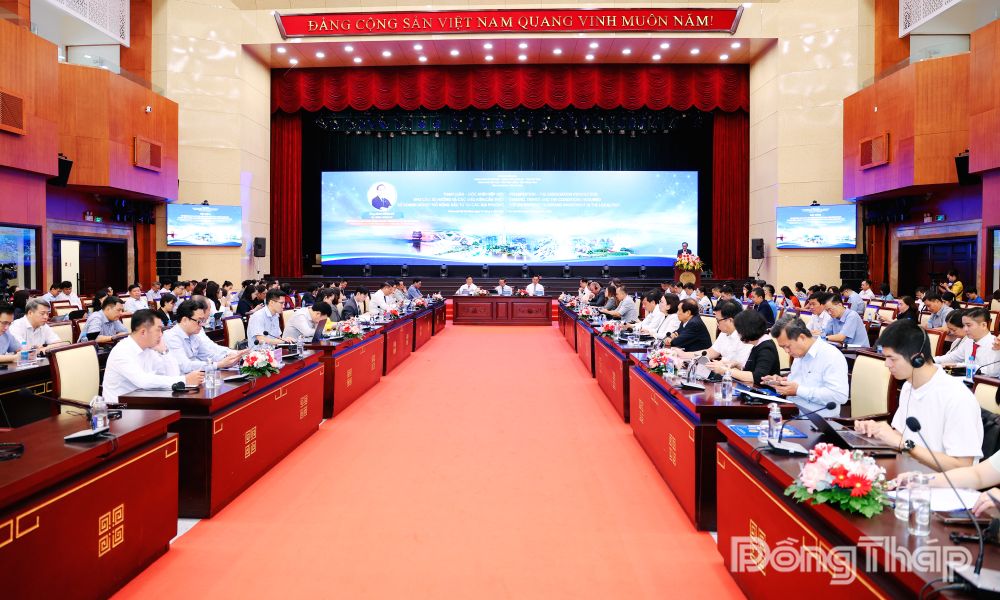
(DTO) On the afternoon of September 17, at a discussion session of the Investment Linkage and Development Cooperation Conference between Ho Chi Minh City and provinces and cities in the Southeast and Mekong Delta regions, business and investor representatives focused on the demand for human resources, infrastructure, land and logistics. They also proposed solutions to remove obstacles and facilitate investment, production and business activities.
A representative of Kinh Bac Group’s investment promotion division raised concerns about the supply and quality of workers. Industrial parks such as Tan Phuoc and Song Hau are expected to create tens of thousands of jobs for local residents. However, what solutions does the locality have to ensure a high-quality local workforce and prevent FDI businesses from facing shortages of skilled workers?

The representative also stressed the need to strengthen training links and develop social housing. Dong Thap Province, as well as other provinces and cities, was urged to set aside well-planned land adjacent to industrial parks for social housing and rental housing, helping retain workers and attract experts.
At the same time, training programs could be developed based on orders from industrial park infrastructure businesses, in cooperation with colleges and vocational education institutions in the province. Regional cooperation in logistics could also be established, making use of riverside industrial parks to develop ports and inland waterway terminals connected directly to local waterways and ports, thereby minimizing logistics costs for businesses.

Responding to these issues, Nguyen Dinh Phuong Uyen, Deputy Director of the Dong Thap Department of Finance, said that based on her work advising on economic development, investment and business affairs, she believes that, from the finance sector’s perspective, one of the major issues in investment in recent years, besides logistics infrastructure difficulties, has been site clearance for projects.
This is not only an issue for Dong Thap but also a common challenge faced by many localities. Following Politburo’s Resolution No. 21 on orientations for amendments to the Land Law and related laws, and during the adjustment of Dong Thap’s provincial planning, the issue has created an even greater need for appropriate solutions.

Nguyen Dinh Phuong Uyen also said that Dong Thap currently has six industrial parks in operation, four industrial parks undergoing investment procedures, and plans to attract another 18 industrial parks. Implementing these projects will create significant demands for land acquisition, support, compensation and resettlement.
Therefore, land acquisition for economic development must ensure a balance of interests for affected residents. Dong Thap has assigned the Department of Construction to develop a plan for residential clusters for the 2026 to 2030 period. Under the plan, 20 residential areas covering more than 240 hectares are expected to be developed, providing about 11,059 residential lots to promptly meet local residents’ needs for compensation, site clearance and housing.
Currently, 15 resettlement projects covering 68.65 hectares are being implemented across the province, with about 2,500 affected households expected to be resettled. Total state budget funding for these projects is 1.192 trillion VND. In particular, these residential areas are planned to be located adjacent to industrial parks and clusters, helping residents stabilize their lives while giving them access to jobs and livelihood opportunities locally.
As for the workforce, this remains a major challenge for Dong Thap. In the past, many workers left their hometowns, particularly for other provinces and cities, in search of jobs. However, if businesses and workers can reach agreement on employment, income and working conditions, local residents are more likely to stay and work in their hometown.

In recent years, the Dong Thap Employment Service Center has directly connected workers with businesses seeking employees, mainly for unskilled jobs. However, the supply of high-quality workers remains a major challenge. In reality, many Dong Thap workers also want to return home for work, but the requirements of businesses have not yet fully matched workers’ skills and needs. This has also been a concern raised by many businesses during recent meetings.
Therefore, the locality will continue to collect feedback and find solutions to strengthen connections among state management agencies, training institutions, workers and businesses. This will help clearly identify the type and number of high-quality workers businesses need, as well as specific professional and skill requirements, gradually improving the ability to meet labor market demand.
The Dong Thap Economic Zone Management Board has recently signed cooperation agreements with universities and colleges inside and outside the province to train human resources for industrial parks and economic zones in the province. Through these cooperation programs, the parties expect to gradually build a sustainable training and human resource development ecosystem, helping enhance investment appeal and make Dong Thap an attractive destination for domestic and foreign investors.
Dong Thap aims to have 82.5% of its workforce receive training by 2030, gradually building a high-quality workforce to meet development requirements in the new period. The province identifies people as the center of development, with high-quality human resources playing an important role in improving competitiveness and driving sustainable development.
By HA NAM
Translated by ANH DUC