
Dong Thap strengthens water security amid climate change
(DTO) On April 9, the Department of Agriculture and Environment held a workshop titled “Strengthening solutions for freshwater storage, transfer, and replenishment to serve production and daily life amid climate change in Dong Thap province.”
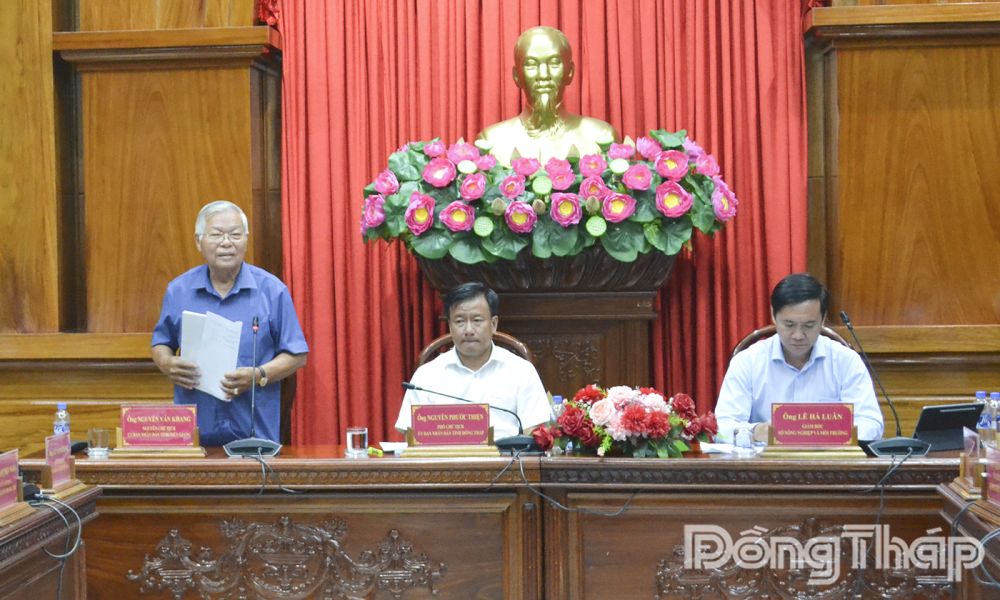
The workshop was chaired by Dr. Nguyen Van Khang, former Deputy Secretary of the Tien Giang Provincial Party Committee and former Chairman of the Provincial People’s Committee; Dr. Nguyen Phuoc Thien, Vice Chairman of the Dong Thap Provincial People’s Committee; and Le Ha Luan, Director of the Department of Agriculture and Environment. It also drew representatives from research institutes, the Hydrometeorological Station, former provincial leaders, experts, and scientists.
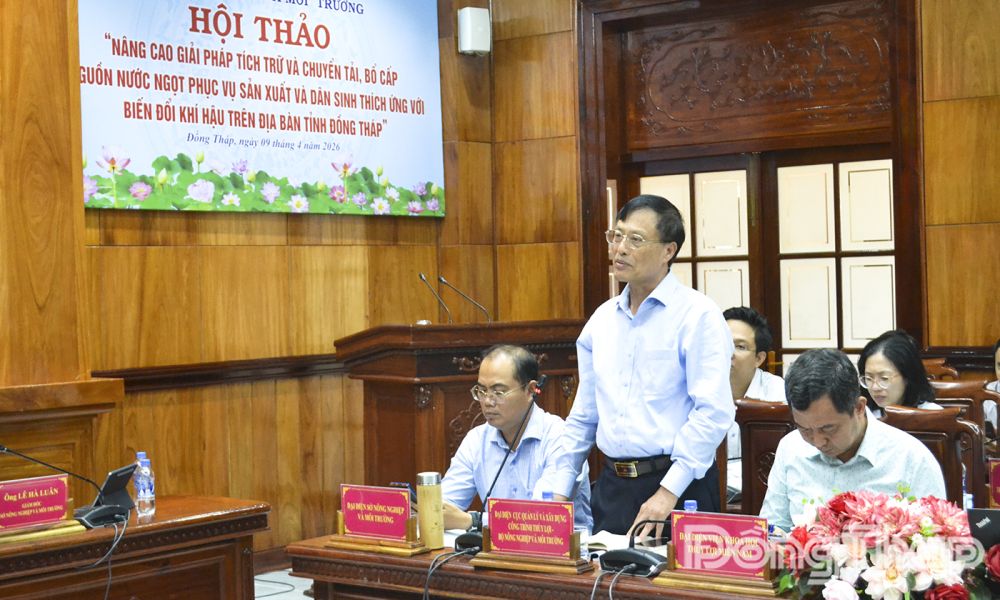
The workshop aimed to assess the current water resource status and propose viable solutions to bolster water security capacity within the province, fostering sustainable development and proactive climate change adaptation in the coming period.
At the workshop, representatives of the Department of Agriculture and Environment presented reports on the current status of water resources and saline intrusion, while proposing solutions to ensure water supply for production and domestic use. The Southern Regional Hydrometeorological Center also reviewed hydrological conditions in the Mekong Delta in 2025 and provided forecasts for 2026.
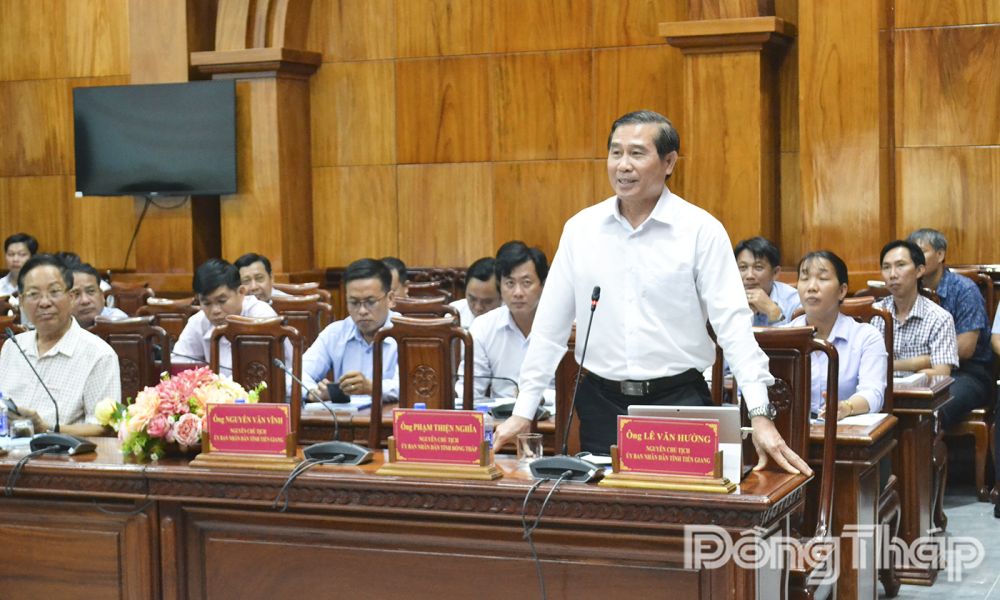
Research institutes presented key reports on strategic issues, such as water security solutions for the Go Cong freshwater zone, regional linkage in water governance in the Mekong Delta in the context of Dong Thap, and solutions for fruit tree cultivation under drought and salinity conditions.
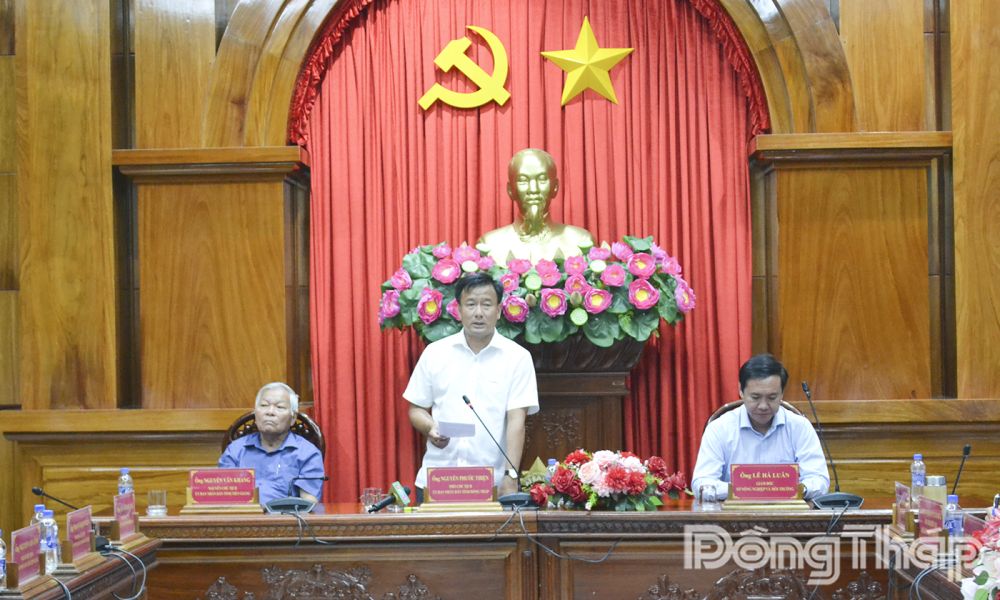
Speaking at the event, Vice Chairman Nguyen Phuoc Thien emphasized that investing in freshwater storage, transfer, and replenishment solutions is essential, but must ensure substantive efficiency and avoid fragmented or superficial implementation. Project development, he noted, must be grounded in scientific evidence, expert opinions, and realistic scenarios tailored to local conditions.
The Vice Chairman urged the Department of Agriculture and Environment to fully absorb feedback from experts, scientists, and former provincial leaders to promptly finalize a comprehensive report for project formulation. At the same time, the department should accelerate proposals for research initiatives, feasibility assessments, and the selection of optimal solutions to shorten preparation time.
Additionally, he stressed the need to integrate freshwater storage and supply solutions into provincial planning, identify specific project lists for implementation, and mobilize resources. The implementation process should be carried out in a synchronized manner, with continuous research and updates to meet practical requirements.
Provincial leaders also highlighted the importance of efficient and economical water resource management, adjusting production structures in line with water availability, and studying on-site water storage solutions by utilizing canals, ditches, ponds, and fields.
Ensuring water security is a vital, long-term mission requiring close coordination among departments, sectors, and localities, alongside the active participation of the scientific community, to drive sustainable socio-economic development amidst climate change.
By H.THONG
Translated by X.QUANG