Dong Thap targets sustainable, low-emission durian value chain
(DTO) On the morning of August 20, Tien Giang University, in partnership with THE VOS Ecosystem Joint Stock Company (THE VOS), organized a specialized seminar titled “Developing a Sustainable and Low-Emission Durian Value Chain in Dong Thap Province.”
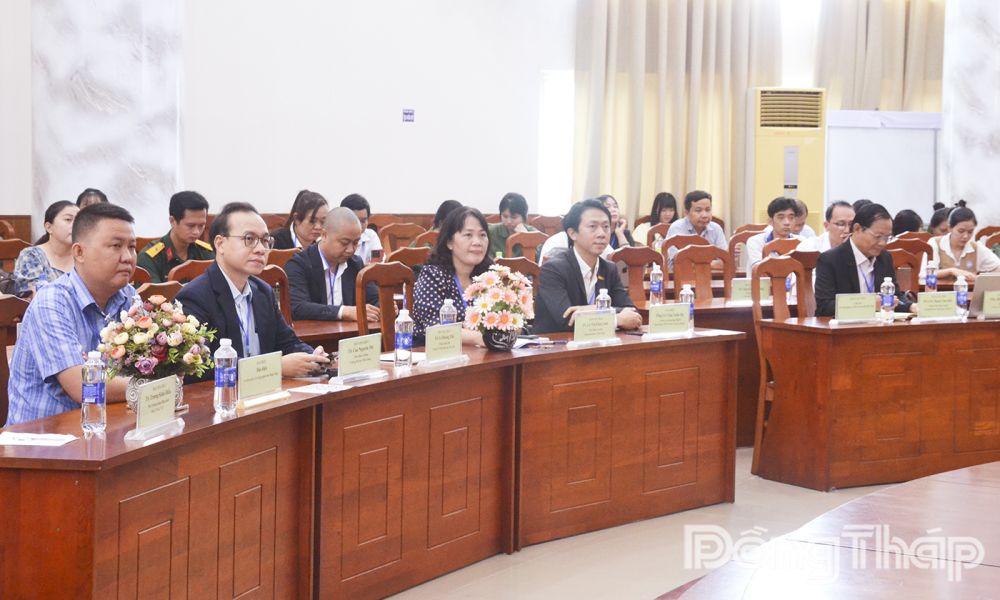
The seminar drew representatives from Dong Thap provincial departments and sectors, leaders of Tien Giang University and THE VOS, the Vietnam Fruit and Vegetable Association (Vinafruit), alongside experts, scientists, bankers, businesses, cooperatives, Farmers’ Forums, and durian orchard owners.
In his opening remarks, Dr. Cao Nguyen Thi, Vice Rector of Tien Giang University and Head of the Organizing Committee, highlighted durian as a high-value commodity with immense potential for development and export. However, the sector is facing increasingly stringent requirements regarding quality, food safety, origin traceability, phytosanitary measures, and environmental standards.
According to Dr. Cao Nguyen Thi, chemical residues, cadmium contamination, carbon footprints, and the imperative to transition toward green, low-emission production are becoming critical conditions for durian to maintain and expand its market share. Therefore, the sector must adopt a value-chain approach, encompassing everything from growing areas and cultivation practices to testing, certification, traceability, processing, and trade.
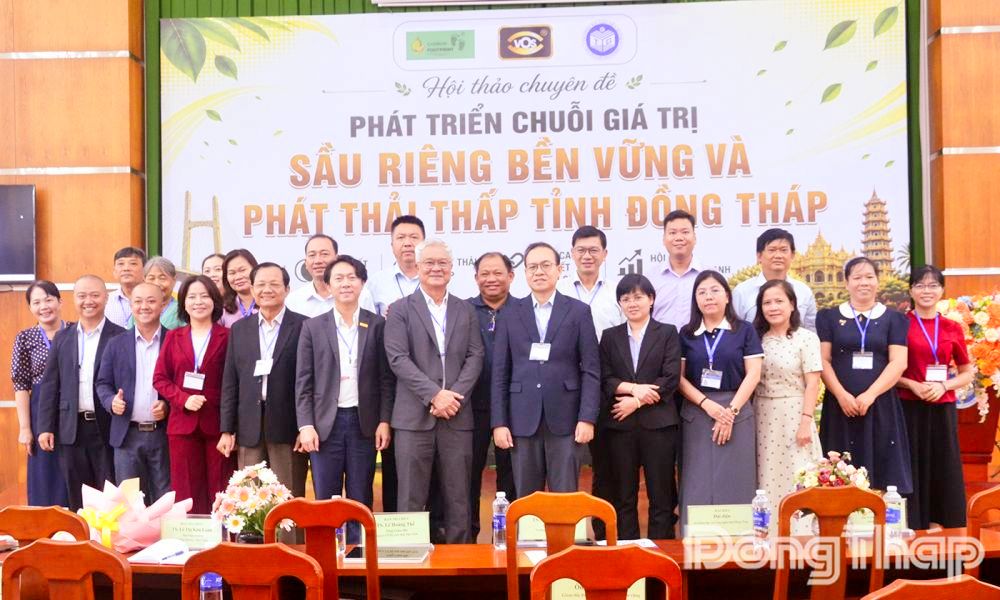
The seminar provided a platform for regulators, scientists, businesses, credit institutions, cooperatives, and growers to collaborate and propose viable scientific, technological, and practical models to drive the sustainable, low-emission development of Dong Thap's durian value chain.
Speaking on cooperation orientations, Dr. Le Hoang The, Chairman of THE VOS, stressed that the durian industry faces an urgent need for green transformation and improved capacity to meet emission thresholds, chemical residue limits, and heavy-metal contamination controls.
At the seminar, THE VOS and its partners introduced several solutions for low-emission agricultural production, including a model using Ganoderma mushrooms to treat cadmium contamination, digitalized IoT infrastructure, and a dMRV system for transparent management of growing areas, aimed at supporting rapid screening of key indicators on-site.
Delegates also focused discussions on the current state of Dong Thap's durian industry; export activities, food safety, green consumption trends, and testing standards; as well as solutions for training, technology transfer, and the application of water-saving irrigation models to adapt to climate change and foster low-emission production.
Ultimately, the seminar aimed to identify opportunities, challenges, and bottlenecks in the durian value chain, while carving out solutions for production, quality standards, food safety, exports, green consumption, emissions reduction, and access to green capital. It also sought to strengthen linkages among regulators, scientists, businesses, credit institutions, cooperatives, and producers.
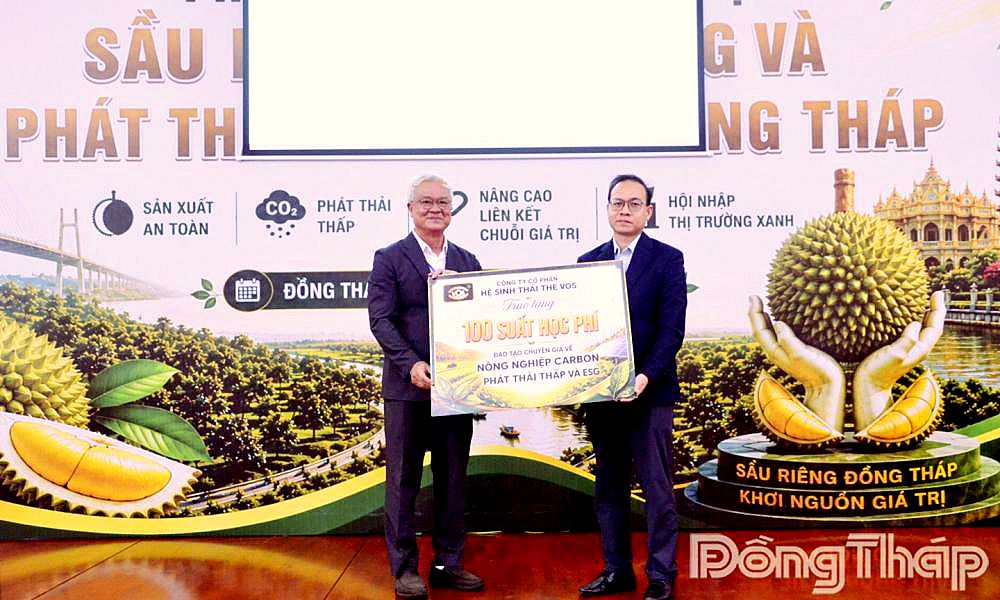
On this occasion, THE VOS presented a symbolic board for 100 tuition-free slots in a training program for low-emission carbon agriculture and ESG experts to Tien Giang University.
By H. THONG
Translated by X.QUANG