
Dong Thap's collective economy gains strong momentum
(DTO) The collective economy sector in Dong Thap has made remarkable progress in recent years, with cooperatives expanding in both scale and operational quality. By embracing innovation, strengthening value chain linkages, and adopting advanced technologies, many cooperatives have gradually secured a foothold in export markets. To sustain this momentum, the province is rolling out a range of support policies aimed at building modern, efficient cooperative models.
STEADY GROWTH
According to the Dong Thap Cooperative Alliance, the province's cooperative sector continued to expand in terms of quantity, scale, and operational quality during the 2020–2025 period.
The province established 125 new cooperatives and dissolved 28 during the period, bringing the total active number to 539, up 22% compared to 2020. Their combined charter capital reaching VND 1.674 trillion. A total of 344 cooperatives were rated as performing well or excellent, an increase of 27.4% over 2020.
Total cooperative membership reached 169,751, up 26.6%, including 10,104 new members, representing a 26% increase compared to 2020. Cooperatives employed 2,599 management personnel, including 1,848 with primary or intermediate vocational qualifications (up 55.8%), and 751 holding college or university degrees or higher (up 72.6% from 2020).
Average annual revenue reached VND 7.775 billion per cooperative, up 2.1%; average annual profit stood at VND 305 million per cooperative, an increase of 10.5%; while the average annual income of regular employees reached VND 85 million per person, up 26% compared to 2020.
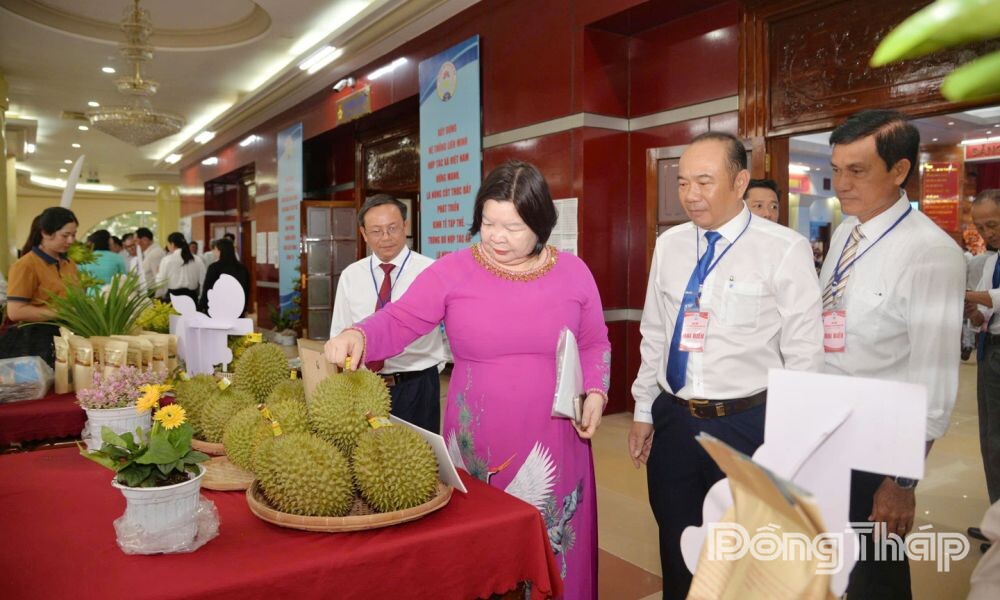
Addressing the 1st Congress of the Dong Thap Cooperative Alliance for the 2025–2030 term, Ms. Cao Xuan Thu Van, Chairwoman of the Vietnam Cooperative Alliance, urged the newly elected Executive Board to focus on five key tasks. First, she called for building Dong Thap into the country's leading locality in developing modern agricultural cooperatives, emphasizing qualitative operational efficiency over numerical growth and placing members' interests at the center of development. Second, the Chairwoman stressed the need to develop value chains bearing the Dong Thap brand, woven directly into the province's key products such as rice, Cao Lanh mangoes, Sa Dec flowers, OCOP products and other commodities with export potential. Each key commodity sector should be driven by capable cooperatives acting as the core nuclei to spearhead these linkages. Third, she called for accelerating digital transformation in the collective economy sector by deeply integrating digital technologies into corporate governance, production organization, e-commerce transactions, product traceability, and market connectivity. Fourth, Dong Thap must take the lead in developing a green and circular economy, with the goal of modeling the province as a benchmark for green agricultural cooperatives featuring low-emission production, organic farming, and climate change resilience in line with green growth objectives. Fifth, she emphasized the need to build the Dong Thap Cooperative Alliance into a genuine hub for connecting resources and a steadfast partner that supports cooperatives while safeguarding their legitimate rights and lawful interests. At the same time, the alliance should serve as an institutional catalyst, inspiring and driving the robust development of the collective economy sector. |
During the 2020–2025 term, cooperatives recorded encouraging progress in quantity, scale, and quality, reaffirming their role in developing the collective economy, creating jobs, and ensuring social security.
Their organizational structure and operational quality have been gradually enhanced, while production and business efficiency, as well as workers' incomes, have improved significantly.
Since its establishment, the My Long Agricultural Service Cooperative in My Hiep Commune has operated in various fields. However, its most successful business model—benefiting both cooperative members and local farmers—has been its linkage in cultivating seedless limes under certified standards for export to the European market.
The cooperative currently has 210 members cultivating 60 hectares of seedless limes. It is also expanding its raw material area to 95.2 hectares with the participation of 98 farming households to meet growing market demand.
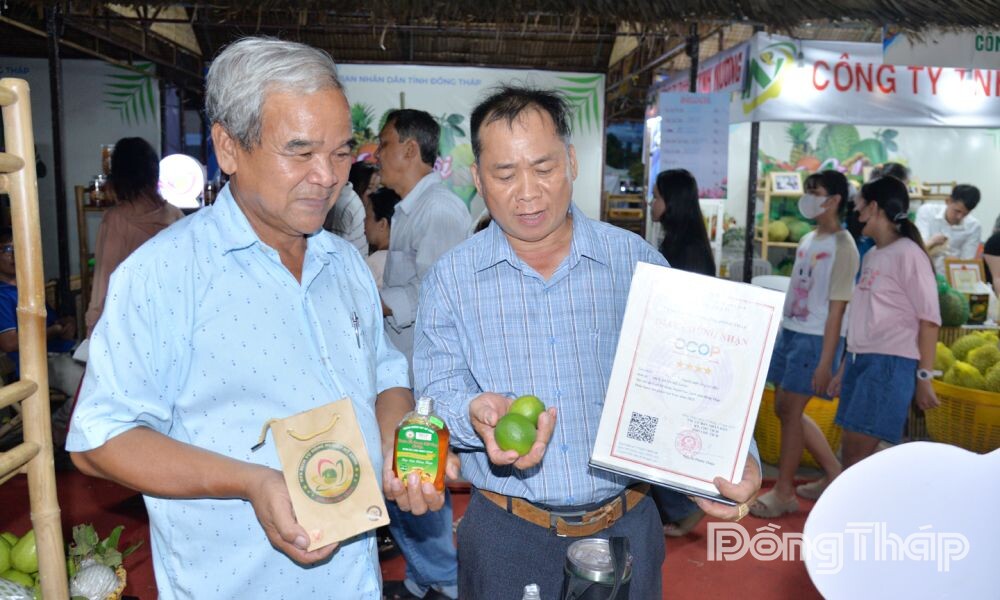
Mr. Le Van Nam, Chairman of the Board of Directors of the My Long Agricultural Service Cooperative, said: "The cooperative successfully launched its debut product—concentrated lime honey juice made entirely from seedless limes and Melaleuca forest honey, certified as a three-star OCOP product.
"The cooperative successfully built an ISO-HACCP certified processing plant and invested in advanced technological equipment in August 2023.
"More recently, the cooperative has boldly embraced a green transition for its closed-loop seedless lime production project. After fresh limes are exported, second- and third-grade fruit is processed into value-added products such as concentrated lime honey juice, lime-infused soap, lime peel enzymes, and organic fertilizer made from lime peel residue, creating a closed-loop circular economy for My Long limes."
Established in 2003, the Quang Minh Cooperative in Trung An Ward currently has 26 members. Its primary business is the production and export of handicraft products, including baskets, crates, trays, and laundry hampers woven from water hyacinth, seagrass, and plastic cord.
The cooperative currently operates four production workshops employing around 150 workers. In addition, it engages approximately 3,000 home-based artisans organized into 28 production groups across Dong Thap and Vinh Long provinces.
Its products are primarily exported to the United States, Europe, Australia and Canada, generating an average annual export revenue of US$5 million.
Mr. Cao Dung Khanh, Director of the Quang Minh Cooperative, said: "Through persistent efforts to overcome difficulties, the cooperative has helped generate thousands of rural jobs, delivered substantial economic value, and driven the sustainable development of the collective economy."
PARTNERING WITH COOPERATIVES FOR SUSTAINABLE GROWTH
According to Mr. Le Quang Cuong, Chairman of the Dong Thap Cooperative Alliance, the province's collective economy sector remained resilient amid a challenging past term, committing to innovation and achieving steady progress in both scale and quality.
Today's cooperatives are no longer merely vehicles for production linkage, but are gradually becoming hubs connecting farmers with businesses, markets, science and technology, and digital transformation.
Many cooperative models have demonstrated their effectiveness, boosting members' incomes, driving new-style rural development and catalyzing local socio-economic growth.
According to Le Quang Cuong, alongside these positive achievements, the collective economy sector admittedly faces lingering hurdles.
This requires a paradigm shift, stronger governance capacity, closer linkages, greater self-reliance, and a sharper focus on leveraging development opportunities in the new period.
As the country enters a new era characterized by digital transformation, green growth, and deeper international integration, the new term calls for fresh thinking, renewed determination, and more breakthrough approaches.
The Dong Thap Cooperative Alliance will continue to champion cooperatives by placing members at the center, using operational efficiency as the benchmark, taking innovation as the driving force, and promoting cooperation and linkages as the foundation for development.
In the coming period, the alliance will step up communications on the Party's guidelines and the State's policies regarding cooperative development, while raising public awareness and strengthening understanding across the political system of the role of the collective economy and cooperatives.
At the same time, it will proactively participate in translating the Party's resolutions and the State's policies and laws on collective economy and cooperative development into practical implementation suited to the province's conditions.
The alliance will also effectively fulfill its role in representing and protecting the legitimate rights and interests of its members, while enhancing support and advisory services to improve the operational quality and efficiency of existing cooperatives.
One of the key priorities will be to foster a dual digital and green transition, promoting the development of the collective economy and cooperatives on the foundation of science, technology, and innovation.
The Dong Thap Cooperative Alliance will further strengthen training programmes to improve governance capacity and professional skills for cooperative officials. Particular emphasis will be placed on enhancing linkages between cooperatives and corporate partners to support the sustainable development of the collective economy and cooperatives.
By T. Dat
Translated By X.QUANG