

Dr. Tran Triet: A Man Who Knows Every “Heartbeat” of Tram Chim
(DTO) Some people come to Tram Chim National Park for a survey or a research project, then leave. But others stay, dedicating nearly their entire lives to this land. For Dr. Tran Triet, Tram Chim is not only a place for scientific work. It is tied to his youth, his formative years, and all the joys and sorrows he has shared with this place.
A COMMITMENT TO TRAM CHIM
For more than 40 years, he has quietly walked through the melaleuca forests and flooded grasslands of the Dong Thap Muoi region.
From a young university student to now, with silver hair, Dr. Tran Triet has devoted almost his entire life to witnessing Tram Chim National Park transform day by day.
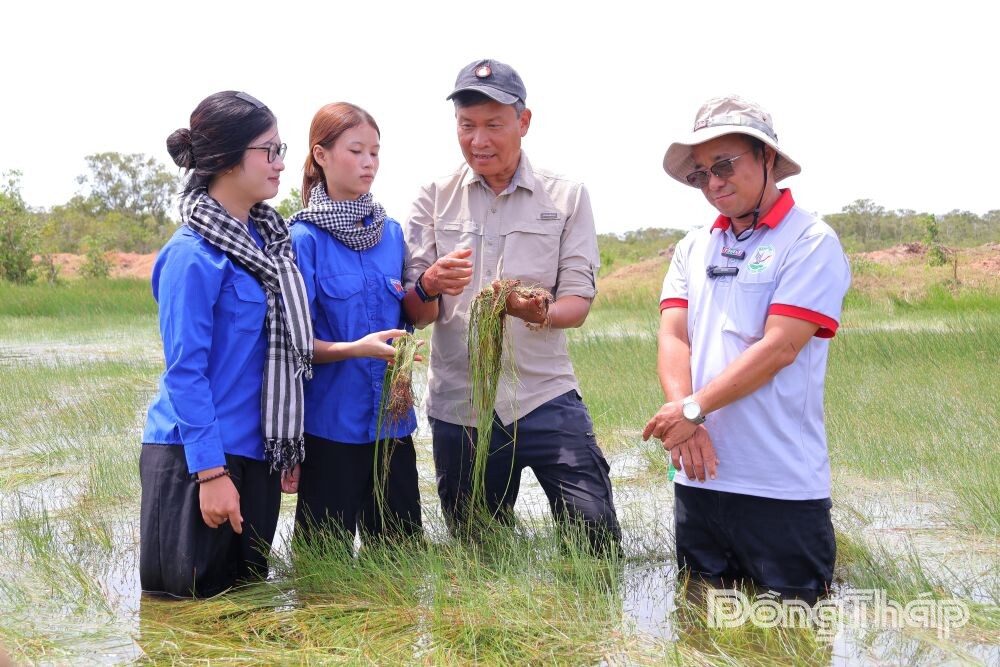
Dr. Tran Triet vividly remembers the first time he set foot here, back in 1986. He recalls: “I was a final-year Ecology student when Nguyen Xuan Truong, former Chairman of the Dong Thap Provincial People’s Committee, who laid the foundations for the establishment of Tram Chim National Park, invited me to conduct a field survey in Dong Thap Muoi. That trip marked the beginning of my lifelong connection to Tram Chim.”
The first time he saw a flock of sarus cranes spread their wings across the expansive grasslands, he realized that this place was far more than a melaleuca forest.
“The most important goal is not only to bring the cranes back, but to restore the entire ecosystem of Tram Chim. Tram Chim is not just about sarus cranes. Its greatest value lies in the wetland ecosystem as a whole, where countless endemic plant and animal species coexist.” DR. TRAN TRIET |
It is an extraordinary part of the Dong Thap Muoi landscape, which, once lost, would be extremely difficult to restore. Later, thanks to a scholarship from the International Crane Foundation, he went to the United States to pursue a PhD in wetland ecology at the University of Wisconsin-Madison. But the more he studied and traveled, the more he appreciated the value of natural wetlands like Tram Chim.
Having accompanied Dr. Tran Triet many times on field surveys at Tram Chim, we can clearly sense that his affection for this place is no longer that of a scientist toward a research subject. It is the affection of someone who has witnessed a beloved land weather countless ups and downs.
During the 2025 flood season, on a survey trip to Zone A1, the Go Lao Voi area of Tràm Chim National Park, where more than 150 hectares of spike rush have been strongly regenerating, Dr. Tran Triet stood for a long time in the vast flooded fields, gently touching the young shoots that had revived after years of decline. His gaze at that moment was like someone reuniting with an “old friend” after a long separation.
Afterward, he enthusiastically explained to students of Tram Chim High School why spike rush is vital to sarus cranes, and why preserving the cranes must begin with preserving the entire ecosystem of Tram Chim.
Walking through each zone with Dr. Tran Triet, we finally understood why many people say he knows every “heartbeat” of Tram Chim.
There are tiny aquatic species and patches of grass that seem ordinary, yet he remembers exactly where they once appeared, when they vanished, and why they have returned…
A MAN DEVOTED TO THE FOREST
Years ago, Tram Chim National Park maintained deep water levels for extended periods as a fire prevention measure. But this practice disrupted the natural balance of the ecosystem. Grasslands gradually disappeared, spike rush declined, and many aquatic species no longer appeared as they once did. The feeding grounds of the sarus crane vanished, and this bird species slowly disappeared from Tram Chim.
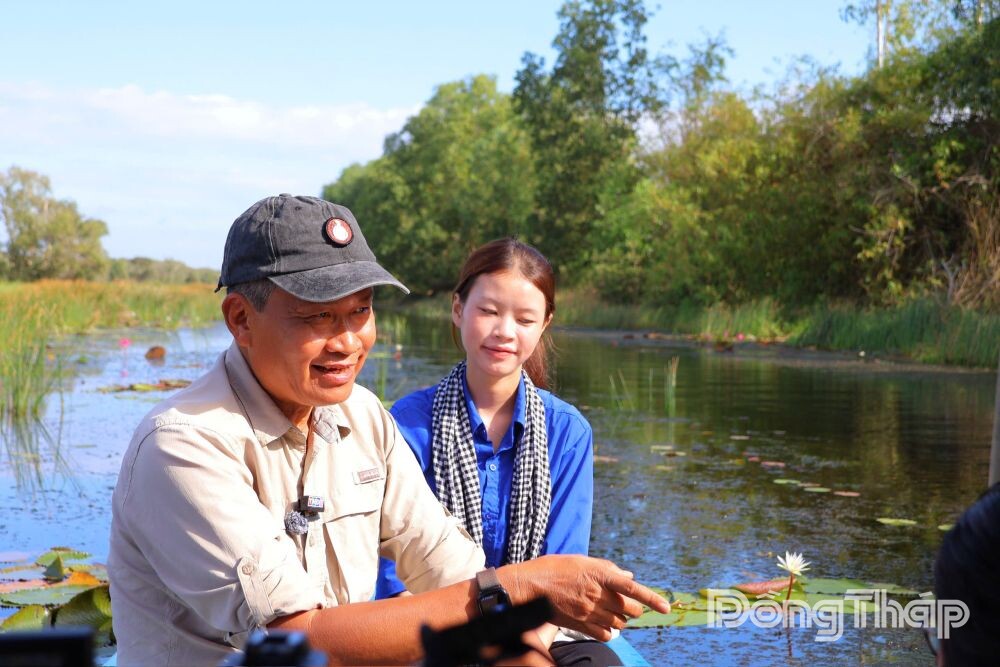
Dr. Tran Triet recalls: “There were times during field surveys when I felt deeply worried. Sometimes, seeing Tram Chim so depleted, I was really saddened. Scientific recommendations were not fully implemented. Watching the ecosystem deteriorate made me feel helpless, and there were moments when I thought I might never return to Tram Chim. But in the end, my colleagues and I chose to stay committed to this place. We kept surveying, kept giving feedback, and continued proposing solutions to restore the ecosystem.”
He reflects: “The greatest shock came when Tram Chim no longer saw the return of the sarus cranes. Their absence woke people up and forced a re-examination of how the ecosystem was being managed.”
Since Dong Thap Province launched its Sarus Crane Conservation and Development Project, with multiple habitat-restoration measures aligned more closely with natural conditions, signs of recovery have gradually emerged.
After just two years, many positive changes can be seen. Spike rush is thriving again, wild rice has returned, and many waterbird species are appearing in greater numbers than before.
WHEN TRAM CHIM TURNS GREEN AGAIN
Deputy Director of the Tram Chim National Park Conservation Center, Doan Van Nhanh, shared that throughout the journey of ecosystem restoration and the implementation of Dong Thap’s sarus crane conservation project, Dr. Tran Triet has been one of the scientists who has steadfastly accompanied Tram Chim National Park.
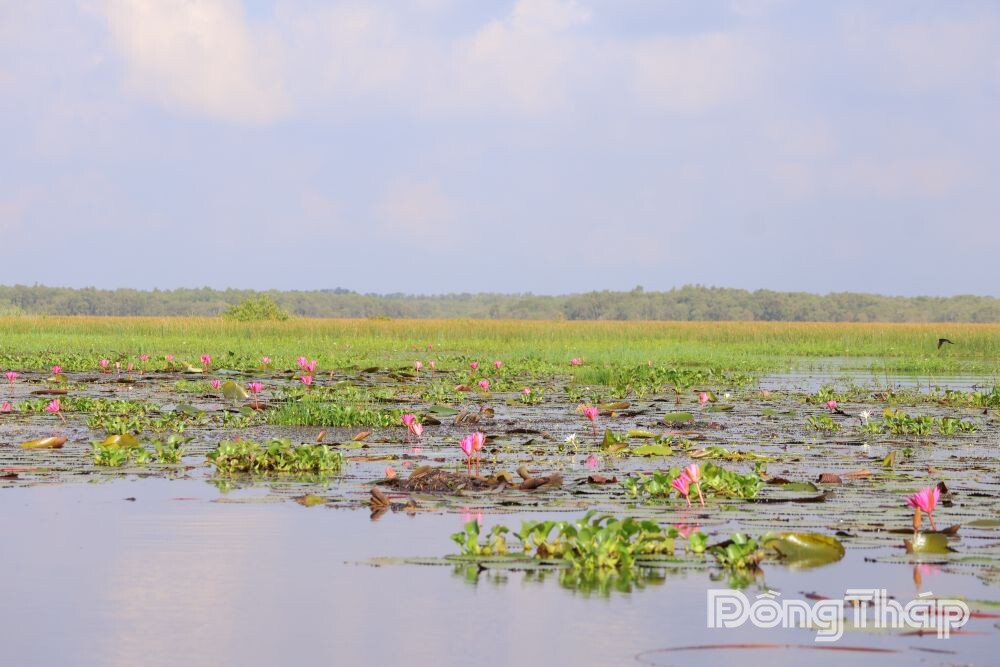
“There were times when things were extremely difficult, but Dr. Triet and other experts always stood by Tram Chim. He didn’t just conduct research. He went directly into the field, guiding and sharing practical experience with technical staff throughout the restoration process,” Nhanh said.
Today, alongside Tram Chim National Park and Dong Thap Province in restoring the core ecosystem, Dr. Tran Triet, together with many scientists, businesses, and local residents, is also working to gradually transform farming practices in the buffer zone.
“Tram Chim, to me, is not just a place for scientific research. It is tied to my youth, my academic journey, and almost all of my formative years |
Several ecological rice farming models are being implemented, aiming to reduce the use of chemical fertilizers and pesticides, eliminate post-harvest field burning, and instead apply biological products to decompose straw, improve soil, and protect the wetland environment.
According to scientists, saving Tram Chim’s ecosystem cannot be achieved by restoring only the core area of the national park. The surrounding buffer zone must also change, so waterbirds have feeding grounds and nature can recover in the most natural way possible.
And perhaps, after more than 40 years devoted to Tram Chim, what Dr. Tran Triet hopes for most is not merely the abundant return of the sarus crane, but something simpler, which is to see Tram Chim live in accordance with its true natural essence.
By MY LY
Translated by ANH DUC