
THE 3RD SESSION OF THE 11TH DONG THAP PROVINCIAL PEOPLE’S COUNCIL:
Economic Bright Spots Highlight Strong Growth Momentum
(DTO) Assessments presented at the 3rd session of the 11th Dong Thap Provincial People’s Council showed that the province’s socio-economic performance continued to record significant achievements in the first half of 2026. These results reflected the strong leadership and direction of the Provincial Party Committee and the Provincial People’s Committee, close oversight by the Provincial People’s Council, and the concerted efforts of all sectors, localities, the business community, and residents. Several key indicators met or exceeded planned targets, creating bright spots in the province’s economic landscape.
STATE BUDGET REVENUE RISES YEAR-ON-YEAR
Presenting the report at the session, Mr. Tran Van Dung, Member of the Provincial Party Committee Standing Board and Permanent Vice Chairman of the Dong Thap Provincial People’s Committee, said that the province had achieved encouraging results in implementing its major socio-economic targets during the first six months of 2026. Several important indicators performed well against annual targets and improved compared to the same period last year, providing a solid foundation for achieving the province’s 2026 socio-economic development goals. Among these, state budget revenue stood out as one of the most notable achievements.
According to the Provincial People’s Committee, the economy in 2026 continued to face both opportunities and challenges. Economic growth remained fragile, while natural disasters and climate change became increasingly unpredictable. Rising input costs also affected business operations and people’s livelihoods. At the same time, the Government continued implementing support policies to help businesses and residents overcome difficulties.
To ensure budget revenue targets were met, under the consistent direction of the Provincial Party Committee and the Provincial People’s Council, the Provincial People’s Committee focused from the beginning of the year on strengthening state budget revenue collection while actively addressing obstacles facing businesses and residents.
Authorities at all levels also coordinated closely to implement comprehensive revenue management measures, accelerate administrative reform, review untapped revenue sources, and intensify efforts to recover outstanding tax debts. These measures helped deliver encouraging budget collection results.
Estimated state budget revenue in the first six months of 2026 reached VND13.523 trillion, equivalent to 56.88% of the annual target and 104.17% of the figure recorded in the same period last year. Of this, domestic revenue totaled VND13.010 trillion, accounting for 56.01% of the annual target and 103.77% year-on-year. Notably, seven of the province’s 15 domestic revenue categories had already exceeded 50% of their annual targets.
Budget expenditure also met the operational needs of agencies and localities. Total local budget expenditure in the first half of 2026 was estimated at more than VND22.094 trillion, equivalent to 55.05% of the annual estimate. Development investment expenditure under the 2026 public investment plan reached VND4.022 trillion, or 37.67% of the annual target.
The Provincial People’s Committee projected state budget revenue in the second half of 2026 at VND12.727 trillion, bringing total revenue for the year to VND26.250 trillion, equal to 110.41% of the annual estimate. Total local budget expenditure for the second half of the year is estimated at around VND29.803 trillion, raising total expenditure for 2026 to more than VND51.831 trillion.
To achieve these targets, the Provincial People’s Committee will focus on removing obstacles for businesses, improving the investment and business environment, and creating favourable conditions for enterprises to operate sustainably, thereby generating stable revenue sources for the state budget and supporting economic growth.
The province will also strengthen state budget revenue and expenditure management, effectively tap available revenue sources, prevent revenue losses, improve revenue quality, and explore new revenue streams, while striving to exceed annual revenue targets and ensure sufficient funding for planned local budget expenditures.
In addition, authorities will maintain strict control over public spending, prioritise resources for socio-economic development, social welfare, national defence and security, as well as urgent emerging tasks, while rigorously implementing measures to promote thrift and prevent wastefulness.
NEW BUSINESS FORMATION SURGES
The sharp increase in newly established enterprises was another positive highlight of Dong Thap’s economic performance. According to the Provincial People’s Committee, 1,837 new enterprises were established during the first six months of 2026, with a combined registered capital of more than VND7.83 trillion. This represented a 40.4% increase year-on-year and fulfilled 61.23% of the annual target.
During the same period, 234 enterprises resumed operations, bringing the total number of active businesses in the province to an estimated more than 14,160 by the end of June. Notably, Dong Thap is now home to 12 private enterprises ranked among Vietnam’s Top 500 Largest Enterprises.
Despite these encouraging results, the business community continued to face considerable challenges. In the first half of the year, 523 enterprises temporarily suspended operations, up 2.3% from the same period last year, while 234 enterprises completed dissolution procedures, an increase of 77.3%. Most of the businesses exiting the market were small enterprises with registered capital of less than VND10 billion. The primary reasons included declining orders, shrinking markets, and low production and business efficiency.
In response, the province will continue implementing comprehensive measures to improve the investment and business environment in line with resolutions and plans issued by the Provincial Party Committee and the Provincial People’s Committee.
Accordingly, the Provincial People’s Committee is focusing on a range of initiatives to help enterprises stabilise production and minimise business suspensions. Priority will be given to further improving the investment climate, strengthening dialogue with businesses, and promptly addressing their difficulties. The province will also work to improve its Provincial Competitiveness Index (PCI), Public Administration Reform Index (PAR Index), Provincial Governance and Public Administration Performance Index (PAPI), Satisfaction Index of Public Administrative Services (SIPAS), and digital transformation indicators. At the same time, it will accelerate the simplification of administrative procedures, expand online public services, and make more effective use of digital platforms.
In parallel, the province has launched a pilot co-working space to support businesses and start-ups, while restructuring its Centre for Start-up, Innovation and Digital Transformation to strengthen links within the innovation ecosystem, support technology upgrading, promote digital transformation, and enhance business competitiveness.
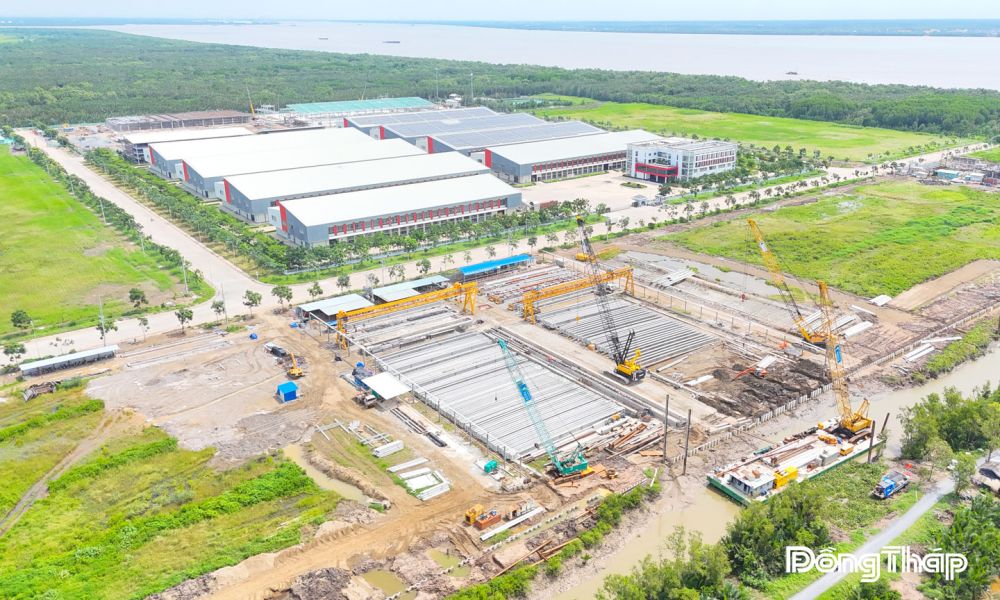
The province will also step up assistance for small and medium-sized enterprises, cooperatives, and household businesses in accessing finance, land, market information, and government support policies. At the same time, it will enhance investment promotion efforts, prioritising projects in high technology, deep-processing industries, logistics, clean energy, industrial park infrastructure, and other sectors capable of generating new growth momentum. The province aims to establish an additional 1,470 enterprises in the second half of 2026, bringing the total number of newly registered enterprises for the year to more than 3,000.
EXPORTS AND IMPORTS SHOW POSITIVE MOMENTUM
Despite ongoing challenges in the global economy, export activities continued to improve as businesses, with support from the provincial authorities, made sustained efforts to overcome difficulties.
Export turnover in the first half of 2026 was estimated at US$4.85 billion, up 9.25% from the same period in 2025 and equivalent to 48.5% of the annual target. Dong Thap’s products maintained a strong presence in traditional markets, including the United States, China, Japan, and the Republic of Korea, while also expanding into new destinations, particularly countries with which Vietnam has signed free trade agreements (FTAs).
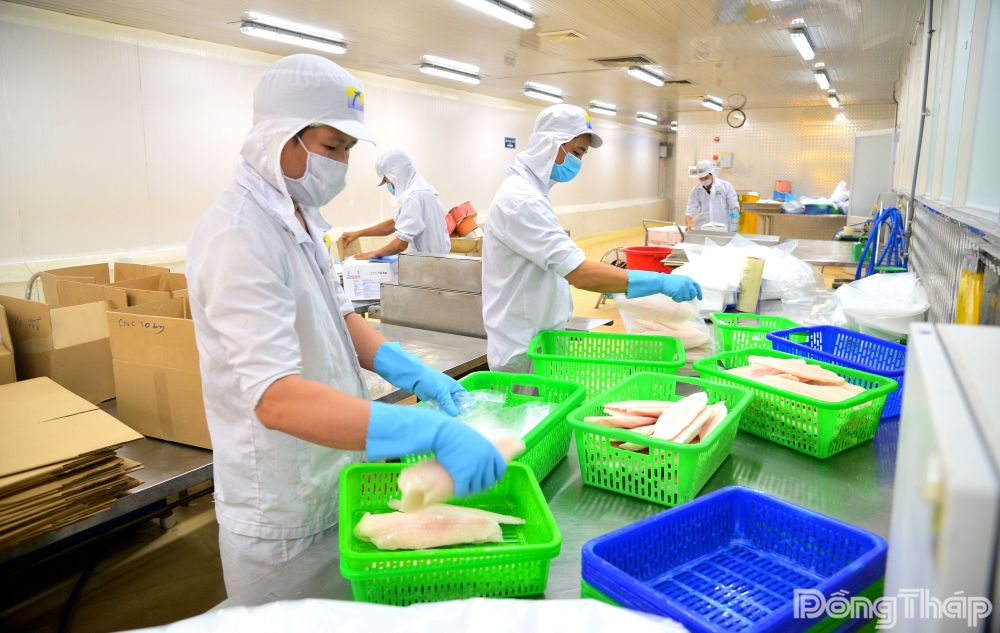
Industrial products remained the province’s leading export category, accounting for more than 60% of total export value. Several key export items recorded solid growth and exceeded their six-month targets, including rice, seafood, footwear, plastic products, and base metals and related products.
Meanwhile, import turnover was estimated at US$2.8 billion, an increase of 12.53% year-on-year and equivalent to 56.14% of the annual plan. Imports mainly consisted of raw materials, fuels, and production inputs.
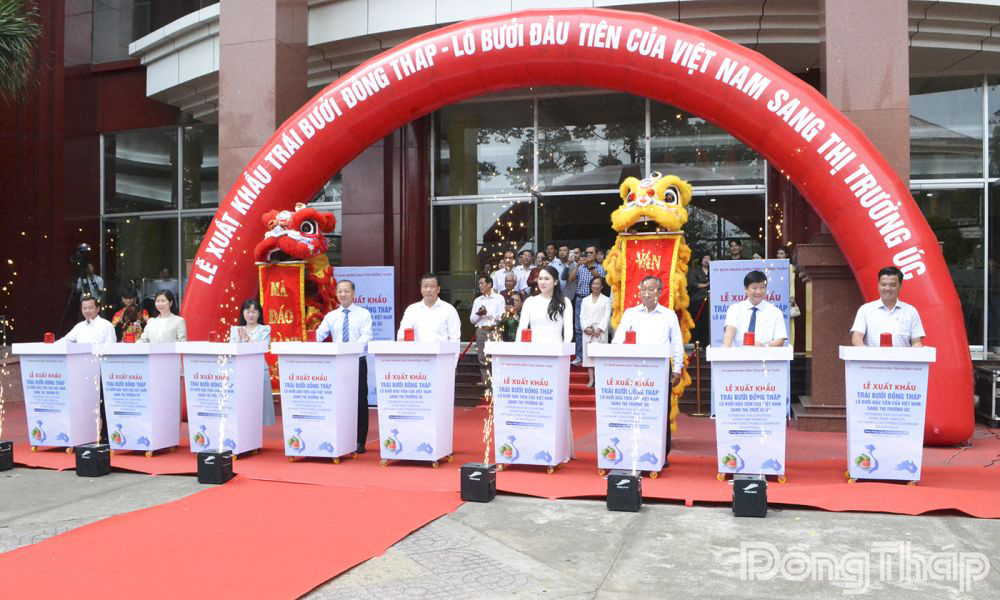
According to Mr. Tran Van Dung, Member of the Provincial Party Committee Standing Board and Permanent Vice Chairman of the Dong Thap Provincial People’s Committee, global trade is expected to remain volatile in the months ahead, with intensifying competition, fluctuating logistics costs and exchange rates, and increasingly stringent requirements in import markets regarding product quality, traceability, and green development. These factors will pose additional challenges for the province’s exporters.
In response, the Provincial People’s Committee will prioritise export promotion by key product groups, target markets, and leading enterprises, while ensuring imports continue to effectively support domestic production. The province will review each major export category, identifying products with strong growth, those falling short of targets, and those most affected by market conditions in order to implement appropriate support measures.
Authorities will continue fostering growth in major export earners such as base metals and metal products, footwear, handbags, processed seafood, rice, and plastic products, while addressing bottlenecks affecting lower-performing sectors, including fruit and vegetables, cereal-based products, garments, and processed agricultural products.
At the same time, the province will step up trade promotion activities, assist enterprises in making better use of free trade agreements, expand into new export markets, and improve product quality standards, traceability systems, packaging, branding, logistics, and compliance with increasingly stringent green and low-emission requirements in international markets.
In addition, Dong Thap will continue implementing plans to develop a modern border-gate economy, promote cross-border trade, strengthen technology infrastructure, and ensure national defence and security.
By THU HOAI – LE MINH
Translated by X.QUANG