
NEW SPACE – NEW VISION:
First, proximity to the market; second, proximity to the river; third, proximity to the road
(DTO) The Spring of the Year of the Horse 2026 marks a historic chapter for Dong Thap as the provinces of Tien Giang and Dong Thap officially merge. This unification transcends simple boundary adjustments; it represents a strategic shift in developmental vision, positioning the Tien River - Hau River region as the new connectivity hub of the Mekong Delta.
In this new regional structure, Dong Thap is no longer a landlocked area nestled between two rivers. Instead, it has emerged as a strategic crossroads linking the East Sea, the Cambodian border, and Ho Chi Minh City—perfectly embodying the traditional Southern Vietnamese principle of prosperity: "First, proximity to the market; second, to the river; and third, to the road."
A NEW CONNECTIVITY AXIS
If Tien Giang carries the breath of the sea from Go Cong, Dong Thap brings the gateway of border trade from Hong Ngu.
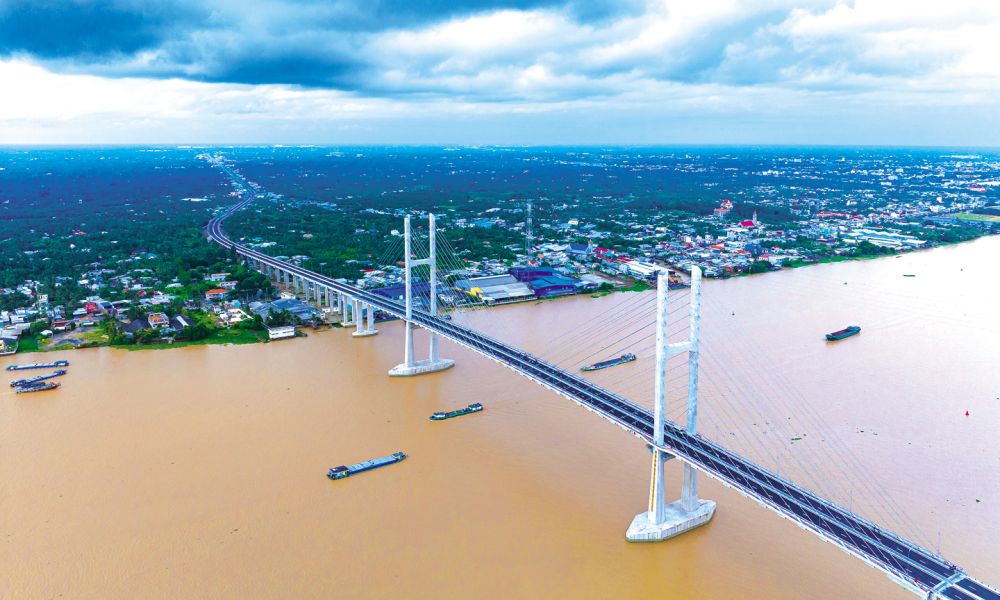
Photo: Thanh – Thao
When these two spaces merge, they form a rare East–West development axis in the Mekong Delta. Go Cong – My Tho has the potential to develop agricultural logistics ports based on the export demand of over USD 3 billion annually from the entire Tien River region.
Hong Ngu – Cambodia is experiencing average border trade growth of over 12% per year, opening new markets for Vietnamese fruits, seafood, and consumer goods.
Thus, the new Dong Thap province possesses both export gateways: to the sea and across the border—an invaluable advantage that previously had not been fully leveraged.
Floodplains – freshwater – alluvium, once merely natural resources, are now transforming into knowledge-based economic advantages.
The new Dong Thap province may not be loud or hurried, yet it possesses the quiet, resilient strength of alluvium and pink lotuses. Once it successfully leverages the sea-to-border connectivity, transforms sediment into knowledge, and turns agricultural produce into brand value, Dong Thap will not only expand its physical space but also open a new horizon for the entire Mekong Delta. This Spring, amidst the blooming pink lotuses and the flows of the Tien and Hau Rivers, Dong Thap begins a new chapter: A land that carves out its future from the very heart of its own identity. |
The Plain of Reeds (Dong Thap Muoi) was once considered a “low-lying area,” but today it has become a unique ecological asset.
Each year, floods bring millions of tons of alluvium, nourishing sedimentary and aquatic ecosystems, preserving soil, filtering water, and creating “flood-season fields” with rare tourism value.
With more than 300,000 hectares of high-quality agricultural land, the new Dong Thap province is a “capital” of various fruit varieties, especially mango, durian, jackfruit, and specialty fruits; high-quality rice with stable output of approximately 1.8–2 million tons per year; and pangasius fish—an export sector generating over USD 2.4 billion annually in the Tien River region.
Challenges of flooding, distance from the sea, and fragmented production in the past have now become opportunities for Dong Thap to shift from traditional agriculture to a knowledge-based economy; from raw exports to deep processing, cold-chain logistics, and regional branding. This marks a new step for an agriculture no longer reliant on manual labor strength, but on science, digital transformation, and brand value.
A new Dong Thap defines three strategic axes:
Axis 1: From Go Cong Sea → My Tho → Cao Lanh → Hong Ngu (border), forming a logistics and agricultural trade corridor connecting seaports and international border gates. If properly invested, this could become the “agricultural goods highway” from the Mekong Delta to the world.
Axis 2: The ecological space of the Plain of Reeds, where an ecosystem combining agriculture – flood-season eco-tourism – and distinctive OCOP products can be developed. Images of flood season, lotus fields, river convergence – floating markets, melaleuca forests… are not only cultural identity but economic resources for green tourism.
Axis 3: The My Tho – Cai Lay – Cao Lanh urban-service-science cluster, with favorable conditions to develop service centers, education, agricultural processing, seed research, and post-harvest technology. This will become the “agricultural science capital” of the region.
NEW IDENTITY – NEW VISION
With its expanded space and greater potential, the post-merger Dong Thap must prioritize three strategic directions.
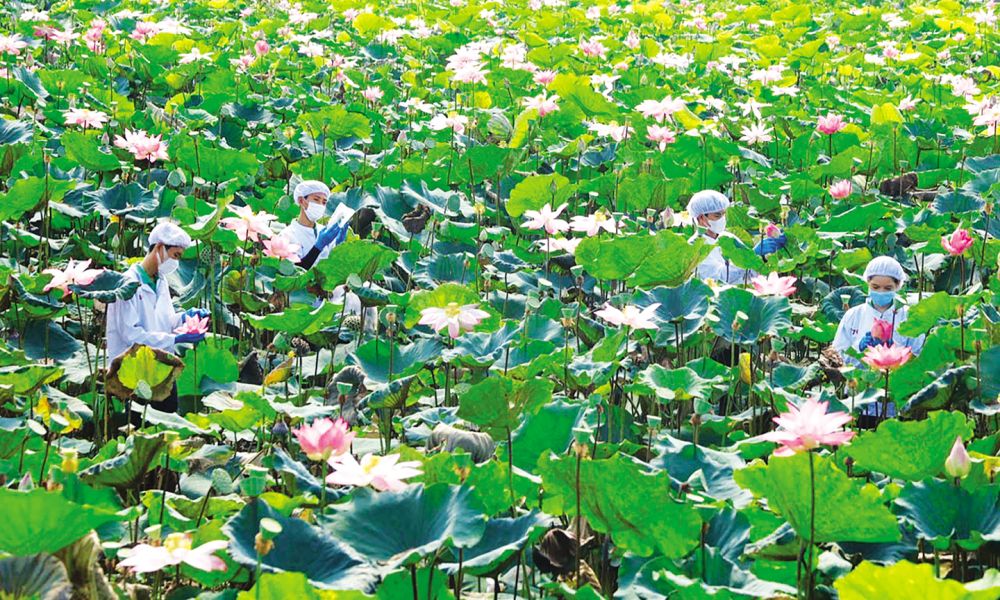
First: Defining a Unified Agricultural Brand for Dong Thap – Tien Giang. We should not merely sell produce but market the stories of origin, flavors, and the unique "orchard culture" (van hoa miet vuon).
It is essential to build a collective regional brand rather than having each district or province develop fragmented ones.
Second: Developing an Agro-Logistics Hub Linking Sea and Border. Capitalizing on the principle of "Market First, River Second, Road Third”, the province needs to connect the Go Cong seaports with the corridor leading to Hong Ngu.
This will be the driving force to reduce logistics costs and increase profitability for both farmers and enterprises.
Third: Identity-Based Tourism: Lotus - River - Floods - Orchards. Dong Thap’s tourism does not need to chase modern urban models. Instead, it should preserve the "Southern Soul," elevating visitor experiences and creating a cultural economy where identity serves as the primary competitive advantage.
By Associate Professor, PhD NGUYEN VAN SANH
Former Director of the Mekong Delta Development Research Institute (Can Tho University)
Translated by X.QUANG