
Harnessing the Economic Potential of Rice Straw
(DTO) Once regarded as waste, rice straw was often burned in the fields, blanketing countryside villages with plumes of thick black smoke every harvest season. Today, however, across the Mekong Delta in general and Dong Thap Province in particular, this agricultural by-product is gradually turning into “brown gold” for farmers. From straw mushroom cultivation and organic fertilizer production to animal feed, rice straw is paving a new path for circular agriculture-a realm where the concept of “waste” no longer exists.
THE VALUE OF RICE STRAW
In previous harvest seasons, the sight of farmers burning straw in the fields was a familiar one across the Mekong Delta. Dense columns of smoke not only polluted the environment but also depleted valuable organic matter from the soil.
According to agricultural authorities, burning rice straw releases massive amounts of carbon dioxide (CO2) and other pollutants, contributing to the greenhouse effect and directly degrading air quality.
Furthermore, the intense heat from the fires destroys beneficial microorganisms, leaving the soil increasingly hardened and less fertile.
Over the past few years, however, the production mindset of farmers has gradually evolved. In a major rice-producing hub like the Mekong Delta, and particularly in Dong Thap, farmers are starting to see a new wealth-generating opportunity in every strand of dry straw. Rice straw is no longer viewed as a burden but has become a valuable raw material that yields significant economic returns.
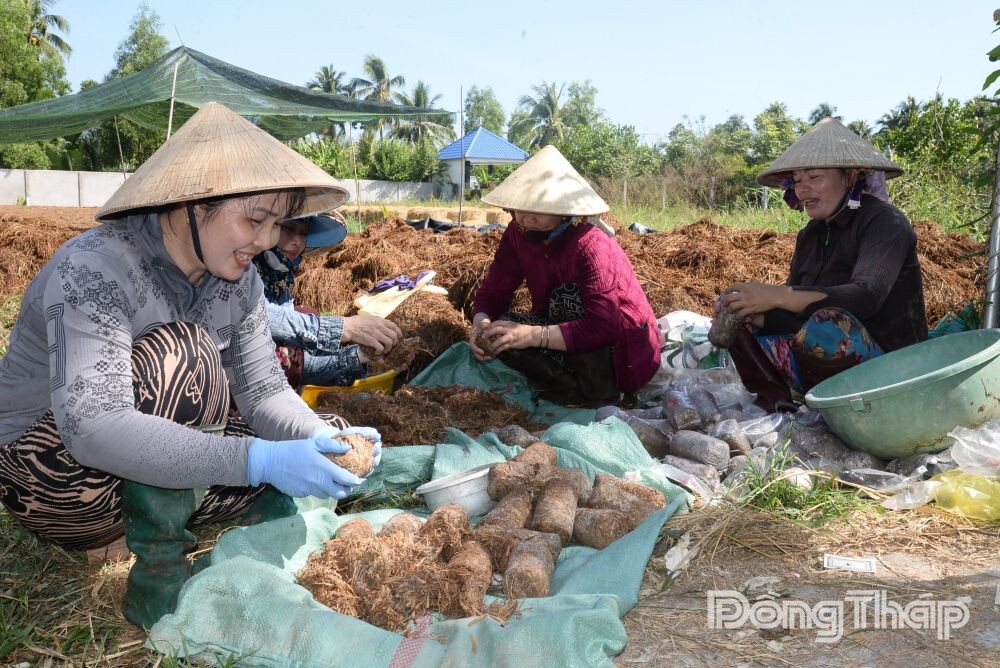
Showing us around her family's straw mushroom cultivation area, Ms. Nguyen Thi Kieu Trang, a resident of Thanh Binh Hamlet, Vinh Binh Commune, enthusiastically shared the positive changes brought about by post-harvest straw rolls.
"In the past, after harvesting the rice, I would burn everything to prepare the land in time for the next crop. Now, I am willing to buy extra straw from my neighbors to grow mushrooms," Ms. Trang said.
According to her, straw mushroom cultivation requires much less labor than rice farming or vegetable growing. The most critical factor is properly controlling the temperature and humidity to ensure steady mushroom growth.
By utilizing the post-harvest straw, her family secures a steady income year-round. Beyond selling fresh mushrooms, the spent straw is further repurposed into organic fertilizer or resold to vegetable growers. "We make full use of everything; nothing goes to waste," she smiled.
Meanwhile, for Mr. Le Quoc Dat, who has over 10 years of experience in local straw mushroom cultivation, the economic efficiency of rice straw is highly evident. "Each hectare of rice yields about 6 to 7 tons of straw.
If burned, it turns to ash, but if used for mushroom cultivation, each ton of dry straw can produce nearly 200 kilograms of fresh mushrooms. With stable selling prices, the profit from a single mushroom crop is double that of rice farming," Mr. Dat stated.
According to Mr. Huynh Hai Son, Chairman of the Vinh Binh Commune Farmers' Association, the straw mushroom cultivation area in the commune has been expanding year after year. Moving forward, the locality will encourage farmers to transition to indoor mushroom cultivation models to proactively control temperature and humidity, reduce weather dependence, and boost yields.
"From straw rolls that were once thought worthless, local people are generating a stable income and contributing to environmental protection," Mr. Son assessed.
“RETURNING” NUTRIENTS TO THE SOIL
Beyond generating direct economic value, rice straw is being utilized by many farmers in closed-loop farming models to produce organic fertilizer and growing substrates for vegetables and crops.
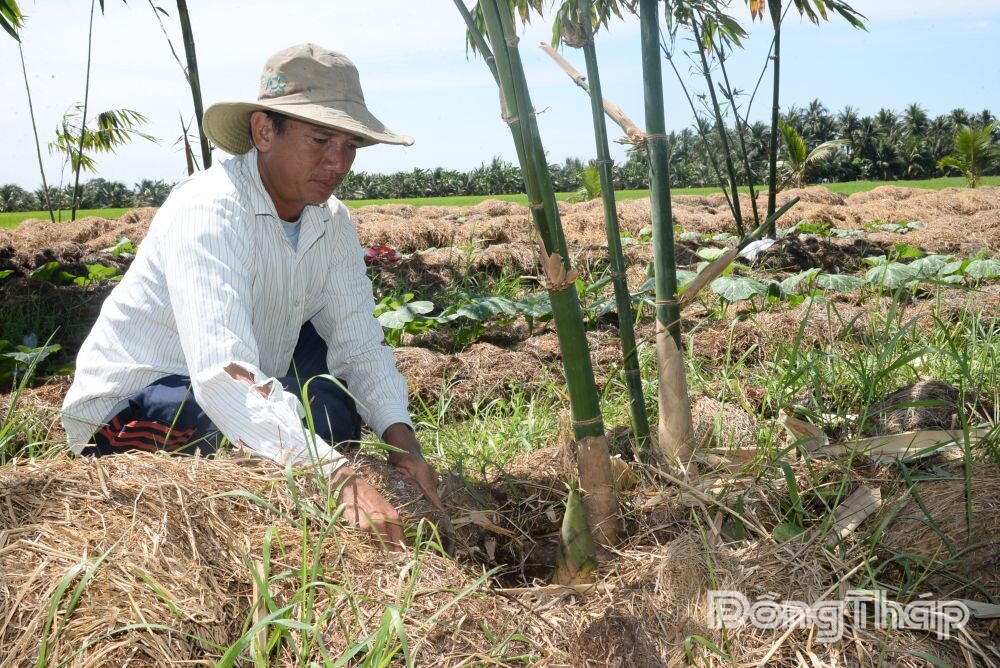
Mr. Tran Duy Khoa, a resident of Thanh An Hamlet, Vinh Binh Commune, said that after the mushroom harvest, the remaining straw is composted into organic fertilizer for clean vegetable and crop production.
“When using fertilizer made from rice straw, the soil becomes more porous, crops grow healthier, and pests are less common,” Mr. Khoa shared.
Based on his practical experience, the use of organic fertilizer derived from straw helps reduce chemical fertilizer use by 20% to 30% in agricultural production, thereby significantly cutting investment costs and improving soil quality.
Amid constantly fluctuating livestock feed prices, rice straw is also becoming an important feed source for many large-scale cattle farms. Recognizing this demand, many farmers have invested in straw baling machines to supply raw materials to livestock farms.
Ms. Tran Thị Hoa, owner of a cattle farm in Binh Ninh Commune, said that thanks to a reserved stock of properly treated straw, her family’s herd of more than 20 cattle always has sufficient quality feed throughout the year.
“Utilizing rice straw has drastically cut down the cost of purchasing fresh grass and mixed feed. As a result, livestock farming profits have increased significantly,” Ms. Hoa said.
UTILIZATION TOWARD GREEN AGRICULTURE
The utilization of rice straw is no longer an isolated effort by individual households but is becoming part of a broader strategy for green agricultural development and greenhouse gas.
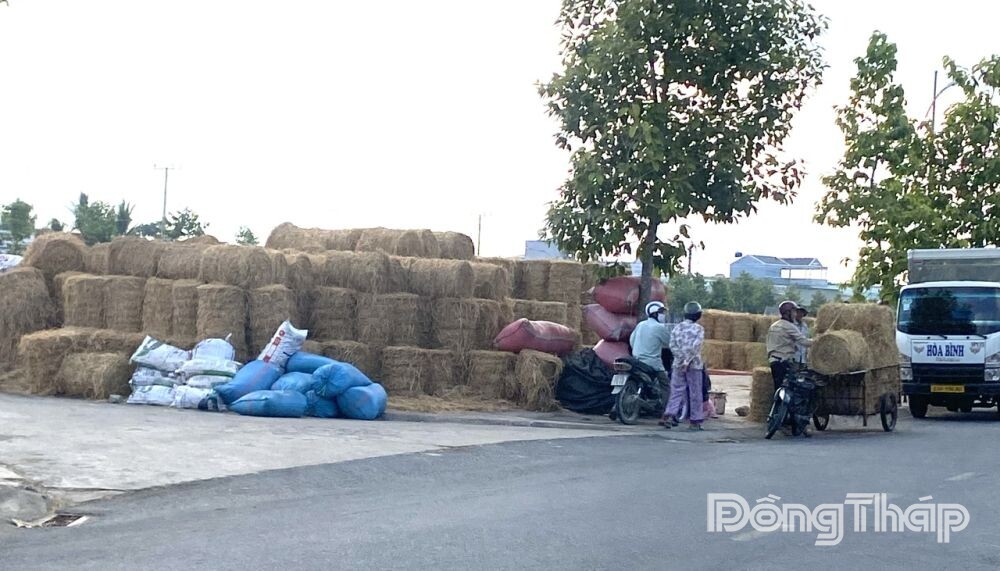
According to experts, the potential of rice by-products in Vietnam remains immense. If effectively exploited, rice straw could not only help reduce production costs but also form entirely new value chains, including straw collection services, industrial-scale mushroom production, organic fertilizers, and eco-friendly materials.
However, for this “rice straw revolution” to develop sustainably, a close four-party linkage among the State, scientists, businesses, and farmers is indispensable.
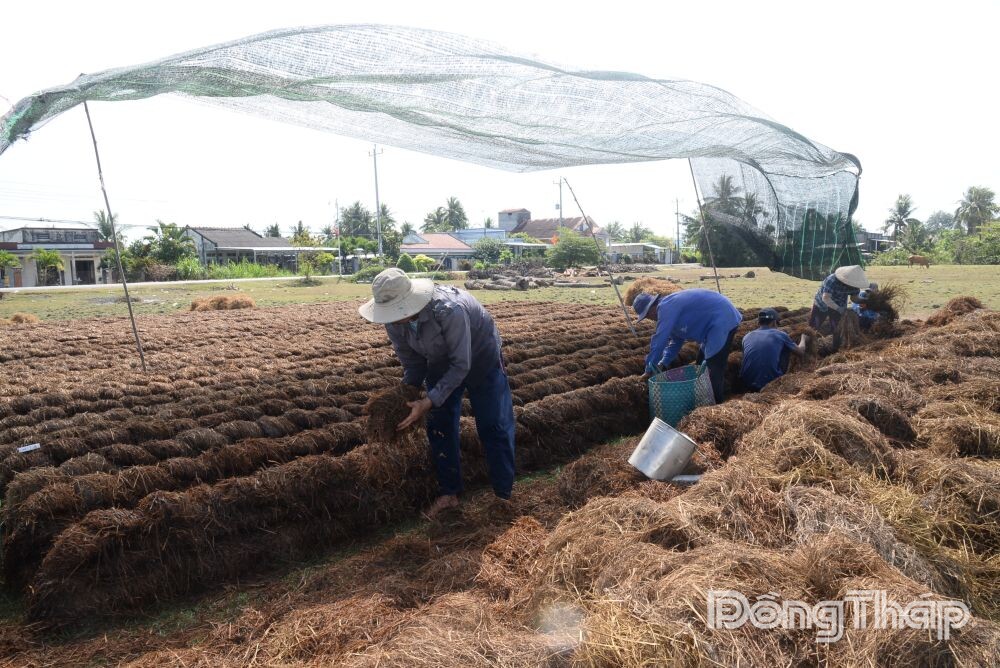
In this matrix, the State needs to establish supportive policies for collection and preservation machinery, while enterprises must invest in deep-processing technologies to create high-value, environmentally friendly products.
Fields no longer blanketed by smoke from straw burning, bumper mushroom harvests, and lush green vegetable beds nourished by spent straw all reflect a new production mindset—one based on a nature-based, circular approach.
As farmers increasingly regard rice straw as “brown gold,” rural areas are undergoing a powerful transformation toward a greener, more sustainable, and higher-value agriculture, built from the simplest resources left behind after each harvest season.
By P. MAI
Translated by X.QUANG