

Keeping the River Alive
(DTO) More than two years ago, what began with just a handful of fish seeking shelter along the An Thanh embankment in Hong Ngu Ward, Dong Thap Province, inspired an initiative to retain fish in their natural river habitat. Without solid fences or fish cages, the fish have remained and their numbers have steadily grown thanks to the protection of the local community.
Today, this fisheries resource conservation model has become a shining example of nature conservation integrated with tourism development while fostering greater public awareness of environmental protection.
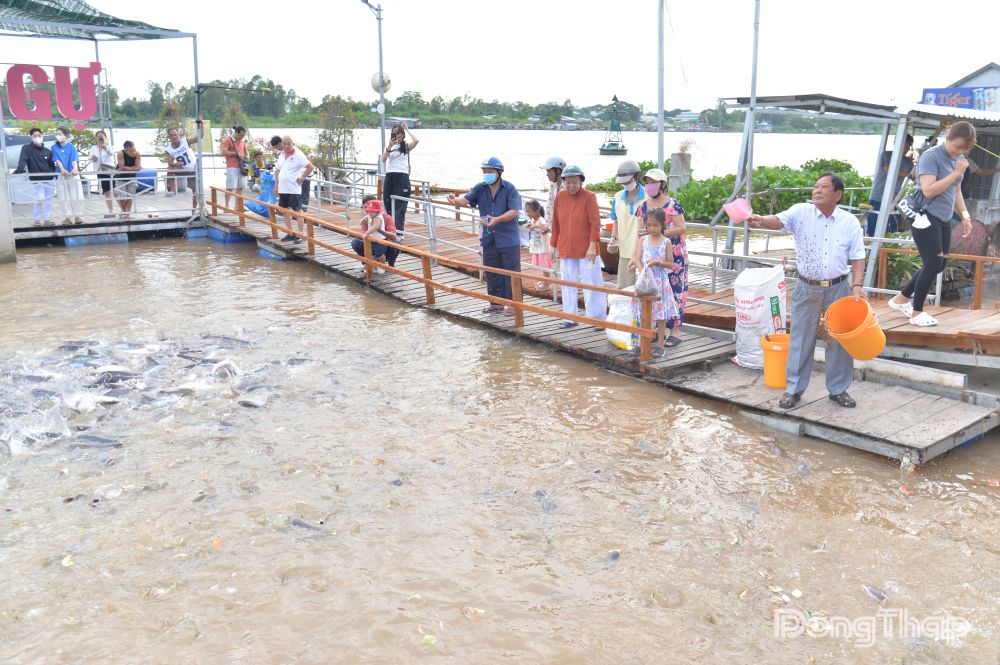
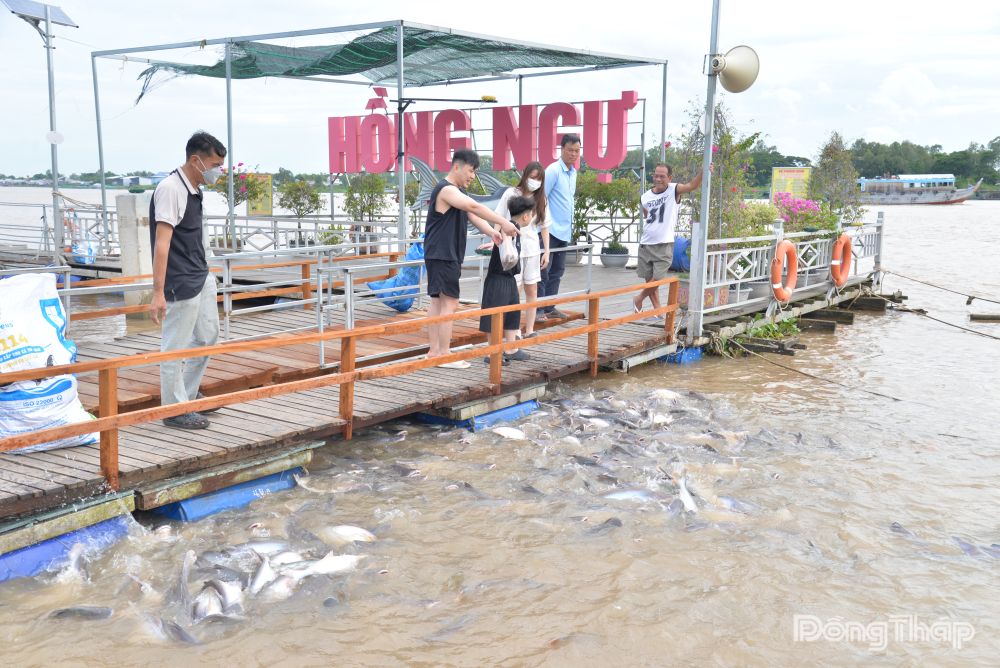
One afternoon in late July 2026, as dusk settled over the An Thanh embankment, the area once again became lively. Dozens of residents arrived carrying leftover rice and other food to the floating wooden pier to feed the fish. As soon as the food touched the water, thousands of fish surged to the surface, creating a spectacular scene along the Tien River. Few would have imagined that a place once visited by only a handful of wild fish would become one of the upstream region's best-known aquatic conservation sites.
A HAVEN FOR WILD FISH
Records show that the idea of establishing the fish conservation area was initiated by Mr. Le Ha Luan, current Director of the Dong Thap Provincial Department of Agriculture and Environment, during his tenure as Secretary of the Hong Ngu City Party Committee. The initiative was embraced by Mr. Truong Minh Hai, 73, head of the Hong Ngu Community Aquatic Resources Protection Team, together with many local residents.
Mr. Hai said that, after receiving approval from local authorities, the riverside area near the An Binh Temple was selected as a site for restoring aquatic resources.
He then traveled to Tan Hung District of the former Long An Province to purchase thousands of branches of freshwater tamarind brushwood, which were bundled together and submerged in the river to create artificial underwater shelters. Floating water hyacinths were also anchored to provide natural habitats, effectively building "homes" beneath the river's surface.
During the Ky Yen Ha Dien Festival at An Binh Temple in 2024 (held on the 26th day of the third lunar month), nearly one tonne of striped catfish fingerlings was released into the river. "I thought all the fish had swum away," Mr. Hai recalled. "But then one fish surfaced for food, followed by several more, then dozens. I was overjoyed."
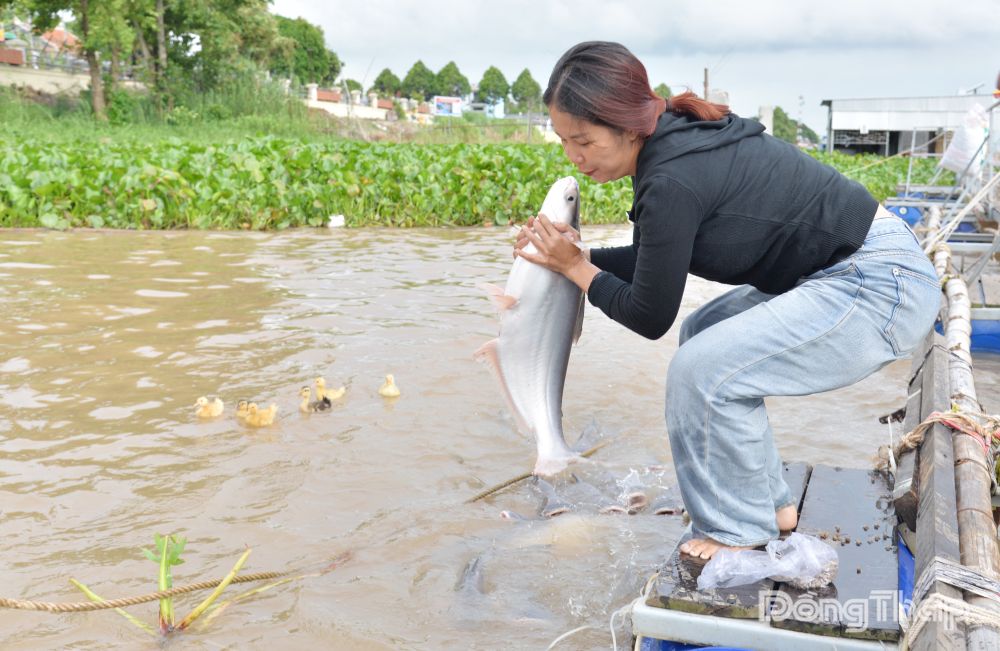
Since then, the fish have never left. Instead, the population has continued to grow. Fingerlings measuring only 1.5 to 2 centimetres in length quickly thrived thanks to abundant food and favorable natural conditions. Today, many fish weigh between five and six kilograms, while some approach ten kilograms.
Asked how many fish now inhabit the area, Mr. Hai just smiled. "I've invited professional striped catfish farmers from Hong Ngu to estimate the stock. Some say around 70 tonnes, others 90 tonnes, while a few believe there could be 120 or even 150 tonnes. But those are only personal estimates. No one knows the exact figure."
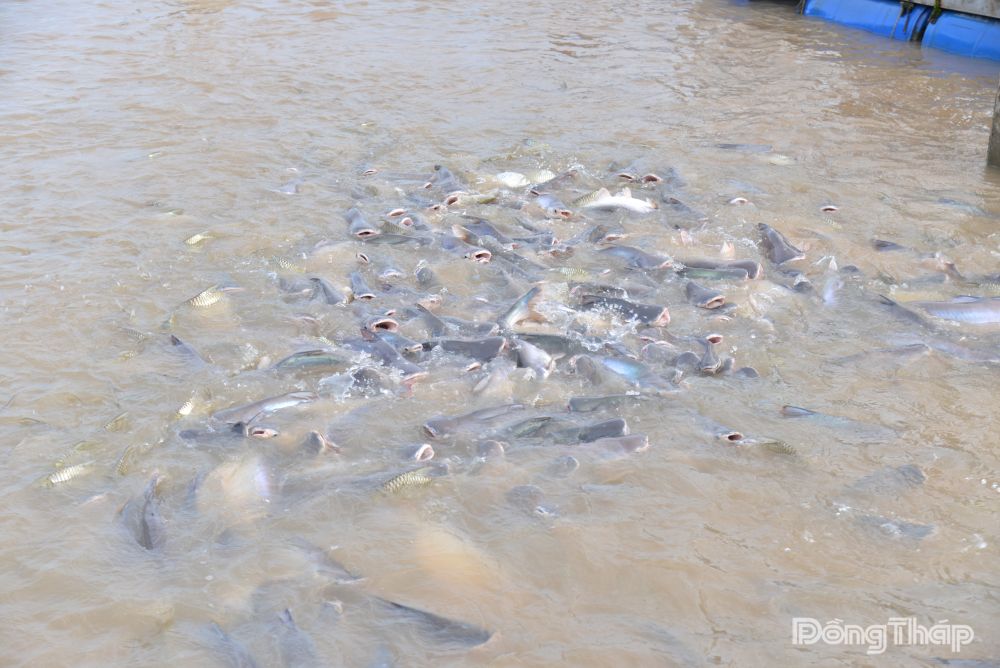
Mr. Hai said that when the conservation area was first established, many people were unaware of its protected status and continued fishing there. Following sustained public awareness campaigns through local loudspeaker systems and direct community outreach, violations have declined significantly, although occasional illegal fishing still occurs. Besides released fish, many native wild species have also returned to the area, including blackspotted catfish, silver barbs trout barbs, Java barbs, and tinfoil barbs. According to Mr. Hai, however, these naturally occurring wild fish now outnumber the ceremonially released ones.
He added that the conservation area is maintained entirely through socialized community contributions. "Local authorities, benefactors, my family and many people from near and far all contribute fish feed and financial support. Mr. Le Ha Luan, who initiated the model while serving as Secretary of the Hong Ngu City Party Committee and is now Director of the provincial Department of Agriculture and Environment, has also continued mobilizing resources to sustain the conservation site," he said.
THE COMMUNITY JOINS HANDS TO PROTECT THE FISH
The success of this fisheries resource conservation model has gradually inspired wider community participation. According to Mr. Nam Dung of Hong Ngu Ward, who has been involved with the conservation site since its inception, the area has developed into a rich ecosystem that is home to striped catfish, tinfoil barbs, Java barbs, and many other aquatic species, including eels, turtles, and snakes. It is estimated that the conservation site now supports more than 200 tonnes of fish along a river stretch of over one kilometre.
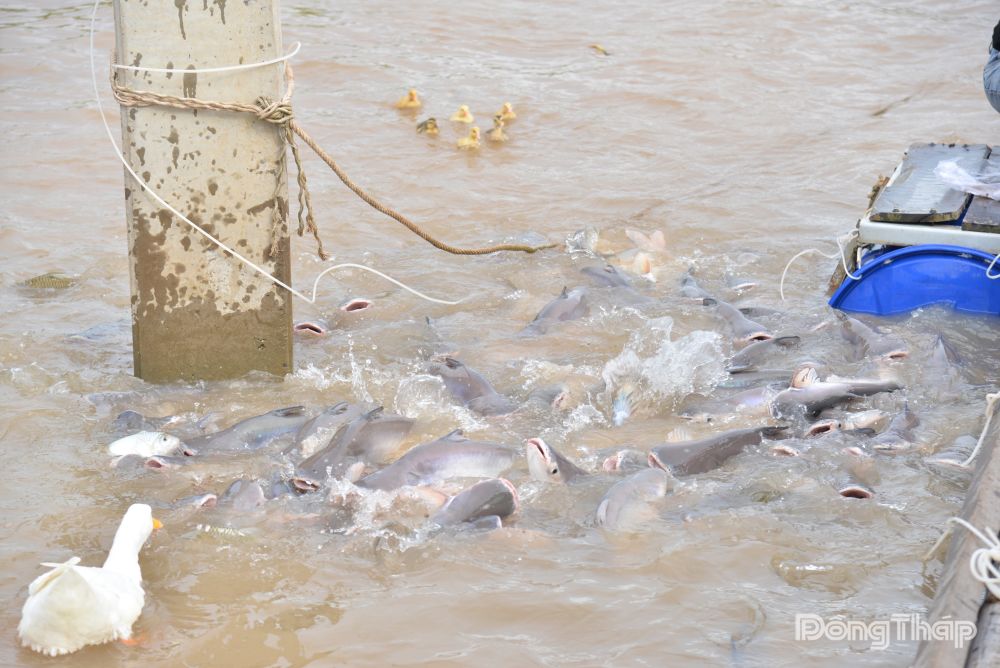
Mr. Dung said the site is currently overseen by two caretakers who receive monthly stipends, while many local residents voluntarily take turns patrolling and monitoring the area without pay.
According to him, the greatest value of the conservation site lies not only in the flourishing fish population but also in the transformation of community awareness. "Since the conservation site was established, local residents' awareness of nature and aquatic resource protection has improved significantly. Everyone now regards this area as a shared asset and willingly helps safeguard it," Mr. Dung said.
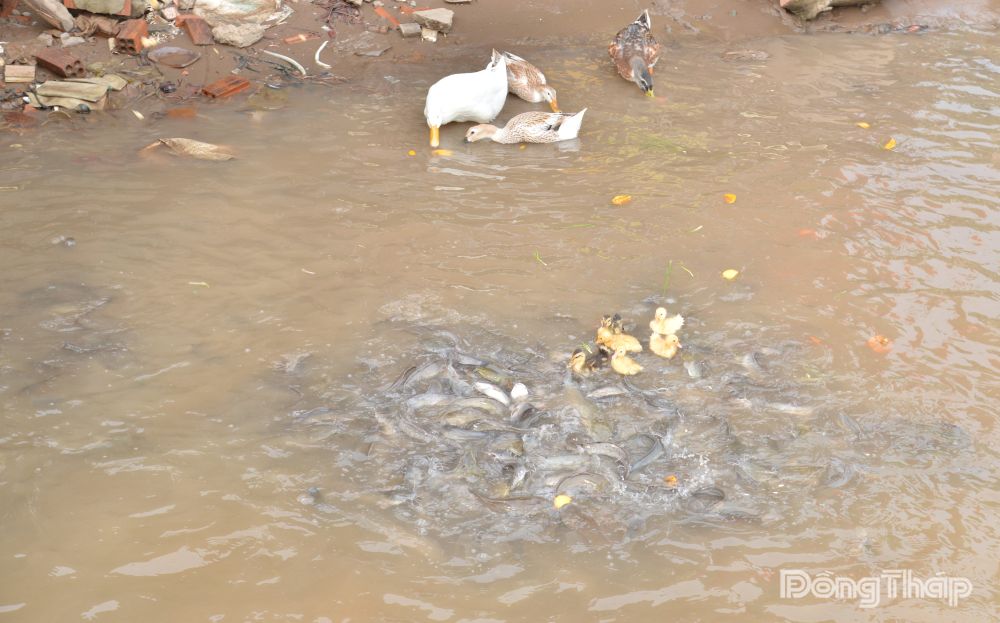
Beyond conserving aquatic resources, the site has gradually become an attractive destination for local residents and visitors. On weekends, large numbers of people from Can Tho, Vinh Long, An Giang, central provinces, and even overseas come to observe the fish and experience feeding them.
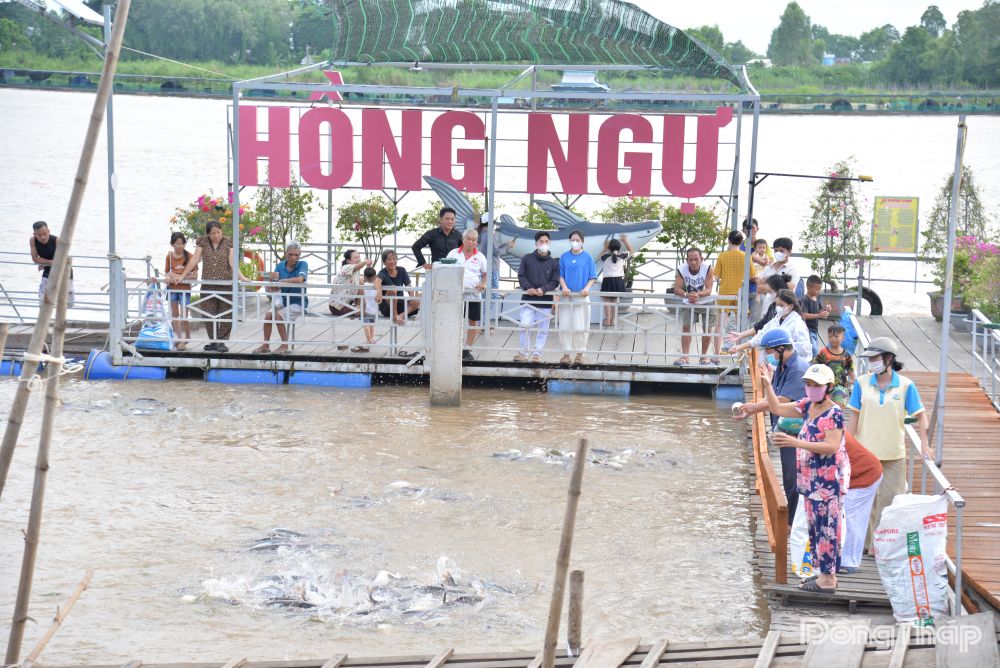
The site is at its liveliest between 5 p.m. and 6 p.m. each day. After work, local residents bring leftover rice and other food to feed the fish. The bustling atmosphere has gradually become a familiar daily scene for the local community.
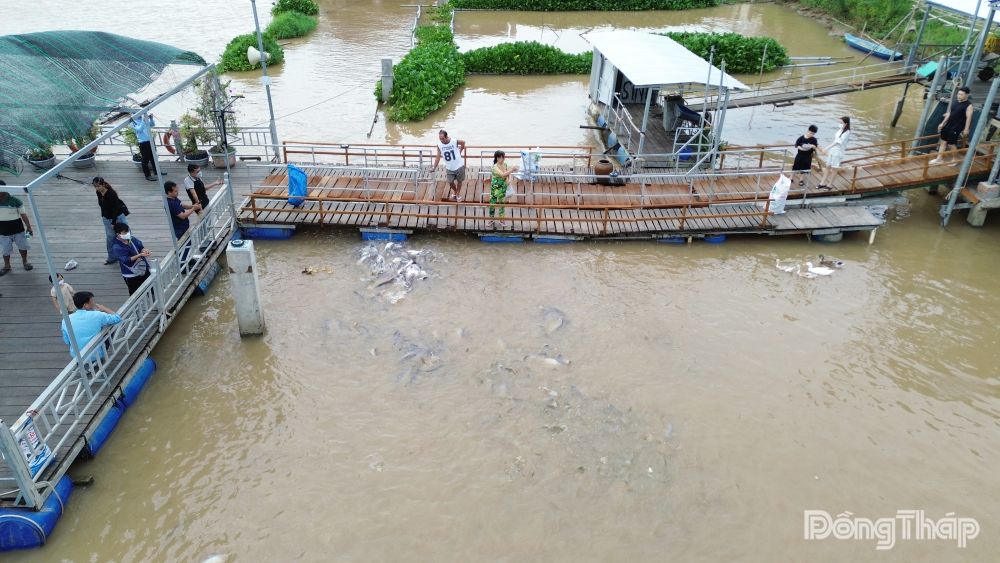
One feature that has intrigued many visitors is that, after living in the area for several years, the striped catfish all display a small spot on their heads, unlike fish elsewhere. Although there is no scientific explanation for this unique feature, it has added to the attraction of the site.
Mr. Le Van Thang of Thuong Lac Ward, Dong Thap Province, who regularly visits to feed the fish, said he comes to the site about twice a week on average.
"This is a very meaningful initiative. It not only helps conserve aquatic resources but also raises public awareness of nature conservation. I believe the model should be maintained and expanded," Mr. Thang said.
According to Mr. Truong Minh Hai, encouraged by its initial success, the model is being replicated. An Binh Ward is developing a similar conservation site, while another has recently been established in An Lac Ward. Before launching these initiatives, numerous study delegations from various localities visited the site to study and exchange experiences.
Along the alluvium-laden Tien River, the wild fish continue to thrive under the "shelter" of the community. Without dividing fences or rigid regulations, it is the shared commitment of local authorities and residents that has created an open conservation area.
The model is gradually spreading the efforts and significance of conserving aquatic resources and protecting the environment throughout the community.
By MINH THANH
Translated by X.QUANG