
Lai Vung: The "Kingdom" of Pink Mandarins
(DTO) Dong Thap has long been known as the "Kingdom" of Pink Mandarins, a famous specialty with its eye-catching orange-yellow peel, large size, and refreshing sweetness.
Grown widely along the banks of the Hau River, entire orchards turn a brilliant golden hue when the fruits ripen, attracting visitors during spring and providing a popular choice for Lunar New Year decorations.
Through many ups and downs, thanks to their skill and perseverance, the farmers here have not only preserved this renowned specialty but also elevated the value of mandarins into an art form, spreading their vibrant golden color far and wide and contributing to the unique identity of the Pink Lotus Land.
THE DISTINCTIVE BEAUTY OF POTTED MANDARINS
When it comes to the breakthrough transformation of Lai Vung mandarins, many people think of veteran farmer Luu Van Rang of Phong Hoa Commune. Locals respectfully call him the “father” of potted mandarin trees.
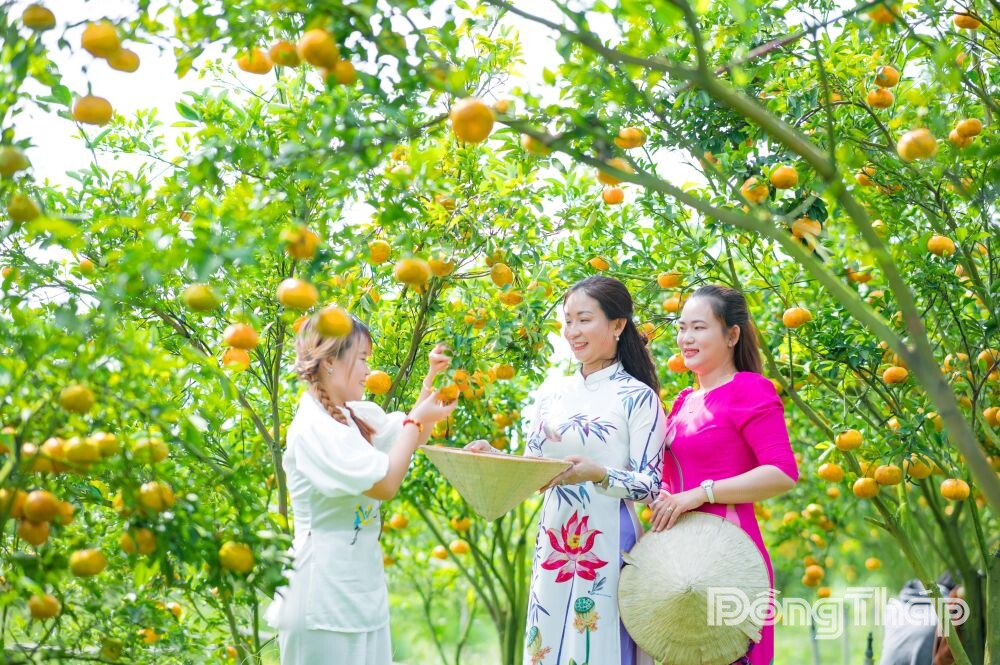
The mandarin tree is a woody plant that develops a lush, tall canopy when fully grown.
Since the early 20th century, mandarins have taken root in the soil of Lai Vung, producing large fruits with thin peel, abundant juice, and a signature delicate sweetness.
Each fruit that reaches consumers carries the taste of the land, the alluvial richness of the river, and the heartfelt sincerity of Lai Vung’s farmers. Thus, the land of mandarins remains a beloved spring destination, where tradition and innovation blend harmoniously, creating a vibrant life force for this fertile, storied region. |
However, for decades, mandarins were known simply as a specialty fruit to eat. The idea of growing mandarin trees in pots as ornamental plants for the Lunar New Year was almost unimaginable to many.
Rang recalls: “During the Lunar New Year, people display yellow apricot blossoms, chrysanthemums, and at most, calamansi. No one thought a big mandarin tree could be miniaturized and placed in the living room.” With curiosity and a keen eye, he began the arduous journey of adapting mandarin trees for ornamental pots in 2005.
The first two years were filled with sleepless nights. He shared: “The hardest part was taming the root system. Mandarins prefer well-aerated soil. Once confined in a pot, the roots can easily suffocate, leading the tree to wilt or die. Some batches survived but failed to bear fruit, or produced fruit insufficiently attractive to be ornamental.”
Undeterred, he kept learning through trial and error as he worked to develop his own unique formula.
He discovered that timing was the key. When the fruit on the tree reaches the size of a quail egg, that is the best moment to uproot the tree and transfer it into a pot.
After many failures, by 2008 he finally announced his successful “research,” creating a sensation in the ornamental plant market of the Mekong Delta.
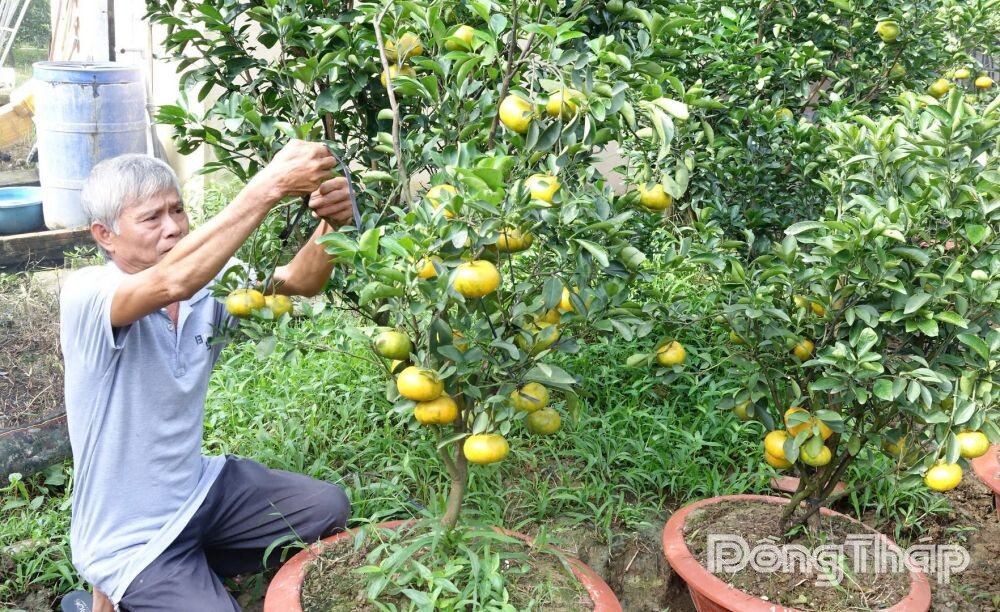
His potted mandarin trees amazed viewers. A standard ornamental tree stands only 1 to 1.5 meters tall, yet bears 20 to 50 large, round, plump fruits.
The miracle lies in the fact that despite being “downsized,” the fruit quality remains unchanged with thin peel, vibrant orange-yellow color, the same fragrance, and refreshing sweetness.
To produce a potted mandarin tree for sale during the Lunar New Year, growers must prepare 2-3 years in advance.
From selecting seedlings and propagating to shaping and pruning, every step requires patience and meticulous care.
According to Mr. Rang, cultivating ornamental mandarins is five to ten times harder than growing them in orchards. Just one careless move during transplanting that disturbs the roots could ruin years of effort.
His success opened a new direction for Lai Vung farmers.
He did not keep the technique to himself but willingly shared it with local growers.
Mr. Ha Thanh Hong, another farmer from Phong Hoa Commune, visited to learn from Rang and eventually succeeded in cultivating mandarins in pots as well.
Today, every Lunar New Year, hundreds of unique and eye-catching potted mandarins, priced from 2.5 to 5 million VND each, are shipped nationwide and even exported overseas, bringing substantial profits to local growers.
PRESERVING A RENOWNED SPECIALTY
A few years ago, yellow leaf disease and root rot began attacking mandarin orchards across Lai Vung.
The once vibrant golden orchards withered, forcing many growers into hardship. Entire orchards that had been nurtured for generations had to be uprooted.
During this difficult time, the spirit of the farmers once again shone brightly. Instead of giving up, they joined hands with local authorities to begin the recovery process.
Mr. Doan Anh Kiet, one of the pioneers in the province’s project to preserve Lai Vung mandarin orchards, boldly shifted to organic farming.
"Lai Vung fermented pork is both sweet and sour. |
He shared: “The old farming methods relied too heavily on chemical fertilizers and pesticides, which hardened the soil, weakened the trees, and made them more susceptible to disease. Switching to organic cultivation is harder, and in the beginning yields may be lower, but the trees grow sustainably, the soil is rejuvenated, and most importantly, it’s safer for consumers.”
Like Mr. Kiet and many other growers, the work did not stop at selling fresh fruit. They transformed their orchards into attractive ecotourism destinations.
Visitors come not only to admire rows of sunlit, brilliantly ripe mandarins, but also to hear stories of farmers’ perseverance and appreciate their care for every branch and leaf.
This sustainable direction has helped stabilize farmers’ incomes while laying the foundation for long-term tourism development in the area.
Recognizing the cultural and economic significance of mandarins, the Dong Thap Provincial People’s Committee approved a project to conserve Lai Vung mandarin orchards.
This strategic move aims to revive the kingdom of mandarins, which has been severely affected by plant disease and climate change. In addition, the province has coordinated with the Southern Fruit Research Institute to carry out a study titled “Improving the Quality of Lai Vung Mandarins.”
The goal is to hybridize and select new varieties with higher disease resistance and better climate adaptability, while retaining signature traits like the vibrant orange-yellow color, refreshing sweetness, and distinctive fragrance found nowhere else.
Today, the Lai Vung mandarin brand is no longer limited to fruit stalls in traditional markets. It is now featured prominently in major supermarket chains, premium fruit stores, and has become a popular Lunar New Year gift.
The mandarin’s rosy hue symbolizes luck and prosperity, while its round, full shape represents abundance and fulfillment.
These values have secured a lasting place for Lai Vung mandarins in the hearts of consumers during the Lunar New Year.
Along the small road beside the Cai Son Canal in Phong Hoa Commune, in the chilly first days of 2026, we saw elderly farmers carefully tending to each potted mandarin tree.
Their silver hair beside the green leaves and orange-yellow fruits painted a beautiful portrait of labor.
Today, Lai Vung mandarins are not only a regional specialty but also a symbol of perseverance, creativity, and the aspiration to rise above challenges of local farmers.
Their brilliant orange-yellow hue will continue to shine, not only during the Lunar New Year but throughout the journey of elevating Dong Thap’s agricultural reputation on the market.
By DUONG UT
Translated by ANH DUC