
Preserving and Promoting the Heritage Value of Long Khanh Scarf-Weaving Village
(DTO) For a hundred years, the sound of looms clattering has remained a familiar feature of Long Khanh Islet Commune in Dong Thap Province. Through many ups and downs, local artisans have remained devoted to their craft, breathing new life into the traditional Khan Ran checkered scarf and ensuring that this cultural heritage endures through time.
A CENTURY OF UPS AND DOWNS
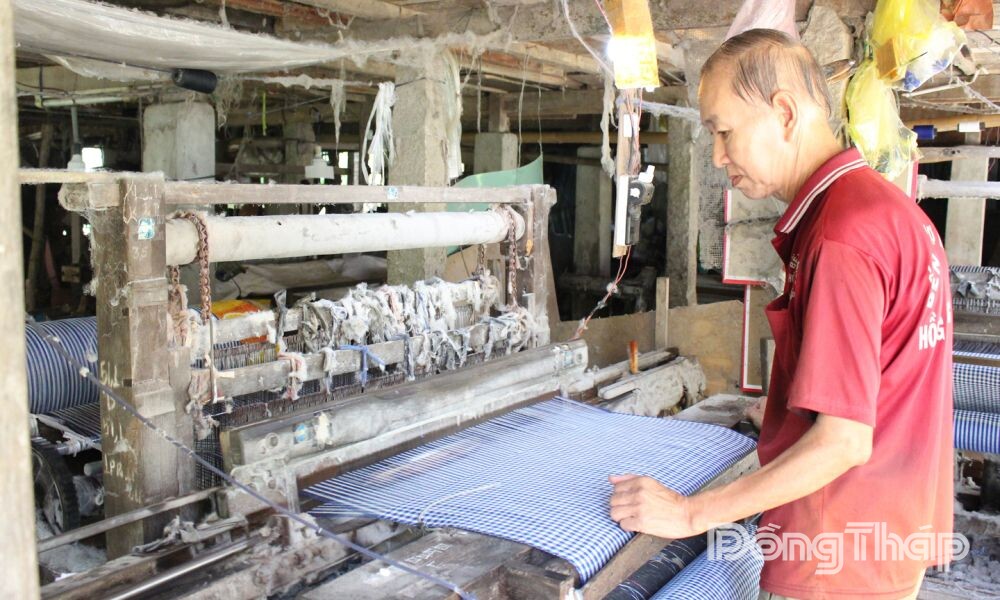
A visit to Long Khanh Scarf-Weaving Village offers the lively sounds of shuttles moving and looms operating, as colorful threads are woven into Khan Ran scarves imbued with the distinctive cultural identity of southern Vietnam.
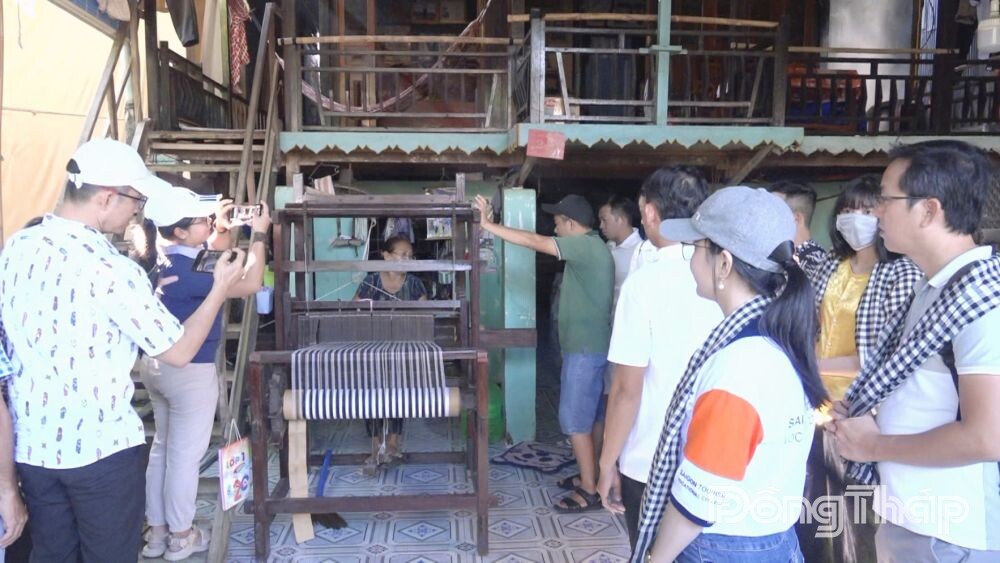
Long Khanh Scarf-Weaving Village dates back to the early 20th century. Despite many ups and downs, the craft has been preserved by successive generations.
At one point, the village faced the risk of disappearing as Khan Ran scarves gradually lost market appeal and were no longer considered essential products. Only a few dozen looms remained in occasional operation.
Elderly villagers recall that in the 1980s, scarves sold “like hot cakes.” During the rice harvest season, traders from many places came to place orders, selling the scarves to farmers to wear while working in the fields.
However, from 1992, demand for scarves slumped, while rising weaving-material costs made production unprofitable. Despite these difficulties, many families in the weaving hamlet remained committed to their ancestral craft, and their perseverance eventually paid off.
In 1994, the weaving hamlet staged a strong comeback. Khan Ran scarves were transported by traders to markets far and wide, while weavers worked tirelessly until dusk to meet demand.
A major turning point came in 2004, when mechanical looms were introduced to the village. At that time, the national power grid had yet to reach the islet, so many of the first mechanical looms had to be powered by diesel generators.
Because the machines were expensive and artisans were accustomed to traditional handlooms, it was not until 2014 that some of them began investing in mechanical looms.
After a century of formation and development, Long Khanh Scarf-Weaving Village now has around 60 households engaged in the craft, operating 150 looms and providing stable employment for many local workers.
A particularly proud moment for local residents came on August 2, 2023, when the traditional scarf-weaving craft of then-Long Khanh A Commune was officially recognized as a National Intangible Cultural Heritage.
Meeting 68-year-old artisan Tran Van Nat, who has been devoted to the craft since he was 13, gave us a deeper understanding of the strong bond between weavers and their looms. He shared: “I have been involved in scarf weaving since the time my grandfather was still practicing the craft. In the past, the village used traditional handlooms, while today machines make the work faster. My family has invested in four machines, producing around 100 scarves a day. This village is not simply a place where people practice a trade; it also embodies a century of history and deep human attachment. My family still preserves an old handloom for visitors to see and experience the craft, so they can appreciate the affection local people have for these scarves.”
PRESERVING AND RENEWING LOCAL HERITAGE
To survive and develop in an era of digitalization and economic integration, the village cannot rely solely on traditional production methods, as this would risk limiting its development.
Recognizing this, the Long Khanh Scarf-Weaving Cooperative was established in 2015, bringing significant changes to production and business practices.
By boldly adopting technology and putting mechanical looms into operation, the cooperative has increased productivity four- to five-fold compared with traditional hand-weaving. Each year, it supplies between 1.5 million and 2 million scarves to the market.
Thanks to its strategy of diversifying designs, the cooperative’s products remain in high demand. They are sold extensively in provinces and cities across the Mekong Delta, Ho Chi Minh City and other parts of the country, while also reaching international markets.
Traditionally, Khan Ran scarves came mainly in distinctive black-and-white or brown-and-white patterns. Today, artisans continue to innovate, breathing a modern touch into these familiar products.
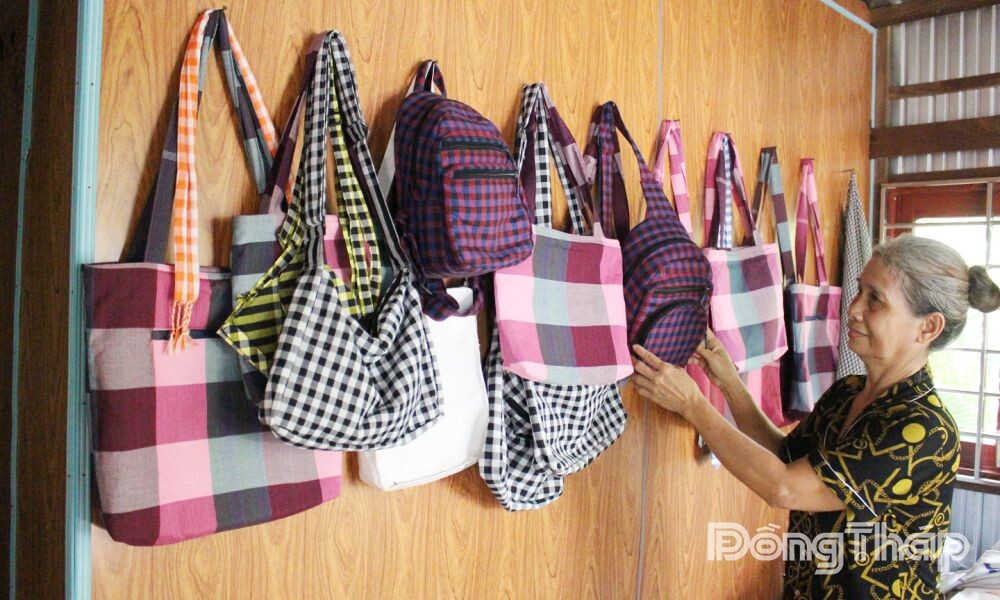
The scarves now feature intricate embroidery depicting iconic images of Dong Thap, such as lotus flowers and red-crowned cranes. Beyond scarves, the fabric is creatively adapted to make Ao Dai (traditional long dresses), Ao Ba Ba (traditional southern Vietnamese shirts), ties, hats and distinctive fashion accessories.
This transformation has turned Long Khanh Scarf-Weaving Village into an attractive experiential tourism destination on Dong Thap Province’s tourism map.
Local authorities and residents are working together to develop community-based tourism, creating distinctive new experiences while preserving and promoting local cultural values.
Visitors can witness the village’s production process firsthand, watch demonstrations of different weaving stages and try weaving alongside skilled artisans.
The vitality of intangible cultural heritage depends not only on its past or present prosperity, but also on future generations. Younger generations from Long Khanh have chosen to stay committed to their hometown’s heritage, renewing it with enthusiasm and creativity.
The family of artisan Le Thi Nay operates four scarf-weaving machines while maintaining a community-based tourism site where visitors can explore and experience the craft free of charge.
“In addition to scarves, we make handbags, backpacks, Ao Dai, ties, wallets, purses and other products to diversify our range. Visitors are welcome to watch the weaving process and choose from the village’s products,” artisan Nay said.
The combination of a century-long history, the artisans’ enduring dedication and the creativity and enthusiasm of younger generations is the key to keeping this heritage alive.
With their love for the craft and determination to preserve traditional values, local residents have made the scarf-weaving village a source of pride for Dong Thap and its people, as well as a cultural destination not to be missed by visitors exploring the heritage of southern Vietnam.
By DUONG UT - NTL
Translated by X.QUANG