
Preserving Soul of Dong Thap Muoi Through Local Experiences
(DTO) At Tram Chim National Park, traditional livelihoods once central to life in Dong Thap Muoi, such as setting up fish shelters, harvesting fish from the shelters, and catching field rats, are being revived in a unique way. More than simply creating new tourism products, these activities are strengthening the connection between the national park and its surrounding communities, allowing local residents to become storytellers of their own land.
WHEN FARMERS TELL THE STORY OF DONG THAP MUOI
After the first rains of the season, Tram Chim National Park is blanketed in fresh green grass. It is also when the vast wetland enters its most vibrant growing season.
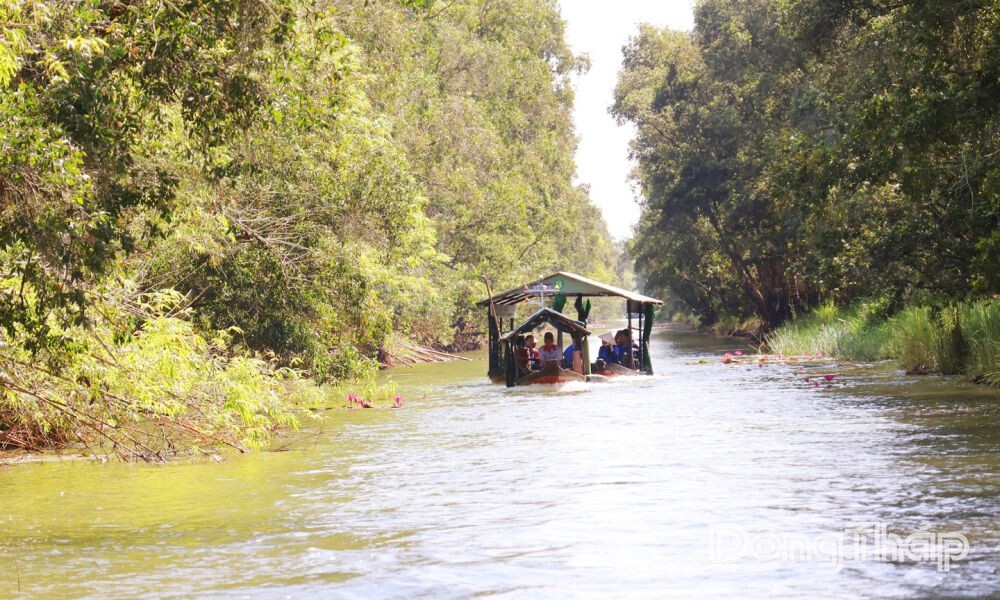
For the people of Dong Thap Muoi, this is the familiar season for harvesting fish from tree branch shelters and catching field rats, activities that have supported generations of local families.
Today, these traditional practices are no longer just a means of making a living. Instead, they have become experiences that many visitors seek out when visiting Tram Chim National Park.
According to Tran Van Tien, Head of Tram Chim National Park’s Field Rat Hunting Tourism Team, the first seasonal rains bring an abundance of fresh grass, providing plentiful food for field rats. As a result, they are at their plumpest, with firm meat that is more delicious than at any other time of the year. Local residents have long relied on this natural cycle to determine the ideal time to set up tree branch shelters and catch field rats.
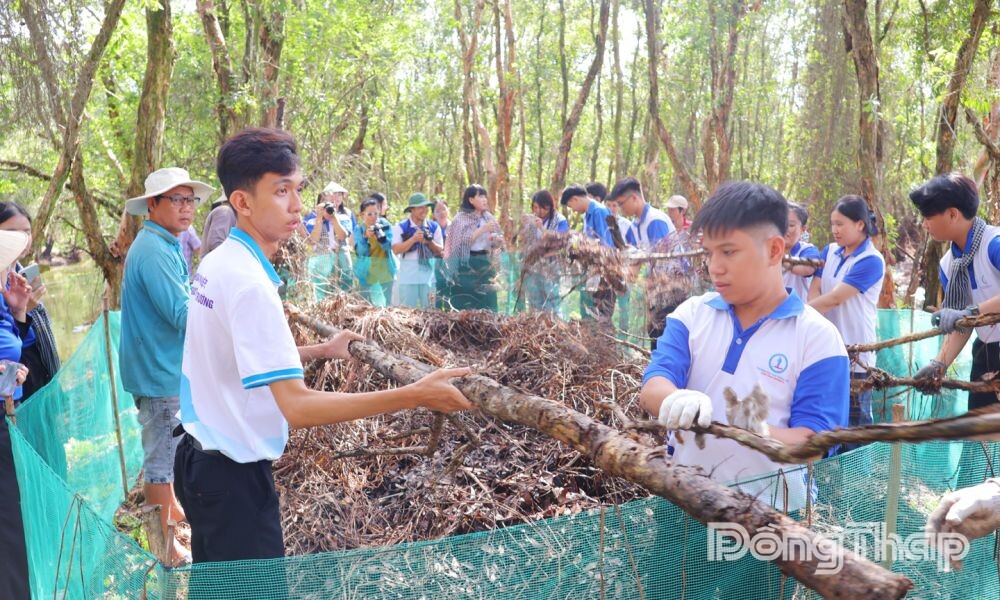
The practice extends beyond field rats. Tree branch shelters placed in canals and marshes are also the product of generations of accumulated knowledge. Bundles of tree branches are submerged to create habitats for fish, shrimp, and other aquatic species. On harvest day, locals surround the shelter with nets before carefully dismantling it layer by layer to collect the catch.
Scenes that were once an ordinary part of daily life in Dong Thap Muoi have now become fascinating experiences for visitors. Initial curiosity quickly gives way to excitement as tourists wade through the wetlands alongside local residents, pull in the nets, dismantle the shelters, eagerly watch fish dart beneath the water, or swiftly catch field rats as they rush out from the branches.
In these moments, the line between guide and visitor disappears. Everyone works together, laughs together, and listens to stories of the early days of the region, when people learned to live in harmony with nature and build their lives by following its rhythms.
Tran Van Tien shared that these activities were once simply a way for families to supplement their food supply. Today, as tourism experiences, they provide local residents with additional income while offering visitors an opportunity to learn about the lifestyle, customs, and culture of the people of Dong Thap Muoi.
LOCAL CULTURE-BASED TOURISM PRODUCTS
The appeal of these experiential activities lies not in how many fish or field rats are caught, but in the stories behind each experience.
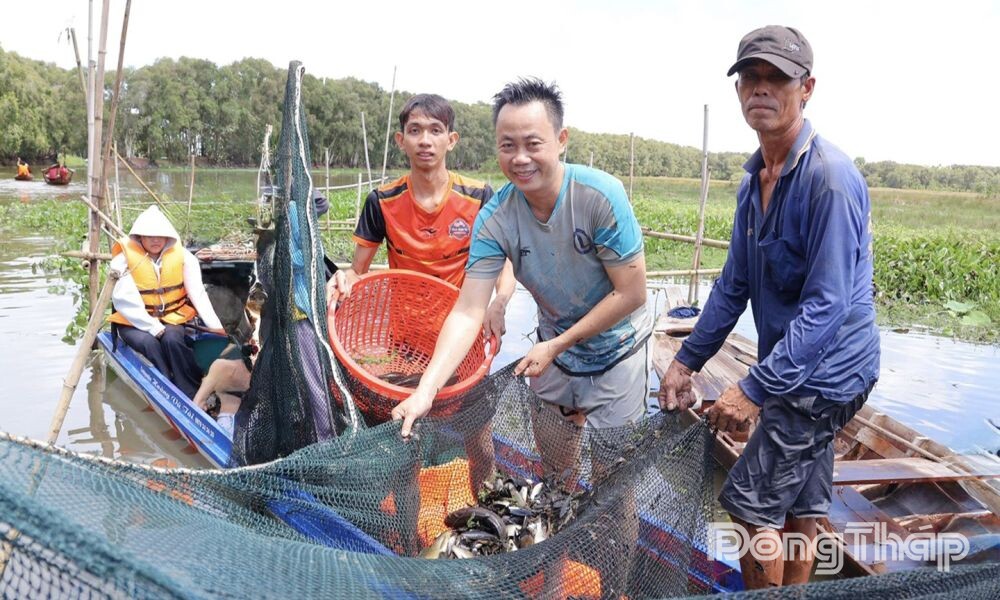
Each shelter set up embodies folk wisdom passed down through generations. Locals know how to select the right water currents and tree species, understand the habits of various aquatic species, and time the harvest to align with the rhythms of nature.
Field rat hunting is similar. It is not merely manual labor, but a deep understanding of the flood season, vegetation, and the growth patterns of animals closely linked to the fields. It is precisely this local knowledge that is becoming a unique resource for Tram Chim tourism.
Nguyen Mai Thao, a second-year student majoring in Culture, Tourism and Social Work at Dong Thap University, shared: “Even though I was born in Dong Thap, this is the first time I have directly experienced hunting field rats. As a child, I only heard stories from my grandparents, but participating today and preparing the dish together with everyone helped me better understand the lives of Dong Thap Muoi residents in the past. These will be valuable stories for me to introduce to tourists.”
Beyond creating a distinct journey to explore Tram Chim National Park, the involvement of local residents brings an authenticity that few other tourism products can match. Locals do not merely provide services. They become storytellers, passing down labor experiences, lifestyle habits, and memories of the Dong Thap Muoi region during its early days.
In the coming time, to further enhance the appeal of Tram Chim National Park’s tourism products, the Tram Chim Tourist Area plans to continue developing seasonal offerings, such as bird breeding season viewing, migratory bird watching, and admiring the blooming seasons of purple bladderwort, water lilies, and lotuses, ensuring that every time of the year, Tram Chim National Park has its own unique stories to tell visitors.
According to Pham Duc Hoa, Director of the Tram Chim Tourist Area (under Tram Chim National Park), the process of building new community-based tourism products still faces numerous challenges.
Many households are not yet accustomed to doing tourism, and their skills in welcoming, serving, and storytelling for tourists remain limited. Transforming daily labor habits into an engaging experiential product also requires time to collectively adjust and refine.
Therefore, in the coming time, the Tram Chim Tourist Area will continue long-term partnership with the local people, offering guidance, sharing experiences, and working together to build increasingly professional products while preserving the rustic, authentic nature inherent to Dong Thap Muoi.
The unit collaborates with residents in the buffer zone to create various experiential activities such as setting up tree branch shelters, harvesting fish and field rats from the shelters, paddling boats, and seasonal activities aimed at recreating the lives of Dong Thap Muoi residents in the past. The goal is not only to create diverse experiences for visitors, but also to help local people become the primary agents of tourism activities, actively participating in preserving the cultural values associated with the wetlands. PHAM DUC HOA, DIRECTOR OF TRAM CHIM TOURIST AREA (UNDER TRAM CHIM NATIONAL PARK) |
When local residents gain additional income from tourism, they will become more attached to their land and join Tram Chim National Park in conserving natural resources and preserving local culture.
This is also the path that Tram Chim National Park has chosen: not only leveraging the beauty of the wetland ecosystem, but also awakening the cultural values that have been tied to buffer zone residents for generations.
Every tree branch shelter, every fish harvest trip, or every story about the early field rat season becomes part of the journey to discover Dong Thap Muoi.
When local residents take center stage in tourism products, memories of the reclaimed wilderness no longer remain confined to the tales of elders, but continue to be passed down through every experiential trip.
This is how Tram Chim National Park enriches its tourism offerings while preserving the true soul of Dong Thap Muoi through the simplest, most everyday things.
By MY LY
Translated by ANH DUC