
Preserving the Flavor of "Countryside Cakes" Amidst Urban Life
(DTO) Amid the bustling flow of modern urban life, there remain moments that cause us to slow down, savoring the gentle aroma of banana leaves, rice flour, and coconut milk-evoking the memory of early morning country markets. There, the simple and rustic folk cakes of the South quietly hold a special place in the hearts of the Vietnamese.
In Dao Thanh Ward, where life is becoming increasingly vibrant, the folk cake stall at Thanh Tri Market has long been a familiar stop for locals and travelers alike.
Without being loud or ostentatious, these "countryside cakes" captivate passersby simply through their deliciousness and authenticity.
A SMALL STALL PRESERVING THE SOUL OF THE COUNTRYSIDE
Every day, from very early morning, the vendor is present to arrange each type of cake on the shelves: attractive steamed rice cakes (banh bo), smooth multi-layered steampipe cakes (banh da lon), and fragrant glutinous rice cakes (banh tet, banh u) wrapped in banana leaves. Everything is neatly organized, clean, and eye-catching.
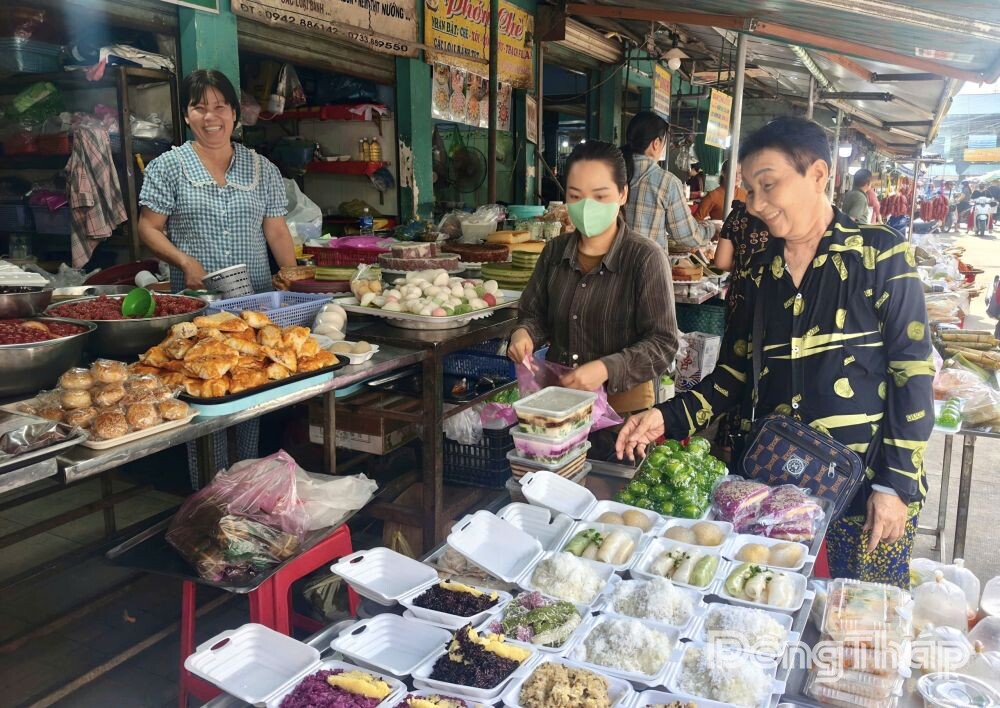
Ms. Nguyen Thi Bich Phuong (Dao Thanh Ward), a regular customer at Thanh Tri Market, smiled gently while selecting cakes: “My child really likes sweet cakes, so whenever I go to the market, I stop by to buy some.
They sell all kinds of traditional cakes here, and every one of them is delicious.
Her simple words reflect deep trust. Though times have changed, the flavor of “country cakes” remains pure and rich in every ingredient. People come not only to buy cakes but also to rediscover childhood memories in each soft, fragrant, and creamy bite.
Dozens of fresh varieties are prepared daily. According to the vendor, the secret lies in preserving traditional flavors: rice flour ground by hand, freshly squeezed coconut milk, and natural coloring extracted from pandan leaves, magenta plant leaves, and gac fruit. Notably, no industrial coloring or preservatives are used.
Ms. Tran Thi My Linh, owner of the “country cake” stall at Thanh Tri Market, shared: “The most popular items are banh bo, banh tet, banh uot (steamed rice rolls), banh da lon, cassava cake, grilled mung bean cake, and banana cake.
All of them are homemade, entirely handcrafted using pandan and magenta leaves for natural white, green, and purple colors-no artificial dyes. Customers who try them always praise the taste.”
Ms. Linh said that every day her family wakes up at 2–3 a.m. to prepare ingredients.
The rice is washed clean and soaked overnight, then ground into flour and mixed with freshly squeezed coconut milk, a bit of sugar, and salt to taste.
Pandan and magenta leaves are blended to extract natural green and purple colors, which are both attractive and delicately fragrant. Each batch is poured into molds and steamed evenly to ensure the cakes rise well and remain soft without becoming mushy.
Once cooked, the cakes are left to cool, wrapped in clean banana leaves, or displayed on trays for customers to choose. “Handcrafting is labor-intensive, but it preserves the original flavor—the aroma of rice and pandan, the richness of coconut milk. People try it once, remember it, and keep coming back,” Ms. Linh said cheerfully.
By sticking to traditional methods and refusing to switch to industrial ingredients, Ms. Linh’s stall has stood firm for nearly 20 years.
Despite the rise of many modern eateries, her small stall continues to attract a steady stream of customers. Besides local residents, visitors from other places also stop by—drawn not only by the authentic taste but also by the warmth and familiarity of these countryside treats.
INNOVATING TO SURVIVE
Across the wards of My Tho, Dao Thanh, and Thoi Son, a series of folk cake shops have emerged, becoming a familiar sight in the urban landscape. This trend represents both a commercial success and a way to preserve traditional culinary culture.
However, amid growing competition and changing consumer tastes, preserving tradition alone is no longer enough. Many traditional cake producers in Dong Thap have proactively made more systematic investments—building proper storefronts, improving designs, and upgrading packaging.
Today, traditional cakes are not only breakfast staples but have also become elegant gifts for special occasions.
At Tai Duc Traditional Cake Facility in Dao Thanh Ward, fresh batches of cakes are steamed from early morning. Amid the fragrant aroma of rice flour and coconut milk, young artisan Nguyen Tan Tai works tirelessly, his eyes reflecting genuine passion for the craft.
He shared that for years he has pondered how to bring traditional cakes closer to modern life. “Besides the classic varieties, I’ve created new ones such as steamed taro cake, baked taro cake, bunny sponge cake, and savory banh bo.
We have to adapt to consumers’ tastes, but the most important thing is preserving the authentic flavors of our homeland while blending them with modern creativity,” Mr Tai explained as he carefully arranged the cakes on display.
Beyond flavor, Mr Tai has also invested in packaging and food safety standards. Labels, ingredient sourcing, and wrapping methods are handled meticulously and hygienically.
As a result, customers can confidently purchase the cakes to serve at parties, holidays, Tet celebrations, or as gifts for loved ones. These rustic yet refined “countryside cakes” have become small but meaningful presents, helping traditional flavors reach a wider audience.
Amid the bustling morning market, Ms. Nguyen Thi Nghia Vien (My Tho Ward) paused at a cake stall, admiring the display with satisfaction: “Cakes nowadays look more appealing, the designs are beautiful, and they taste good—most importantly, they’re clean and hygienic.
In the past, they were the same types of cakes, but they weren’t presented as nicely as they are now. These are perfect for serving at parties-everyone compliments them.”
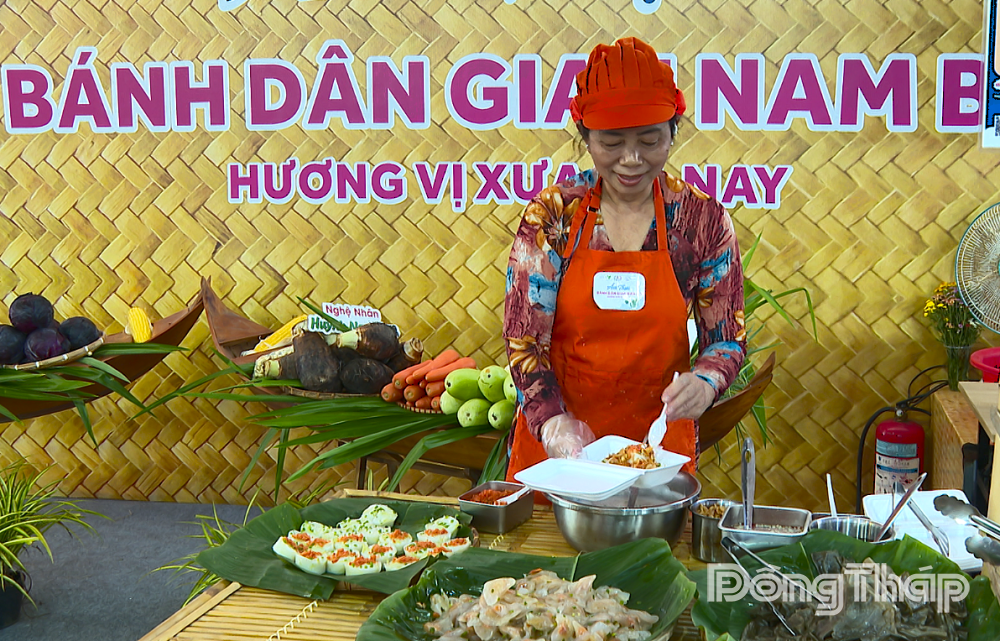
Traditional Southern cakes are no longer confined to market stalls or small shops. They now appear at major events such as conferences, festivals, tourism exhibitions, and socio-economic showcases in Dong Thap Province. On elegant banquet tables, one can still see the vibrant green of pandan leaves, the gentle purple of magenta leaves, and inhale the comforting aroma of rice flour and coconut milk—simple yet deeply evocative.
Traditional folk cakes have now moved beyond rural markets, entering urban life in a gentle and natural way. Interestingly, their customers are not only older people seeking nostalgic flavors. Many young people also choose these “country cakes” as a cultural experience.
Amid the fast pace of modern life, traditional cakes quietly “win over” younger generations with the authentic taste of home. In every hint of sweetness and richness lies the story of the Southern people — gentle, sincere, and deeply compassionate.
Among the growing number of young faces visiting traditional cake shops is Ms. Dang Oanh Nhi from Cho Gao Commune. While selecting several varieties, she shared: “Traditional cakes preserve a beautiful part of Vietnamese culture, and they’re delicious, too. I love them, so I often recommend them to friends who share the same interest. In that way, we help preserve this beautiful tradition and the craft of making traditional cakes.”
No longer found only at market stalls or small shops, Southern folk cakes are now featured at major events such as conferences, festivals, exhibitions, and tourism showcases in Dong Thap Province.
On elegantly set banquet tables, one can still recognize the green hue of pandan leaves, the purple tint of magenta plant leaves, and the gentle aroma of rice flour and coconut milk — simple yet deeply evocative.
In the heart of the bustling city, Southern folk cakes remain a living culinary heritage, preserved and passed down through generations. Through the dedication of the artisans and the appreciation of diners, the flavor of "countryside cakes" continues to spread, becoming ever more endearing to today's audience.
By PHUOC LOC
Translated by X.QUANG