

The Heady Aroma of Pickled Scallions in the Tet Season
(DTO) During the final days of the year, riding a motorbike along the roads leading to the hamlets of Tam Nong and My An Hung communes, we suddenly catch the pungent, spicy aroma of leeks.
Stopping by the roadside, we are greeted by the bustling labor scene of the Tet leek production season in full swing.
THE “SCALLION HAMLET” IN SEASON
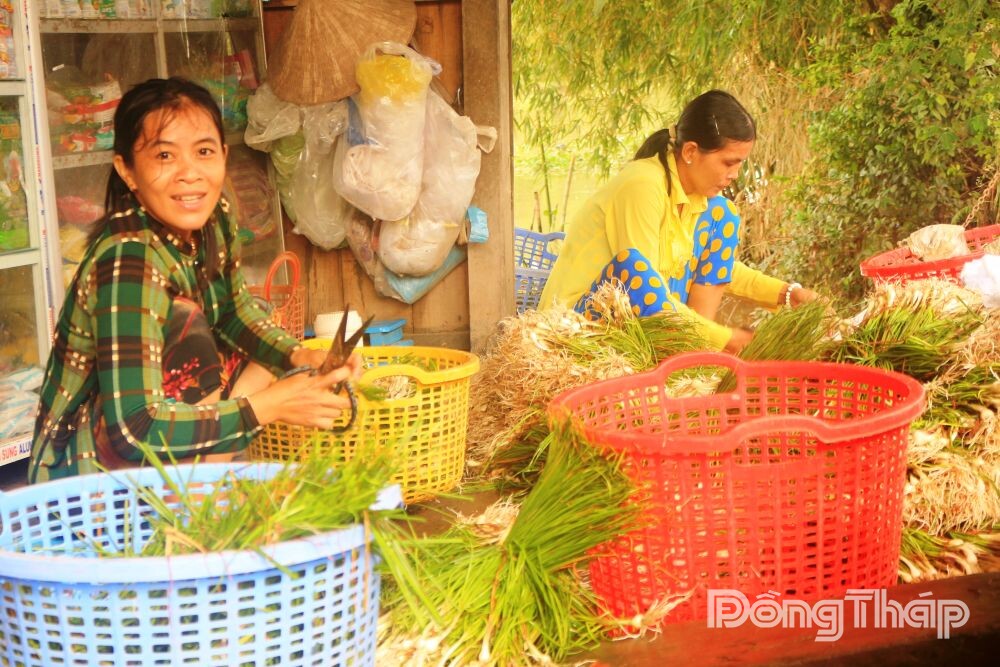
Under house eaves and along small canals, groups of women - from silver-haired grandmothers to middle-aged women - are busy working over baskets brimming with scallions.
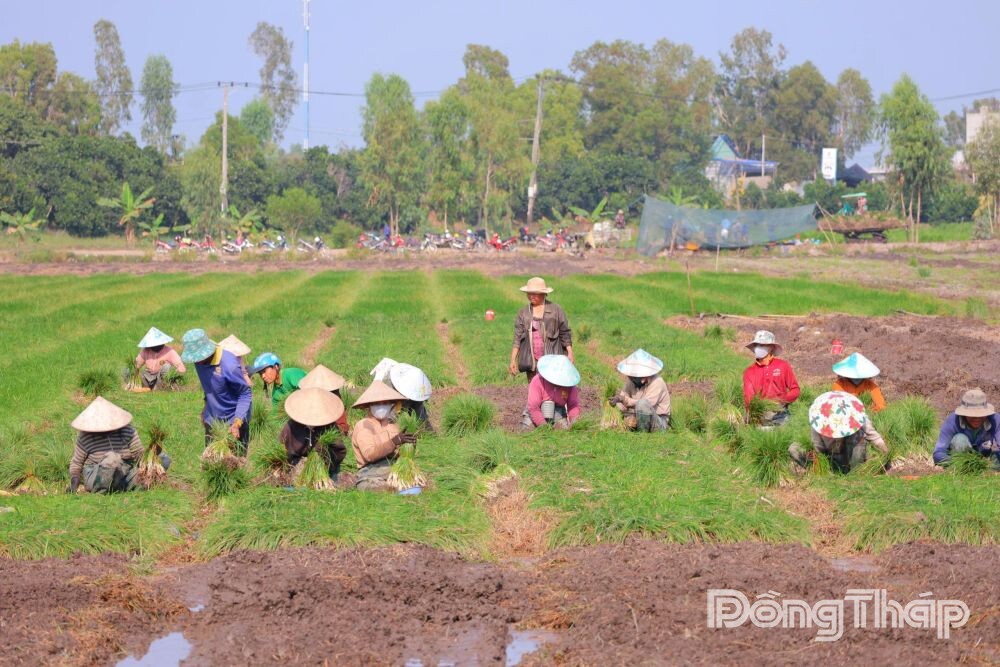
Dong Thap has long been famous for its lotus, but few people know that it is also home to areas considered the “capital” of scallions. Tam Nong and My An Hung are the two localities with the largest scallion-growing areas in the province.
No one remembers exactly when scallions first took root here. People only know that over generations, this crop has grown from the fertile alluvium of the Tien River, becoming a beloved agricultural product.
Laughter and lively chatter mingle with the rhythmic clinking of knives and scissors, creating a soundscape unique to the days leading up to Tet.
Nimble hands swiftly trim roots and strip leaves, transforming mud-stained scallion bulbs into pristine white “pearls.”
Ms. Tran Kim Chi (My An Hung commune), deftly cleaning scallions, shares: “Fresh scallion bulbs are delicious no matter how you cook them.”
For people in the Mekong Delta, Tet without pickled scallions is like losing half of the festive flavor. Each spring, families gather under their porches to clean and sun-dry scallions together.
This is not merely food preparation, but a cherished time for neighbors to chat and share stories after months of hard work. Making pickled scallions may seem simple, but it requires experience.
After being thoroughly cleaned, the bulbs are marinated with vinegar and white sugar, with a few slices of fresh red chili added for color and a spicy kick.
Ms. Phan Thi Thum, who runs a pickled scallion business in Tam Nong commune, explains: “After cleaning and whitening the scallions, we marinate them and store them in jars. After a few days, when the bulbs turn translucent and absorb that sweet-and-sour taste, they’re ready. The skill lies in keeping them crisp-not too pungent, not too sour.”
On the Tet dining table, pickled scallions play the role of a perfect “flavor balancer.” Ms. Thum suggests: “They must be eaten with braised pork in coconut water. The aroma of the meat, the salty fish sauce, combined with the crisp, tangy, pungent scallions create an indescribable taste.” For those living far from home, a pot of braised pork beside a plate of pickled scallions is a heartfelt call to return home for Tet.
As Tet approaches, the scallion hamlet becomes busier than ever. Labor costs rise, raw material prices increase with market demand.
The local women take advantage of their free time to pluck scallions for hire, earning extra income to prepare for Tet for their families. The scallion plant not only enriches farmers but also creates jobs for local workers.
Local women take on scallion-cleaning work in their spare time earn extra income to prepare for the holiday. Scallions not only enrich farmers, but also create jobs for local laborers.
FROM UPS AND DOWNS TO A BRAND
To build the Dong Thap scallion brand as it is today, farmers have endured many hardships caused by weather and market fluctuations.
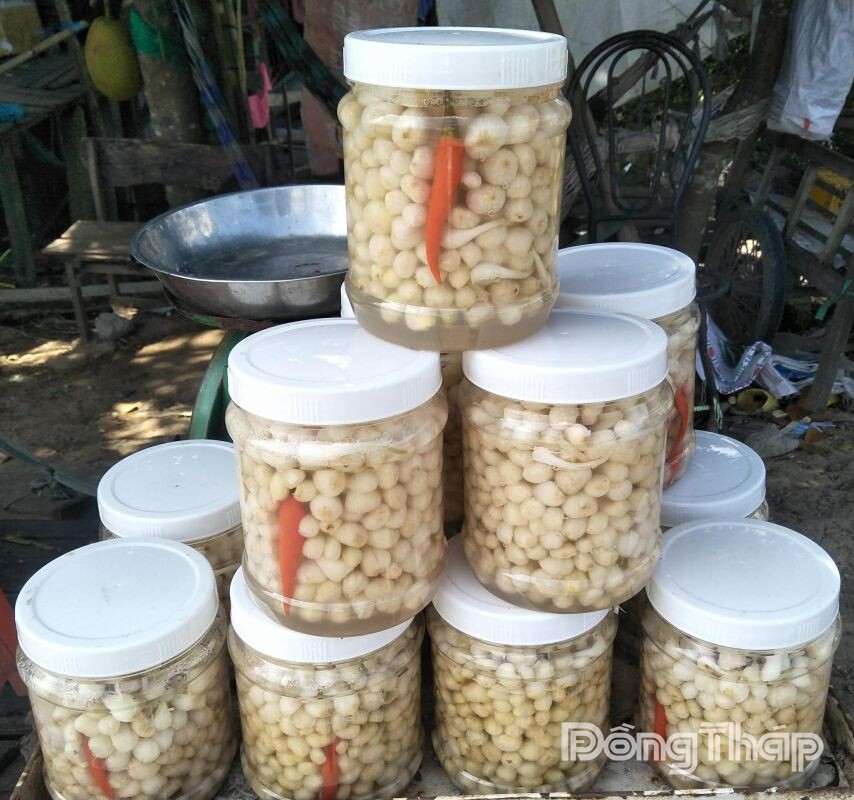
There were seasons when prices drop, forcing growers to watch their hard work go to waste. Yet love for their homeland and faith in the scallion crop helped them persevere, turning it into a “wealth-creating plant.”
The story of Ms. Nguyen Thi Cung (Tam Nong commune) is a vivid example.
After failing in scallion farming in 2008 and even having to sell land to repay debts, she refused to give up.
Recalling the past, she says softly: “I was very sad then. But missing the work, I started cleaning and making pickled scallions in my spare time to give to friends. Everyone praised them and encouraged me to sell. Seeing it as my last chance, I decided to start over.”
From handmade jars sold to passers-by, her high-quality pickled scallions gradually gained recognition. The product achieved OCOP 3-star certification and is now available in major supermarkets and the Ho Chi Minh City market.
Her success is not only personal, but also opens a new path for the entire scallion-growing region, proving that with quality investment and value enhancement, scallions can go far.
Dong Thap scallions have now been granted a certified trademark, with diverse products ranging from dried scallions and sweet-and-sour pickles to ready-cleaned fresh bulbs. This has significantly increased their economic value. A cleaned fresh scallions sell for about VND 60,000 per kilogram, while jarred pickled scallions cost about 80,000 VND per jar, providing a stable income that is significantly higher than selling raw produce."
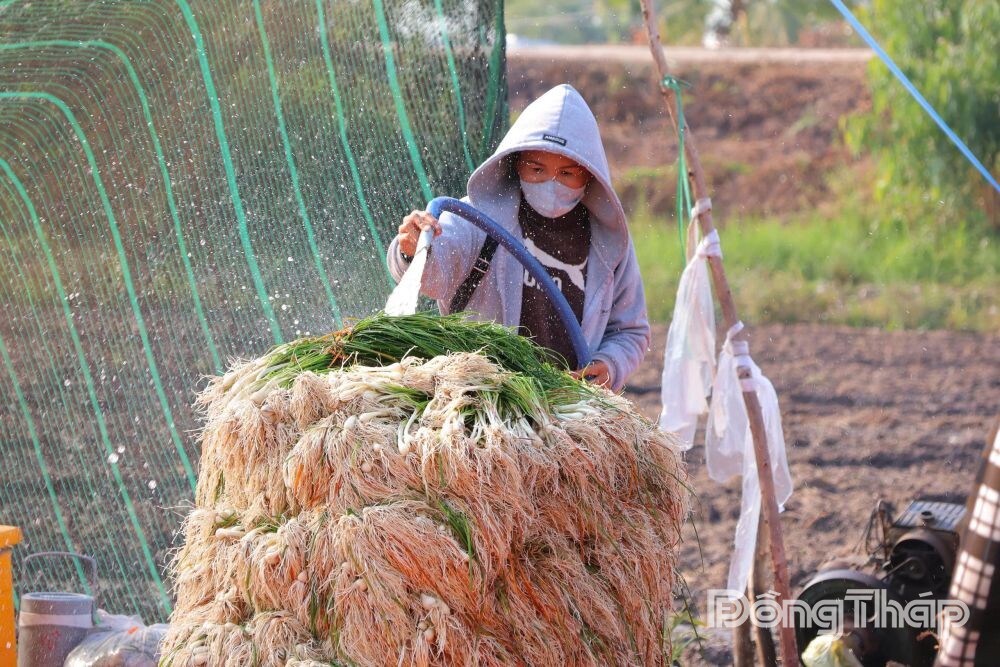
Tam Nong commune has about 20 hectares of scallion cultivation, My An Hung about 25 hectares, along with neighboring communes across Dong Thap province.
The scallion plant not only helps farmers escape poverty but also enables many households to prosper.
According to Ms. Nguyen Thi Be (Tam Nong commune): “With yields of around 3.5 tons per ‘cong’ (1,000 m²), after expenses, profits reach about VND 11 million per cong.”
Culinary creativity with scallions continues to grow, reflecting the ingenuity of Mekong Delta residents.
Beyond the traditional pickles eaten with banh tet during Tet, locals have invented dishes such as scallions stir-fried with beef, frog, field rat, or mixed with dried shrimp.
This diversity creates irresistible appeal for visitors, turning scallions into a must-try specialty when visiting the Mekong Delta.
As we leave the scallion hamlet at dusk, the pungent aroma still lingers.
The image of diligent, gentle farmers beside baskets of scallions reaffirms that no matter how life changes, Tet scallions remain an indispensable dish - a cherished memory for Mekong Delta people whenever spring returns.
By DUONG UT
Translated by X.QUANG