
Vietnam Retain ASEAN Cup Title
(DTO) Vietnam’s back-to-back ASEAN Cup titles, along with its ASEAN U23 Championship and SEA Games triumphs, mark a special chapter in head coach Kim Sang-sik’s journey with Vietnamese football.
A MORE COMPOSED TEAM LIFTS THE TROPHY
The second leg of the 2026 ASEAN Cup final between Vietnam and Thailand was a dramatic affair. After losing 2-0 in the first leg, Thailand had to push forward in search of a comeback, while Vietnam did not simply sit back to defend, but was ready to take the game to its opponents.
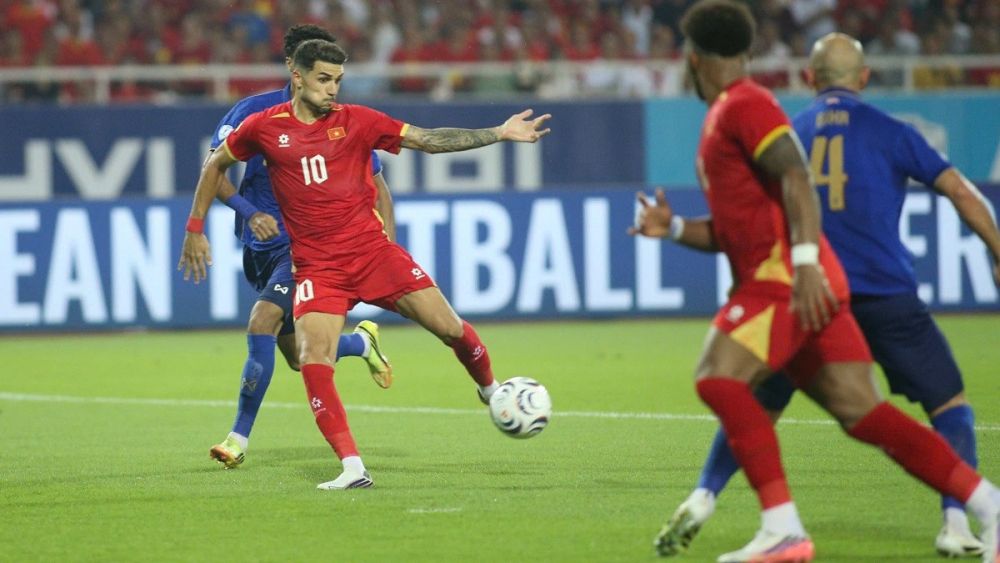
In the 10th minute, Vietnam suffered a setback when Van Vi pulled a muscle after a burst of speed down the left and had to leave the field. Coach Kim Sang-sik immediately brought on Phan Tuan Tai.
Just two minutes later, Thailand capitalized on uncertainty in Vietnam’s defense to open the scoring. After a move down the right, Yotsakorn Burapha fired a low, powerful shot that goalkeeper Patrik Le Giang could only get a hand to.
Trailing, Vietnam came under considerable pressure from Thailand but continued to search for openings. In the 18th minute, Dinh Bac worked his way into the box and fired from a tight angle, only for goalkeeper Botproom to make the save.
In the 27th minute, Thanh Long intervened at the right moment, using his strength to make Kakana’s effort from just outside the box easy for Patrik Le Giang to collect.
Vietnam’s biggest chance of the first half came in the 43rd minute. Phan Tuan Tai crossed from the left toward the far post, where Xuan Son rose to head the ball against the crossbar. However, no Vietnamese player was there to follow up.
The first half ended 1-0 to Thailand, but Vietnam still held a 2-1 aggregate lead.
Thailand continued to apply pressure after the break and came close to leveling the aggregate score. In the 49th minute, Xuan Manh fouled Kakana in the box and the referee awarded a penalty. Kakana, however, sent his spot-kick wide, missing a golden opportunity to bring Thailand back into the contest.
Just three minutes later, Vietnam equalized. Phan Tuan Tai sent an early cross into the box, and Hoang Hen’s effort hit the post before rebounding off goalkeeper Chatchai and into the net. Vietnam’s aggregate lead increased to 3-1.
The goal lifted Vietnam’s confidence. In the 63rd minute, Tien Anh missed a good chance after combining with Xuan Son and Hoang Hen. Five minutes later, coach Kim Sang-sik brought Quang Hai and Hai Long on. Less than a minute later, Hai Long beat the offside trap and struck the crossbar before forcing another save with a long-range effort.
But the final was far from over. In the 85th minute, Wanchai capitalized on Tien Anh’s mistake in the box to make it 2-1, cutting Vietnam’s aggregate lead to 3-2. Vietnam now faced a tense final few minutes.
Then, in the final minute of stoppage time, the decisive twist arrived. Under pressure from Xuan Son while attempting to clear the ball, Wanchai inadvertently put it into his own net. Vietnam leveled at 2-2 and preserved its advantage. The match ended 4-2 on aggregate, securing Vietnam the 2026 ASEAN Cup title.
Vietnam did not always have the better of the game. Thailand mounted strong pressure at times, took the lead and had a chance to level the aggregate score from the penalty spot. But Vietnam showed the composure of champions: it did not panic when trailing, stood firm under pressure and made the most of decisive moments to protect its hard-earned advantage.
THE ART OF SQUAD MANAGEMENT AND COLLECTIVE STRENGTH
The most notable aspect of Vietnam’s 2026 ASEAN Cup campaign was not simply the number of goals or wins, but how the team operated. Almost every match saw coach Kim Sang-sik make adjustments to personnel, formation and approach.
These were more than routine rotations. Behind the changes was a clear message: Vietnam needed multiple ways to win and could not depend on a handful of individuals.
This was especially significant given the quality of the team’s naturalized players, including Nguyen Xuan Son, Do Hoang Hen and Tai Loc. They can make a difference, but Kim Sang-sik has not built the team around serving a few stars.
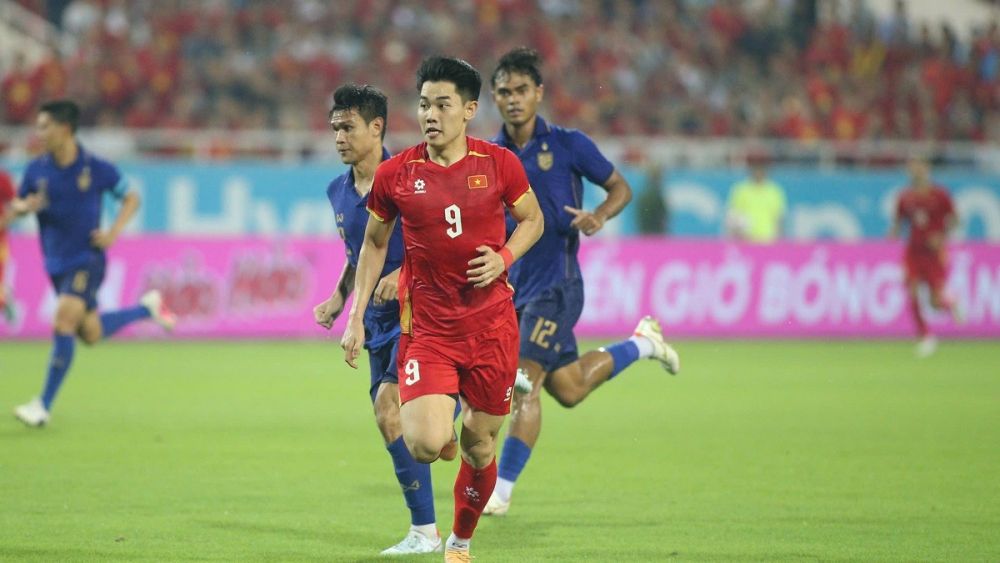
Instead, even players expected to provide a spark have had to adapt to the overall system. At times, Xuan Son, Hoang Hen and Tai Loc have dropped deep to support the defense, link up with the midfield or make runs to create space for teammates. Their value, therefore, goes beyond goals and individual moments of brilliance.
This is what stands out about Kim Sang-sik’s squad management: no player is above the team. The first leg of the final at Rajamangala Stadium was the clearest example. Thailand started better, created several chances and put Vietnam’s defense under considerable pressure. Yet Vietnam remained composed throughout. The players maintained their shape, accepted periods of Thai possession and patiently waited for their opportunities.
Then, changes from the bench turned the game around. Nguyen Hai Long came on in the 58th minute and scored the opener just minutes later. In the 69th minute, another substitute, Nguyen Quang Hai, doubled the lead with a superb volley from Hoang Hen’s cross. Two goals in seven minutes gave Vietnam a 2-0 win at Rajamangala.
Hai Long and Quang Hai decided the game despite not starting. It was not simply a story about two individuals, but a testament to Kim Sang-sik’s ability to read the game and make the right changes.
This approach has given Vietnam considerable squad depth. When one option does not work, the team has another. When opponents shut down one attacking route, Vietnam can change its approach. And when starters struggle, players coming off the bench can become match-winners.
Hai Long, Quang Hai, Hoang Hen, Dinh Bac and Le Pham Thanh Long can all take on different roles depending on the match. Even in goal, the team’s depth was evident, with Patrik Le Giang putting in an impressive performance in the first leg, making several key saves under pressure from the hosts.
If Xuan Son was one of the symbols of Vietnam’s 2024 ASEAN Cup triumph, the 2026 campaign showed that the team can find other ways to win. Xuan Son remains important, but he is not the only answer. When opponents try to shut down the striker, the resulting spaces can be exploited by Hoang Hen, Dinh Bac, Hai Long or Quang Hai. That is the difference between having good players and building a strong team.
A team that relies on one star can struggle when that player is neutralized. But a team with multiple options can find another way when one door closes. Under Kim Sang-sik, Vietnam is moving in the latter direction.
If the 2026 ASEAN Cup title marks another milestone in the Korean coach’s journey, the greater value of the trophy lies in how Vietnam won it. It was a team that could adapt, change and avoid placing all its hopes on any one individual.
Kim Sang-sik has turned rotation into strength, made substitutes capable of deciding matches and, most importantly, built a team in which every player has a role, but no one is irreplaceable.
A championship can be decided by a single moment. But a successful era can only be built on depth, organization and adaptability. For Vietnam, that may be Kim Sang-sik’s most valuable legacy from the 2026 ASEAN Cup triumph.
By CAO THANG
Translated by ANH DUC