
Vietnamese Green Rice – Creating Value and Reaching Global Markets
(DTO) As part of the events under the 2nd Vietnam Rice Industry International Festival – Can Tho 2026, the Can Tho City People’s Committee, in coordination with the Ministry of Agriculture and Environment (MAE), held a seminar entitled “Vietnamese Green Rice – Creating Value and Reaching Global Markets” on the morning of November 24.
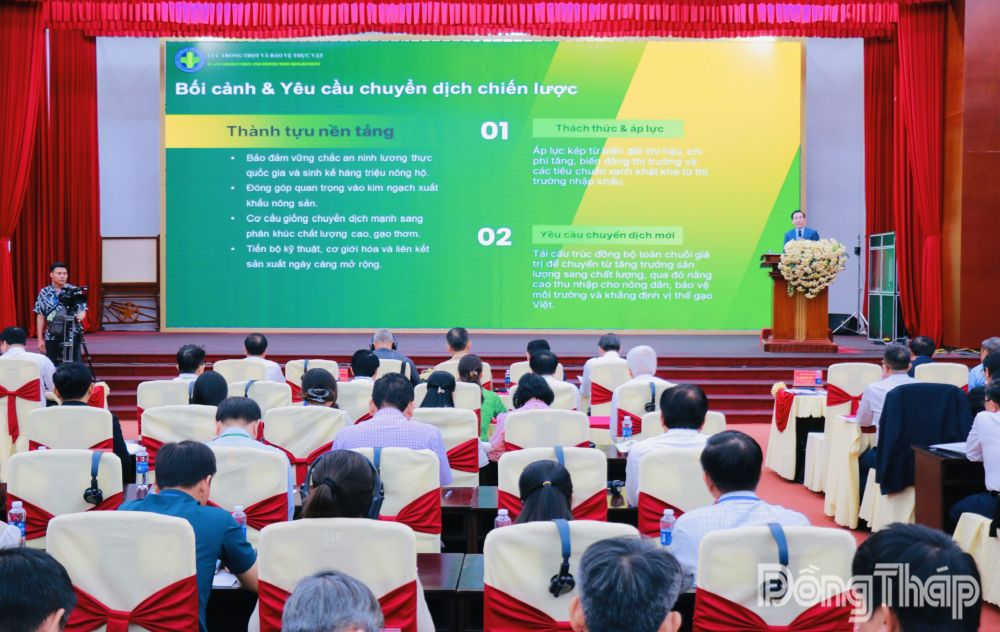
According to the Ministry of Agriculture and Environment, rice has long played a particularly important role in agriculture, the economy and national food security. Vietnam has not only firmly ensured domestic food security but has also become one of the major rice suppliers to the global market.
However, the new development context is placing higher demands on the rice sector, extending beyond production volumes and prices to include quality, food safety, traceability, environmental responsibility, greenhouse gas emissions and the sustainability of the entire value chain.
Against this backdrop, regulators and scientists at the seminar identified key transitions that need to be prioritised in the coming period.
Participants presented a range of papers on orientations for Vietnam’s rice export markets; policies to develop high-quality, green and low-emission rice production in Vietnam; an overview of the global rice market in 2025–2026 and trends in the coming years; and how green Vietnamese rice can build consumer trust and elevate the national brand.
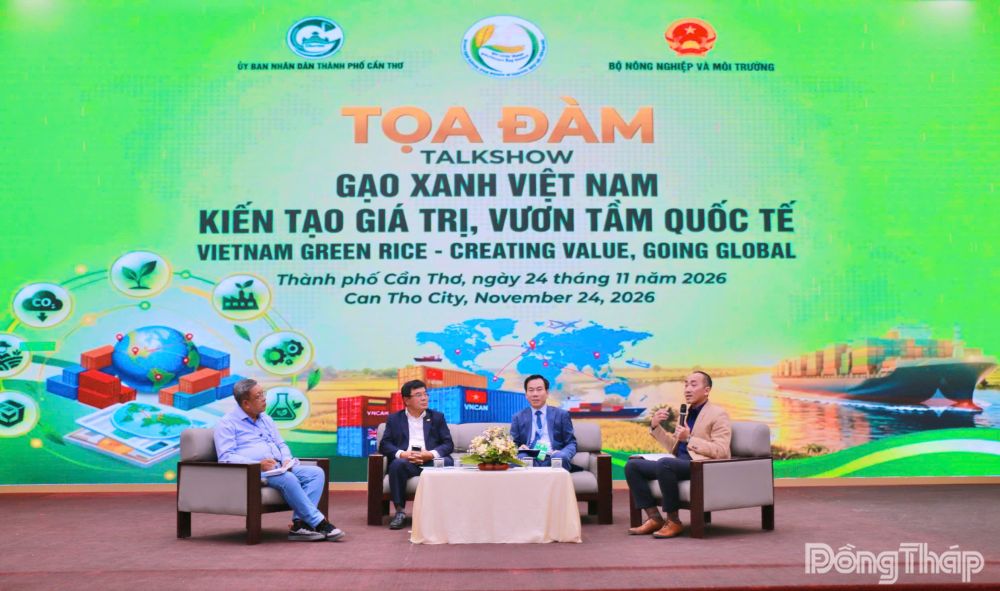
According to Mr. Duong Duc Huy, Director General of the Department of Crop Production and Plant Protection, Vietnam is facing a major opportunity to usher its rice sector into a new phase of development. Future competitiveness cannot rely solely on production volumes and prices, but must increasingly be built on quality, efficiency, traceability, low emissions and responsibility throughout the value chain.
To achieve these goals, the State needs to continue refining policies and infrastructure. Specialized agencies should standardise and provide technical guidance; localities should organise production areas; cooperatives should bring farmers together and provide services; businesses should lead linkages and market development; while research institutes, universities and international organisations should support science, technology and assessment methodologies.
Most importantly, the added value generated through the green transition must be fairly shared with farmers, who directly implement high-quality and emission-reduction practices in the fields.
When producers benefit, cooperatives have the capacity to operate effectively, businesses have markets and the State has transparent management tools, “Vietnamese Green Rice” will be more than a communications message – it can become a tangible competitive advantage for the country’s rice sector.
Drawing on the implementation of the Project on One Million Hectares of High-Quality, Low-Emission Rice and the orientations of the Low-Emission Crop Production Programme for 2025–2030, the Department of Crop Production and Plant Protection has identified its key task for the coming period as turning verified emission reductions into tangible economic value.
At the same time, it will ensure transparency, avoid double counting of emission reductions and prioritise mechanisms for fair benefit-sharing with those directly engaged in production.
By C. TRI – T. DAT
Translated by X. QUANG