
When Space Expands, Experiences Awaken
(DTO) In the past, tourism in Dong Thap was largely associated with Tram Chim, Gao Giong, Go Thap, or the Sa Dec Flower Village. Today, the tourism landscape stretches farther, toward the waterways along the Tien River, fertile river islands, ancient villages, and even the coastal area of Go Cong.
This expansion not only enriches the destination map but also lays the groundwork for restructuring the tourism sector in a more methodical, modern, and in-depth direction, creating new, emotionally resonant journeys for visitors.
NEW SPACES - NEW PATHWAYS FOR TOURISM LINKAGES
For the 2026-2030 period, Dong Thap has set its sights on developing tourism into a key economic sector, working toward becoming an attractive destination for the region and the country.
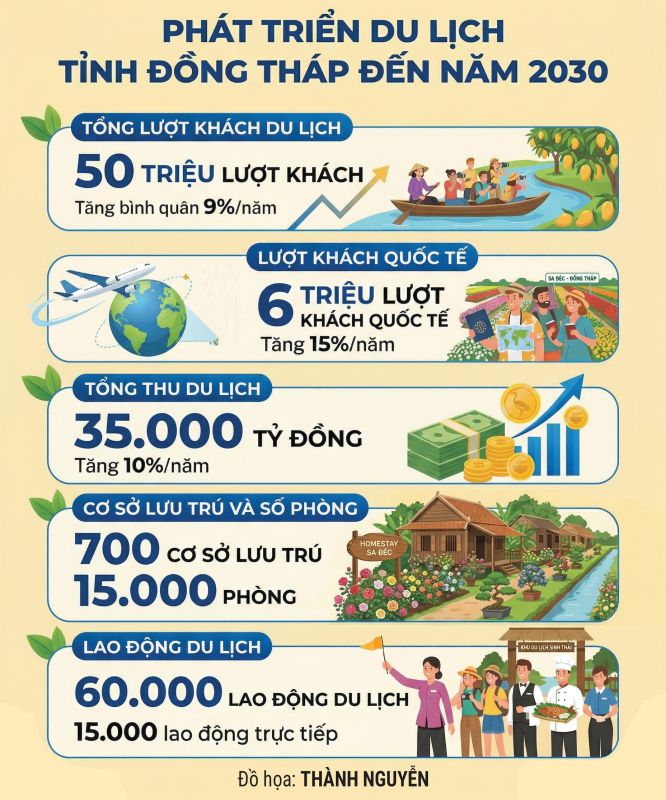
The province aims to welcome about 50 million visitors, including 6 million international arrivals, generate 35 trillion VND in total revenue, and by 2030, reach approximately 700 lodging establishments with 15,000 rooms, creating jobs for around 60,000 workers.
These targets reflect tourism’s position as a driver of growth within the service economy.
Following the administrative merger, Dong Thap now possesses a “three-in-one” resource structure: the Dong Thap Muoi wetland ecosystem (Tram Chim, Gao Giong), aligning with green, ecological, and Net Zero tourism; the river-orchard ecosystem of the Tien River, islands, craft villages, and ancient villages; and the Go Cong coastal ecosystem, with 32 km of coastline, mangrove areas, tidal flats, and community-based tourism. These advantages form the basis for shifting from fragmented development to organizing tourism space into interconnected chains, routes, and product clusters.
According to the Department of Culture, Sports and Tourism, the post-merger priority is to restructure the tourism ecosystem toward linkage, professionalism, and sustainability, where each locality becomes a component in a shared value chain. On this foundation, the province prioritizes the development of key product groups: ecological-agricultural-Net Zero tourism centered on Tram Chim and Dong Thap Muoi; river-orchard-ancient village tourism in Cai Be, Dong Hoa Hiep, and Thoi Son; cultural-historical tourism; coastal-mangrove tourism in Go Cong; and the expansion of nighttime economic activities in My Tho, Cao Lanh, and Sa Đéc. This approach highlights a clear shift from isolated site exploitation to building a holistic experiential ecosystem.
Positive signs are already visible. In 2025, the province welcomed more than 7.35 million visitors, up 19.8%. International arrivals exceeded 766,000, up 23.6%. Tourism revenue reached 4,158 billion VND, up 21.5%. Building on this momentum, the 2026 target is 8 million visitors and 4,800 billion VND in revenue. These figures represent both pressure and motivation for Dong Thap to elevate its tourism sector to new heights.
A RICHER RANGE OF EXPERIENCES - RAISING TOURISM VALUE
Following the administrative merger, an expanded development space is giving Dong Thap tourism the conditions to reposition itself toward greater connectivity, diversity, and added value.
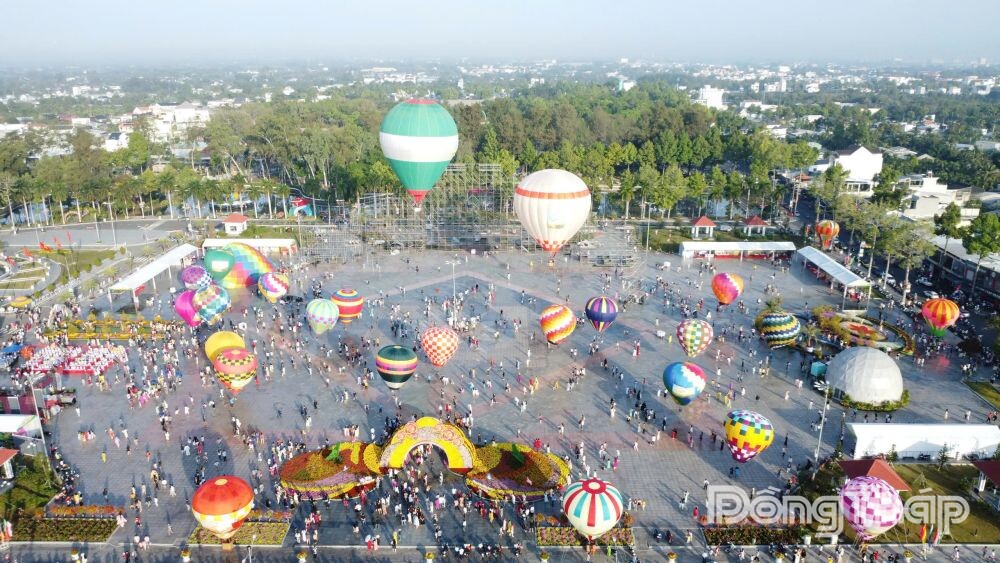
Central urban areas such as My Tho, Cao Lanh, and Sa Dec are being shaped into major tourism growth hubs through models like “My Tho Grand Avenue,” “Cao Lanh Lotus Zone,” and “Sa Dec Flower Zone.” These efforts not only refresh the urban image but also orient development toward integrated services tied to festivals, cuisine, performing arts, commerce, and nighttime economic activities.
As travelers increasingly prefer all-in-one experiences, encouraging longer stays and higher spending becomes essential. Developing products after 6 p.m. is therefore seen as a key direction for increasing added value in local tourism.
Green tourism and cultural-historical tourism continue to form the sector’s foundation.
The province currently has 295 recognized historical-cultural sites and scenic spots, including 5 special national relic sites and 33 national relic sites.
In 2025, these heritage sites attracted more than 831,810 visitors, generating nearly 2.8 billion VND in revenue. This is an important resource for developing in-depth tourism products that blend ecology, culture, and history.
If Tram Chim and Dong Thap Muoi represent the ecological “soul” of the former Dong Thap, then the former Tien Giang area adds another experiential layer, deeply rooted in river life, orchards, and Southern folk culture.
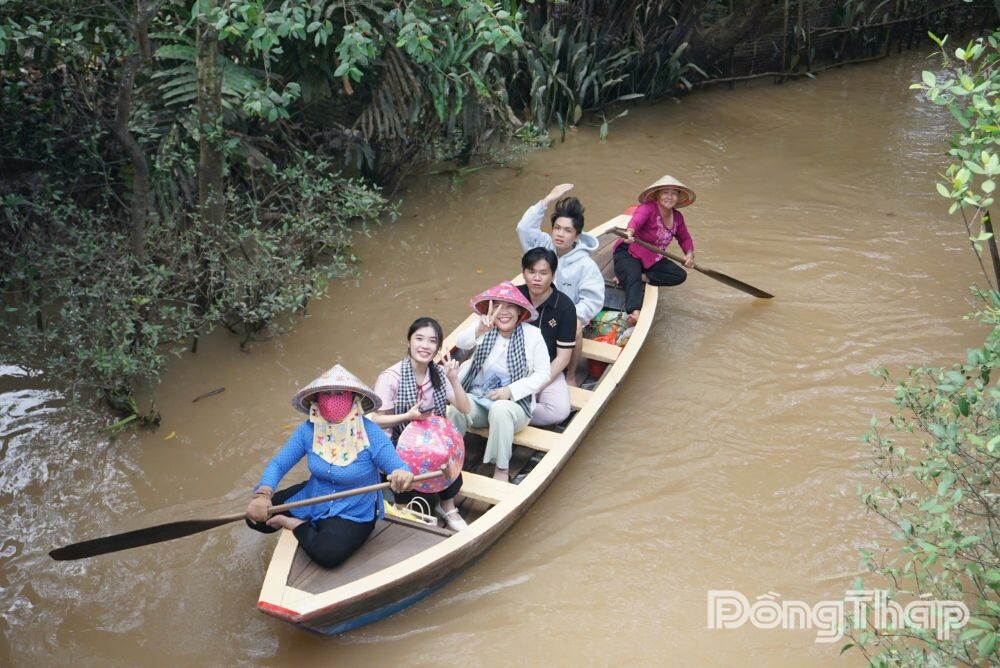
Thoi Sơn Island is a vivid example, with a development orientation centered on sustainability and community participation. Tourism products continue to be refreshed with experiential, community-based, and ecological elements, such as gardening, beekeeping, and “A Day as a Farmer,” increasing appeal to young visitors and students.
In contrast, Tan Thanh Beach offers a completely different landscape. Though it lacks large-scale resort advantages, it stands out with tidal flats, piers, coastal ecosystems, and experiences tied to local life such as clam digging, seafood tasting, and sunset watching. With proper investment in infrastructure and services, this could become a distinct competitive asset. Meanwhile, Dong Hoa Hiep Ancient Village opens pathways for tourism focused on heritage architecture, historic homes, and traditional cultural spaces.
This diversity of resources allows the new Dong Thap to form interconnected tour routes, enhancing its ability to retain visitors.
From a market perspective, the expanded tourism area opens considerable room for private-sector investment. Transportation infrastructure continues to improve, with expressways, major bridges, and key national roads shortening travel times and strengthening access for weekend travelers, MICE tourists, and international visitors along Mekong routes. These conditions are crucial for attracting high-quality accommodation projects and ecological-experiential tourism facilities.
In reality, both businesses and communities are responding positively. The 2nd Sa Dec Flower & Ornamental Festival welcomed around 1.17 million visitors, generating an estimated 468 billion VND in revenue.
The OCOP zone and specialty products of the Mekong Delta featured more than 900 items, drawing over 150,000 visitors and nearly 6.5 billion VND in sales.
These figures show the growing prominence of agricultural economic models linked with tourism. Sa Dec is therefore no longer just a craft village. It is steadily evolving into the province’s hub for agricultural, urban, and event tourism. The linking of destinations into unified chains also helps extend visitor stays while creating opportunities for businesses to renew products and strengthen partnerships.
It is clear that after the merger, Dong Thap has expanded not only in geography but also in development vision. The harmony of the wetland ecosystem, the river-orchard landscape, and the coastal zone has created a diverse, interconnected, and highly promising tourism resource structure.
With clear direction, defined targets, and collective involvement, Đồng Tháp tourism has every foundation for a breakthrough. “Expanded space” is thus not merely a geographic concept but a widening of development mindset and aspirations for a green, sustainable economic sector.
MY LY - SONG AN
Translated by ANH DUC