
COMMEMORATING THE 51st ANNIVERSARY OF THE NGA SAU - BANG LANG VICTORY (MARCH 14, 1975 – MARCH 14, 2026):
Adding Brilliance to the Heroic History of Dong Thap’s Armed Forces and People
(DTO) During the resistance war against the U.S. for national salvation, under the Party’s leadership, the armed forces and people of My Tho Province (now Dong Thap Province) achieved numerous resounding victories, contributing to the nation’s final triumph, the liberation of the South, and national reunification.
Among these feats was the Nga Sau – Bang Lang Victory in My Trung Commune, Cai Be District (now My Thien Commune, Dong Thap Province), which took place from March 11 to 14, 1975.
This victory marked a turning point, propelling the revolutionary movement in My Tho to grow rapidly and comprehensively, creating new momentum and coordinating with the main forces of Military Region 8 to launch attacks and uprisings that expanded the liberated zones. It paved the way for the armed forces and people of My Tho to rise up and liberate the province, contributing to the historic success of the Ho Chi Minh Campaign.
LIBERATING THE CENTRAL REGION OF DONG THAP MUOI
During the 1975 Spring General Offensive and Uprising, on the battlefront of Military Region 8, from March 1975, following the directives of the Regional Command and with a spirit of proactiveness and creativity, the armed forces pressed on into the second phase of the combined offensive campaign.
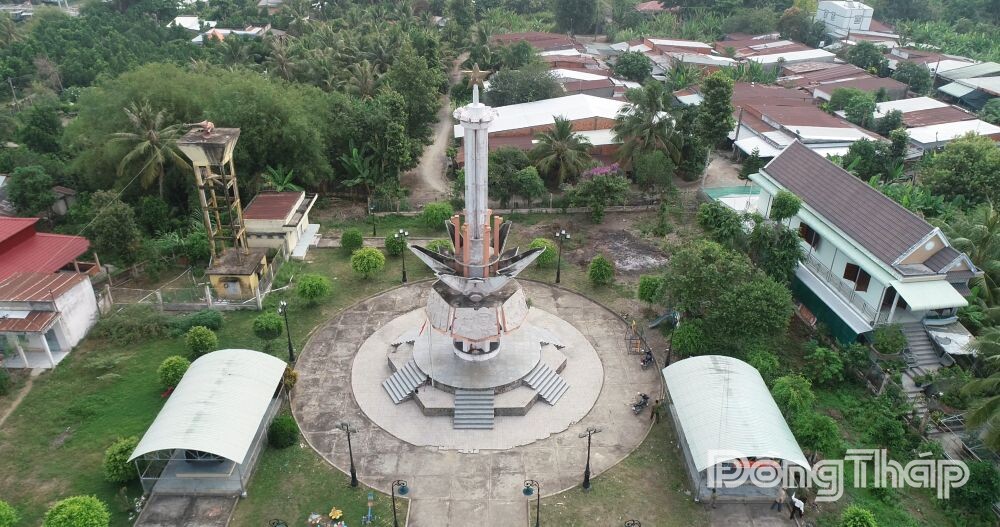
In Phase 2, the Regional Party Committee and the Military Region Command identified the task as completely liberating the central Dong Thap Muoi area, securing the Duong Van Duong route and Zone 4 of Kien Tuong, and stabilizing the Nguyen Van Tiep route to connect the northern Cai Lay area with northern Cai Be.
Based on practical experience from Phase 1, when the objective of destroying enemy strongpoints had not been fully met, the Regional Command of Military Region 8 proposed adjusting the plan for Phase 2 in line with higher-level directives: the primary direction of attack would focus on the Nguyen Van Tiep B area and Nga Sau, including communes bordering Cai Be District (My Tho Province) and My An District (Sa Dec Province).
On the My Tho front, during Phase 2, the Provincial Military Committee set a clear goal: “Mobilize the utmost effort of local armed and semi-armed forces to fulfill their core role in the widespread uprising, liberating key areas along Route 4 North-South and Cho Gao District.”
They aimed to establish control up to the edges of Route 4 North-South and open multiple corridors across it. In May 1974, following the directive of the Central Office, Sa Dec Province was restructured to include the former Kien Phong districts of Cao Lanh, My An, Kien Van, Cho Moi, and Cao Lanh Town, along with Lap Vo, Lai Vung, and Chau Thanh districts from Vinh Long Province.
The plan was to extend control to hamlets close to town centers, secure political footholds deep inside enemy-held areas, destroy one to two district-level strongpoints, and advance toward the basic liberation of My Tho.
The Provincial Military Committee detailed specific tasks and targets for each district and sector. My Tho’s battlefield was divided into three zones of operation.
Zone 1: Cho Gao District, the province’s focal point. Zone 2: Chau Thanh Nam, Chau Thanh Bac, Cai Lay Nam, Cai Lay Bac districts, the central command zone. Zone 3: Cai Be District, a strategically important area.
Within just four days, with close coordination among the three categories of forces, especially the main-force units, using the tactic of encircle - press - isolate - eliminate, the troops inflicted heavy losses on two enemy battalions (the 450 Regional Force Battalion of Sa Dec Sector and Battalion 2, Regiment 10 of Division 7). They weakened the 453 Regional Force Battalion and took over 540 enemy troops out of combat, with 217 killed, 323 wounded, and 52 captured. They seized two 105mm artillery pieces, four recoilless rifles, two 12.7mm machine guns, over 200 mortars, AR15s, and M79s, 37 PRC-25 radios, one 15W signal set, around four tons of ammunition, and various military supplies, expanding the liberated zone and contributing to the great victory of Spring 1975, the liberation of the South, and national reunification. |
At each operational hotspot, a command team was formed, composed of members of the Standing Committee of the District Party Committee, the District Military Command, and provincial cadre reinforcements.
For Cai Be District, the northern area served as the strategic focal point for the Military Region. Accordingly, the district designated the southern Route 4 zone as its own main focus, with the key axes being Routes 20 and 30. The intention was to further penetrate weak enemy areas, move toward the basic liberation of the southern Route 4 zone, and exert pressure on the Cai Be and An Huu district strongholds.
A district-level command group was established, consisting of three members of the Standing Committee of the District Party Committee and the District Military Commander, with a Provincial Party Committee member assigned to directly oversee the district’s operations.
ELIMINATING THE ENEMY’S MASSIVE “FORTRESS”
According to the plan, on the night of March 10 and early morning of March 11, 1975, Regiment 24 of Division 8 launched an assault on the Nga Sau base, wiping out a Regional Force Battalion. Regiment 320 intercepted reinforcements along the Bang Lang canal, annihilating an entire battalion of the enemy’s Regiment 10 under Division 7.
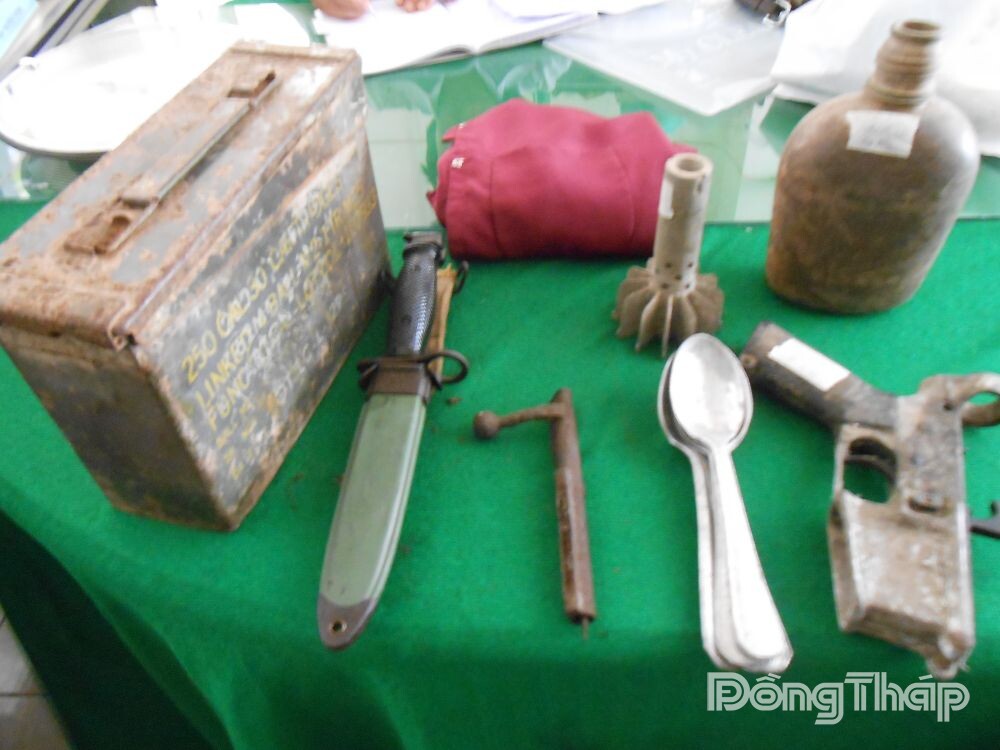
This was the decisive battle of Phase 2 in the 1975 dry-season combined offensive in Military Region 8, opening a clear gateway for the region’s main-force units to advance toward My Tho City.
After the enemy retook the Nga Sau base, on the night of March 13 and early hours of March 14, 1975, Regiment 207 attacked and eliminated the base for a second time. From that point on, the enemy never recaptured Nga Sau again.
Regiment 207 continued pushing forward, destroying the Thanh My junction base, a battalion-level outpost. Forces then intensified operations, overrunning or forcing the withdrawal of a series of enemy outposts, liberating the Tu Moi canal and the Nguyen Van Tiep B canal, securing a six-kilometer stretch of Route 20, and encircling and pressuring numerous outposts along the Nguyen Van Tiep route (west of Thien Ho and east of My An). They liberated Thanh My and My Trung communes, and most of My An and Doc Binh Kieu communes, freeing an area with 8,150 residents.
From March 11 to March 25, in the region’s focal area, Division 8 fought dozens of battles, including three regimental-level battles, destroying two battalions and heavily damaging a Regional Force group. A wide expanse of territory was liberated, covering many northern Route 4 communes in the districts of Cai Be and Cai Lay (My Tho Province), and Kien Van and My An (Sa Dec Province).
The liberated zone expanded, linking the Dong Thap Muoi base area all the way to Route 4, creating favorable conditions to threaten and sever the route, a strategic objective during the 1975 Spring General Offensive and Uprising.
When Regiment 24 attacked the Nga Sau strongpoint, residents of My Trung, My Thien, and My Loi mobilized boats and supplies to support the troops. After the battle, hundreds of local laborers were deployed to help the army clear the battlefield.
By the end of Phase 2 (March 1975), in the province’s main operational direction, forces had successfully opened the Cho Gao corridor. Alongside the region’s main front, following the Nga Sau Victory, further major gains were achieved. The regional main-force units and provincial armed forces then prepared for the next mission.
Across other localities on the My Tho battlefield, operations were intensified according to the specific objectives set for March 1975. Through Phase 2, especially after the Nga Sau - Bang Lang Victory, the tight enemy control in peripheral and weak areas was broken. Continuous, extensive liberated zones were formed, reaching close to towns and district centers. Previously liberated areas were solidified, while enemy population-concentration zones, particularly those deep within Dong Thap Muoi, were dismantled.
The Nga Sau - Bang Lang Victory held profound significance. It affirmed the correctness of the directives from higher command and the resolutions of the Regional Party Committee and Military Region Command, aligning well with battlefield realities.
The victory also demonstrated that strong command and coordination, thorough battlefield preparation, effective troop training, and having key commanders operate close to the front lines were all crucial factors in securing success in the opening decisive battle.
With the Nga Sau - Bang Lang Victory, Phase 2 of the 1975 dry-season offensive developed under highly favorable conditions. Across Military Region 8, especially on the My Tho front, our forces gained substantial momentum and strength.
This formed the foundation for the armed forces and people of My Tho and Military Region 8 to successfully carry out the general offensive and uprising, completely liberating the region and contributing to the overall liberation of the South in the victorious Spring of 1975.
By HONG LE
Translated by ANH DUC