
Creating New Growth Drivers While Ensuring Effective Operation of the Two-Tier Local Government Model
(DTO) On the morning of July 14, the Dong Thap Provincial Party held its July 2026 Conference for Provincial Reporters.
The conference was attended by Mr. Pham Thanh Ngai, Deputy Secretary of the Provincial Party Committee and Chairman of the Provincial People’s Committee; Ms. Nguyen Thi Kim Tuyen, Member of the Standing Committee of the Provincial Party Committee and Head of the Commission for Information, Education and Mass Mobilization; Mr. Phan Van Thuong, Member of the Standing Committee of the Provincial Party Committee and Head of the Provincial Party Committee’s Internal Affairs Commission; along with provincial reporters and public opinion collaborators from departments, agencies, and wards including My Tho, Trung An, and Dao Thanh.
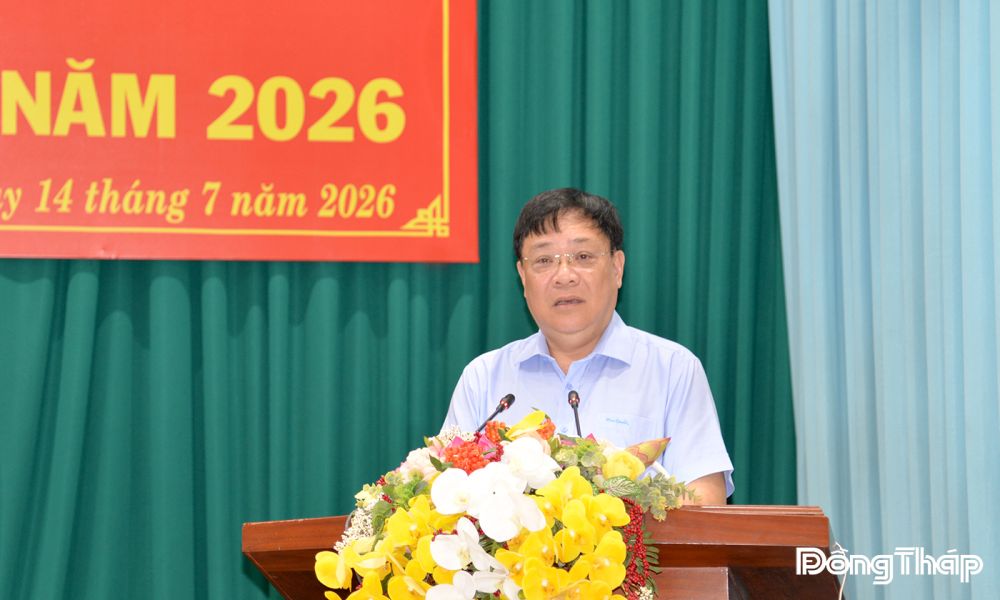
At the conference, Deputy Secretary Pham Thanh Ngai delivered a presentation on “Strategic Solutions for Achieving Dong Thap’s Double-Digit Economic Growth Target.”
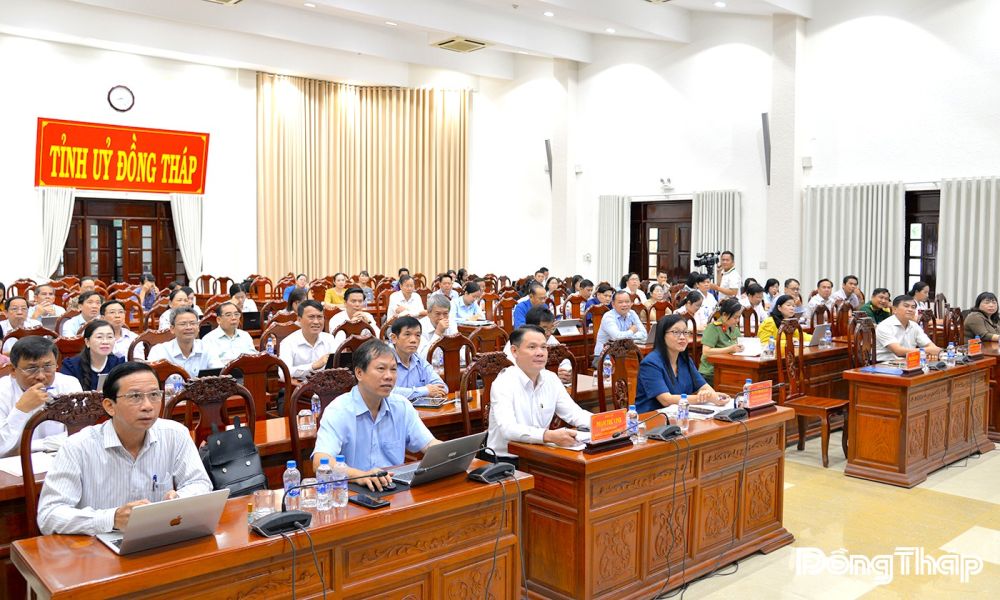
He stressed the need for strong consensus in both awareness and action to achieve double-digit economic growth. He also called for renewed thinking and approaches, particularly among senior officials and agency leaders, better utilization of human resources, and stronger traditional growth drivers, including investment, consumption, and exports. At the same time, he emphasized the importance of creating new growth drivers while ensuring the effective operation of the two-tier local government model.
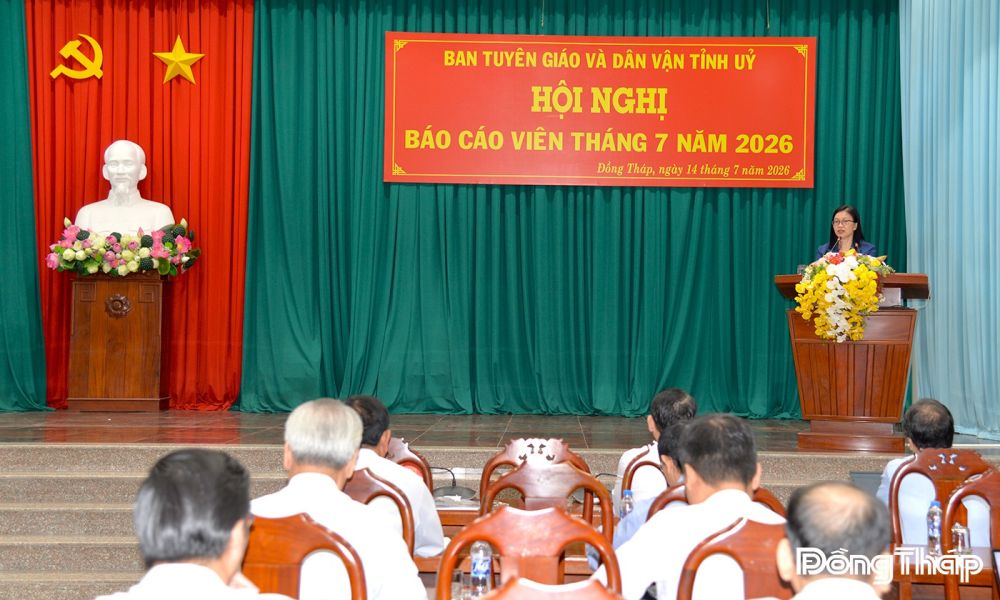
Also at the conference, Mr. Phan Van Thuong, Head of the Provincial Party Committee’s Internal Affairs Commission, presented a report on the implementation of key anti-corruption, anti-negative practices, and anti-wastefulness following the provincial merger. His presentation highlighted the core contents of Resolution No. 04-NQ/TW, adopted at the Second Plenum of the 14th Party Central Committee on April 1, 2026, which aims to further strengthen the Party’s leadership in preventing and combating corruption, wastefulness, and negative practices in the new development period.
Providing communication guidance for the coming period, Mr. Pham The Vinh, Deputy Head of the Provincial Party Committee’s Commission for Information, Education and Mass Mobilization, called for continued dissemination of the resolutions of the 14th National Party Congress, along with the Party’s resolutions, directives, regulations, conclusions, and guidelines, particularly the Politburo’s 10 strategic resolutions, including Resolution No. 57-NQ/TW, dated December 22, 2024, on breakthroughs in science and technology development, innovation, and national digital transformation; Resolution No. 59-NQ/TW, dated December 22, 2024, on international integration in the new context; Resolution No. 66-NQ/TW, dated April 30, 2025, on reforming lawmaking and law enforcement to meet the country’s development needs in the new era; Resolution No. 68-NQ/TW, dated May 4, 2025, on private sector development; Resolution No. 70-NQ/TW, dated August 20, 2025, on ensuring national energy security through 2030, with a vision to 2045; Resolution No. 71-NQ/TW, dated August 22, 2025, on breakthroughs in education and training development; Resolution No. 72-NQ/TW, dated September 9, 2025, on breakthrough measures to strengthen the protection, care, and improvement of public health; Resolution No. 79-NQ/TW, dated January 6, 2026, on the development of the state economy; Resolution No. 80-NQ/TW, dated January 7, 2026, on the development of Vietnamese culture; and Resolution No. 10-NQ/TW, dated June 8, 2026, on the development of the foreign direct investment (FDI) sector.
He also urged continued communication on the one-year results of implementing the overall organizational model of the political system and the three-tier government model, as well as the restructuring of villages and neighborhood groups and the deployment, utilization, and policies for part-time personnel at the commune, village, and neighborhood levels.
He further requested agencies, organizations, and public opinion collaborators across the province to strengthen the monitoring and timely reporting of public sentiment. He also encouraged greater use of information technology and digital tools to analyze and identify public opinion trends, proactively address issues at an early stage and from afar, and firmly counter false or misleading information, thereby improving the quality and effectiveness of public opinion monitoring and communication efforts.
By LE NGUYEN
Translated by ANH DUC