
Cybersecurity and social order in cyberspace remain under firm control, preventing strategic surprises
(DTO) On the morning of August 6, the National Steering Committee on Cybersecurity convened a meeting at the headquarters of the Department of Cybersecurity and High-Tech Crime Prevention and Control under the Ministry of Public Security. The meeting was chaired by Prime Minister Le Minh Hung, Head of the National Steering Committee.
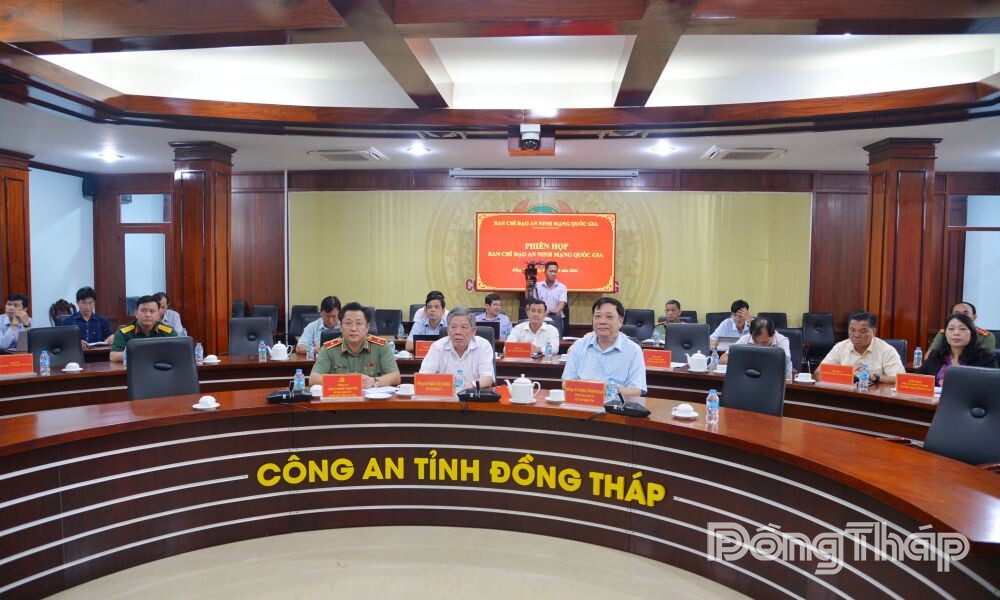
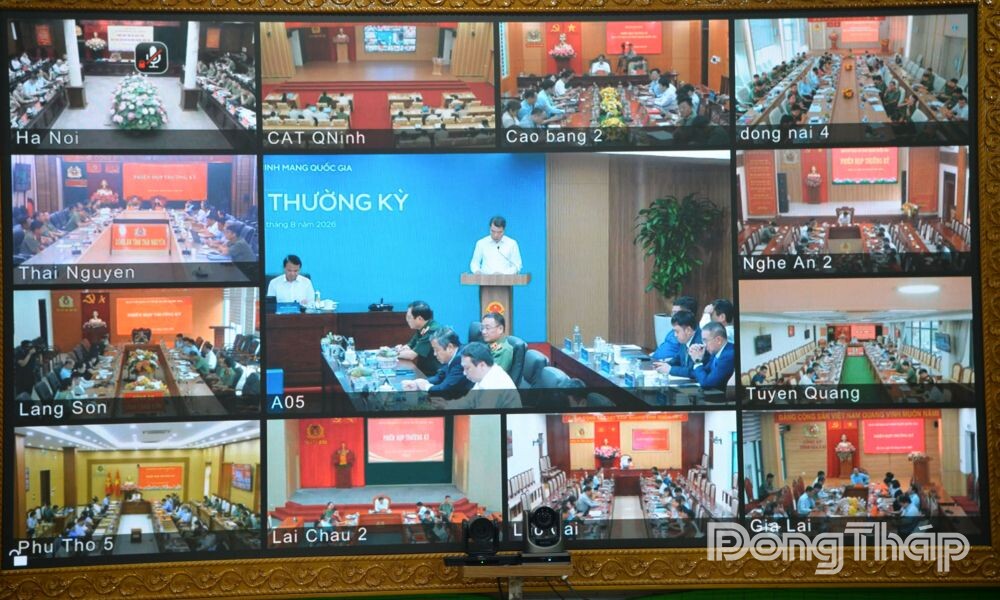
The meeting was held via videoconference, linking 34 provinces and centrally-run cities nationwide. Attending the Dong Thap venue were Mr. Ngo Chi Cuong, Member of the Party Central Committee, Secretary of the Dong Thap Provincial Party Committee and Chairman of the Provincial People's Council; Mr. Pham Thanh Ngai, Deputy Secretary of the Provincial Party Committee and Chairman of the Provincial People's Committee; along with leaders of provincial departments, agencies, and the Dong Thap Provincial Police.
During the first six months of 2026, cybersecurity and social order were firmly maintained, ensuring that authorities were not caught off guard or left passive in any strategic scenario. The legal and policy framework for cybersecurity continued to be improved and synchronized, while approaches to cybersecurity protection underwent significant shifts, further enhancing the pivotal role of the National Steering Committee, the National Cybersecurity Association, and the Digital Trust Alliance.
Meanwhile, efforts to safeguard network systems and data security continued to provide a solid foundation for implementing the objectives of Politburo Resolution No. 57. The competent forces promptly detected and thwarted cyberattacks and cyberespionage campaigns, ensuring the security of critical information systems. Measures to prevent and handle harmful and malicious online content also met established targets, attracting active participation from the public and social media influencers.
The fight against high-tech crime was implemented in a coordinated and effective manner, while state management in this field was significantly elevated. Relevant agencies also proactively researched, developed, and applied emerging and strategic technologies to strengthen the country's self-reliance in cybersecurity.
According to the report presented at the meeting, authorities recently prosecuted nine individuals for conducting subversive propaganda activities in cyberspace; summoned, warned, and placed under surveillance more than 1,700 individuals to deter unlawful online activities; imposed administrative penalties on 95 individuals; and verified 58 individuals and social media accounts involved in complex online activities.
Regarding the fight against high-tech crime, law enforcement agencies focused on dismantling large-scale, sophisticated, and transnational criminal networks. Specifically, authorities dismantled 122 cases involving cyber fraud for property appropriation, resulting in the prosecution of 222 defendants. They also dismantled 589 online gambling cases, representing a 57% increase compared to the same period in 2025, and prosecuted 2,517 defendants, up 68% year-on-year.
At the meeting, delegates discussed measures to further strengthen cybersecurity in the coming period. Key priorities include continuing to implement central directives on cybersecurity and data security, improving legal and policy frameworks for cybersecurity, and intensifying efforts to combat high-tech crime.
Delivering his keynote directive, Prime Minister Le Minh Hung called on the National Steering Committee to further enhance its leadership and coordination capacity, strengthen cooperation with cybersecurity subcommittees of ministries, sectors, and localities, reinforce AI governance and security, and organize simulation exercises to respond to cyberattacks, AI misuse, data breaches, and information crises.
The Prime Minister also stressed the need to continue tackling anonymous and pre-activated SIM cards, bank accounts, and e-wallets registered under fake identities; step up efforts to combat online fraud and the illicit trade of personal data; enhance early warning capabilities; intercept illicit financial flows; and better protect citizens and businesses.
By TUAN LAM
Translated by X.QUANG