

Dong Thap Accelerates Digital Transformation in State Management
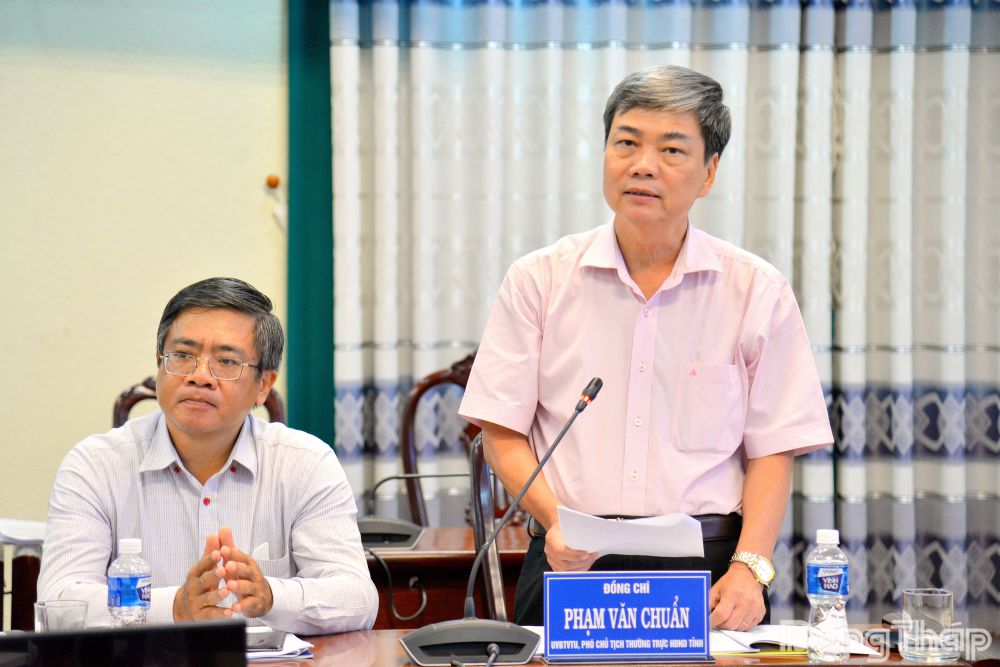
(DTO) — On October 6, an oversight delegation of the Standing Committee of the Dong Thap Provincial People’s Council worked with the Department of Science and Technology, the Department of Finance, and the Provincial Police Department to assess the implementation of digital transformation in state management across the province. Mr. Pham Van Chuan, Member of the Standing Committee of the Provincial Party Committee and Permanent Vice Chairman of the provincial People’s Council, led the delegation.
According to the report by the Department of Science and Technology, digital transformation has been synchronously deployed across three pillars: digital government, digital economy, and digital society. Legal frameworks, programs, and plans were issued in a timely manner, with key tasks progressing on schedule and no tasks overdue. Digital infrastructure, data, and platforms have been progressively refined, while digital transformation models in state management, production, and daily life have been widely expanded.
Telecommunications infrastructure has expanded rapidly, with 4G and 5G coverage reaching high levels. Shared digital platforms—such as the Shared Data Warehouse, the Intelligent Operation Center (IOC), and the electronic document management system—operate stably. The rate of applications processed online has surged, boosting satisfaction levels among citizens and businesses. Models such as the “Popular Digital Literacy” campaign, “4.0 Markets,” and “Cashless Streets” have gained significant traction.

The Provincial Police Department has also recorded positive milestones in digital transformation and the implementation of Project 06. The agency has proactively advised on and implemented cybersecurity measures, regularly inspected systems to detect security vulnerabilities, and intensified efforts to combat malicious online content. Project 06 has helped raise public awareness of administrative reform and the use of online public services, while population data, citizen IDs, and electronic identification have provided numerous conveniences for residents.
At the Department of Finance, digital transformation has been carried out in conjunction with administrative reform and state management tasks. Specialized information systems, software, and shared systems have been effectively leveraged to support operations, with 100 percent of civil servants and public employees equipped with computers. Information security and cybersecurity have received due attention, including proactive malware prevention, data backup, and the formulation of security-level proposals for information systems.
During the session, delegation members and representatives of the three departments debated lingering bottlenecks in digital transformation, including the low rate of end-to-end online applications; shortages of IT personnel at commune and ward levels; solutions to boost personal digital signature usage; and measures to address network congestion and software crashes that cause delays in administrative processing.
Speaking at the session, Mr. Pham Van Chuan urged the Department of Finance to advise on the timely allocation of the digital transformation budget and ensure its effective disbursement. He also requested the department to balance allocations to support commune-level authorities in funding “Community Digital Technology Teams” in accordance with Resolution No. 13, dated July 9, 2026, of the provincial People’s Council.
The Department of Science and Technology was directed to develop solutions to assist localities in overcoming bandwidth constraints, which frequently cause network congestion and disconnections during peak periods, disrupting online application processing. The department must also coordinate with relevant agencies to verify SIM card ownership during population data integration.
Meanwhile, the Provincial Police Department must continue supporting localities in raising public awareness about digital services and safe digital practices; providing guidance on the six groups of administrative procedures integrated into the VNeID application; and deploying robust measures to protect personal data and ensure cybersecurity for citizens and businesses engaging in electronic transactions.
By QUANG MINH
Translated by X.QUANG