
Dong Thap: Economic Development Identified As The Central Task
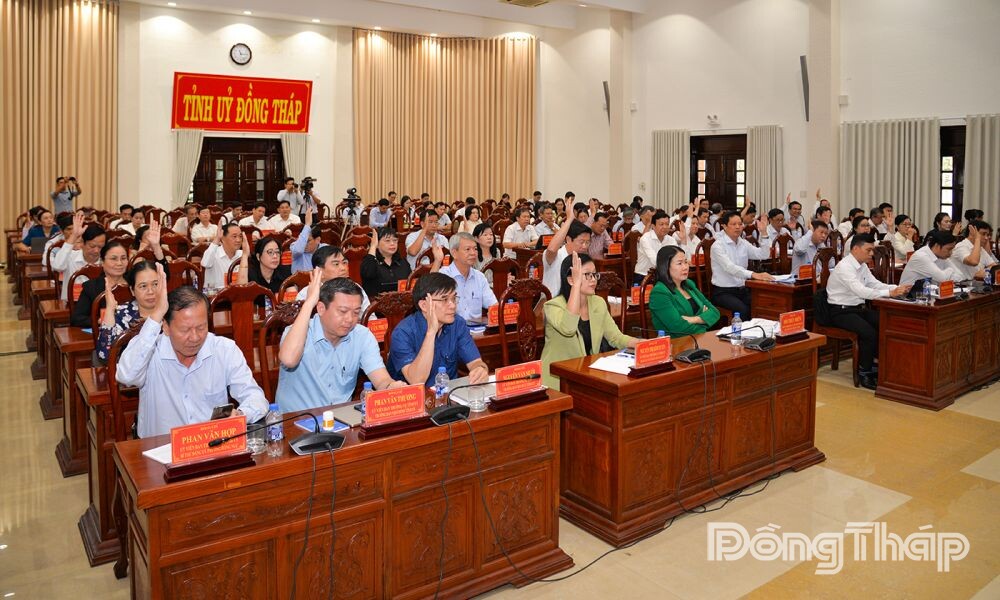
(DTO) On the morning of January 7, the 1st Executive Committee of the Dong Thap Provincial Party (term 2025-2030) convened its 2nd expanded conference to review 2025 political performance and outline key tasks for 2026.
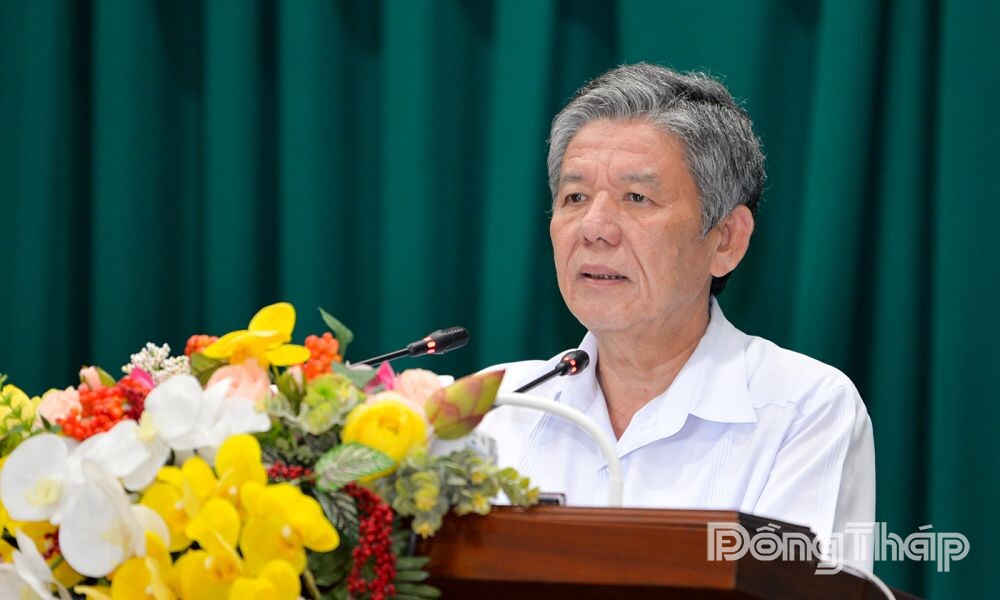
Attending the conference from central agencies were Ms. Ho Thuy Hien, Deputy Director of Local Affairs Department III under the Central Organization Commission; Mr. Pham Minh Tam, Deputy Director of Local Affairs Department III under the Central Commission for Information and Mass Mobilization; and Mr. Tang Minh Nghia, Deputy Director of Area VIII Department under the Central Inspection Commission.
The conference was chaired by Mr. Ngo Chi Cuong, Member of the Party Central Committee, Secretary of the Dong Thap Provincial Party Committee and Head of the provincial National Assembly delegation; Ms. Chau Thi My Phuong, Deputy Secretary of the Provincial Party Committee and Chairwoman of the Dong Thap Provincial People’s Council; Mr. Pham Thanh Ngai, Deputy Secretary of the Provincial Party Committee and Chairman of the Dong Thap Provincial People’s Committee; and Mr. Phan Van Thang, Deputy Secretary of the Provincial Party Committee and Chairman of the Vietnam Fatherland Front Committee of Dong Thap Province.
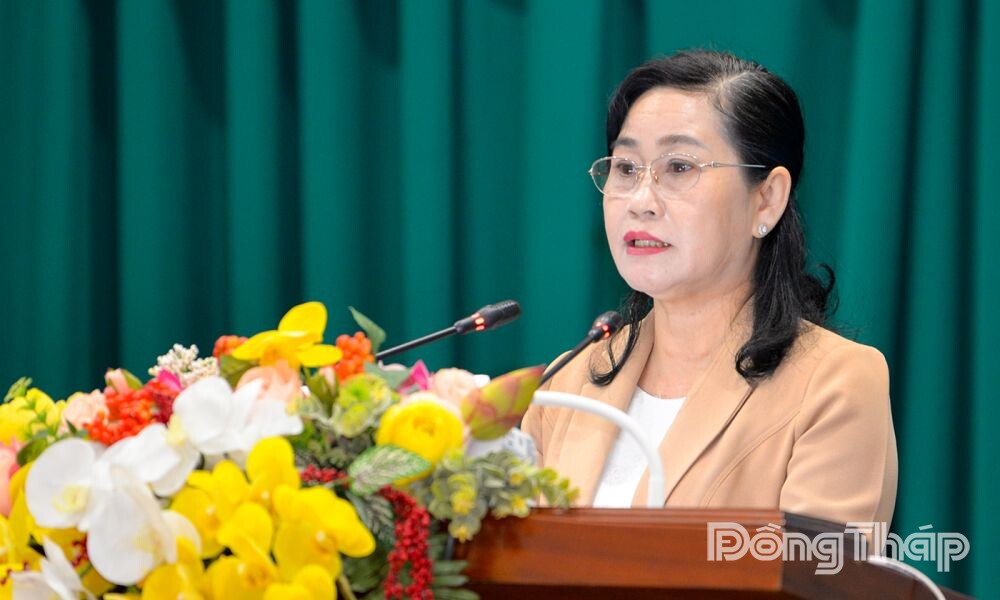
At the conference, Ms. Chau Thi My Phuong presented a summary report on the implementation of political tasks in 2025 and key tasks for 2026. Mr. Pham Thanh Ngai delivered a summary report on socio-economic development in 2025, as well as orientations, tasks and solutions for socio-economic development in 2026.
Also at the conference, leaders of departments, sectors and localities reported on the results of task implementation in 2025 and key tasks for 2026, focusing on areas such as agricultural development; provincial planning following administrative mergers; basic construction tasks; orientations and solutions for the development of industry, trade and services; and preparations for the Lunar New Year.
In his concluding remarks, Mr. Ngo Chi Cuong noted that 2025 was a year marked by an exceptionally heavy workload and high demands. The province had to pursue economic growth targets set by the central authorities while simultaneously reorganizing the administrative apparatus, ending district-level operations, operating the two-tier local government model, and preparing for and organizing Party congresses at all levels for the 2025–2030 term.
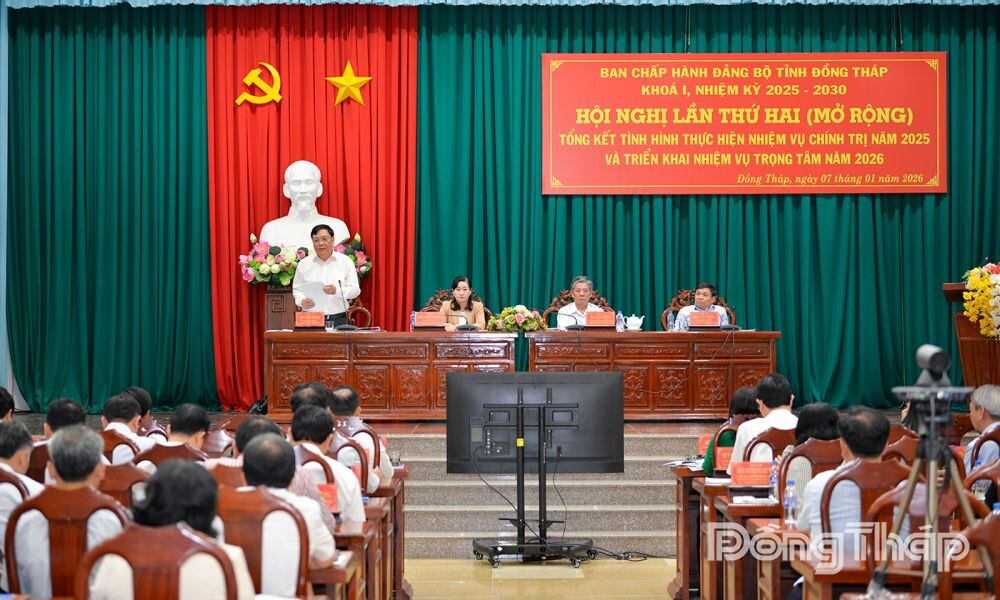
In this context, the Provincial Party Executive Committee and the Standing Board of the Provincial Party Committee focused on providing strong, synchronized leadership and direction. The entire political system acted with a high sense of responsibility, accurately assessing the situation and taking decisive action. As a result, most key targets have been achieved, with several exceeded and notable outcomes recorded.
According to Secretary Ngo Chi Cuong, 2026 holds special significance as the first year of implementing the Resolution of the Provincial Party Congress for the 2025–2030 term and the 2026–2030 five-year socio-economic development plan. Therefore, tasks assessed as being well performed must be carried out even better, while shortcomings must be promptly addressed.
He emphasized that Party building must be identified as the foremost priority, with a focus on improving the quality of grassroots Party organizations following administrative restructuring, and enhancing leadership capacity at the commune and ward levels to foster local development.
At the same time, inspection and supervision must be strengthened in association with the prevention and control of corruption, wastefulness and negative practices, particularly in areas prone to violations. Cadre work was identified as the foundation of all tasks, requiring accurate assessment and proper assignment of personnel.
In addition, economic development was identified as the central task. In 2026, the province will focus on removing bottlenecks, creating breakthroughs in the investment environment and administrative reform, striving to achieve GRDP growth of 8–8.5%, laying the groundwork for double-digit growth in subsequent years.
Although 26 industrial parks have been approved by the Prime Minister, currently only six are in operation, four are under implementation, while 16 have yet to be developed. The causes of this situation must be clearly identified and investment implementation accelerated.
To contribute to double-digit growth, agriculture must shift from a focus on output volume to value-based development, with an emphasis on transitioning from “agricultural production” to “food production.” Farmers need access to quality seeds, product traceability, and support in applying technology and digitalizing production data to reduce costs and enhance quality.
Secretary Ngo Chi Cuong also stressed the need to improve the quality of new rural development and promote urban development. In trade, the province should build regional agricultural distribution and logistics centers capable of directly connecting with Ho Chi Minh City and other regions, while supporting local enterprises in agricultural e-commerce, specialty products, and cross-border sales. For tourism, the province must select appropriate market segments, innovate offerings, and retain visitors for longer stays.
National defense and security were identified as the foundation for socio-economic development. The province aims to build peaceful, friendly and developing border areas, strengthen cooperation with border provinces of Cambodia, and enhance border patrols and controls in conjunction with border trade development, facilitating commerce while ensuring strict security.
During task implementation, Mr. Ngo Chi Cuong requested leaders of agencies, units and localities to pay special attention to regularly reviewing and closely adhering to directives from the central and provincial authorities.
With just over one month remaining until the 2026 Lunar New Year, he required all levels and sectors to strictly implement Directive No. 55-CT/TW dated December 22, 2025, issued by the Party Secretariat on organizing the 2026 Lunar New Year (Binh Ngo).
At the same time, efforts must focus on practicing thrift, combating wastefulness and negative practices; ensuring supply-demand balance and market stabilization; maintaining security, public order and traffic safety; and preventing fires and explosions.
In addition, plans should be in place to organize festive activities for the public, while mobilizing and leveraging social resources to care for people’s livelihoods, especially policy beneficiaries, poor and near-poor households, disadvantaged workers, and vulnerable groups.
By M. THANH - VAN THAO
Translated by X.QUANG