
Dong Thap moves forward with confidence after one year of provincial restructuring and operating the two-tier local government model
ONE-YEAR REVIEW: INITIAL MILESTONES
One year ago, together with the rest of the country, Dong Thap embarked on a major institutional reform, restructuring its organizational apparatus and local governance methods.
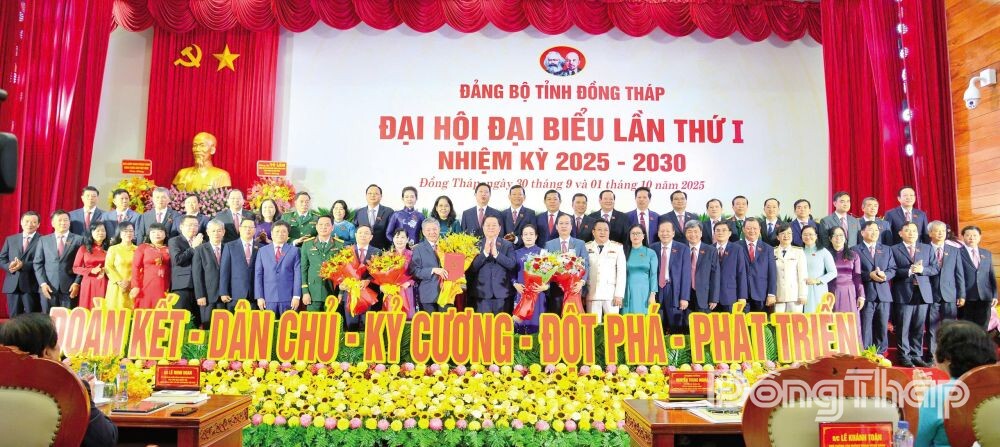
The transition from a three-tier government system to a two-tier local government model was not merely an organizational restructuring. It represented a fundamental shift in governance mindset, public service delivery, and the operation of the state administrative apparatus.
At the outset of the reform, skepticism and concerns were inevitable. Officials worried about a heavier workload. Residents wondered whether administrative procedures would be disrupted. Businesses were concerned that the processing of dossiers might be affected. Such concerns were understandable, as any major turn requires time for adaptation.
However, one year later, it can be unquestionably affirmed that the Party and State's policy is entirely sound. Public consensus has provided a solid foundation, while the dedication of the cadre team and civil servants has been the decisive factor in helping the new model gradually stabilize and drive efficiency.
The most valuable outcome is not simply how the administrative apparatus was reshuffled, but the fact that many public services are now delivered more quickly and conveniently for the people.
It can be affirmed that: where officials take the initiative, work progresses at a brisk pace; where authorities stay close to the grassroots and genuinely understand their needs, greater public consensus is achieved; and where officials dare to take on tasks and shoulder responsibility, public trust is solidified.
From the provincial level down to the grassroots, thousands of directives, guidelines, and coordination regulations have been issued to ensure the smooth operation of the new administrative system. Many procedures have been reviewed and streamlined to clearly define the personnel in charge, responsibilities, implementation timelines, and expected outcomes.
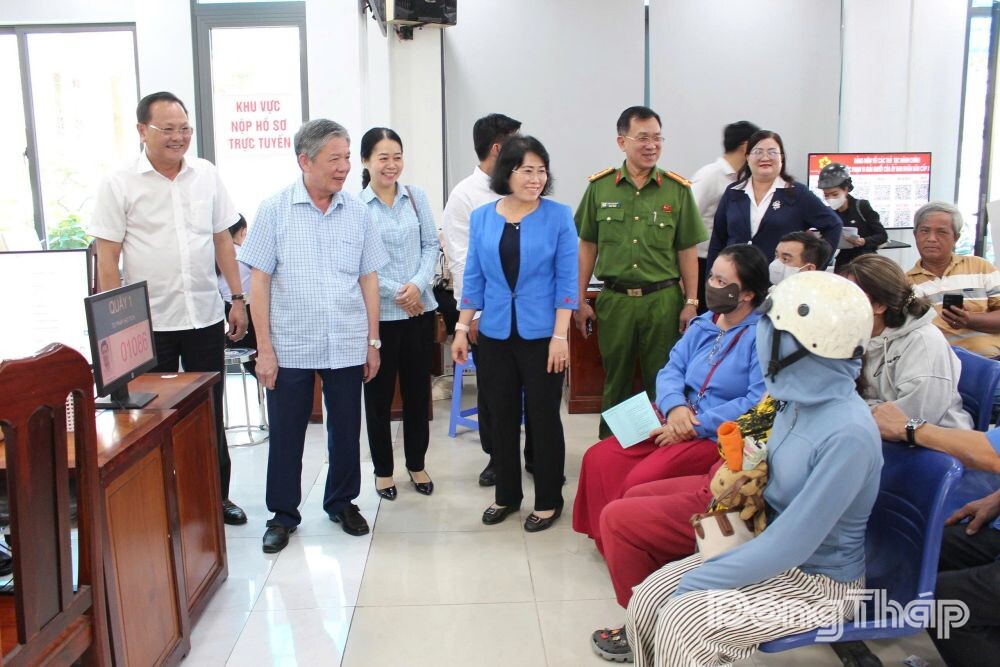
The most visible improvement has been in the handling of administrative procedures. Since July 2025, the province has processed more than 1.26 million administrative applications. Nearly 99% of applications handled at the commune level were completed on time or ahead of schedule, while the processing rate at the provincial level exceeded 97.5%.
Behind these figures are millions of citizens and businesses well-served; civil status applications processed promptly; permits and investment dossiers expedited; and fewer trips required to government offices.
Public satisfaction with administrative services has exceeded 96%. While this is an encouraging result, it also serves as a reminder to continue doing even better, as gaps still remain to be filled.
In terms of economic development, the province has announced the Dong Thap Provincial Master Plan for the 2021–2030 period, with a vision to 2050. Under the plan, strategic transport infrastructure projects in the southern Tien River area are being developed to break the transport monopoly and seamlessly connect intra-provincial economic corridors.
Construction of the Cao Lanh–An Huu and Cao Lanh–Dinh Ba expressways is being intensively deployed, paving the way for expanded trade and connectivity. Meanwhile, the project to transfer fresh water through the Cho Gao Canal has been launched, resolving the development equation for industry and agriculture in the Go Cong freshwater zone, laying the foundation for the formation of large-scale industrial parks and economic zones.
We are moving in the right direction toward a sustainable, circular agricultural economy, with an increasing number of large-scale, modern deep-processing plants being developed along major transport arteries. These projects reflect the province's determination to enhance the value-added content of its local products.
Notably, the province's agricultural sector is no longer developing in isolation in the fields. Agriculture has forged synergies with tourism and services to create new cultural and tourism values.
Well-organized Fruit Festivals, the Lotus Festival celebrating the noble character of the Pink Lotus Land, and vibrant Ornamental Flower Festivals have not only gradually elevated and reinforced the Dong Thap agricultural brand but also opened up grand opportunities to attract visitors from across the country and abroad.
However, a candid assessment shows that much work remains to be done. In several areas, coordination among agencies has yet to become fully synchronized.
Administrative procedures relating to land and construction still involve multiple intermediate steps. Digital infrastructure in some localities has yet to meet practical requirements. A segment of the cadre team remains passive in adapting to new tasks and responsibilities. Meanwhile, some residents, particularly those in rural areas and the elderly, continue to face difficulties in accessing online public services.
More importantly, people expect more than just convenient administrative procedures. They also aspire to higher incomes, better jobs, an improved living environment, superior schools, and higher-quality healthcare services. These are legitimate aspirations, and they will remain key priorities for the political system to strive for in the years ahead.
DONG THAP MARCHES FORWARD WITH CONFIDENCE – TURNING THE PROVINCIAL PARTY CONGRESS RESOLUTION'S GOALS AND TARGETS INTO TANGIBLE RESULTS
Today's Dong Thap represents more than the mere integration of land area, population, and development resources. More importantly, we have forged a new development space driven by fresh momentum, new thinking, and renewed action.
From the resource-rich Dong Thap Muoi region to the dynamic economic zone along the Tien River; from vast rice fields, fruit-growing areas, and concentrated aquaculture zones to large-scale marine fishing, while seaports, industrial parks, industrial clusters, and new urban areas are taking shape, all these factors are combining into a synergistic force to position Dong Thap as an important growth pole of the Mekong Delta.
The first anniversary of the establishment of Dong Thap Province (July 1, 2025 – July 1, 2026) and the operation of the two-tier local government model marks only a short period, yet the initial achievements are substantial enough for us to feel encouraged and proud.
This provides a vital foundation for Dong Thap to move forward with confidence by focusing drastically on several key priorities: effectively implementing the Party's and the State's major policies to inject new growth drivers for the province; and accelerating the implementation of the Resolution on the three breakthrough tasks and the nine strategic resolutions for the country's new stage of development.
We will continue refining the two-tier local government model to ensure a citizen-centric approach, staying close and attentive to the people to serve them better, while promoting greater decentralization and delegation of authority in tandem with stronger power oversight and stricter administrative discipline.
Priority will also be given to promptly restructuring the cadre team based on job positions, expanding training programmes on modern governance, leadership, digital transformation, and public service execution capacity, while paying particular attention to nurturing young officials, female officials, and those with long-term development potential.
At the same time, We will build a professional and dynamic working environment in which the efficiency of public service and the satisfaction of citizens and businesses serve as the primary yardstick for evaluating cadres.
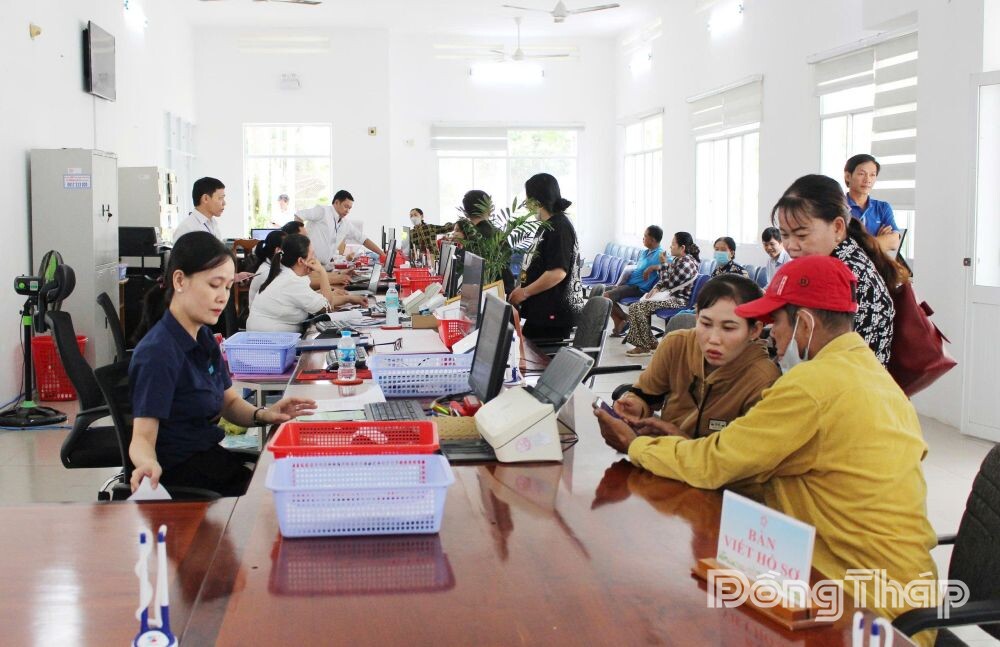
Every official and civil servant must genuinely shift from a mindset of merely handling administrative procedures to one of accompanying and supporting citizens and businesses in their development.
We will focus on achieving a powerful breakthrough in science and technology, innovation, and digital transformation in line with the spirit of the Politburo's Resolution No. 57-NQ/TW. This will serve as a key driver for improving labour productivity, the quality of economic growth and local competitiveness.
Efforts will be made to build a digital government, digital economy, and digital society, making digital technology a new governance tool in the operations of the political system and a practical means of improving the quality of life of local residents.
In terms of economic development, Dong Thap remains committed to the goal of achieving rapid yet sustainable growth by fully capitalising on its strengths as one of the country's major agricultural provinces.
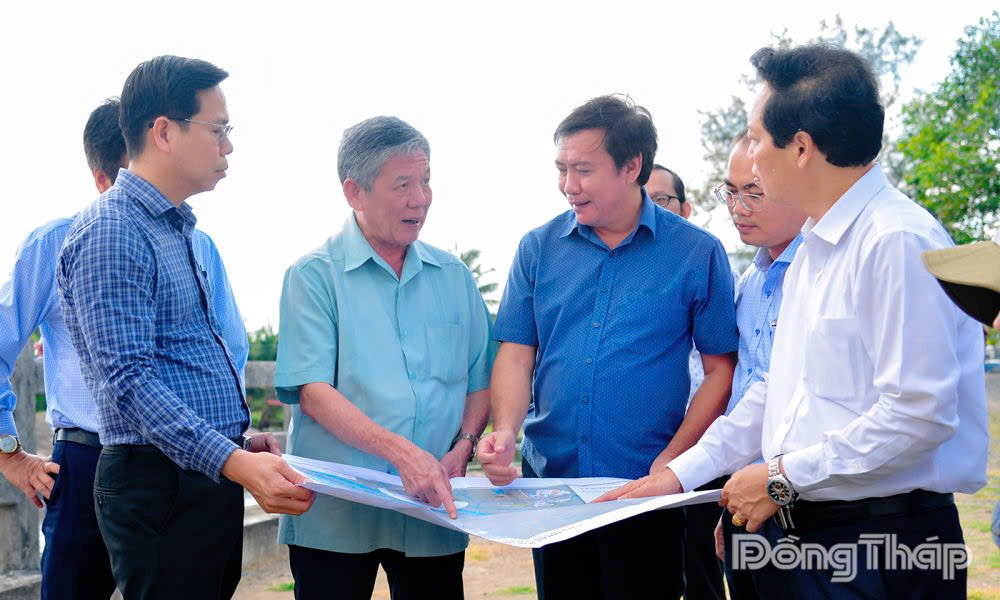
The province will continue shifting decisively from a "production-oriented agricultural mindset" to an "agricultural economic mindset." It will promote ecological agriculture and modern new-style rural development in a substantive and sustainable manner, with people placed at the centre of development. At the same time, it will expand effective production models to improve incomes and the quality of life of local residents; accelerate the development of concentrated raw material production areas; promote the circular economy, high-tech agriculture, green agriculture and digital agriculture; and enhance the seed and breeding quality and the value of key agricultural products, including rice, fruits, aquatic products, ornamental flowers and plants, and the province's distinctive OCOP products.
At the same time, the province will focus on the development of agricultural processing industries and supporting industries, while establishing and efficiently utilising the industrial parks and industrial clusters already included in the provincial master plan. It will also continue creating a favourable investment environment to attract strategic investors and major domestic and international corporations.
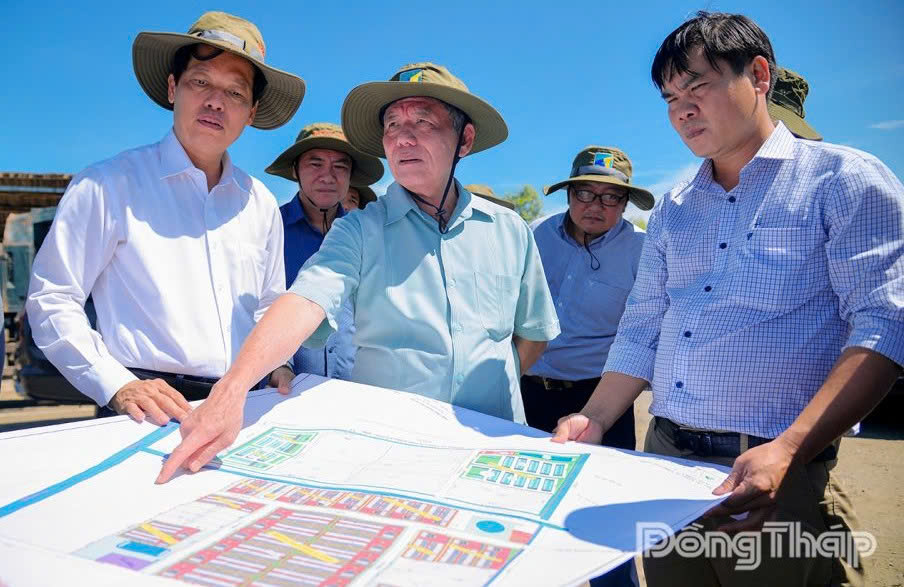
The objective is to make industry a genuine driving force for growth, creating more jobs, raising people's incomes, expanding the provincial economy and improving economic growth indicators.
At the same time, infrastructure development has been identified as a fundamental priority of foundational significance. The province will work closely with relevant authorities to accelerate the progress of nationally significant transport projects, particularly expressways connecting the province with Ho Chi Minh City and other provinces in the region. It will also promote the synchronous development of road and inland waterway transport networks, digital infrastructure, urban infrastructure and infrastructure serving agricultural and industrial production.
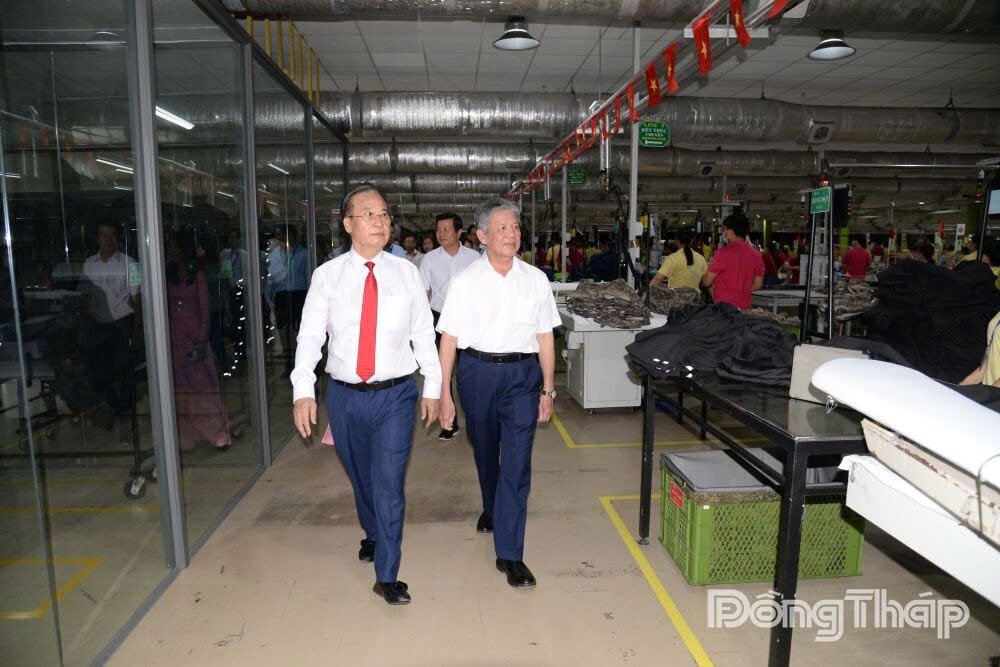
Alongside economic development, the province will continue prioritising resources for culture, education, healthcare and social welfare, heading towards universal healthcare coverage for all.
All development achievements must ultimately serve the highest objective of improving the quality of life of the people. Citizens should reap increasingly greater rewards; enjoy stable employment and steadily rising incomes; and live in a safe, civilised, happy and comprehensively developed environment.
We will promote the development of cultural products and services that support tourism, improve the quality of cultural and artistic activities, and create distinctive attractions that encourage visitors—particularly international tourists—to stay longer in the province.
It will also continue to preserve and promote Dong Thap's distinctive cultural values, revolutionary traditions, and the spirit of compassion, dynamism and creativity of its people.
These efforts aim to inspire confidence and the willpower to rise, while building Dong Thap into an attractive destination for investors, businesses, tourists and highly skilled workers. Special attention will be given to developing a learning society and fostering a high-quality workforce.
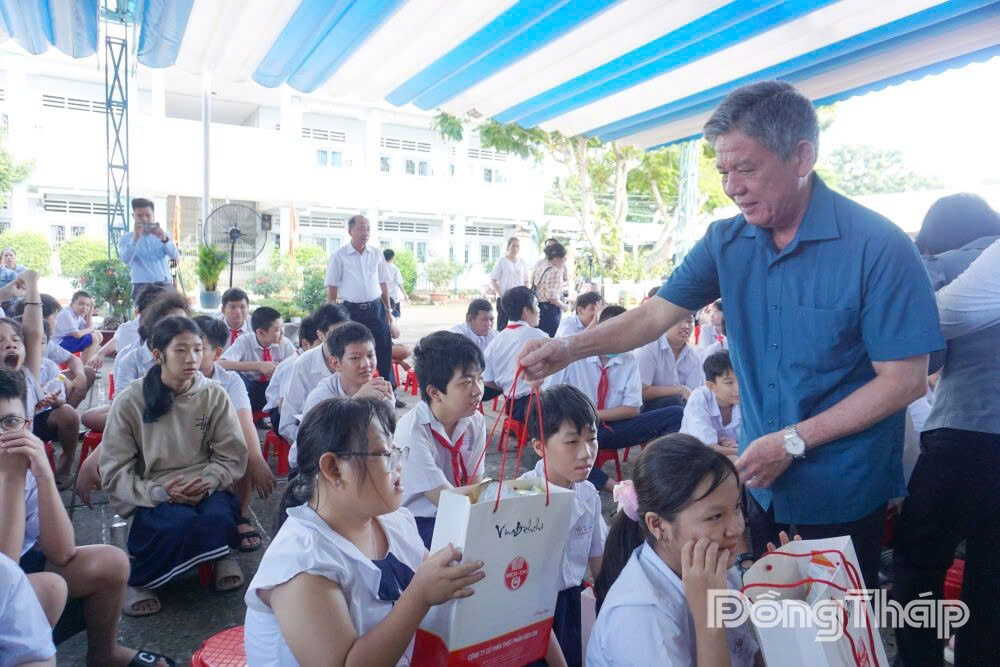
We will accelerate the implementation of programmes and projects to develop human resources for spearhead sectors, including digital technology, artificial intelligence, logistics, food processing, high-tech agriculture and high-quality services. At the same time, it will strengthen linkages with universities, research institutes and businesses to provide training that meets practical demands.
On the occasion of the first anniversary of the establishment of Dong Thap Province (July 1, 2025 – July 1, 2026), I call upon all cadres, Party members, soldiers of the Armed Forces, the business community and the people of the province to continue upholding the province's heroic tradition, spirit of compassion, diligence and creativity.
Each individual should shoulder his or her share of responsibility; each sector should fulfil its assigned tasks effectively; and each locality should remain determined to accomplish its objectives. Every cadre and Party member must demonstrate a strong sense of responsibility, serve as a role model in both work and daily life, and remain wholeheartedly devoted to serving the people.
All of us must act with one mind for a new Dong Thap Province, sharing the same awareness, actions, willpower, and confidence in victory.
We have every reason to believe that, in the years ahead, Dong Thap will successfully realise its development goals and achieve faster and more sustainable growth.
By NGO CHI CUONG
Member of the Party Central Committee,
Secretary of the Dong Thap Provincial Party Committee,
Chairman of the Dong Thap Provincial People's Council
Translated by X.QUANG