
Dong Thap Promotes Science, Technology, Innovation, and Digital Transformation
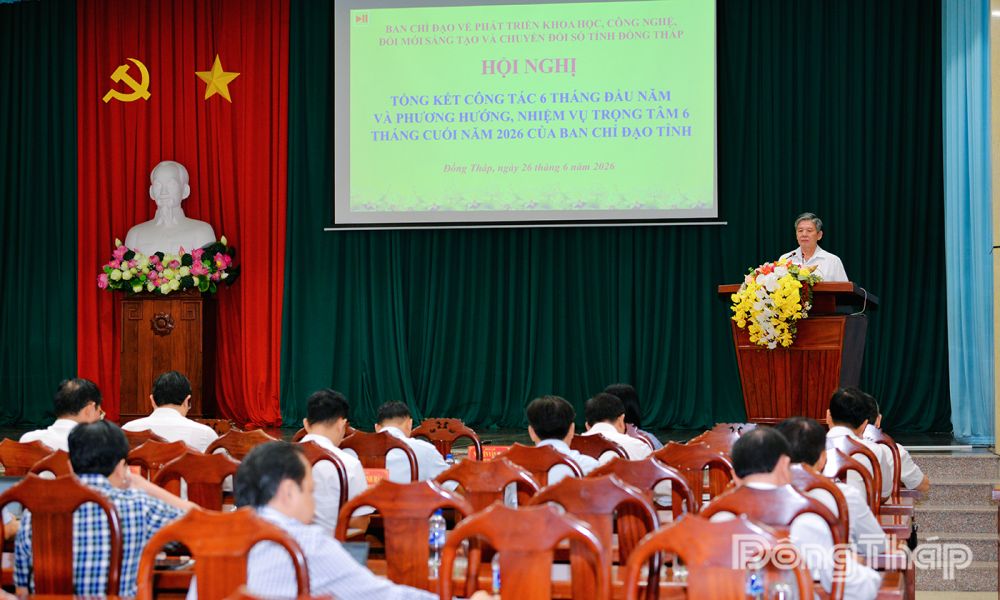
(DTO) On the morning of June 26, the Dong Thap Provincial Steering Committee for Science, Technology, Innovation, and Digital Transformation held a conference to review its performance in the first six months of 2026 and outline key tasks for the remainder of the year.
The meeting was chaired by Ngo Chi Cuong, Member of the Party Central Committee, Secretary of the Provincial Party Committee, Chairman of the Provincial People’s Council, and Head of the Provincial Steering Committee.
According to the Provincial Steering Committee, the implementation of Politburo Resolution No. 57 in Dong Thap has been carried out in a serious and coordinated manner with positive results during the first half of the year. Most targets remain on schedule, while data infrastructure and electronic management systems have been strengthened. Digital awareness and skills have also continued to improve.
The province currently has 30 science and technology enterprises, 24 innovative startups, and 10 science and technology organizations, including both public and non-public institutions.
The province is also restructuring its Startup and Innovation Hub, which is envisioned as a center connecting the startup community inside and outside the province with experts and startup support partners. The hub will provide co-working spaces, office services, equipment, and facilities for research and product development.
The Provincial People’s Committee has signed digital transformation cooperation agreements with VNPT and MobiFone for the 2026-2030 period. It has also partnered with Viettel to implement digital transformation initiatives, upgrade digital infrastructure, and deploy AI, IoT, smart camera, and virtual assistant solutions.
The province has begun piloting the use of AI in public administration to improve governance efficiency and the quality of public services, while helping government leaders gradually adopt data- and AI-driven approach to management. AI has also been integrated into several digital platforms, including the Smart Urban Operations Center and the Public Service Portal, to support data analysis, trend forecasting, and enhanced user experience. In addition, Dong Thap is considering investments in AI projects, IoT platforms, and multi-platform digital citizen applications.
The province is also reviewing major investment proposals, including a multi-platform digital citizen application, an expanded AI-powered camera data analysis system, AI applications based on big data across multiple sectors, and an IoT platform to support AI-powered public administration. These projects are expected to establish a strong technological foundation for more effective governance, monitoring, analysis, forecasting, and the development of a modern digital government.
However, the Provincial Steering Committee also identified several shortcomings. The rate of online public service applications remains relatively low, as does the percentage of adults using digital signatures, personal e-signatures, and bank accounts for cashless payments. E-commerce platforms have yet to achieve high transaction volumes, while the application of technology and innovation in business has not generated significant commercial value. Research activities remain limited in scale and impact. In addition, administrative procedures are processed through multiple ministry-level systems, requiring officials to work across different platforms and making data consolidation more difficult.

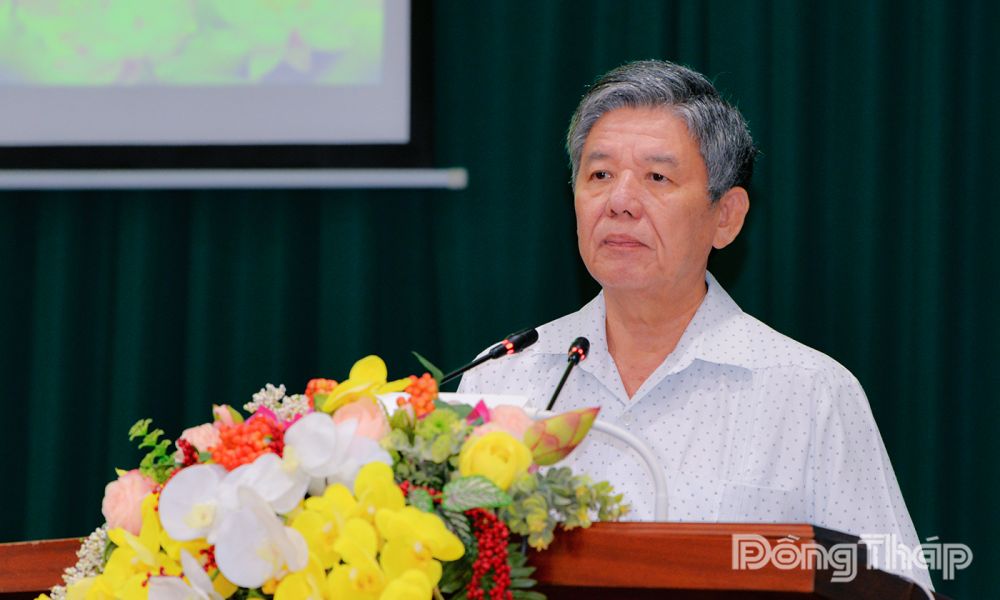
Speaking at the conference, Secretary Ngo Chi Cuong called on members of the Provincial Steering Committee and heads of agencies and localities to personally oversee and direct the implementation of assigned tasks. He stressed that this must be treated as a regular and top political priority and included among the key criteria for quarterly and annual performance evaluations. He also emphasized that citizens should no longer be required to submit additional documents once government databases have been connected and integrated.
He urged relevant agencies to promptly remove bottlenecks in institutional mechanisms and digital infrastructure. The Party Committee of the Provincial People’s Committee was tasked with directing the Provincial People’s Committee to finalize and submit 11 draft resolutions to the Provincial People’s Council in 2026 to complete the province’s legal framework.
The Department of Science and Technology was instructed to expedite procedures to reorganize the Digital Transformation Center into the Startup, Innovation, and Digital Transformation Center, with the goal of putting it into operation in the third quarter of 2026.
The Department of Industry and Trade was assigned to immediately upgrade production lines to improve productivity and quality, establish at least one pilot model linked to a key value chain, and update progress on the Central Government’s monitoring system, as this is a priority task that cannot be delayed. The department was also instructed to continue reviewing and upgrading digital infrastructure, particularly at the commune level, to ensure the smooth operation of the two-tier local government model.
Regarding digital data development and the application of emerging technologies, Secretary Ngo Chi Cuong requested the Department of Science and Technology and the Provincial Police Department to promptly propose a provincial framework covering core, master, and open datasets. Priority should be given to standardizing data in key sectors, including land administration, healthcare, construction, and agriculture, while accelerating the application of AI and big data in public administration through the appraisal and implementation of major technology projects.
To help residents and businesses better access resources for science, technology, innovation, and digital transformation, Secretary Ngo Chi Cuong also called on the Party Committee of the Provincial People’s Committee to direct the Provincial People’s Committee to instruct relevant departments and agencies to continue reviewing and improving support policies, with people and businesses placed at the center of public service delivery.
By HA NAM
Translated by ANH DUC