
Dong Thap Provincial Party Committee Secretary Ngo Chi Cuong: Building a Peaceful, Friendly, Cooperative and Developing Border
(DTO) On the morning of October 20, the Dong Thap Provincial Party Committee reviewed the implementation of Politburo Resolution No. 16, dated October 10, 2017, on socio-economic development in mainland border communes in conjunction with strengthening national defense, security and foreign relations.
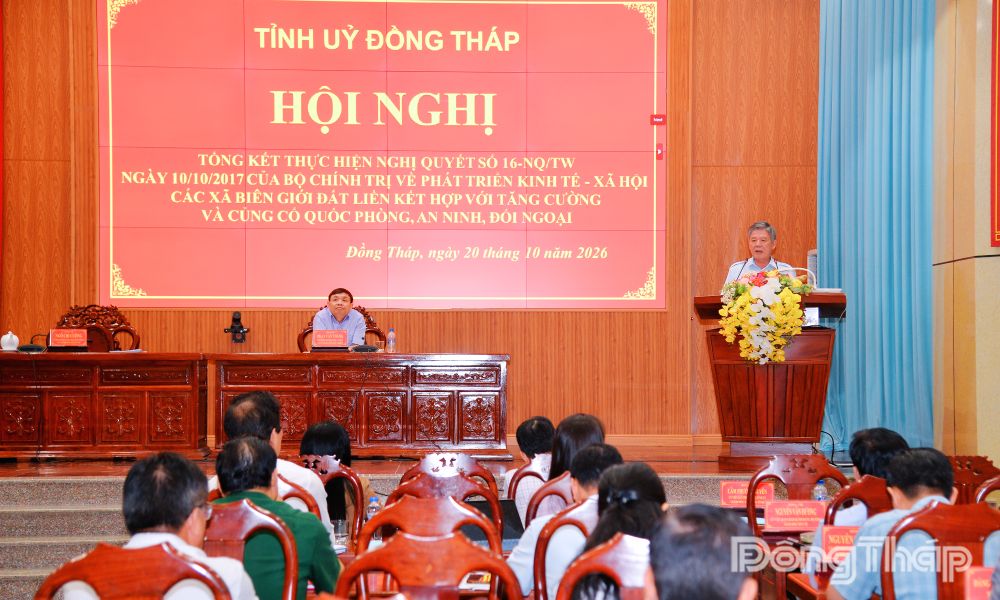
The conference was chaired by Ngo Chi Cuong, Member of the Party Central Committee, Secretary of the Provincial Party Committee and Chairman of the Provincial People’s Council, and Phan Van Thang, Standing Deputy Secretary of the Provincial Party Committee and Chairman of the Vietnam Fatherland Front Committee of Dong Thap Province.
During the 2016-2020 and 2021-2025 periods, the province mobilized funding to implement a project for socio-economic development and maintaining security and public order in eight border communes. Investment focused on transport infrastructure, border-gate economic zone infrastructure, residential areas and projects supporting socio-economic development alongside national defense and security.
Many roads were upgraded and expanded, improving connections between local centers, residential areas, production zones and border gates. Border patrol roads have served both sovereignty management and protection and facilitated travel and goods transportation. Projects under the Tan Hong Economic-Defense Zone have helped improve infrastructure, stabilize residential areas and support production development.
Trade and services in the border area have remained generally stable, gradually capitalizing on the advantages of the two international border gates of Dinh Ba and Thuong Phuoc. In 2025, cross-border import-export turnover exceeded 1.25 billion USD, 15 times the 2017 figure, with an average annual growth rate of 24.1%. Meanwhile, markets, convenience stores, transport services and warehousing have gradually expanded to meet demand for trading and exchanging goods.
Social welfare programs have continued to receive attention. The poverty rate in border areas fell from 1.85% at the end of 2020 to 1.42% at the end of 2025. In 2025, average per capita income in border communes and wards ranged from 64.5 million VND to 76.6 million VND, more than double the 2017 level.
During 2021-2025, border localities provided jobs for nearly 42,000 workers, while more than 1,600 workers went abroad under labor contracts. These results have expanded livelihood opportunities, increased incomes and gradually improved living conditions for border residents.
By 2026, 16 of the 26 schools in border areas had met national standards. Projects to build six inter-level boarding schools combining primary and lower secondary education are underway. Public healthcare has also received attention, with doctors available at 100% of commune and ward health stations in border areas. Support for poor households and disadvantaged families, assistance to communities of Vietnamese origin, and military-civilian exchanges have continued, fostering solidarity and mutual support.
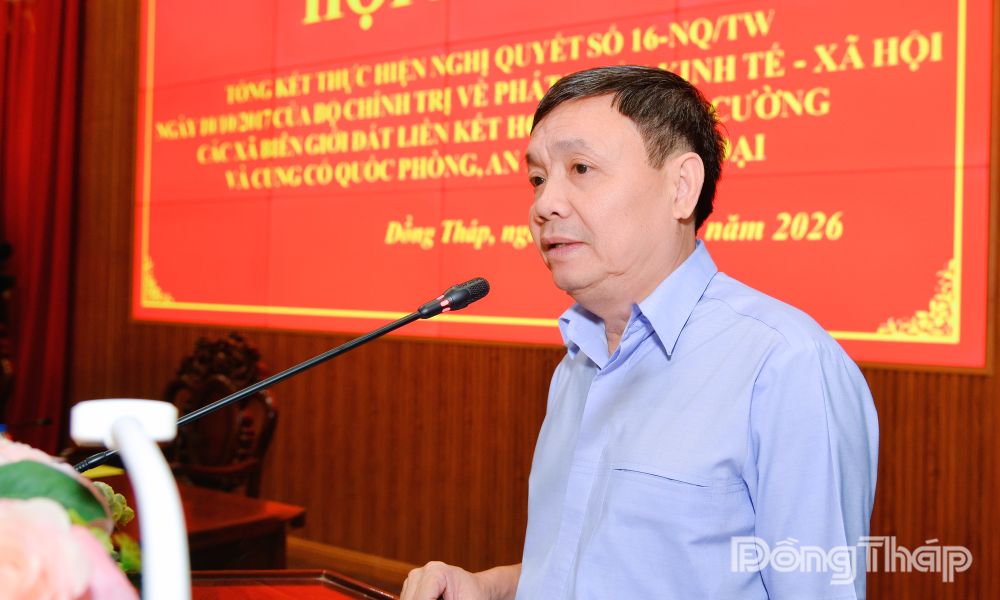
Nearly 10 years of implementing Resolution No. 16 have shown that socio-economic development combined with stronger national defense and security and expanded foreign relations is of strategic importance to Dong Thap’s border region. These achievements provide an important foundation for the province to further tap the potential of its border-gate economy, improve people’s livelihoods and build a peaceful, friendly and cooperative border that supports sustainable development.
For the new period, the Dong Thap Provincial Party Committee issued Resolution No. 18 on July 17, 2026, on socio-economic development in the province’s border areas for 2026-2030. The resolution provides important direction for translating central policies into action and effectively tapping the potential of border areas. It identifies border urban centers and border-gate economic zones as key drivers of development, while closely linking socio-economic growth with national defense, security and foreign relations.
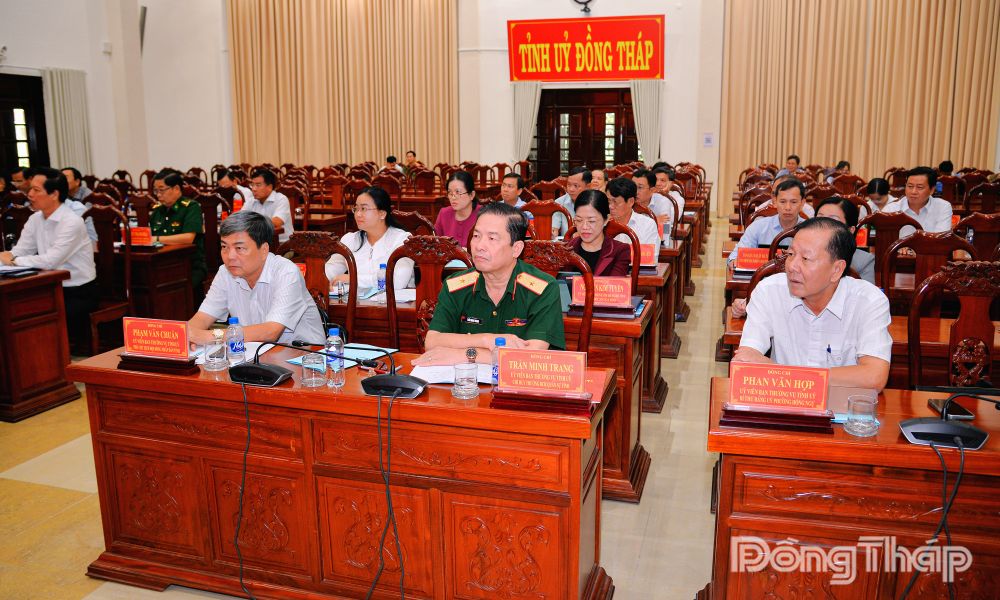
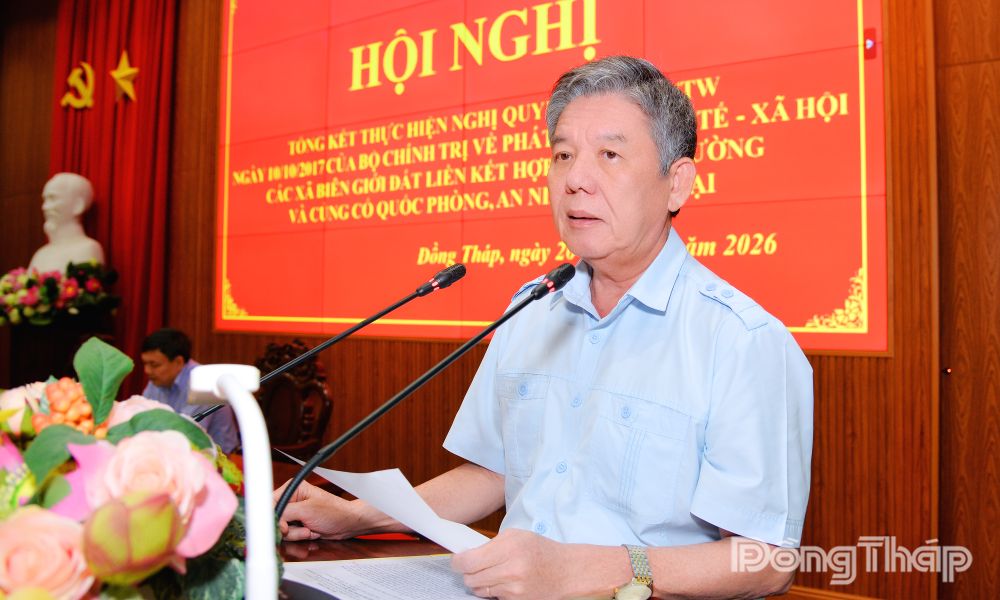
Speaking at the conference, Secretary Ngo Chi Cuong emphasized that economic development and improving people’s livelihoods must remain central, ongoing priorities. Resources should be focused on transport infrastructure, border gates, logistics and key urban areas, while strengthening connections within the province, across regions and between countries.
He called for the development of border trade, border-gate economies, services and tourism in an orderly and modern manner; stronger cooperation with Cambodian localities and businesses; and support for businesses in resolving difficulties and facilitating formal import-export activities.
In border areas, investment must not only promote socio-economic development and improve people’s livelihoods but also strengthen national defense and security, firmly protect territorial sovereignty, maintain border stability and build a peaceful, friendly and cooperative border that supports development.
Secretary Ngo Chi Cuong called for building clean, strong grassroots Party organizations and political systems that remain close to and serve the people. Heads of Party committees and local authorities must lead by example, stay closely engaged with local communities and match words with actions.
Correct policies must not be delayed during implementation, and people and businesses must not be left waiting because of avoidance or the shifting of responsibilities. The Vietnam Fatherland Front and socio-political organizations should strengthen their oversight and social criticism, mobilize public support and encourage people to participate in local development.
He also urged relevant forces to intensify efforts against drug-related crimes, smuggling, particularly cigarettes, commercial fraud, illegal entry and exit, and other threats to security and public order. The strength of the people should be harnessed. Effective community-based self-management models should be maintained and expanded. Every resident should play an active role in protecting the border, boundary markers and local security.
By HA NAM
Translated by ANH DUC